
Best Pillow Filling – 2026 Reviews

Every throw pillow has an expiration date. One day the corners go soft, the middle flattens into a pancake, and you’re left deciding whether to buy a new insert or open the seam and stuff it yourself. That’s usually the moment people start reading about polyester fiber fill.
The tricky part is that pillow filling covers two jobs that look identical in the bag. Loose, silky fill is meant to be fluffed into a sham and stay cloud-soft against your head. Coarser, drier fill is built to be packed tight so a plush toy stands upright and keeps its shape. Buy the wrong one and you get a pillow that never fills out, or a doll that slumps within a week.
Beyond texture, the differences that actually matter are resiliency, washability, and how far a bag goes once it’s unpacked and re-fluffed. We compared the main fiber fills on the market across those axes so you can match the bag to the project instead of guessing and re-stuffing twice.
Best Pillow Filling – 2026 Reviews
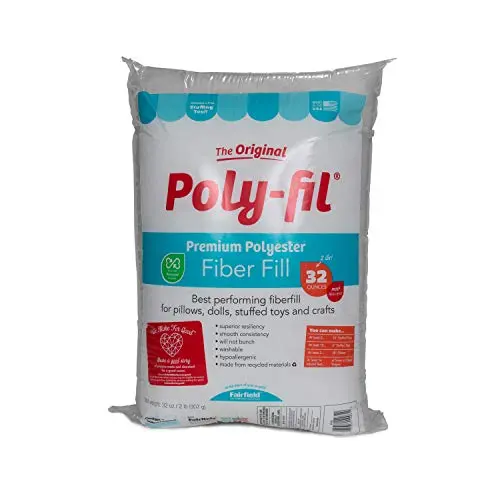
Original Poly-Fil – Smooth, Resilient Pillow Stuffing
A 100% polyester fiber fill with a smooth, consistent blend that resists bunching. It’s hypoallergenic, contains no chemicals or flame retardants, and is made in the USA from recycled materials. Machine washable on a gentle cycle and suitable for pillows, plush toys, and cloud decor.
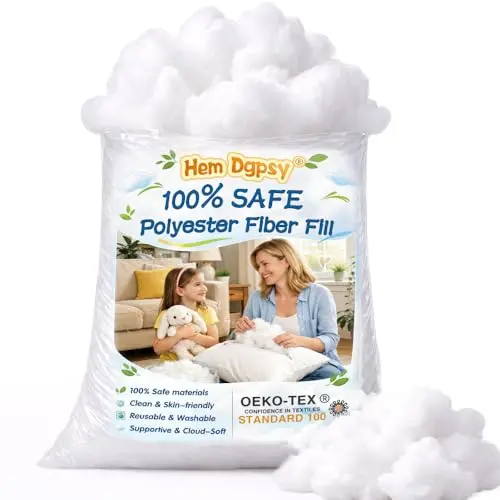
Polyfill Fiber Fill – Cloud-Soft Bulk Filling
A 100% new polyester fiber fill that’s OEKO-TEX certified, odorless, bleach-free, and non-fluorescent. It’s described as cloud-soft yet firm enough to resist collapsing or clumping, tears by hand without lint, and arrives vacuum-sealed for compact storage.
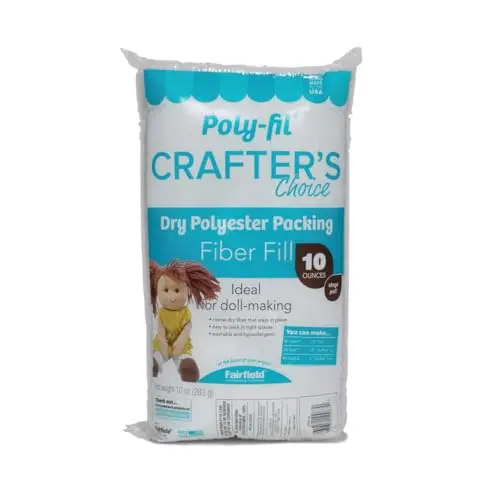
Crafter's Choice – Coarse Fill That Holds Its Shape
A dry, coarse polyester fiber fill that hasn’t been treated with silicone, so it packs firmly and stays where you place it. Built for small spaces, dolls, plush animals, and crafts that need to hold structure. Hypoallergenic, machine washable, and made in the USA.
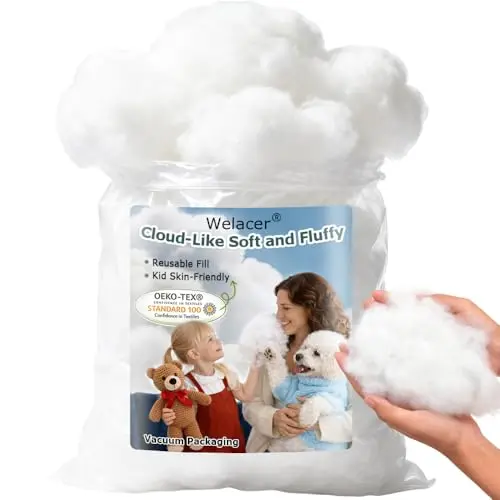
Premium Polyfill – Silky, Clump-Resistant Loft
A newly upgraded polyester fiber fill that’s soft, delicate, and resistant to clumping, with no hard lumps or fiber shedding. It expands quickly after opening, is hypoallergenic and odorless, and can be machine or hand washed and dried fast.
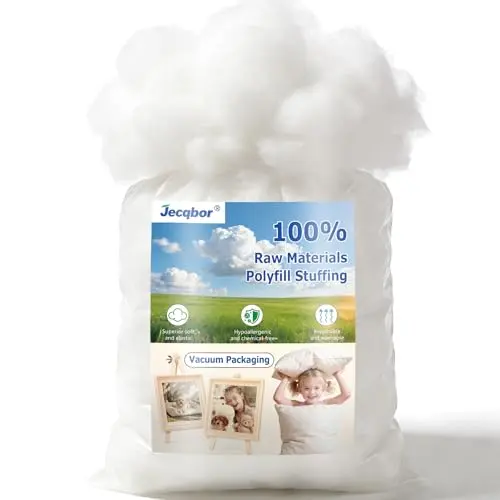
High-Resilience Polyfill – OEKO-TEX Certified Bulk Fill
A 100% new polyester fiber fill with OEKO-TEX certification and no recycled content. It’s odorless, non-toxic, and formulated to stay fluffy through gentle machine washing and low tumble drying. Suits couch cushions, pillows, plush toys, pet beds, and craft projects.
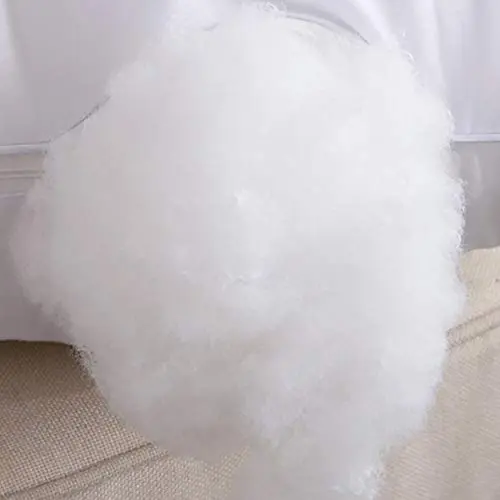
Premium Polyfill – Breathable 3D Fiber
A 3D polyester fiber fill that’s soft to the touch, breathable, and moisture-absorbing to help keep pillows dry. It suits pillowcases, cushions, pet beds, plush toys, and DIY crafts, and can be machine washed and shade dried. Ships vacuum double-packed – tap it and wait about twenty minutes for full loft.
How We Evaluated These Pillow Filling Options
This review didn’t involve hand-stuffing test pillows and re-fluffing them over months of nightly use. It’s built on published fiber specifications, feature sets, and owner feedback where available, mapped against how each fill is actually meant to be used.
We cross-referenced 6 pillow filling options from 5 distinct brands across five decision axes – fiber composition and treatment, resiliency and loft retention, texture and packing behavior, washability, and how well the fill suits the job it’s sold for, whether that’s a soft pillow insert or structured craft work. Where a listing was thin on detail, we leaned on the manufacturer’s stated fiber type rather than guessing at performance.
Our scoring weighted real-world fit (70%) – how well a fill delivers on its stated use, from a cloud-soft bed pillow to an upright amigurumi – against feature differentiation (30%), meaning certifications, hypoallergenic treatment, care instructions, and any genuinely useful edge over the rest of the market. We triangulated specifications, use-case fit, and owner sentiment, then audited claims like “resists clumping” against what the fiber type actually implies. No brand gets preference here; the rankings follow fit and differentiation.
If you’re refreshing a flattened couch cushion, the Original Poly-Fil is the straightforward pick. If you’re filling a larger piece and want a certified fiber, the Hem Dgpsy polyfill is the better match.
How to Choose the Right Pillow Filling
1. What Separates Good Pillow Filling From Lumpy Filler
Almost any polyester fill feels fine in the bag. The difference shows up weeks later, when a cheap batt has migrated into one dense lump at the end of the cushion. Two things predict that outcome: resiliency – how quickly the fiber springs back after compression – and smooth, consistent fiber length, which keeps the fill from balling up as you work it into a case.
Look for language like “resists clumping” or “superior resiliency” in the specs, then cross-check the fiber type. Long-staple polyester blends tend to hold loft longer than short, choppy fibers, and treatment matters too: silicone-treated fill slides easily and feels silkier, while untreated fill grips and packs.
2. Fiber Texture and Loft: Matching Pillow Filling to the Job
The single biggest mistake buyers make is treating all polyfill as interchangeable. Soft, silky fiber belongs in anything that touches your face or needs to feel cloud-like: bed pillows, decorative shams, body pillows, plush toys you want to squeeze. Coarse, dry fiber belongs in anything that has to stand up, hold an edge, or stay where you push it – amigurumi limbs, doll arms, small structured crafts.
If you’re restuffing a crochet or plush project, the Crafter’s Choice is the pick; its untreated, coarse fiber grips itself so small pieces keep their shape.
3. How Much Pillow Filling Do You Actually Need?
Judge by volume, not weight. A pound of one fill can look like twice as much as a pound of another once it’s fluffed, because density and crimp vary so widely between brands. The practical approach: buy more than you think you need, stuff incrementally, and keep the leftover for the next cushion.
Expect to use noticeably more fill when refreshing a flattened insert than when topping off a pillow that’s only slightly soft. Add in handfuls, break up dense spots as you go, and check the loft from the side rather than pressing down on top.
4. Certifications, Allergens, and Washability in Pillow Filling
Polyester itself is generally hypoallergenic, and most fills in this category are sold untreated – no chemical finishes, no flame retardants. OEKO-TEX certification goes a step further and confirms the fiber has been screened for harmful substances, which is worth paying attention to if the finished pillow is going to a child or someone with sensitive skin.
Washing is where fills diverge. Most are gentle-cycle machine washable, but the fiber will shift during the spin. Air dry or tumble on low heat, then massage the fill back into place with your fingertips before the pillow fully dries. If easy care is the priority, the Original Poly-Fil is the pick here.
5. Craft Fill vs. Pillow Fill: Why One Bag Doesn't Do Both
Craft fill and pillow fill sit in the same aisle and often look identical, but they’re formulated for different jobs. Craft fill is typically drier and coarser so it can be packed tightly into small openings with a stuffing tool, and so the fiber doesn’t migrate back out. Pillow fill is looser and silkier so it spreads evenly across a wide case.
Buying the wrong one is the most common reason a project disappoints. Coarse fill in a bed pillow feels lumpy, and soft fill in a plush toy sags within days.
6. What to Expect at Each Pillow Filling Price Tier
Smaller bags sit at the entry level and suit one cushion or a handful of small crafts. Mid-range bags – the ones in the two-to-four-pound range – are the sweet spot for most households, since they cover a sofa’s worth of cushions without leaving a closet full of leftovers. Large boxes and bulk bags sit at the premium end and only make sense if you’re restuffing on a schedule or running a steady stream of craft projects.
Do the per-ounce math before you commit, because bag sizes aren’t standardized and a large bag from one brand can hold less than a mid-size bag from another. Vacuum packing also compresses what you see, so judge the fill after it’s had time to expand.
If you want a certified, wash-durable bag for large cushions, the Jecqbor polyfill is the pick in this lineup.
Frequently Asked Questions
1. What's the difference between Poly-Fil Original and Crafter's Choice?
Same brand, two different jobs. Original Poly-Fil is a smooth, soft blend designed to fill pillows and plush toys with a cloud-like feel – it’s the one you want against your skin. Crafter’s Choice is deliberately dry and coarse, untreated with silicone so the fiber grips itself and packs firmly into small openings without springing back out.
Short version: Original for anything soft and squishy, Crafter’s Choice for anything that needs structure.
2. Poly-Fil Original vs. Hem Dgpsy polyfill: which should you buy?
Buy Original Poly-Fil if you want the most forgiving all-rounder and don’t need much volume – it’s soft, hypoallergenic, and washes easily. Choose the Hem Dgpsy polyfill if you’re covering several cushions at once and want OEKO-TEX certified fiber that holds shape under daily use.
The practical split comes down to quantity and whether certification matters to you. For a single pillow refresh, Original is plenty. For a whole sofa, or a kid’s project where the certification reassures you, Hem Dgpsy is the better fit.
3. How much polyfill does it take to stuff a throw pillow?
Less than the bag suggests, and more than you’d guess – it depends entirely on how firm you want the result. Start with a loose, even layer that fills the corners, then add in small handfuls and check the loft from the side.
Two things to remember: vacuum-packed fill expands over the first twenty minutes or so, and overstuffing makes a pillow feel stiff rather than plush. Leave a little room in the case and let the fiber settle.
4. Is polyester pillow filling safe for kids and allergy sufferers?
Polyester fiber is generally considered hypoallergenic, and the fills here are sold without chemical finishes or flame retardants – Poly-Fil’s Original line states this explicitly. If you want extra assurance, look for OEKO-TEX certification, which screens for harmful substances.
Worth noting: dust mites, not the fiber itself, are usually the real issue for allergy sufferers. Regular gentle washing and thorough drying helps more than switching fill types.
5. Welacer vs. Jecqbor: which bulk polyfill holds its loft longer?
Welacer is the softer, silkier of the two – it expands fast, feels down-like, and suits decorative pillows and plush projects. Jecqbor is built around resilience, with a wash-durable structure meant to keep bounce through repeated cycles, and it carries OEKO-TEX certification to boot.
If you’re stuffing something that gets leaned on daily, go with the Jecqbor polyfill. If the priority is a soft, cloud-like hand-feel, Welacer is the better match.
Final Verdict
For most people, the Original Poly-Fil is the answer. It’s soft without collapsing, hypoallergenic, and easy to wash – the least fussy way to bring a flat cushion or a lumpy DIY pillow back to life. Covering more ground than one cushion? The Hem Dgpsy polyfill gives you certified fiber in a bigger bag and holds shape under heavy daily use. Restuffing plush toys or a crochet project instead? Go with the Crafter’s Choice, whose coarse texture keeps structure where soft fill would sag. And if you want a silkier, down-like hand-feel for a decorative pillow, the Welacer polyfill is the one to try. Match the fill to the job and you’ll stop re-stuffing the same pillow twice.
