
Best Pillows For Acid Reflux And Neck Pain – 2026 Reviews

You wake up with a sour taste in your throat and a stiff neck, and the pillow under your head is doing neither job well. Acid reflux wants your torso raised; neck pain wants your head and neck supported in a neutral line. Those two jobs can pull in different directions, which is why so many people end up stacking pillows and still sleeping badly.
The fix is not just a firmer pillow or an extra pillow. It is the shape of the pillow and how it changes your sleeping angle. A wedge raises your upper body, but a bad wedge can leave your neck cranked forward. A contour pillow supports the neck, but it does nothing for reflux. The best pillows for acid reflux and neck pain either combine those jobs or make it easy to add the missing piece.
We looked across the market at wedges, adjustable sets, and contour options to find the ones that make the most sense for different sleepers. The two axes that separate a good pick from a frustrating one are incline angle and neck alignment. Get those right, and you stop fighting your pillow at 3 a.m.
Best Pillows for Acid Reflux and Neck Pain – 2026 Reviews

19-Degree Wedge Pillow – Contoured Reflux and Neck Support
A firm, single-piece memory foam wedge with a 19-degree incline and a contoured top that curves under the shoulders. It raises the whole upper body rather than just the head, which is the difference that matters when reflux and neck alignment are both on your list.
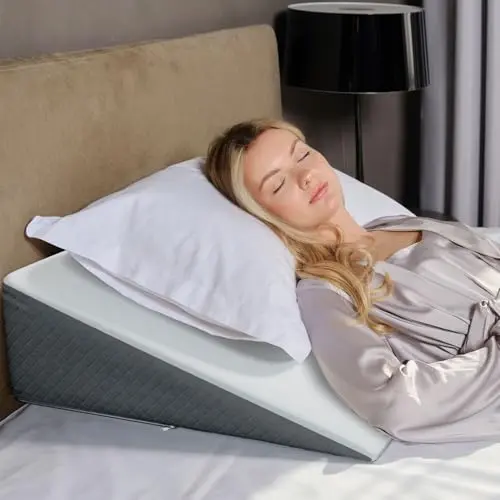
7.5-Inch Bed Wedge – Jacquard-Covered Reflux Support
A classic 7.5-inch bed wedge with a plush memory foam top over a high-density foam core. The lower profile suits back sleepers who want a gentle incline, and the jacquard cover gives it a more bedroom-friendly look than a bare medical wedge.

7.5-Inch Cooling Wedge – Budget Reflux Relief
A budget-friendly 7.5-inch wedge with a cooling cover, CertiPUR-US foam, and side pockets. It is a straightforward incline pillow for reflux, snoring, or leg elevation, with a softer feel than the firmest wedges here.
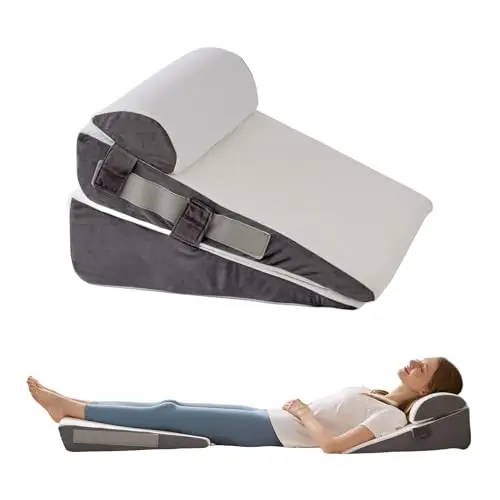
3-Piece Adjustable Wedge Set – Custom Incline for Reflux and Recovery
A modular wedge set with a memory foam head pillow and two base sections that combine into a 12-inch incline or split down to 5.5 inches. Velcro straps and an anti-slip bottom make it the most adjustable option in the lineup.
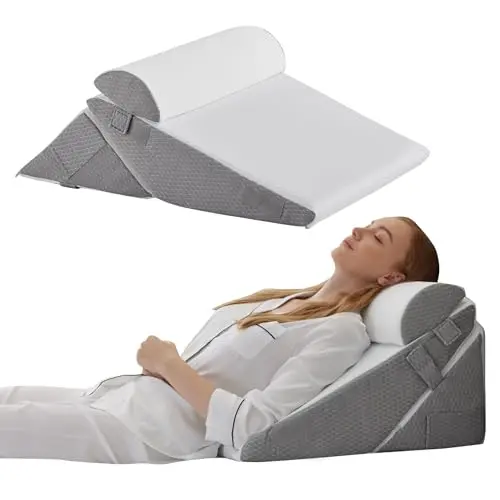
Adjustable Wedge Set – 9/12-Inch Incline with Head Pillow
A three-piece set with a dual-layer memory foam wedge, an independent head and neck bolster, and a linked base that flips for lumbar or knee support. It covers the 9- and 12-inch incline without making you buy two separate wedges.

10-Inch Gel Wedge – Higher Incline for Reflux
A 10-inch wedge with a cooling gel-infused memory foam top and a high-density foam base. The taller profile gives you more elevation than a 7.5-inch wedge, with pockets and a handle for daily use.

4-Piece Orthopedic Wedge Set – Adjustable Post-Surgery Support
A four-piece orthopedic set with soft contoured head and back cushions over high-density base wedges. Side hook-and-loop fasteners let you adjust the angle from a gentle recline to a steeper supported position.
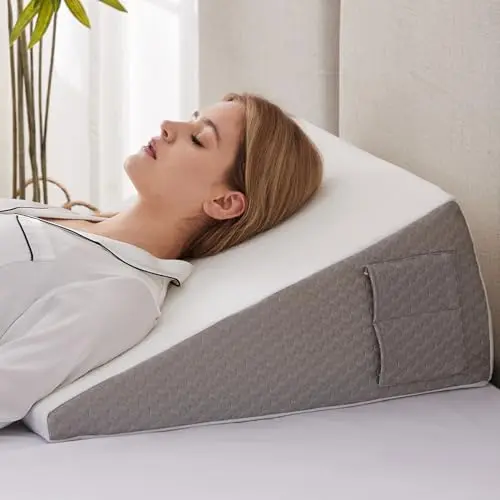
10-Inch Triangle Wedge – Jacquard-Covered Reflux Support
A 10-inch high-density foam wedge with a jacquard cover, side pockets, and a carry handle. It is a simple, taller incline pillow for reflux, back pain, or leg elevation without the extra pieces of a modular set.
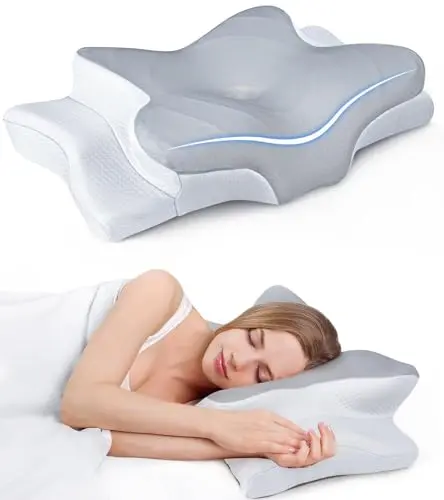
Cervical Contour Pillow – Dedicated Neck Pain Support
A contour cervical pillow with a hollow concave center, six support zones, and an adjustable height insert. It is built for neck pain and side, back, or stomach sleeping-not for acid reflux, which needs an incline rather than a flat contour.
How We Evaluated These Pillows for Acid Reflux and Neck Pain
We did not run sleep-lab pressure mapping or spend a month sleeping on each pillow. What we did: cross-referenced nine pillow models from eight brands across five decision axes – incline angle, firmness and foam layering, neck alignment, cover and care, and adjustability. We triangulated published specifications, feature sets, owner feedback where available, and use-case fit for people managing reflux and neck pain at the same time. For wedge pillows, we looked at whether the incline lifts the whole torso or just the head, and whether the top surface gives the shoulders a place to settle. We also mapped each pillow to sleeping positions and body sizes, then audited the claims against what the product actually includes. Where a product’s design clearly pushed toward one symptom over the other, we called that out instead of pretending every wedge is a dual-purpose tool.
The scoring framework weighted real-world fit for reflux and neck pain (70%) – how well each pillow raises the torso while keeping the neck supported – against feature differentiation (30%) – unique adjustments, cooling, covers, and setup details. We have no commercial relationship with any of the brands featured; recommendations track fit and differentiation, not brand preference. If you want one contoured wedge that treats both problems together, the Aeris 19-Degree Wedge is the pick. If you prefer a lower, classic profile, the Kolbs Wedge is the better fit.
How to Choose the Right Pillows for Acid Reflux and Neck Pain
1. Why Incline Angle Matters for Acid Reflux and Neck Pain
For reflux, the key number is not the height of the pillow-it is the incline angle and whether the wedge lifts your whole upper torso or just your head. A gentle 7.5-inch wedge and a steeper 10- or 12-inch wedge can both work, but the steeper angle is not automatically better. If the slope is too aggressive, you slide down and wake up with your neck cranked forward.
Neck pain adds a second requirement: your cervical spine needs to stay close to neutral. That is why a contoured wedge or an adjustable set with a separate head pillow can be easier to live with than a plain triangle. If you want a single wedge that handles both jobs, the Aeris 19-Degree Wedge is the pick because the contoured top gives your shoulders a place to sit.
2. Wedge vs. Cervical Contour: Which Pillow Fits Your Neck Pain?
A wedge pillow raises your torso, which is the mechanic that helps acid reflux. A cervical contour pillow supports the neck on a flatter plane, which is the mechanic that helps neck pain without reflux. They are not interchangeable. If you have both issues, start with a wedge and add a head pillow for neck alignment; if reflux is not part of your problem, a contour pillow is the more targeted tool.
The Kolbs Wedge is a good example of the classic approach: a lower 7.5-inch incline with a memory foam top. A contour pillow is the opposite tradeoff-better for neck support, no reflux help.
3. Firmness, Foam, and Cover Materials That Affect Comfort
Firmness is the most divisive spec in this category. A firm wedge keeps its angle, but it can feel hard on the shoulders and hips. A softer wedge is more forgiving at first, but it may compress and lose the incline you bought it for. Look for a high-density foam base with a memory foam top layer if you want support without a plank-like feel.
Cover materials matter more than they sound. A removable, machine-washable cover is close to non-negotiable for a pillow that sits against your face. Cooling covers and gel-infused foam can help if you sleep hot, but they are not a substitute for a cooler room.
4. Matching a Pillow to Your Sleeping Position and Body Size
Back sleepers usually do best with a 7.5- to 10-inch wedge and a contour that supports the neck. Side sleepers often need a regular head pillow on top of the wedge to keep the neck level, and some find steeper wedges too aggressive. Stomach sleepers are the hardest fit; a wedge is usually the wrong shape unless a doctor recommends it.
Body size matters too. A 24-inch-wide wedge can feel narrow for broader shoulders, while a 25.5-inch base gives you more room to settle. If you are tall, a taller back section may be more comfortable than a short ramp.
5. Setup, Sliding, and Care: What to Expect From a Wedge Pillow
Almost every wedge has two setup quirks: the wedge itself can travel on smooth sheets, and your body can slide down the slope. Push the flat edge against a headboard or wall to stop the pillow from migrating, and set your shoulders into the contour rather than perching on top of the slope. A non-slip bottom or a textured sheet helps.
Most wedges ship vacuum-compressed and need 24 to 48 hours to reach full height. The cover is usually removable and machine washable; the foam core is spot-clean only. If you have a smaller bed, measure the footprint before you order-these are bulkier than a standard pillow.
6. Budget, Mid-Range, and Premium Pillows: What Changes
At the budget-friendly end, you get a straightforward foam wedge with a basic cover. The incline is fixed, the foam is usually softer, and the cover may be simpler. That is not a bad thing if you are testing whether a wedge works for you. At the mid-range, you start to see better foam layering, cooling covers, pockets, and adjustable sets. At the premium end, you pay for a more purposeful shape, firmer foam, and details like contoured shoulders or modular sections.
If you want to test the format without spending much, the Cozymaker 7.5-Inch Cooling Wedge is the pick. If you already know you need a specific angle or a head pillow, spend more for the adjustability.
Frequently Asked Questions
1. What is the difference between the Aeris 19-Degree Wedge and the Kolbs 7.5-Inch Wedge?
The Aeris 19-Degree Wedge has a contoured top and a firmer, single-piece build; it is the better choice if you want the wedge to help with neck alignment as well as reflux. The Kolbs 7.5-Inch Wedge is a more traditional flat ramp with a memory foam top and a lower profile. The Aeris is the more premium pick; the Kolbs is the simpler, lower-incline option.
2. Can a wedge pillow help both acid reflux and neck pain at the same time?
Yes, but only if the pillow raises your whole torso and gives your neck a neutral place to rest. A plain wedge can help reflux while leaving your neck unsupported, which is why a contoured top or a separate head pillow matters. For most people who need both, the Aeris 19-Degree Wedge is the pick because the shoulder curve reduces sliding and the incline is gentle enough for back sleeping.
3. What is the difference between the Bedluxe 10-Inch Wedge and the Cozymaker 7.5-Inch Wedge?
The Bedluxe 10-Inch Wedge gives you a taller, more pronounced incline and a gel-infused top; it suits back sleepers who want more lift. The Cozymaker 7.5-Inch Wedge is lower, softer, and more budget-friendly, with a cooling cover and side pockets. If you are unsure how steep you want to go, the lower Cozymaker is the easier starting point; if you already know you need more elevation, the taller Bedluxe makes more sense.
4. Do adjustable wedge pillow sets work for side sleepers with neck pain?
An adjustable wedge set can work for side sleepers, but you will likely need a regular head pillow on top to keep your neck level. The advantage of a set is that you can lower the incline if the slope feels steep, then add height when you need more reflux support. The WGAKCED 3-Piece Adjustable Wedge Set is the pick here because it spans a wide height range and has an anti-slip base.
Final Verdict
For most people who are dealing with both reflux and neck pain, the Aeris 19-Degree Wedge is the answer. Its contoured top and firm 19-degree incline do the two jobs that matter: raise the torso and keep the neck from collapsing forward. If you want to spend less while you figure out whether a wedge suits you, the Cozymaker 7.5-Inch Cooling Wedge is the budget-friendly entry point. If you need to change angles for recovery, reading, or different sleepers, the WGAKCED 3-Piece Adjustable Wedge Set is the most flexible pick. And if reflux is not part of your problem and neck pain is the whole story, the Cozyplayer Cervical Contour Pillow is the dedicated contour option. Start with the shape that matches your main nighttime symptom, then adjust from there.
