
Best Pillows For Arthritis In The Neck – 2026 Reviews

The first clue is usually the morning. You roll over, try to turn your head, and your neck answers back with a stiffness that takes twenty minutes and a hot shower to loosen. Pillows rarely get blamed for that, but they’re often the one variable you can actually control.
Arthritis in the cervical spine changes the math on what a pillow needs to do. A joint that’s already irritated doesn’t tolerate a pillow that pushes the neck into extension all night, and it doesn’t tolerate one that lets the head drop out of alignment either. The sweet spot is support that holds the natural curve without fighting it – which is why the picks below lean heavily on models with genuinely adjustable loft and a real medium feel rather than a marshmallow surface.
We looked across the category rather than inside one brand’s lineup, and the differences that mattered came down to three things: whether you can change the height, how the contour engages the base of your skull, and whether the foam stays supportive past the first month. Everything here is a cross-brand comparison aimed at a specific problem, not a brand loyalty exercise. Work out your sleep position and your tolerance for pressure first, and the shortlist gets very short very fast.
Best Pillows for Arthritis in the Neck – 2026 Reviews
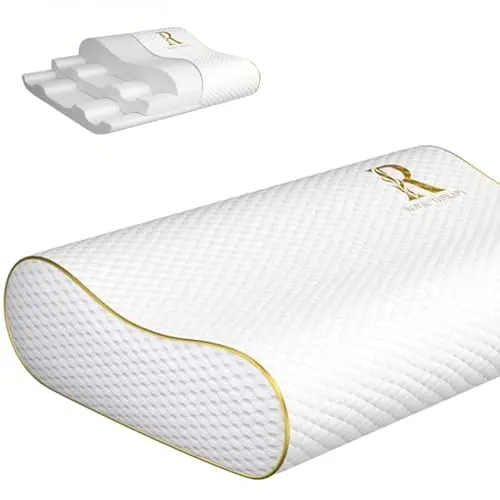
Memory Foam Cervical Pillow – Three-Layer Adjustable Loft
A three-layer memory foam contour pillow you can physically take apart to change its height. That single feature matters more for a stiff, arthritic neck than almost anything else in this category.
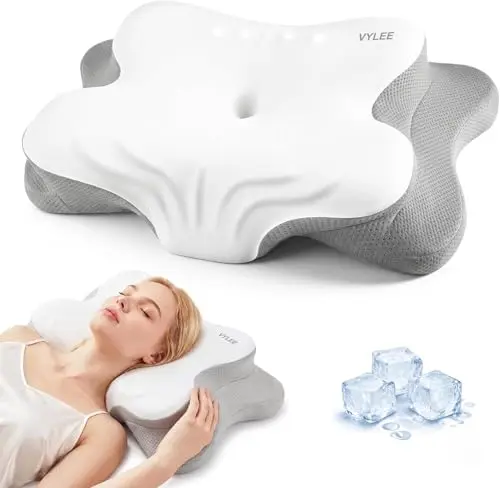
Cervical Neck Pillow – Dual-Height Butterfly Contour
A butterfly-shaped contour pillow with two loft heights built into one piece – flip it 180 degrees for roughly an inch of difference. The five-zone shape is designed to support head, neck, shoulders, and arms at once.
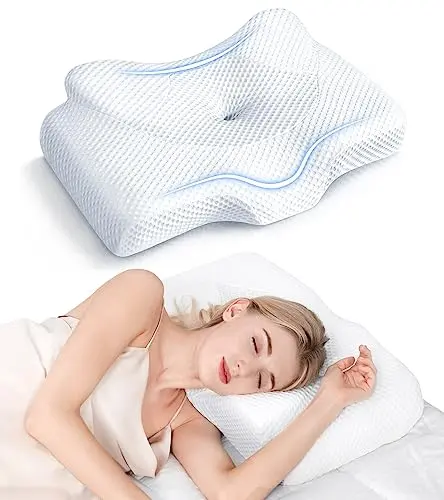
Cervical Pillow – Hollow-Center Odorless Memory Foam
The hollow-center design is the differentiator here – a scooped channel at the middle of the pillow cradles the back of the skull instead of pressing on it, while the surrounding foam supports the neck’s curve.
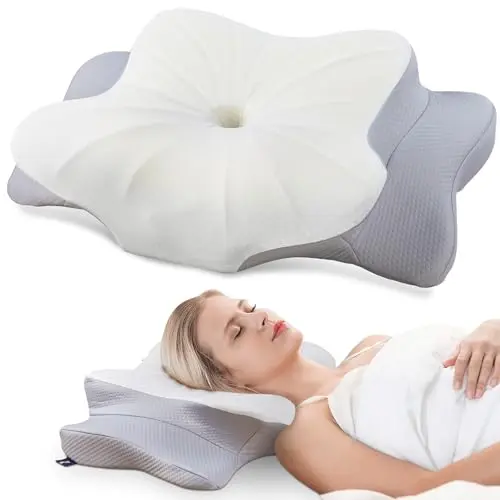
Cervical Pillow – Dual-Height with Armrest Grooves
A dual-height butterfly contour with one feature the others don’t have: grooves under the side wings so your arm can tuck beneath the pillow instead of bunching up against it all night.
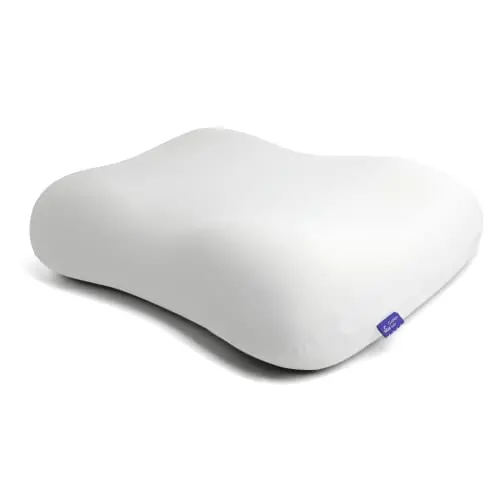
Deep Sleep Pillow – Patented Contour for Side and Back Sleepers
A densely built contour pillow with a soft top layer over a firmer support base, sculpted bolsters down each side, and a swept shoulder line that lets you snug in closer to the mattress.
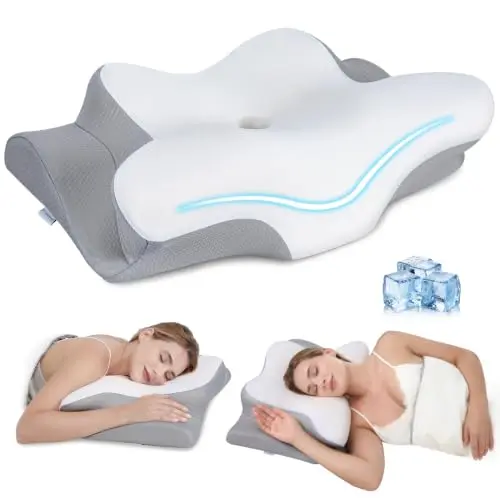
Cervical Neck Pillow – Two Heights with Ice Silk Cover
A lower-profile butterfly contour with two heights, a silky ice-silk cover, and a firmer, slower-rebound foam than most budget cervical pillows use.
How We Evaluated These Pillows for Arthritis in the Neck
A quick word on what this review is and isn’t. We did not run sleep-lab polysomnography, pressure mapping, or clinical pain assessments on any of these pillows. What we did: cross-referenced 6 contour pillow models from 6 distinct brands across six decision axes – loft adjustability, contour geometry, foam density and firmness, cover breathability, sleep-position fit, and washability. We triangulated published specifications, feature sets, and owner feedback where available, then mapped each option against the practical needs of a sleeper managing cervical arthritis: someone who needs the neck held in neutral without extra pressure landing on joints that are already tender.
The scoring framework weighted real-world fit (70%) – how well a pillow supports a sore neck through a full night without forcing it into extension – against feature differentiation (30%), meaning the adjustments and material choices that genuinely separate one model from another. We also audited claims like odorless and cooling against what the published specifications actually support, because those words get used loosely in this category. Where owner feedback was thin or contradictory, we leaned on specifications rather than filling the gap with guesswork. We have no commercial relationship with any brand featured here; recommendations track fit and differentiation, not brand preference. If you want the most adjustable option, the Royal Therapy is the pick; if a cooling two-height design suits you better, the VYLEE is the better match.
How to Choose the Right Pillow for Arthritis in the Neck
1. Why Arthritis in the Neck Changes What a Pillow Needs to Do
An arthritic cervical spine is less forgiving than a healthy one. Joints that are already inflamed don’t like being pushed into extension for eight hours, and they don’t like being left unsupported either – both end with the same morning stiffness. What you’re looking for is a neutral spine position: chin roughly level, ears stacked over shoulders, the natural curve of the neck preserved rather than flattened or exaggerated.
That’s a different brief than simply asking for something soft. Plenty of very comfortable pillows are wrong for an arthritic neck because they let the head sink below the shoulder line, which loads the joint instead of resting it. The practical translation is medium firmness with real support underneath, plus enough height control that you can dial in the loft rather than guessing and hoping.
2. Contour Shapes and What They Actually Do
The three main geometries you’ll see are the butterfly (a center cradle flanked by raised side wings), the hollow center (a scooped channel for the back of the skull), and the layered slab (a contour you physically dismantle to change height). None is universally better – they solve different problems.
A butterfly contour is the most versatile for combination sleepers, because the wings support side sleeping and the center handles back sleeping. A hollow-center design is the one to look at if pressure at the base of your skull is part of what triggers your pain. A layered pillow is the most forgiving if you genuinely don’t know which height you need yet, since the answer can shift over time without you buying anything new.
3. How to Choose a Pillow Height for Arthritis in the Neck
Height is the single most consequential variable, and it’s also the one most people guess wrong. The rough rule: side sleepers need enough loft to fill the gap between the mattress and the side of the head, so shoulder width is the deciding measurement. Back sleepers need less – just enough to keep the chin level rather than tipped toward the chest.
Because you can’t measure that gap reliably in a shop, adjustable loft is the safest bet. Two-height rotation gives you an either/or choice; removable layers give you a spectrum. If you’d rather have the ability to pull a layer out outright, the Royal Therapy is built exactly that way, while the Osteo adds a third position through a removable bottom insert.
4. Firmness, Foam Density, and Pressure Relief
Memory foam density and firmness aren’t the same thing, and the difference matters. Density is how much material is packed into a given volume – higher density generally means the pillow lasts longer. Firmness is how it feels under your head. You want a pillow that is dense enough not to collapse and soft enough at the surface not to press into a tender joint.
Slow-rebound foam is a useful marker here. It yields gradually rather than bouncing back instantly, which translates to a surface that lets your head settle instead of fighting it. Most of the picks here use it. The ones that don’t offer a dual-density build instead – a plush top over a firmer base – which gets you a similar outcome through layering rather than chemistry. That’s the approach in the C Cushion Lab model, and it’s much of why it feels plusher than its support level would suggest.
5. Sleep Position Still Rules Your Pillow Choice
Arthritis narrows the range of pillows that will work for you, but it doesn’t override your sleep position. Side sleepers need the tallest effective loft and benefit most from side bolsters or butterfly wings. Back sleepers need a center cradle that keeps the chin level. Stomach sleepers are the hardest case – most cervical pillows are simply too tall for them, and the honest answer is a very low profile rather than a fully contoured shape.
If you switch positions through the night, prioritize a pillow that doesn’t punish the switch. The VYLEE model is the most position-agnostic of the group, largely because the butterfly cut gives you a workable center and wings without a hard transition between them.
6. What Different Price Tiers Actually Buy You
At the entry tier you get a genuine two-height contour and a workable cover; what you usually give up is foam longevity and detailed published specifications. The middle of the market is where most people should shop – that’s where certified foam, better covers, and the adjustable designs that actually solve the height problem tend to land.
The premium tier buys denser foam, layered construction, and smoother fabrics. What it doesn’t reliably buy is a better outcome for a painful neck. Spending more on a pillow is a bet on materials and longevity, not on pain relief, so treat the top of the range as a comfort upgrade rather than a medical one.
7. Covers, Care, and the Break-In Window
Almost every pillow in this category pairs a washable cover and a non-washable core, which sets your maintenance routine: wash the cover every couple of weeks, spot clean the foam, and keep it out of direct sun. Expect an initial manufacturing scent – memory foam is compressed and sealed for shipping – and air it out for a day or two before you judge the pillow on anything.
The other thing to budget for is time. Contour pillows feel strange for the first week, and a neck that’s already sore is not a patient judge. Give any of these at least a fortnight before deciding it doesn’t work, and change one variable at a time – don’t remove a foam layer and switch sleep positions in the same week, or you won’t know which change helped.
Frequently Asked Questions
1. What's the difference between the Royal Therapy pillow and the Osteo cervical pillow?
Both let you change height, but they get there differently. The Royal Therapy uses a three-layer build – you remove the middle slab to change the loft, which gives you fairly fine steps. The Osteo asks you to rotate the pillow 180 degrees for a higher or lower side, then pull a removable bottom insert for a third option.
The bigger split is shape. Royal Therapy is a conventional contour surface, whereas Osteo’s hollow center is designed to take pressure off the back of the skull. If pressure at the base of your head is the main trigger, Osteo makes more sense; if you want to fine-tune height in smaller increments, Royal Therapy does.
2. Is a contour pillow actually helpful for arthritis in the neck?
It can be, with caveats. A contour pillow’s job is to hold your neck in neutral alignment overnight rather than letting it flatten or tip – and for plenty of people with cervical arthritis, that’s the difference between a stiff morning and a manageable one. What a pillow can’t do is treat the joint itself. Think of it as removing a nightly irritant, not as therapy.
The other caveat is fit. Height and firmness matter more than the shape on the box, which is why the adjustable models here are the safer bets – the VYLEE two-height design lets you change the variable that actually matters without buying a second pillow.
3. How do the VYLEE and DONAMA cervical pillows compare?
They’re close cousins – both butterfly contoured, both dual-height, both using certified memory foam with removable washable covers. The DONAMA adds armrest grooves under the side wings, which is the meaningful difference if you sleep with an arm bent up beneath your head and wake with a numb hand. The VYLEE counters with a cooler nylon-spandex cover and a slightly wider footprint that holds position better when you roll.
Pick DONAMA for the arm channel. Pick VYLEE if you run hot or move around a lot overnight.
4. How long should I give a new pillow before deciding it doesn't work?
Two weeks is a reasonable floor. Memory foam needs a few nights to reach room temperature and full expansion, and your neck needs longer than that to stop bracing against an unfamiliar shape. If you’re still waking up stiff after two to three weeks, change one variable before writing the pillow off – remove a layer, flip to the other height, or change sleep position. Change two things at once and you’ll have no idea which one helped.
5. Do I need a different pillow if I sleep on my side but wake up on my back?
Not a different pillow – a pillow with a usable center cradle and side support in one piece. That’s what butterfly contours are built for: the wings handle side sleeping and the center channel handles back sleeping, so the transition doesn’t dump your head out of alignment at two in the morning.
The models here without that geometry – the layered and hollow-center designs – are better suited to sleepers who mostly stay put once they’re asleep. If you know you move, prioritize the butterfly shape over everything else.
Final Verdict
For most people dealing with arthritis in the neck, the Royal Therapy is the sensible starting point – the removable middle layer lets you tune loft as your neck’s tolerance changes, and the medium-firm contour does the supportive work without turning into a brick.
If you’d rather keep spending modest, the Missleep covers the two-height basics and throws in the coolest cover of the bunch, though it’s newer to the market. The VYLEE splits the difference with a butterfly shape that suits sleepers who switch positions. And if you want the most refined foam and a genuinely smooth cover, the C Cushion Lab is the premium pick – just go in knowing relief reports are more mixed than the rest.
