
Best Pillows For Bad Back And Neck – 2026 Reviews

Your alarm goes off, you roll over, and there it is again: a kink at the base of your skull and a dull ache across your lower back. The mattress gets blamed first. Usually it’s the pillow.
Two things separate a pillow that helps a bad back and neck from one that makes the morning worse. The first is loft, the compressed height under your head. Too tall and your chin tips toward your chest; too flat and your head drops backward, loading the cervical spine all night. The second is whether the fill lets you change that height, because the loft that works in the store is rarely the loft that works after a week of sleep.
We looked across brands at the designs that actually address this: shredded-fill pillows you can tune by hand, molded cervical contours with two heights, and hybrids that borrow from both. Some are inexpensive and simple. Others cost more for denser foam and better covers. None of them are magic, but the right one can turn a stiff morning into an ordinary one.
Best Pillows for Bad Back and Neck – 2026 Reviews
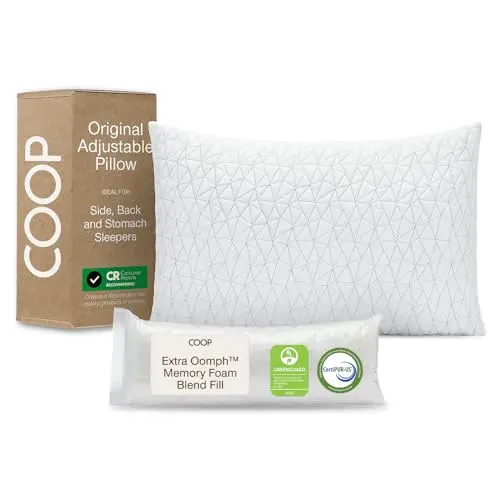
Original Adjustable Pillow – Dial In Your Own Loft
A shredded memory foam and microfiber blend you can top up or scoop out until the height feels right. The removable cover and included extra fill bag make it the most forgiving pick for a mix of back and neck complaints.
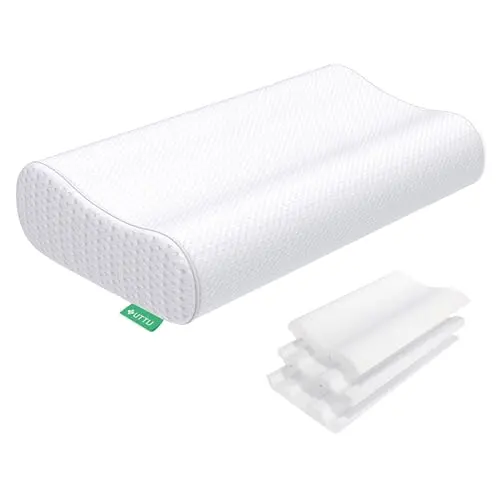
Sandwich Cervical Pillow – Two Heights in One
A contour pillow built like a sandwich. Unzip and remove the middle foam layer and the height drops across both sides, giving you a second fit without buying a second pillow.

Signature Adjustable Pillow – Down-Like Motion, Foam Molding
Shredded memory foam blended with down-like polyester tufts, so the pillow molds like foam but moves like down. Adjustable fill, bamboo-derived rayon cover, and a bonus bag of fill in the box.
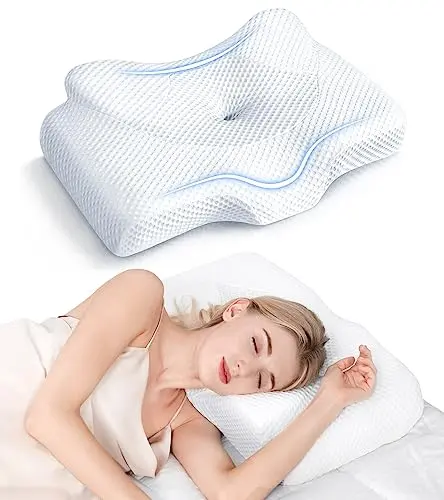
Hollow-Center Cervical Pillow – Pressure Relief Without the Bulk
A hollow-center contour pillow: the recess lets the skull settle while the surrounding foam supports the neck. Rotate it 180 degrees for a second height, and pull the bottom insert for a third.
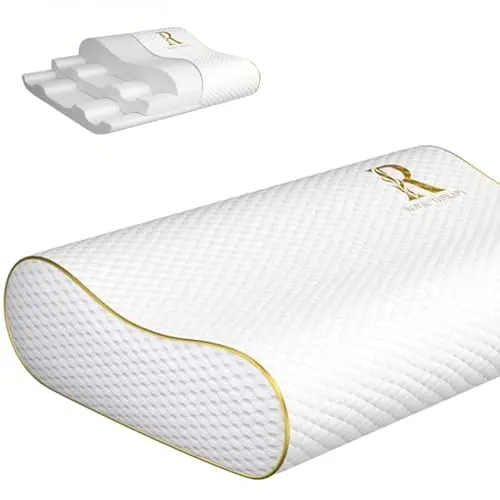
Memory Foam Contour Pillow – Three-Layer Shoulder Fit
A three-layer contour pillow on a 24 x 14-inch footprint. Leave the middle layer in for broader shoulders, pull it out to drop the loft for narrower frames.

Adjustable Curved Pillow – Neck Cradle With Extra Fill
A curved, shredded-fill pillow in a full queen footprint. Extra fill ships with it, and the plush cover comes off for machine washing.

Dual-Height Cervical Pillow – Flip Between Two Contours
A butterfly-shaped contour with two sides, 3.9 inches and 4.9 inches, so you flip to whichever height matches your sleep position. Cooling stretch cover included.
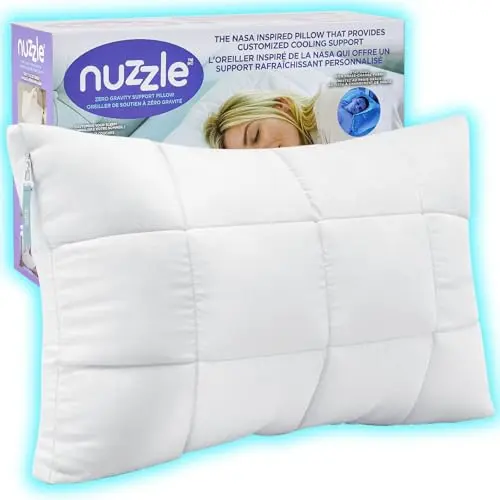
Standard Adjustable Pillow – Three Layers, Hotel Softness
Stackable Nanocoil fiber layers instead of foam, so you can run it slim and soft for stomach sleeping or add layers for a firmer side-sleeper setup. Temperature-regulating fabric on the outside.
How We Evaluated These Pillows for Bad Back and Neck
A few things we can’t tell you: how any of these pillows feels on night forty, or whether the loft you choose will match your shoulder width. What we can tell you is how the designs differ, which ones actually adjust, and where each is likely to fall short for a given sleep position. We cross-referenced 8 pillow models from 8 distinct brands across five decision axes: loft and height range, fill behavior, contour shape, cover and temperature handling, and care requirements. We triangulated published specifications, feature sets, and owner feedback where available, then mapped each pillow against two representative sleeper profiles, one waking with neck and shoulder tightness and one whose lower back aches after a night on a too-flat pillow.
The scoring framework weighted real-world fit and performance (70%), meaning whether a pillow’s height and shape genuinely support neutral alignment, against feature differentiation (30%), meaning adjustable fill, dual heights, cooling covers, and other design choices that separate one model from the next. We have no commercial relationship with any brand here; the ranking tracks fit and differentiation, not brand preference. If you want to dial in your own loft, the Coop Home Goods Original is the pick. If you’d rather a shaped pillow did the positioning for you, the UTTU Cervical Sandwich Pillow is the stronger match.
How to Choose the Right Pillows for Bad Back and Neck
1. Start With Loft: The Pillow Measurement That Matters Most
Loft is the compressed height of the pillow under your head, and it’s the measurement that decides whether your neck stays neutral overnight. Too tall and your chin tips toward your chest. Too flat and your head drops backward, loading the cervical spine. Sleep position sets the baseline: side sleepers need enough height to fill the gap between mattress and head, back sleepers need a moderate lift that follows the curve of the neck, and stomach sleepers need the least.
Shoulder width and mattress firmness both shift that number. Broad shoulders on a soft mattress usually need more loft than the same sleeper on a firm one. That’s why adjustable pillows beat fixed ones for anyone with ongoing pain. You get to correct the height after a few nights instead of guessing once and living with it.
2. Adjustable Fill vs. Molded Contour: Two Paths to Better Alignment
There are two design philosophies in this category. Shredded-fill pillows hold loose foam or fiber you can add and remove, so loft becomes a dial you control. Molded contour pillows are shaped foam with a raised neck ridge and a recess for the head, often with two heights so you can flip between them. Shredded fill is more forgiving and easier to fine-tune. Molded contours do more of the positioning for you but commit you to a specific geometry.
If you’re unsure, start adjustable. You can always add fill back; you can’t reshape foam. The Coop Home Goods Original is the most complete version of the adjustable approach, with extra fill in the box and a washable cover.
3. Pillows for Bad Back and Neck: What Actually Helps
A pillow can’t treat a disc issue or undo years of desk posture, but it can stop eight hours of nightly strain. The goal is neutral alignment: ears roughly over shoulders, no chin tuck, no forward head drop. Pain that concentrates at the base of the skull and across the top of the shoulders usually points to too much height. Pain that spreads between the shoulder blades often traces to too little support under the neck.
Back pain is trickier, because lower back position at night is influenced by the whole chain above it. A pillow that keeps the head level rather than propped tends to help, and so does one that lets you stop flipping all night. Consistency matters as much as shape.
4. Side Sleepers, Back Sleepers, and Stomach Sleepers Need Different Pillows
Side sleepers need the most height and the firmest support under the neck, and they benefit most from a shaped pillow or a generously filled adjustable one. Back sleepers usually do best with a medium loft and a gentle contour that follows the cervical curve without pushing the head forward. Stomach sleepers need very little height, and a slim adjustable pillow with fill removed is often the only workable option.
Combination sleepers should weight adjustability heavily, since a pillow that’s right for side sleeping is usually wrong for back sleeping. If you have broad shoulders and spend most of the night on your side, the Royal Therapy Memory Foam Contour Pillow keeps its middle layer in place for a taller, wider support surface.
5. Covers, Cooling, and Care: The Details You'll Live With
Look for CertiPUR-US foam at minimum, and GREENGUARD Gold or OEKO-TEX labels if you’re sensitive to off-gassing. Fresh foam can smell for a few days regardless of what the listing promises, so plan to air any new pillow out before sleeping on it.
A machine-washable cover matters more than most people expect. Pillows pick up oils and dust quickly, and inner foam cores should never go in a washer. Cooling claims deserve skepticism too: a breathable knit or mesh cover genuinely helps airflow, but no cover turns a foam pillow into a cold surface.
6. What a Pillow for Back and Neck Support Should Cost
Budget-friendly molded contours can deliver real support. The trade-off is usually a thinner cover and fewer certification labels. Mid-range is where most of the good adjustable pillows live: shredded fill, a washable cover, and enough extra fill to actually tune the loft. Premium pricing buys denser foam, better covers, and more generous fill, but the improvement is incremental rather than dramatic.
Spending more doesn’t automatically mean better alignment. A mid-priced adjustable pillow you can correct usually beats a premium pillow in the wrong height. At the affordable end, the Osteo Cervical Pillow covers contour support, dual heights, and certification for less than most shaped pillows.
Frequently Asked Questions
1. Which is better for neck pain, the UTTU cervical pillow or the Osteo cervical pillow?
They solve the same problem differently. The UTTU Cervical Sandwich Pillow uses a removable middle layer, so both contours drop at once: 5.2 and 4.5 inches become 4.0 and 3.2. The Osteo Cervical Pillow keeps a fixed shape and instead gives you a hollow center, a 180-degree flip to a second height, and a removable bottom insert.
Choose the UTTU if you want a conventional contour feel with a genuinely different lower setting. Choose Osteo if pressure at the back of the head is part of your problem and you like a cooler 3D mesh cover. Both are memory foam with washable covers, and neither suits stomach sleepers well.
2. Coop Home Goods Original vs. DreamyBlue Signature: which adjustable pillow is better?
Both are shredded-fill pillows with extra fill included, but the fill behaves differently. The Coop Home Goods Original blends cross-cut foam with microfiber and feels dense and supportive, closer to a firm pillow you shape by hand. The DreamyBlue Signature mixes shredded foam with down-like tufts, so it has more motion and a softer, more hotel-like feel.
Pick Coop if you want the loft to stay where you put it and you value the GREENGUARD Gold certification. Pick DreamyBlue if you move around at night and want the pillow to shift with you. Side sleepers who need maximum height tend to prefer the denser fill; back sleepers often prefer the softer one.
3. Can a pillow actually help a bad back, or does it only help the neck?
A pillow works on the neck directly and on the back indirectly. Nighttime spinal alignment starts at the head: if the pillow pushes your head forward or lets it drop, the curve through the upper back changes and the lower back often follows. That’s why people with lower back pain frequently notice a difference after correcting their loft, even though nothing about the pillow touches the lumbar spine.
It isn’t a cure. If pain is persistent, sharp, or radiating, a pillow is no substitute for a proper assessment. But as a cheap variable to fix, loft and support are worth sorting out before you blame the mattress.
4. How long should you give a new pillow for back and neck pain before deciding?
Give it at least a week, and adjust it before you give up on it. Most adjustable pillows arrive overfilled, and the first two nights are a test of patience rather than a verdict. Remove a few handfuls, sleep on it, repeat. Loft changes of even half an inch are noticeable to your neck.
Shaped contour pillows need a similar runway. If you’re still waking with neck stiffness after a week of small adjustments, the shape probably isn’t matching your sleep position, and it’s time to try a different design.
5. Do cervical contour pillows work for stomach sleepers?
Rarely. A cervical contour is built to fill the space under the neck, and stomach sleeping doesn’t create that space. The raised ridge tends to push the head back and extend the neck, which is the opposite of what you want. Stomach sleepers usually do better with a very low loft or a slim adjustable pillow with most of the fill removed.
If you alternate between stomach and side sleeping, an adjustable shredded-fill pillow is more practical than a molded contour, since you can strip it down for stomach nights and build it back up for side nights.
Final Verdict
For most people dealing with a bad back and neck, the Coop Home Goods Original is the answer. It combines adjustable fill, a washable cover, and third-party certifications more completely than anything else here, and it lets you correct the loft later if your sleep position changes. If you want something softer and more hotel-like, the DreamyBlue Signature gets you adjustable support with a down-style feel. For a shaped pillow that does the positioning for you, the UTTU Cervical Sandwich Pillow is the most direct route to neck support, and the Osteo Cervical Pillow delivers a similar idea at the affordable end of the market. Start with height, adjust from there, and give it a week before you judge it.
