
Best Pillows For Between Legs After Hip Replacement – 2026 Reviews

Hip replacement recovery has a way of turning sleep into a logistics problem. You’re told to keep a pillow between your legs, but the wrong pillow slides away, feels too thin, or forces your top leg into an awkward angle just when you’re trying to relax.
The useful distinction is not just soft versus firm. For this use case, the pillow has to hold enough leg separation without creating pressure, and it has to stay put without making every position change feel like a project. Length matters too: a short knee cushion can leave your thighs closer than you want, while a longer pillow can support the whole leg line.
We looked across the market at knee pillows, leg pillows, and between-legs cushions that make sense during hip replacement recovery. This guide focuses on fit for the job: thickness, shape, strap options, cover care, and how each pick behaves for side sleeping after surgery.
Best Pillows for Between Legs After Hip Replacement – 2026 Reviews
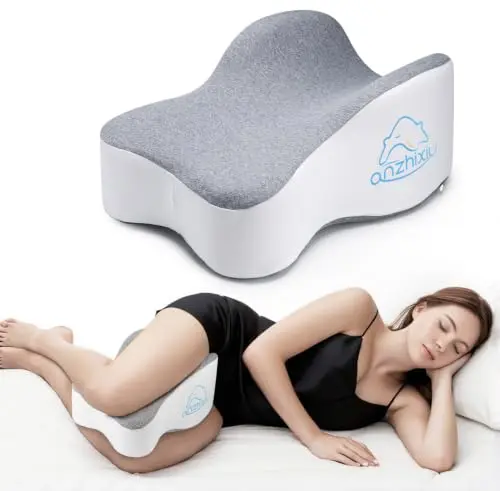
14-Inch Long Knee Pillow – Full-Thigh Alignment Support
A long knee pillow designed to separate the full thighs, not just the knees. The 14-inch semicircular shape gives side sleepers a more continuous support line from knee to upper thigh, and the medium-firm memory foam is meant to hold its shape without a strap.
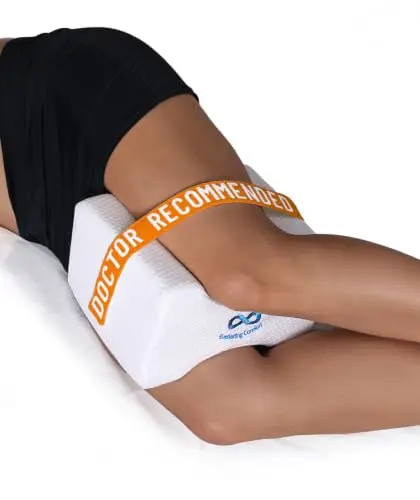
Memory Foam Knee Pillow – Dual-Concave Support with Strap
A dual-concave knee pillow with a removable strap, designed to cradle both knees and keep the cushion centered while side sleeping. The memory foam is paired with a breathable, machine-washable cover.
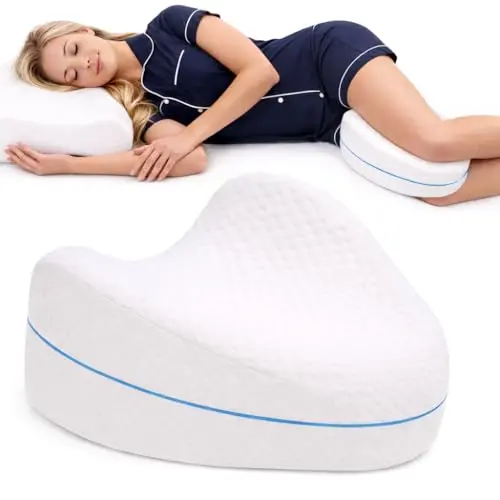
Legacy Leg & Knee Pillow – Ventilated Memory Foam Alignment
A crescent-shaped leg and knee pillow with ventilated memory foam and no straps. The contour is designed to support both legs while allowing air circulation, and the cover is removable.

Knee Pillow for Side Sleepers – Multi-Position Memory Foam Support
A wedge-style knee pillow with a memory foam core and a soft knit cover. It is endorsed by the American Chiropractic Association and designed for four sleeping positions, but it does not include a strap.
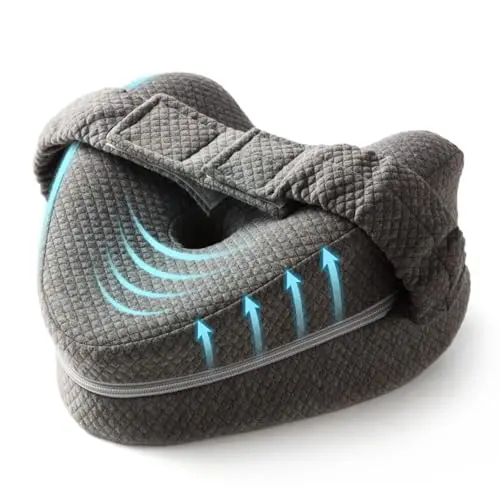
Heart-Shaped Knee Pillow – Adjustable Strap and Contoured Support
A heart-shaped knee pillow with an adjustable strap and a breathable, removable cover. The contoured memory foam is designed to stay between the legs during side sleeping, including after surgery.

Memory Foam Knee Pillow – Strap Support with Sleep Mask and Ear Plugs
A butterfly-shaped memory foam knee pillow with a leg strap, plus a sleep mask and ear plugs. The breathable zippered cover is removable and machine washable.

Memory Foam Knee & Leg Pillow – Ergonomic Budget Support
A compact memory foam knee and leg pillow with an ergonomic H-shape and a removable, washable cover. It is the budget-friendly option in this lineup for simple between-leg support.
How We Evaluated These Pillows for Between Legs After Hip Replacement
We didn’t run a clinical sleep study or measure hip alignment with lab equipment. What we did: cross-referenced 7 between-legs pillows from 7 distinct brands across 5 decision axes – thickness and leg separation, length and thigh coverage, firmness and memory foam behavior, strap versus no-strap stability, and cover care. We triangulated published specifications, feature sets, aggregated owner feedback where available, and use-case fit for side sleeping during hip replacement recovery. We also mapped each pillow against the practical realities of recovery sleep: getting into bed, rolling carefully, keeping the top leg from dropping forward, and washing the cover without dismantling the whole setup. We weighed how each option behaves for a side sleeper who needs to keep the top leg supported without crossing the midline, and how much fiddling it takes to reset the pillow after a position change. That matters more here than decorative features.
The scoring framework weighted real-world performance (70%) – how well each pillow supports between-leg positioning without constant readjusting – against feature differentiation (30%) – shape, ventilation, washability, and surgery-specific design details. We have no commercial relationship with any of the brands featured; recommendations track fit and differentiation, not brand preference. If you want full-thigh coverage, the 14-Inch Long Knee Pillow is the strongest match; if you prefer a strap to keep the cushion in place, the Everlasting Comfort Knee Pillow is the better route.
How to Choose the Right Pillows for Between Legs After Hip Replacement
1. What Makes a Pillow Between Legs Work After Hip Replacement
After hip replacement, the pillow’s job is to support a comfortable side-sleeping position with the top leg from dropping forward or crossing inward. The most useful designs create consistent leg separation without forcing your hip into an aggressive stretch. Look for a shape that cradles the knee and thigh, and a surface that feels supportive rather than bottoming out. Follow your care team’s positioning instructions; this guide is about product fit, not medical protocol.
Thickness is the first practical check. Too thin, and the pillow doesn’t do much; too thick, and it can push your hips out of a comfortable line. A medium-firm feel is a sensible starting point, but your body type and mattress softness matter.
2. Thickness, Length, and Shape in a Between-Legs Pillow
Pillow thickness controls how much space you keep between knees; length determines whether the support runs just at the knees or along the thighs. Short knee pillows are easy to position but can shift. If you want full-thigh coverage, the 14-Inch Long Knee Pillow is the pick; if you want a smaller cushion that’s easier to maneuver, a compact knee pillow makes more sense.
Shape matters too: contoured or H-shaped pillows tend to stay centered better than a plain wedge. A crescent or heart-shaped contour can help the pillow sit naturally between the legs, while a no-strap design is easier to adjust but may need more repositioning.
3. Strap vs. No Strap for Post-Surgery Sleep After Hip Replacement
A removable strap can keep a between-legs pillow from wandering when you roll over. That’s useful during recovery, when readjusting bedding or reaching for the pillow can feel like a chore. The tradeoff is that a strap adds a step when you get in and out of bed, and some sleepers prefer nothing wrapped around the leg.
If stability is your priority, the Everlasting Comfort Knee Pillow is the pick here. If you’d rather avoid straps and reposition freely, choose a no-strap contour pillow and accept that you may need to nudge it back into place.
4. Memory Foam Firmness and Cover Care
Memory foam is common in this category because it contours around the knee and thigh. The key is whether it recovers and holds shape, not whether it feels fancy. Some sleepers want a soft, squishy surface; others need a firmer core to maintain separation. Read feedback for firmness cues, especially if you’re between sizes or sleep on a soft mattress.
Check the removable cover and wash instructions before buying. Most covers are machine washable, but the foam core usually is not. A breathable cover helps if you tend to sleep warm, and a zipper that opens easily makes routine washing less annoying.
5. Budget vs. Premium Pillows for Hip Replacement Recovery
Budget-friendly knee pillows can cover the basics: memory foam, a washable cover, and a shape that fits between the legs. If you want the lowest-cost route, the BlissTrends Memory Foam Knee & Leg Pillow is the pick. Premium picks tend to add length, ventilation, straps, or more refined contouring, which can matter if you need full-thigh support or expect to use the pillow for months.
Don’t assume the most expensive pillow is the best fit. A budget-friendly option with the right thickness can beat a premium pillow that feels too firm or too short for your body. Focus on recovery positioning first, then add features that make nightly use easier.
Frequently Asked Questions
1. What's the difference between the anzhixiu Long Knee Pillow and the Everlasting Comfort Knee Pillow?
The anzhixiu is the longer, full-thigh design – 14 inches long with a consistent 3-inch thickness – so it suits sleepers who want more coverage and no strap. The Everlasting Comfort is shorter and uses a dual-concave shape with a removable strap, which helps keep it centered but adds a step when you get in and out of bed. For hip replacement recovery, choose the 14-Inch Long Knee Pillow if you want thigh-length support; choose Everlasting if strap stability matters more.
2. Should I use a strap on a knee pillow after hip replacement?
A strap can be helpful if your pillow tends to slide away during the night, especially when you’re rolling carefully or getting in and out of bed. It keeps the cushion centered without you having to reach for it. The downside is extra handling when you change positions. If you have limited mobility or sensitive skin, a no-strap contour may be easier.
3. How thick should a pillow between your legs be after hip replacement?
Start with a pillow thick enough to keep your top leg from dropping forward, but not so thick that it pushes your hip into an uncomfortable angle. A 3-inch thickness is a common reference point for knee pillows; the anzhixiu lists that as its target. A medium-firm core usually holds separation better than a very soft one. Follow your care team’s positioning instructions, and adjust based on comfort and stability.
4. What's the difference between the Contour Legacy and the 5 STARS UNITED knee pillow?
The Contour Legacy is a crescent-shaped, ventilated memory foam pillow with no strap, designed to contour around the legs. The 5 STARS UNITED pillow is a wedge-style option with an ACA endorsement and four suggested positions, but it also has no strap. If you sleep warm, the Contour Legacy Leg & Knee Pillow is the more relevant pick; if you want a multi-position wedge for knees or calves, the 5 STARS UNITED is the fit.
5. Can a regular bed pillow work between my legs after hip replacement?
A regular pillow can provide temporary separation, but it tends to compress, slide, and lose shape. A dedicated knee pillow adds a contoured shape, memory foam support, and often a washable cover. If you need support for more than a few nights, a purpose-built pillow is usually easier to keep in place.
Final Verdict
For most people shopping for a pillow to use between the legs after hip replacement, the 14-Inch Long Knee Pillow is the most convincing all-rounder. Its long, full-thigh coverage does more than a small knee cushion to keep the leg line supported, and the no-strap design keeps the setup simple when you’re getting in and out of bed. If you want a strap to hold the pillow in place, the Everlasting Comfort Knee Pillow is the better fit. On a tight budget, the BlissTrends Memory Foam Knee & Leg Pillow covers the basics without extras. And if you sleep warm or prefer a contoured no-strap shape, the Contour Legacy is a strong alternative. Choose by the kind of support you’ll actually maintain night after night, not by feature count.
