
Best Pillows For Cervical Stenosis – 2026 Reviews

Cervical stenosis is not a pillow-shopping problem you solve with one miracle purchase. It is a narrowing in the cervical spine, and no pillow can reverse it. What a pillow can do is give your head and neck a more neutral resting position, reduce pressure points, and make it easier to stay asleep instead of waking up to rearrange the bed.
The tricky part is that cervical stenosis comfort is highly individual. A loft that feels perfect for a side sleeper can push a back sleeper’s chin toward the chest, and a contour that feels supportive for one person can feel like a hard ridge to another. The useful filters are adjustable height, contour shape, foam density, cooling, and how well the pillow fits your dominant sleep position.
We looked across the market at contoured memory foam pillows that make sense for this use case, from budget-friendly dual-height models to premium adjustable designs. The goal is not to crown a medical device. It is to help you choose a supportive pillow that fits your body, your sleep style, and your tolerance for firmness.
Best Pillows for Cervical Stenosis – 2026 Reviews
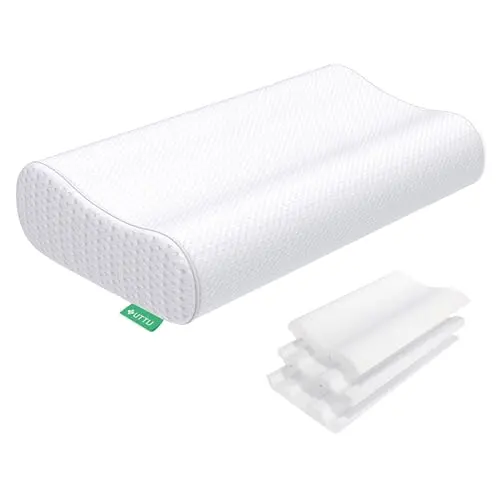
Sandwich Pillow – Adjustable Cervical Support
A layered memory foam cervical pillow with two built-in loft heights and a removable middle layer, so you can dial in a lower profile for back or stomach sleeping and a taller side for side sleeping. The dynamic foam is designed to stay consistent in cold rooms, and the breathable cover is machine washable.
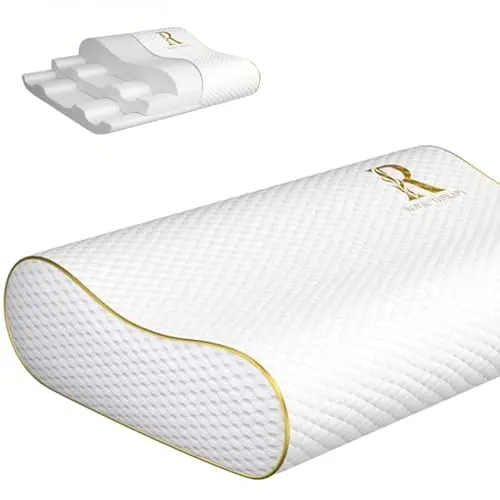
Memory Foam Pillow – Adjustable Contour Support
A medium-firm contour pillow with a three-layer memory foam core and a removable middle layer for custom loft. The foam is CertiPUR-US certified, and the bamboo-derived rayon cover is soft and moisture-wicking.
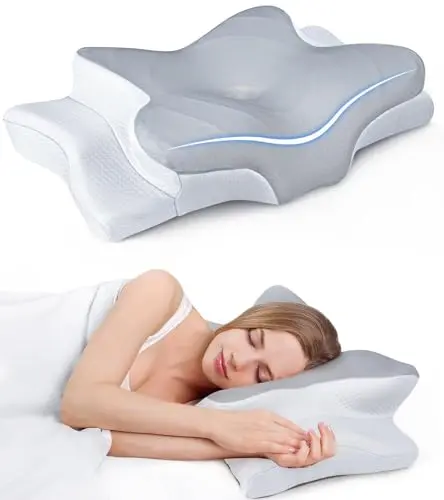
Ultra Pain Relief Cooling Pillow – Contoured Cooling Support
A hollow-concave contour pillow with six support zones and a cooling pillowcase designed to reduce skin temperature. You can rotate it 180 degrees or remove the bottom insert to change height.
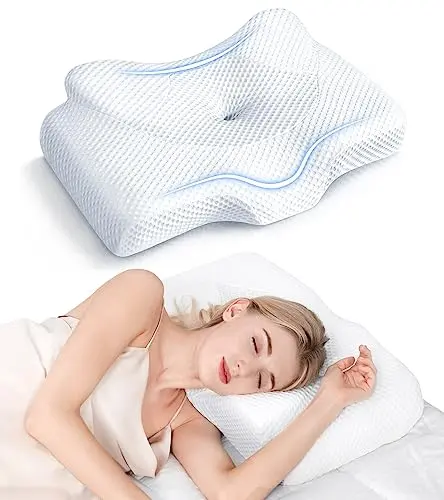
Cervical Pillow – Hollow-Center Pressure Relief
A hollow-center cervical pillow with a 3D mesh cover, two thicknesses, and a removable bottom insert. It is designed to cradle the head while keeping the neck supported, and it is CertiPUR-US and OEKO-TEX certified.
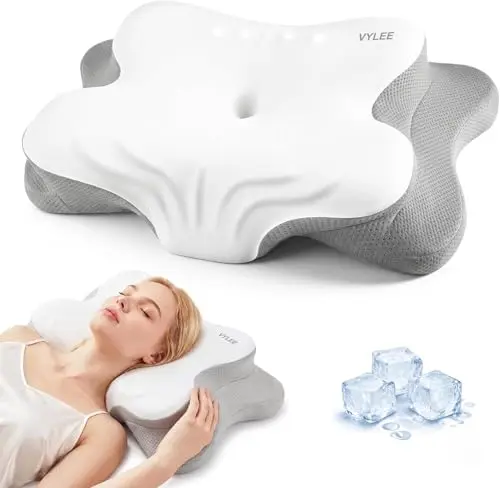
Cervical Neck Pillow – Cooling Butterfly Contour
A butterfly-shaped memory foam pillow with dual heights, five contour zones, and a removable cooling cover made from nylon and spandex. The taller side is meant for side sleeping, while the lower side suits back and stomach sleepers.
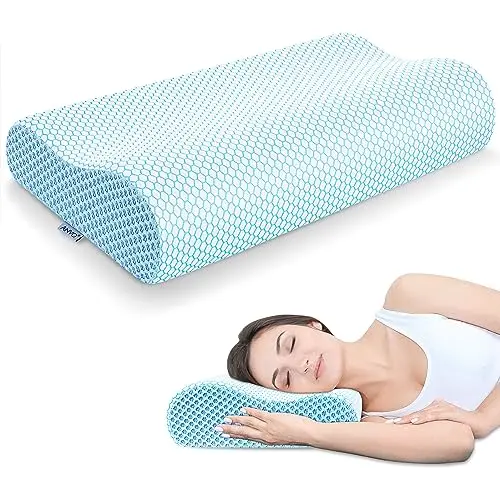
Memory Foam Pillow – Dual-Height Neck Support
A CertiPUR-US memory foam contour pillow with two neck support levels, a breathable mesh-sided cover, and a standard footprint. The slow-rebound foam is designed to relax neck and shoulder muscles.
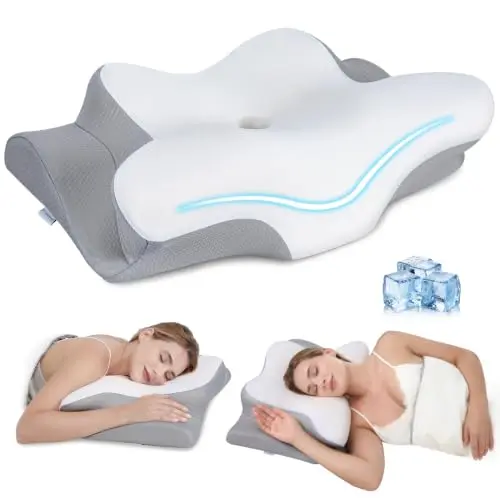
Cervical Neck Pillow – Ice Silk Dual-Height Support
A butterfly-shaped cervical pillow with two heights, slow-rebound memory foam, and a breathable ice silk cover. It is OEKO-TEX and CertiPUR-US certified, and the cover is removable and machine washable.
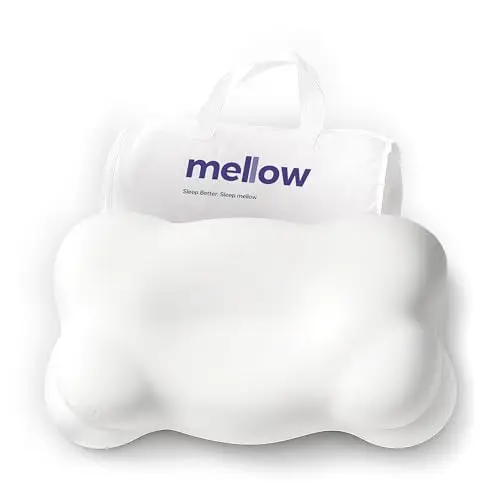
CloudAlign Memory Foam Pillow – Dual-Height Alignment
A contoured gel memory foam pillow with two support heights, a soft OEKO-TEX cover, and a cloud-shaped profile. It is designed for side, back, and stomach sleepers and has a machine-washable cover.
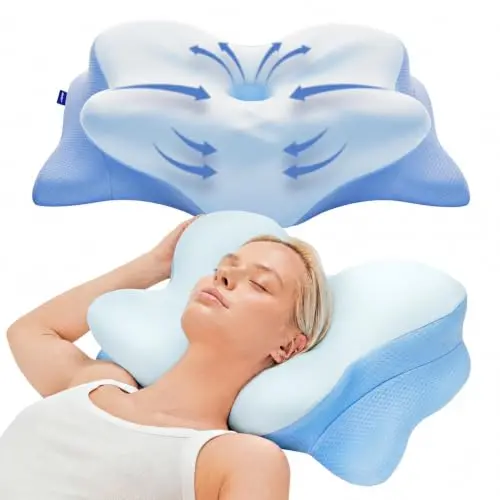
Ergo Cervical Neck Pillow – Butterfly Neck Support
A butterfly-shaped memory foam pillow with a cooling, removable cover and a medium-firm feel. The design is intended to support the head and neck at an angle that keeps airways comfortable, and it is CertiPUR-US and OEKO-TEX certified.
How We Evaluated These Pillows for Cervical Stenosis
We didn’t run clinical sleep trials or measure cervical alignment in a lab. What we did: cross-referenced nine pillow models from nine distinct brands across six decision axes – adjustable height, contour geometry, foam density and rebound, cooling and breathability, cover care, and sleep-position fit. We triangulated published specifications, feature sets, and owner feedback where available, then mapped each pillow against representative buyer profiles for cervical stenosis comfort. We also audited the certifications and care instructions each brand publishes, because a pillow you cannot keep clean or that arrives with a strong odor is harder to live with every night.
The scoring framework weighted real-world fit and support (70%) – how well each pillow delivers on its stated sleep position and height-adjustment promise – against feature differentiation (30%) – cooling covers, certification, contour zoning, and materials that separate one model from another. We have no commercial relationship with any of the brands featured; recommendations track fit and differentiation, not brand preference. If you want the most adjustable all-rounder, the UTTU Sandwich Pillow is the place to start; if you want a plusher premium contour, the Royal Therapy Memory Foam Pillow is the better match.
One caveat: a pillow can support comfort, but it cannot diagnose or treat cervical stenosis. If you have neurological symptoms, severe pain, or numbness, talk to a clinician before relying on any pillow.
How to Choose the Right Pillow for Cervical Stenosis
1. What Cervical Stenosis Means for Pillow Choice
Cervical stenosis is a narrowing of the spaces in the cervical spine, and it can make certain head positions feel worse. A pillow’s job is not to fix the narrowing. Its job is to support the head and neck in a position that feels neutral enough to reduce pressure and keep you from waking up to shift around. That makes height adjustability more important than fancy marketing language.
The best starting point is a pillow that lets you change loft, because side sleepers usually need more height than back sleepers, and stomach sleepers often need the lowest profile. A contoured pillow can help, but only if the contour matches your body instead of forcing your neck into a fixed angle.
2. Height and Loft: The First Thing to Get Right
Height is the make-or-break spec. Too high and your chin drops toward your chest; too low and your neck loses support. Look for a pillow with two or more height options, either through a flippable design, a removable insert, or a layered core you can strip down. The UTTU Sandwich Pillow is a good example of the layered approach, while butterfly-shaped pillows usually rely on a 180-degree rotation to switch loft.
Do not assume a higher contour is more supportive. For cervical stenosis comfort, the right height is the one that lets your neck feel long and relaxed, not propped. If you are between sizes, start lower and add height only if you feel unsupported.
3. Contour Shape and Sleep Position
Side sleepers usually do best with a contour that has a shoulder channel or a butterfly cutout, because it gives the shoulder somewhere to go instead of pushing the neck up. Back sleepers often prefer a gentler neck ridge with a hollow center for the head. Stomach sleepers should prioritize a very low profile over aggressive contouring.
The Royal Therapy Memory Foam Pillow leans toward a traditional contour with a broad footprint, while butterfly models like the VYLEE and Derila feel more sculpted. Neither shape is universally better; the question is whether the cutouts line up with your shoulders and the ridge lands under your neck rather than your skull.
4. Firmness, Foam Density, and Pressure Relief
Memory foam is not one thing. Slow-rebound foam feels soft at first and then settles, while high-density foam pushes back more firmly. For cervical stenosis comfort, medium to medium-firm is usually the safest starting zone because it supports the neck without creating a hard pressure point. If you know you like a soft pillow, look for a medium-soft contour; if you hate sinking, choose a denser foam.
Certifications such as CertiPUR-US and OEKO-TEX are worth checking if you are sensitive to odor or want reassurance about materials. They do not tell you whether the pillow will feel right, but they do tell you the foam and cover have been tested for certain harmful substances.
5. Cooling, Covers, and Maintenance
A cooling cover is not a cure for night sweats, but it can make a memory foam pillow easier to live with. Look for a breathable cover, mesh sides, or a phase-change fabric if you overheat. Just remember that the cooling effect depends on the room and on how much of the pillow your body covers. The Cozyplayer Cooling Pillow is the most cooling-focused pick in this group.
Check whether the cover is removable and machine washable, and whether the foam core can be spot-cleaned only. Most memory foam cores should not go in the washer. A washable outer cover is the practical minimum for a pillow you use every night.
6. How Much to Spend on a Pillow for Cervical Stenosis
You do not need to spend the most to get useful adjustability. Budget-friendly pillows can offer dual heights and a washable cover; premium pillows tend to add denser foam, nicer covers, broader footprints, or more elaborate contour zoning. The Anvo Memory Foam Pillow is the value-oriented route, while the Royal Therapy and Derila sit higher in the market.
Spend more only when the extra feature solves a real problem for you: a cooler cover if you overheat, a broader footprint if you have broad shoulders, or a plusher cover if you are sensitive to fabric texture. Otherwise, put your budget toward height adjustability and a return-friendly trial period.
Frequently Asked Questions
1. What pillow height is best for cervical stenosis?
There is no single height that works for everyone, but the safest starting point is a pillow with adjustable loft and a medium contour. Side sleepers usually need enough height to fill the gap between the neck and shoulder; back sleepers usually need less; stomach sleepers usually need the lowest profile. If a pillow pushes your chin down or lets your head drop back, it is the wrong height for you.
2. Can a contour pillow help with cervical stenosis?
A contour pillow can help with comfort by giving your neck a supported place to rest and your head a stable cradle. It cannot widen the spinal canal or treat stenosis. Think of it as a positioning tool, not a medical device. If you have numbness, weakness, or shooting pain, talk to a clinician before experimenting with pillows.
3. What's the difference between the UTTU Sandwich Pillow and the Royal Therapy Memory Foam Pillow?
The UTTU Sandwich Pillow uses a three-layer core that can be stripped down to a lower loft, and its dynamic foam is designed to stay consistent in cold rooms. The Royal Therapy pillow also has a three-layer adjustable core, but it leans toward a plusher bamboo-derived cover and a broader, more traditional contour. If you want the most flexible height range, UTTU is the easier recommendation; if you want a softer cover and a more premium feel, Royal Therapy is the better fit.
4. How does the Osteo Cervical Pillow compare with the Cozyplayer Cooling Pillow?
The Osteo uses a hollow-center cradle and a 3D mesh cover, with height changes from rotating the pillow or removing an insert. The Cozyplayer also has a hollow-concave center, but it adds a cooling Arc-Chill cover and six contour zones. Choose Osteo if you want a cupped, back-sleeper-friendly feel; choose the Cozyplayer Cooling Pillow if overheating is your main frustration.
5. Is a pillow enough for cervical stenosis?
A pillow is one part of sleep comfort, not a treatment plan. It can support a more neutral resting position, but it will not reverse cervical stenosis or replace medical care. Pair a supportive pillow with sleep-position awareness, gentle movement, and whatever your clinician recommends. If a pillow makes symptoms worse, stop using it and reassess.
Final Verdict
For most people shopping for cervical stenosis comfort, the UTTU Sandwich Pillow is the practical answer. Its three-layer adjustable core lets you change height as you learn what your neck tolerates, and the dual contour works for side, back, and stomach sleepers without feeling like a medical device. If you want a plusher premium option, the Royal Therapy Memory Foam Pillow pairs a broad contour with a softer cover. Budget-conscious shoppers should look at the Anvo Memory Foam Pillow, which offers dual-height support at a lower tier. And if overheating is the main reason you keep flipping your pillow, the Cozyplayer Cooling Pillow is the purpose-built pick. Start with the pillow that matches your sleep position and height needs, then give yourself a week or two to adjust before deciding.
