
Best Pillows For Cpap Users – 2026 Reviews

You know the routine. You get the mask seated, the straps dialed in, and everything feels fine – until you roll onto your side and the cushion gets shoved into your cheek by your own pillow. Then comes the hiss, the readjustment, the strap tightening, and the red line across your face in the morning.
The pillow is doing most of that damage. For CPAP users, the first thing to look at isn’t loft or firmness – it’s where the foam isn’t. A shaped recess under your mask gives the cushion somewhere to sit instead of fighting your head weight, and that single design choice separates a pillow that works with therapy from one that quietly undermines it. Height adjustability is the close second, because shoulder width varies wildly and a fixed loft is a guess.
We looked across the market at purpose-built CPAP pillows, contoured cervical pillows, and a wedge, sorting them by how well each actually serves someone sleeping with a mask. Some carve generous cutouts and route the hose out of the way. Others are neck-support pillows that CPAP users can make work with a little tuning. Both belong here – but they solve different problems, and knowing which one is yours matters more than any spec sheet.
Best Pillows for CPAP Users – 2026 Reviews
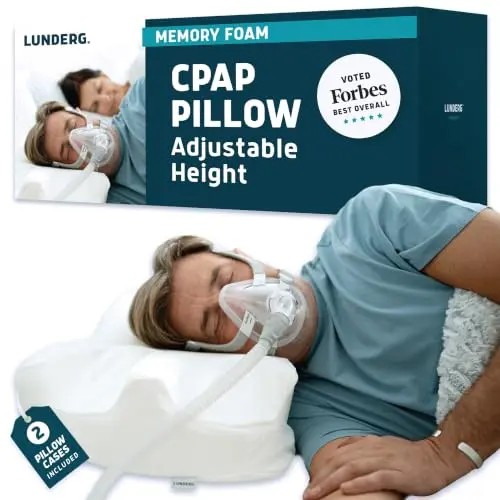
CPAP Pillow for Side and Back Sleepers – Two-Sided Mask Relief
A CPAP-specific memory foam pillow with contoured cutouts on both sides, so a mask sits in open space instead of pressing back into foam. The slow-rebound core runs firm, and a removable layer lets you drop the loft by about an inch. Ships with a spare cooling pillowcase.
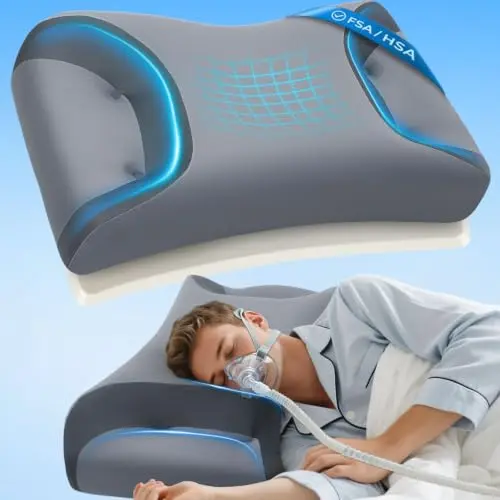
CPAP Pillow with Larger Cutouts – Extra Room for Full-Face Masks
Built around oversized side cutouts that give a full-face or nasal mask room to sit naturally. Height is tunable with a 2 cm insert, the butterfly contour adds an ear hole and side wings, and the cooling-feel cover unzips for washing.

Adjustable CPAP Neck Pillow – Four Heights, Two Firmness Inserts
The most customizable pillow here, with four effective heights and two swappable inserts – one softer, one firmer. Dual cutouts route CPAP tubing away from your face, and the breathable nylon-spandex cover is machine washable.
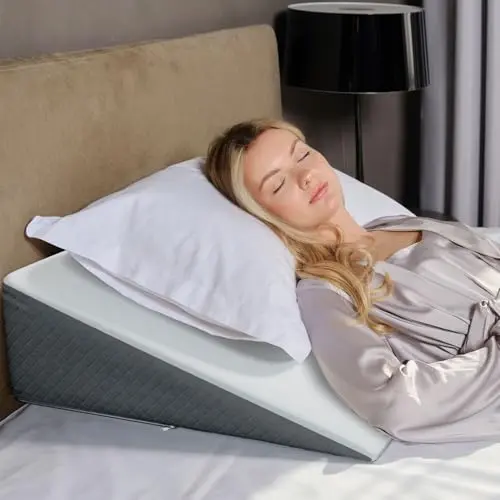
Bed Wedge Pillow – Incline Support for Sleep Apnea
A 7.5-inch bed wedge that raises the upper body to support open airways. A 1.5-inch memory foam layer sits over a high-density foam core, and the jacquard cover removes for machine washing.
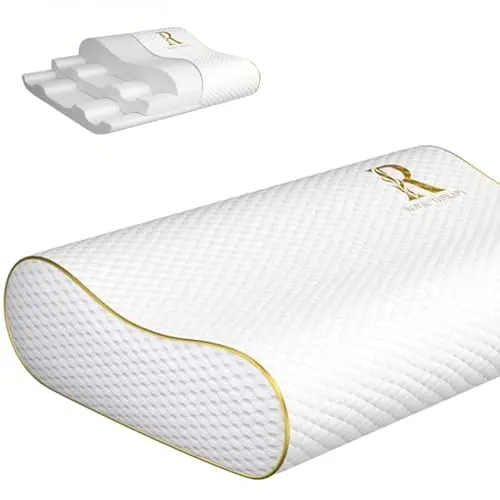
Cervical Memory Foam Pillow – Three-Layer Adjustable Loft
A contoured cervical pillow with a three-layer build – remove the middle foam layer to lower the loft. Medium-firm density holds the neck curve, and the bamboo-rayon cover is soft and washable.
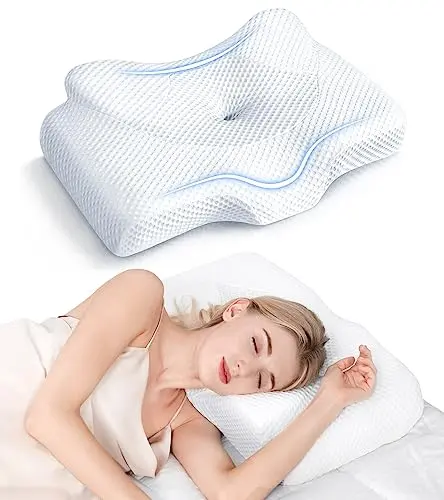
Hollow-Design Cervical Pillow – Cooling Case and Adjustable Height
A hollow-center cervical pillow that cradles the back of the head rather than pushing the neck forward. Flip it 180 degrees for a higher or lower side, and pull the bottom insert for a third option.
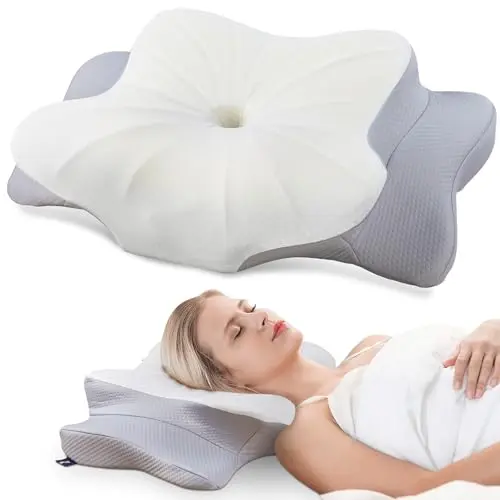
Dual-Height Cervical Pillow – Armrest Grooves for Side Sleepers
A dual-height contour pillow with armrest grooves for side sleepers and a breathable cotton-blend cover. Slow-rebound memory foam holds its shape, and the cover unzips for machine washing.

Butterfly Contour Neck Pillow – Dual-Height Memory Foam
A butterfly-contour neck pillow with two loft options on either side. High-density slow-rebound foam keeps its structure, and the cooling nylon-spandex cover feels smooth and washes easily.
How We Evaluated These Pillows for CPAP Users
We didn’t sleep a full night on each of these with a mask strapped to our faces. What we did: cross-referenced 8 pillow models from 8 distinct brands across five decision axes – cutout geometry and mask clearance, height adjustability, foam density and rebound, cover breathability and washability, and how well each shape serves side, back, or stomach sleeping.
We triangulated published specifications, documented feature sets, and aggregated owner feedback where available, then mapped each pillow against representative CPAP profiles: full-face mask wearers who roll side to side, nasal-pillow users who need less clearance, and sleepers whose real problem is airway positioning rather than mask contact. We also weighed how each option behaves outside therapy – a pillow that only works with a mask on is a harder sell for a shared bed.
The scoring framework weighted real-world fit for CPAP sleepers at 70% against feature differentiation at 30% – the design choices that separate a purpose-built pillow from a cervical pillow with a notch cut into it. We have no commercial relationship with any brand featured here; recommendations track fit and differentiation, not brand preference. If you wear a full-face mask and turn often, the Lunderg CPAP Pillow is the closest match. If your cutouts keep collapsing, the IKSTAR CPAP Pillow gives you more room.
How to Choose the Right Pillow for CPAP Users
1. Why Cutout Geometry Matters More Than Loft for CPAP Users
Most pillow advice is about height and firmness. For CPAP users, the first question is where the foam isn’t. A cutout is a shaped recess on the side of the pillow that gives your mask cushion open space to sit in, which means the pillow isn’t shoving the mask into your cheek every time you turn. Cutout depth, width, and placement matter more than an inch of loft either way.
Two-sided cutouts are worth prioritizing over single-sided ones – you get the same clearance on both flips, so rolling over at 3 a.m. doesn’t break the seal. Also check whether there’s an ear recess or hose channel, both of which reduce the small tugging forces that cause slow leaks.
2. Match the Pillow to Your Mask Type
Mask style changes how much clearance you actually need. Nasal pillow masks sit under the nose and need the least room, so a lightly contoured cervical pillow can work fine. Full-face masks are bulky and need the widest, deepest cutouts – this is where purpose-built pillows earn their keep. Hybrid and nasal masks land in between.
Compatibility documentation is a decent proxy. The Lunderg, for instance, is listed as working with Philips Respironics, ResMed AirFit, and AirTouch masks alongside nasal, nasal pillow, full-face, and hybrid styles. If your mask isn’t named, the safe assumption is that a wider cutout is better. The IKSTAR CPAP Pillow is the pick here if you wear a full-face mask and change sides often.
3. Adjustable Height Is the Feature CPAP Sleepers Underrate
Your shoulder width determines how much loft you need to keep the neck neutral, and that varies a lot from sleeper to sleeper. A fixed pillow is a guess. Look for removable foam layers – Lunderg ships a 1.1-inch layer you can pull, Elviros includes a 0.8-inch base spacer plus two inserts, and IKSTAR uses a 2 cm insert.
Rotating designs are the other route: flip the pillow 180 degrees for a higher or lower side, which is how the Osteo and DONAMA both work. Either approach beats buying three pillows hoping one lands.
4. CPAP Pillow, Cervical Pillow, or Wedge: Which Shape Solves Your Problem?
These are three different tools. A purpose-built CPAP pillow is about mask clearance – that’s Lunderg, IKSTAR, and Elviros. A cervical contour pillow is about neck alignment and pain relief; Royal Therapy, Osteo, DONAMA, and VYLEE all live here, and none of them carve space for a mask. A bed wedge is about torso elevation and airway positioning, which is where the Kolbs Bed Wedge fits.
Figure out which problem is actually wrecking your sleep. Waking to a hissing leak means you need cutouts. Waking with a stiff neck and no leak means a cervical pillow may serve you better. Snoring straight through the mask makes elevation worth testing.
5. Cooling Covers, Foam Density, and Nightly Care for CPAP Users
You’ll spend eight hours a night against this surface, often with a mask trapping heat. Breathable covers matter – look for mesh, nylon-spandex, or cotton blends, and check that the cover is machine washable, because the foam cores generally aren’t. CertiPUR-US certification is a reasonable baseline for foam safety and odor, and a few pillows here also carry OEKO-TEX approval on the fabric.
Expect some initial foam smell. Most makers suggest airing the pillow for anywhere from a day to several days before first use, and the foam needs that time to fully expand anyway.
6. What Different Price Tiers Actually Buy You
At the entry tier, you’re generally getting a contoured memory foam pillow with a dual-height design and a washable cover – solid neck support, no mask geometry. Moving up, you start seeing removable layers, swappable firmness inserts, and better cover fabrics. At the premium end, you’re paying for purpose-built cutouts, documented mask compatibility, and extras like a second pillowcase so you’re never stuck without one on laundry day.
Put simply: the jump from entry to mid-range buys adjustability, and the jump from mid-range to premium buys mask clearance.
Frequently Asked Questions
1. Can a regular cervical pillow work for CPAP users?
Sometimes, with caveats. A contoured cervical pillow supports the neck well, but the foam where your mask sits is still solid, so a full-face or hybrid mask can get pushed sideways and leak. Sleepers using nasal pillows more often get away with it because the mask sits lower on the face.
If you go this route, look for a shape with generous side contours and a cover that stays cool, and expect some trial and error with loft before it clicks.
2. What's the difference between the Lunderg CPAP Pillow and the IKSTAR CPAP Pillow?
Both are purpose-built CPAP pillows, but they solve mask clearance differently. The Lunderg uses a two-sided contour with a removable 1.1-inch layer and ships with two pillowcases, one of them a cooling fabric – it’s the more complete package.
The IKSTAR CPAP Pillow leans on larger cutouts and an ear hole with side wings, which suits sleepers who roll a lot or wear a bulky full-face mask. Lunderg runs firm; IKSTAR runs a touch softer but draws more split feedback on firmness.
3. Do CPAP pillows actually reduce air leaks?
They can, and the mechanism is simple. Cutouts give the mask somewhere to sit instead of being pressed into foam, which means less sideways force on the cushion. That reduces the seal disruption behind leaks – and the red marks and eye soreness that come from over-tightening straps to compensate.
A pillow won’t rescue a badly fitted mask, though. Mask fit comes first; the pillow supports it.
4. Will a wedge pillow help if I wear a CPAP mask?
A wedge addresses a different problem. The Kolbs Bed Wedge raises your torso on a 7.5-inch incline, which is about airway positioning rather than mask clearance – useful when snoring or apnea severity shifts with your sleep position.
But it doesn’t carve space around a mask, so most CPAP wearers treat it as a companion piece. If your complaint is mask pressure and leaks, a cutout pillow is the better first move.
5. How do I know which pillow height I need for CPAP use?
Start with your shoulder width. Broad shoulders usually need a higher loft to keep the neck neutral on your side; narrower shoulders and back sleepers do better lower. The safest bet is a pillow with removable layers or a rotating dual-height design, because you can tune it after a few nights instead of guessing up front.
Give any new pillow a week of adjustment before you decide, and change one variable at a time.
Final Verdict
For most CPAP users, the Lunderg CPAP Pillow is the answer – two-sided cutouts, a removable layer for tuning loft, and a spare cooling case mean fewer leaks and less mask pressure without constant rearranging.
If your cutouts keep collapsing under a bulky full-face mask, the IKSTAR CPAP Pillow gives you more room. Shoppers who mainly want neck support alongside therapy should look at the DONAMA Cervical Pillow, which trades mask-specific geometry for dual-height support and armrest grooves. And if airway positioning is the real problem rather than mask contact, the Kolbs Bed Wedge is built for exactly that.
