
Best Pillows For Ear Cartilage Pain – 2026 Reviews

You roll onto your favorite side, drift off, and then a few hours later the ear wakes you up first – a sharp, hot throb where your cartilage met the pillow. For anyone with chondrodermatitis nodularis helicis (CNH), a fresh cartilage piercing, or just a sensitive ear, side-sleeping stops being restful and starts being a nightly negotiation. The fix sounds almost too simple: a pillow with a hole or cutout that lets your ear drop into open space instead of pressing into fabric and fill.
But not all ear pillows are built the same, and the details that matter are easy to miss. The hole’s size, shape, and placement decide whether your ear actually floats free or still catches pressure, and that gets trickier with cartilage bumps that sit higher on the rim. Then there’s the fill and loft – memory foam, cotton, or down – which decides whether your neck stays supported or you trade ear pain for a stiff morning. Get both right and you sleep through the night on your sore side again.
We looked across the market rather than falling for one brand’s pitch, comparing purpose-built CNH pillows, piercing-focused designs, and budget donut pillows side by side. Below you’ll find which ones genuinely take pressure off cartilage, which suit travel or stacking, and which are worth the upgrade.
Best Pillows for Ear Cartilage Pain – 2026 Reviews

Pillow with a Hole – Purpose-Built CNH Relief
The pillow that created this category, hand-sewn in Liverpool with an organic cotton cover and hypoallergenic coil fibre fill. A YKK zip lets you add or remove filling to set height and firmness, and an OEKO-TEX certified organic sateen pillowcase is included. Built for cartilage pressure pain such as CNH, plus earplugs, earbuds, pulsatile tinnitus, and BAHA hearing aids.

Large Off-Center Piercing Pillow – Big Hole for Cartilage Relief
A compact memory-foam pillow built around an extra-large 4.7 by 3.2-inch off-center opening that gives fresh cartilage piercings, ear surgery sites, and CNH-affected ears room to recover. The off-center placement lets you flip the pillow to match your neck length, slow-rebound foam keeps the ear floating, and a satin cover glides past earrings. Includes a foam plug to convert it into a normal travel pillow.
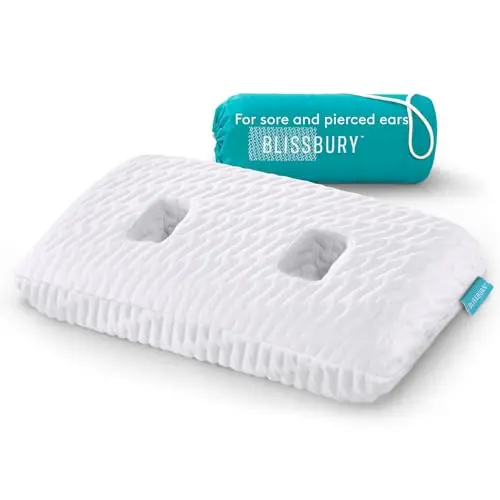
Ear Hole Memory Foam Pillow – Adjustable Dual-Hole Support
A side-sleeper memory-foam pillow with two 4.3 by 2.7-inch ear openings and an adjustable loft that moves between roughly four and five inches of height. The CertiPUR-US gel-infused foam stays cool, a double-weave hypoallergenic cover resists moisture and washes clean, and the dual holes let you flip sides or sleep with earbuds and earplugs in place.

Mini Off-Center Ear Hole Pillow – Compact Travel Support
A compact 16 by 11-inch memory-foam pillow with an off-center opening placed toward one edge, so you flip it to match your neck length rather than forcing one position. The slow-rebound CertiPUR-US foam keeps the ear suspended, a smooth cooling pillowcase avoids snagging earrings, and a removable foam plug lets you fill the hole for use as a normal travel pillow.

Curved Ear Guard Pillow – Anti-Collapse Hole Design
A 17.3 by 12.6-inch ear pillow with a 3.5-inch center hole and a raised workbench rim around the opening so it doesn’t flatten under your head. Soft PP cotton fill in a pure cotton cover shapes a curved profile that follows the neck and shoulders, and a hidden zipper lets you add or remove filling to fine-tune firmness.

Ear-Shaped Hole Pillow – Reversible Satin & Cotton
A 12.6 by 17.3-inch rectangular ear pillow with an ear-shaped opening that follows the natural outline of the ear rather than a plain circle. A smooth satin cover reduces friction and lifts earrings off the surface, the larger footprint adds neck and spine support, and it’s lightweight enough to pack for travel.

Round Ear Pillow – Compact 9-Inch Design
A compact 9-inch round pillow with a 3.5-inch center hole, made from 100% cotton breathable fabric over a cotton-and-polyester fill. An invisible zipper lets you remove or add padding to set firmness, it’s machine-washable, and its small footprint means you can use it alone or set it on top of your regular pillow.

Donut Ear Pillow – Down-Fill Budget Pick
A 9-inch round donut pillow with a 3.5-inch center hole, covered in 100% cotton breathable fabric over a soft down fill. An invisible side zipper lets you remove stuffing to soften it or add filling for more support, and its light footprint means you can rest it on top of your regular pillow.

Contour Ear Pillow – Curved Neck & Shoulder Support
A 17.3 by 12.6-inch ear pillow with a long curved profile and grooves on one side to cradle the shoulder and neck. A 3.5-inch center hole relieves ear pressure, the PP cotton fill stays fluffy, and a side zipper lets you remove padding to adjust height and firmness.
How We Evaluated These Pillows for Ear Cartilage Pain
We didn’t run pressure-mapping tests or sleep a full night on each of these pillows. What we did: cross-referenced nine ear-pain pillow models from six brands across six decision axes – hole size and shape, hole placement, fill material, loft and firmness adjustability, cover fabric, and side-sleeping neck support. We mapped each pillow’s published specifications, triangulated its intended use against cartilage-pain conditions like CNH and fresh piercings, and weighed owner feedback where available to see how each one plays out in real bedrooms. We also audited what each hole actually accommodates – a low CNH bump, a higher cartilage ring, or an earring post – because a cutout that’s the wrong size or placement can leave you in exactly the same pain.
The scoring framework weighted real-world fit for cartilage-pain relief (70%) – how well a pillow suspends the ear and keeps the neck supported through the night – against feature differentiation (30%), meaning unique hole geometry, adjustable fills, and materials that add practical value. We favored options whose adjustability lets you tune loft to your frame rather than forcing one height on every sleeper. We have no commercial relationship with any brand featured, and the recommendations track fit and differentiation rather than brand preference. If chronic cartilage pain is your main battle, the Pillow with a Hole is the proven starting point; if you’re juggling a fresh piercing with cartilage pressure, the larger opening on the USlixury large off-center pillow gives your ear more room to recover.
How to Choose the Right Pillow for Ear Cartilage Pain
1. Why the Right Pillow Matters for Ear Cartilage Pain
Cartilage pain on the ear – whether it’s chondrodermatitis nodularis helicis (CNH), a pressure sore, or a healing piercing – usually flares when the ear is pressed against a hard surface for hours. A regular pillow does exactly that: it pushes the rim of your ear into the fill, and the tissue between skin and cartilage gets squeezed until it’s raw and inflamed. An ear pillow with a hole changes the geometry. Your head is still supported, but the ear drops into an open pocket so nothing presses on the sore spot.
That said, relief isn’t automatic. A cutout in the wrong place, too small for your bump, or paired with a fill that lets your head sink until the ear touches bottom will leave you in the same pain by morning. The goal is a pillow where your ear genuinely floats while your neck stays level with your spine.
2. Hole Size, Shape, and Placement in Ear Pain Pillows
Most ear pillows use a 3.5-inch round hole, which handles everyday ear pain well. If your cartilage bump sits high on the rim or you’re healing a fresh piercing, look for a larger 4.7 by 3.2-inch opening that gives the sore tissue real breathing room. Placement matters just as much: a centered hole forces one sleeping position, while an off-center hole lets short- and long-necked sleepers rotate the pillow to line the opening up with their ear. If your sore spot is a big cartilage bump, the USlixury large off-center pillow is the pick here – its deeper opening is the most forgiving fit in the lineup.
3. Memory Foam vs Cotton vs Down Fill in Side-Sleeper Pillows
Fill decides how the pillow feels after the first hour. Memory foam offers slow-rebound support and keeps its shape, but it can run firm and warm – some sleepers describe it as brick-like until they adjust. Cotton and PP-cotton fills stay breathable and are easy to add or remove through a zip, which makes them the most adjustable. Down and coil fibre feel soft and light but compress over time. If you want the structured, cooling feel of foam, the BLISSBURY memory foam pillow is the foam pick, with a CertiPUR-US core and two ear openings.
4. Adjustable Loft and Firmness for Ear Cartilage Pain
Loft is where a lot of ear pillows quietly fail. Too high and your neck kinks; too low and your head sinks until the ear presses the fill. The most versatile options let you remove or add filling through a zip so you can fine-tune height to your frame. This is especially useful with cartilage pain, because you often need just enough loft to suspend the ear without lifting your neck out of line. A pillow like the Pillow with a Hole leans on this zip-fill approach with natural fibre stuffing you can adjust by the handful.
5. Cover Fabric and Earring-Friendly Surfaces
The cover can make or break overnight comfort. Cotton is breathable and cool but can snag studs and hoops. Satin glides past earrings, which matters if you’re healing a piercing, and stays cool to the touch. Cooling gel and double-weave covers help hot sleepers and side-sleepers who run warm. Whatever you choose, confirm the cover is removable and washable – hygiene around a healing ear isn’t optional, and a spare clean case makes night-to-night care much easier.
6. What to Spend on an Ear Pillow
You don’t need to spend a lot to get relief. Budget donut and round pillows cover the basics for very little and are great for travel or stacking on your regular pillow. Mid-range options add memory foam, satin or cooling covers, and better hole geometry. The premium tier buys you natural fills, certified materials, and long-established build quality – worth it if you’ll use the pillow every night for months. Focus less on the price tag and more on whether the hole size and adjustability match your ear and your neck.
Frequently Asked Questions
1. What's the difference between The Original Pillow with a Hole and the USlixury large off-center pillow?
They solve the same problem from different angles. The Original Pillow with a Hole is the established, natural-fill choice – organic cotton cover, adjustable coil fibre, and a hole built specifically for CNH. The USlixury large off-center pillow goes the other direction with a deeper 4.7 by 3.2-inch off-center opening and slow-rebound memory foam. Pick the Original for a cooler, all-natural feel and proven CNH focus; pick the USlixury if you need a bigger opening for a fresh piercing or a high cartilage bump.
2. How does the BLISSBURY memory foam pillow compare to cotton ear pillows like the Wuronsa?
The BLISSBURY is the structured choice: CertiPUR-US gel memory foam, two ear openings, and an adjustable loft that holds its shape all night. The Wuronsa cotton pillows are softer and more breathable, with PP-cotton fill you can add or remove for a flatter, more malleable feel. Foam suits sleepers who want firm support and don’t overheat; cotton suits those who run warm or want a lighter, stackable pillow.
3. Do ear pillows actually help ear cartilage pain?
For pressure-driven cartilage pain, yes – the mechanism is simple. When your ear rests in an open pocket instead of pressing into fill, the constant squeezing that inflames CNH and pressure sores goes away, giving the tissue a chance to settle. It won’t treat an underlying condition, but it removes the nightly trigger. For most people starting out, the Pillow with a Hole is the most direct route to that relief. Give it a week of consistent use before judging results.
4. Are bigger ear holes always better for cartilage pain?
Not always. A larger opening gives a high cartilage bump or a healing piercing more room, but if it’s paired with a too-soft fill, your head can sink until the ear touches bottom and the benefit disappears. What matters is the combination of hole depth and support. A 3.5-inch hole with firm, adjustable fill often beats a bigger hole that bottoms out. Match the hole to your ear, then make sure the pillow actually holds your head up.
5. How do I keep a cartilage piercing from catching on the pillow at night?
Start with a satin or smooth-weave cover that lets earrings glide instead of snagging, and choose an ear-shaped or generously sized hole so the jewelry never presses the surface. Keep the cover clean and swapped often – a fresh piercing is an open wound, and pillow hygiene matters. If you toss and turn, a stackable round pillow you can reposition in the dark helps more than one big pillow you fight with.
Final Verdict
For most people chasing relief from cartilage pain, the Pillow with a Hole is the pick – it invented the ear-hole category, keeps sleeping cool with natural fills, and its adjustable loft handles both a low CNH bump and a normal side-sleeping neck. If budget is the deciding factor, the coceyese donut pillow covers the basics for a fraction of the outlay, though you trade memory-foam support and a smaller, simpler hole. And if you’re juggling a fresh cartilage piercing or a bigger pressure sore, the USlixury large off-center pillow offers the deepest opening and a satin surface that won’t snag earrings. Match the hole to your ear, keep your neck supported, and side-sleeping stops hurting.
