
Best Pillows For Hip Pain While Sleeping – 2026 Reviews

You wake up on your side and the first thing you notice is your hip. Maybe it’s a dull ache that builds through the night, or a sharp pinch that shows up when you roll over. Hip pain while sleeping is often an alignment problem: when the top leg drops forward, the hip twists and the lower back takes the strain. A pillow won’t fix a medical issue, but the right one can change how your hips, knees, and spine line up overnight.
The useful divide in this category is between between-the-knees knee pillows and full-body pillows. Knee pillows are compact, strap or contour around the legs, and target side-sleeper alignment directly. Body pillows support the legs, belly, and hips at once, which suits sleepers who roll forward or want a more enveloping feel. The second axis is stability versus freedom: a strap keeps alignment locked in, while a strap-free shape lets you move but may slide out of place.
We looked at the options across brands and focused on how each one handles hip alignment, fill, cover care, and real-world sleep positions. The goal is to help you pick the right pillow for your body and sleep style, not to crown a single brand.
Best Pillows for Hip Pain While Sleeping – 2026 Reviews
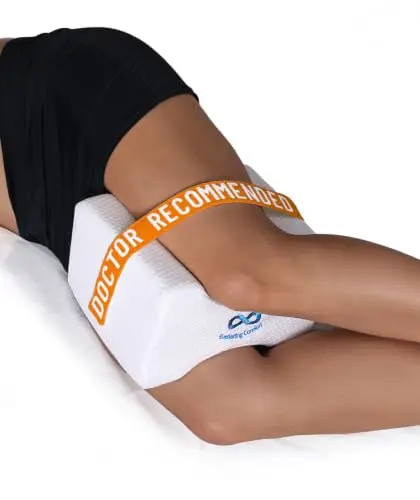
Support Knee Pillow – Dual-Concave Hip Alignment
A knee pillow built around a dual concave shape that cradles both knees and keeps the top leg from dropping forward. A removable strap holds it in place through toss-and-turn nights, and the memory foam core is covered by a breathable, washable cover.
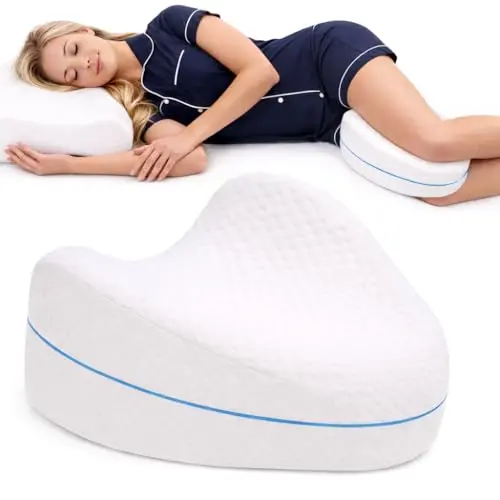
Legacy Leg & Knee Foam Support Pillow – Ventilated Side-Sleeper Support
The Legacy uses a ventilated memory foam core and a crescent shape that contours around the legs without a strap. It is designed to support both legs and knees while allowing you to change position during the night.

Knee Pillow for Side Sleepers – ACA-Endorsed Hip Support
An ACA-endorsed knee pillow with a memory foam core and a soft knit cover. The wedge-like shape is meant to separate the knees, support the hips, and keep the spine aligned for side sleepers.
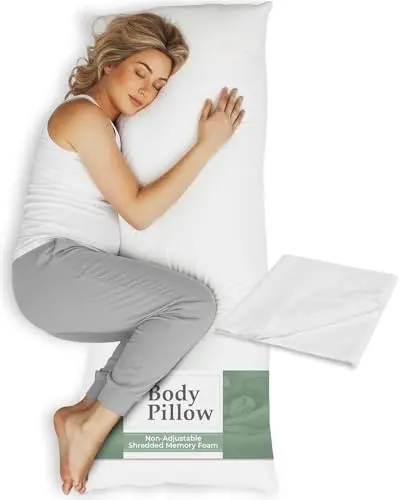
Body Pillow – Full-Body Support for Hips and Legs
A full-body pillow filled with shredded gel memory foam that contours from head to toe. The breathable bamboo cover and cooling fill are aimed at side sleepers who want support for their legs, belly, and hips.
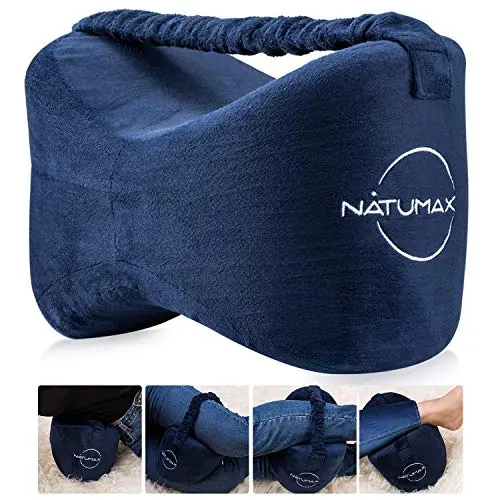
Knee Pillow – Strap-Secured Sciatica Relief
A butterfly-shaped memory foam knee pillow with a leg strap, plus a sleep mask and ear plugs. It is designed to sit between the legs and support hip, knee, and back alignment for side sleepers.
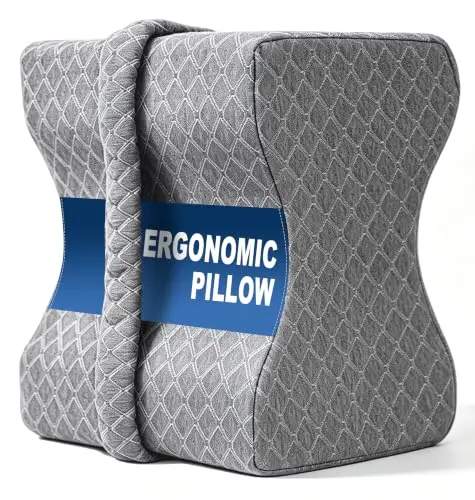
Knee Pillow – Strap-Secured Side-Sleeper Support
A memory foam knee pillow with a securing strap and a soft, breathable cover. The H-shape is designed to support the knees, thighs, and hips in multiple sleep positions.
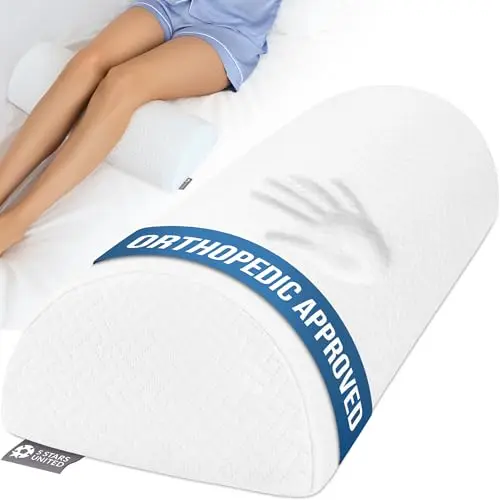
Half Moon Bolster Pillow – Under-Knee Back Support
A half-moon bolster with a memory foam core, designed to sit under the knees for back sleepers. It can also be used between the legs or under the ankles for light elevation and alignment.

Memory Foam Knee & Leg Pillow – H-Shape Alignment
An H-shaped memory foam knee pillow with a removable, washable cover. It is designed to support the knees, legs, hips, and spine for side sleeping and pregnancy.
How We Evaluated These Pillows for Hip Pain While Sleeping
We didn’t run sleep-lab pressure mapping or multi-night in-bed trials. What we did: cross-referenced 8 pillow models from 7 distinct brands across 6 decision axes – hip and knee alignment, fill and contour, strap or no-strap stability, cover care, sleep-position fit, and included support. We triangulated published specifications, feature sets, and owner feedback where available, then mapped each option against representative side-sleeper and back-sleeper profiles.
The scoring framework weighted real-world fit for hip pain while sleeping (70%) – how well each pillow supports alignment without creating new pressure – against feature differentiation (30%) – unique shapes, straps, cooling designs, and care details. We have no commercial relationship with any of the brands featured; recommendations track fit and differentiation, not brand preference. If you want a strap-secured between-the-knees pillow, the Everlasting Comfort Knee Pillow is the first one we’d route you to; if you prefer a strap-free contour, the Contour Legacy Leg & Knee Pillow is the better match.
We also weighed how each pillow behaves across common sleep positions: side sleeping with a pillow between the knees, back sleeping with under-knee support, and full-body side sleeping with a body pillow. Firmness descriptions were audited against the supplied specifications, and care instructions were pressure-tested for practicality – removable covers, machine-washable fabrics, and foam cores that should not go in the washer. Where owner feedback was thin, we leaned on the published design and materials rather than filling gaps with assumptions.
How to Choose the Right Pillows for Hip Pain While Sleeping
1. Why Hip Pain While Sleeping Starts With Alignment
Hip pain while sleeping usually isn’t about the hip joint alone. When you lie on your side, the top leg can drop forward, which rotates the pelvis and puts uneven pressure on the lower back and hip. A pillow helps by filling the gap between the knees or supporting the whole body so the hips stay stacked.
The two main fixes are between-the-knees support and full-body support. A knee pillow is compact and targeted; a body pillow is larger and more enveloping. Neither is automatically better – the right choice depends on how much you move at night and whether you want support only at the knees or from the chest down.
2. Knee Pillows vs. Body Pillows for Hip Pain While Sleeping
A knee pillow is the more direct tool for side-sleeper hip pain. It sits between the legs, keeps the knees from touching, and helps stop the top leg from pulling the hip into rotation. Most are small enough to stay in place with a strap or a contoured shape. If you want that targeted setup, the Everlasting Comfort Knee Pillow is the pick in this guide.
A body pillow is better if you want support along the legs, belly, and hips at once. It can reduce the urge to roll forward and twist the lower back, but it takes up more bed space and can feel bulky. For a full-body approach, the Snuggle-Pedic Body Pillow is the one to look at. The trade-off is simple: knee pillows are precise and space-efficient, body pillows are broader and more enveloping.
3. What to Look for in a Pillow for Hip Pain
Start with shape and height. A knee pillow should fill the space between your knees without forcing the hips out of line. Too thin and the top leg drops; too thick and the pelvis tilts the other way. Contoured shapes, H-shapes, and butterfly designs are all attempts to solve the same problem: keeping the knees separated while supporting the thighs.
Next, look at fill and firmness. Memory foam is common because it contours and holds its shape, but it ranges from soft to firm. Side sleepers who want a locked-in feel often prefer firmer foam; sleepers who dislike pressure points may do better with a softer, more adaptive fill. Cover care matters too – a removable, machine-washable cover makes nightly use more practical.
4. Strap Stability and No-Strap Freedom
A strap is the simplest way to keep a knee pillow from sliding out of place. It helps if you toss and turn, but it can feel restrictive and may not fit every leg size. A strap-free contoured pillow gives you more freedom to move, though it may shift on slick sheets. If airflow and a natural contour matter more to you than locked-in placement, the Contour Legacy Leg & Knee Pillow is the strap-free alternative worth considering.
5. Care, Cover, and Sleep-Position Fit
Most memory foam cores should not go in the washer. Check that the cover is removable and washable, and follow the care instructions for the foam – usually spot cleaning and air drying. A breathable cover helps with temperature, especially if you sleep warm.
Sleep position is the other filter. Side sleepers usually want a between-the-knees pillow; back sleepers may prefer an under-knee bolster to reduce lower-back pressure; combination sleepers may want a body pillow that supports multiple positions. If you switch positions often, a strap-free design or a full-body pillow can be more forgiving than a fixed wedge.
6. Common Pitfalls When Shopping for Hip-Pain Pillows
The biggest mistake is buying a pillow that is too thick or too thin for your body. A knee pillow should feel supportive, not like a wedge that pushes your hips out of alignment. Another common miss is ignoring strap fit: a strap that is too tight or not adjustable can be uncomfortable, while a loose strap lets the pillow wander.
Don’t assume a body pillow will replace a knee pillow, or vice versa. They solve overlapping but different problems. Also, treat certifications and warranties as useful signals, not magic fixes. An ACA endorsement or OEKO-TEX certification tells you something about evaluation or materials; it doesn’t guarantee the shape will suit your body.
Frequently Asked Questions
1. What's the difference between the Everlasting Comfort Knee Pillow and the Contour Legacy Leg & Knee Pillow?
The Everlasting Comfort uses a dual concave shape and a removable strap, so it is the more locked-in option for side sleepers who move around. The Contour Legacy is strap-free and relies on a crescent contour plus ventilated memory foam; it gives you more freedom to shift positions and sleeps cooler, but it can slide on slick sheets. If you want maximum stability between the knees, the Everlasting Comfort Knee Pillow is the better fit. If you dislike straps and want airflow, the Contour Legacy is the alternative.
2. What's the difference between the NATUMAX Knee Pillow and the UJPFEO Knee Pillow?
Both are strap-secured memory foam knee pillows, but they prioritize different extras. The NATUMAX has a butterfly shape, a medium-soft feel, and includes a sleep mask and ear plugs. The UJPFEO has an H-shape, a basic securing strap, and a straightforward washable cover. If you want a softer feel and a small sleep kit, NATUMAX is the pick; if you want a simpler strap pillow, UJPFEO is the more direct choice.
3. Is a body pillow or a knee pillow better for hip pain while sleeping?
A knee pillow is usually the more targeted choice for side-sleeper hip pain because it keeps the knees separated and limits hip rotation. A body pillow is better if you want support along the legs, belly, and hips at once, or if you tend to roll forward during the night. The trade-off is space and bulk: a body pillow takes up more of the bed. For most side sleepers, start with a knee pillow; if you need broader support, the Snuggle-Pedic Body Pillow is the full-body option here.
4. Do you need a strap on a knee pillow for hip pain?
Not necessarily. A strap helps keep the pillow centered if you toss and turn, but it can feel restrictive and may not fit every leg size. A strap-free contoured pillow can work well if you stay relatively still or dislike the feel of a strap. The key is fit and height – the pillow should fill the gap between your knees without pushing your hips out of alignment. If you move a lot, a strap is the safer bet; if you want freedom, go strap-free.
5. Can a knee pillow help if you sleep on your back?
Yes, but the shape matters. A between-the-knees knee pillow is designed for side sleeping; for back sleeping, an under-knee bolster is usually more useful because it supports the legs and takes pressure off the lower back. The 5 STARS UNITED Half Moon Bolster is built for that back-sleeping position, while a standard knee pillow may feel awkward under the knees. If you switch between side and back sleeping, choose a pillow that can handle both positions or keep two options.
Final Verdict
For most people dealing with hip pain while sleeping, the Everlasting Comfort Knee Pillow is the pick. Its dual concave shape and removable strap give you the alignment and stability most side sleepers need, without the bulk of a full-body pillow.
If you want to spend less, the BlissTrends Knee & Leg Pillow covers the basics at a budget-friendly price. If you need broader support from your legs through your hips, the Snuggle-Pedic Body Pillow is the full-body alternative. And if you sleep on your back, the 5 STARS UNITED Half Moon Bolster is the more targeted shape for under-knee support.
Start with your sleep position: side sleepers should prioritize a between-the-knees pillow, back sleepers an under-knee bolster, and restless combination sleepers a body pillow or strap-free contour. That single decision will narrow the field faster than any brand claim.
