
Best Pillows For Lower Back Support – 2026 Reviews

The first sign is usually subtle: you stand up after a long desk session and your lower back feels stiff, or a road trip leaves you shifting in the seat. A pillow for lower back support isn’t a magic fix, but the right shape and placement can change how you sit.
The two axes that matter most are shape and firmness. A cylindrical roll gives a targeted cue, while a contoured memory foam cushion spreads support across a wider area. Then comes hold: a pillow that slides down the chair every twenty minutes is working against you, so straps and seat fit matter as much as foam density.
This guide surveys the market across brands and sitting scenarios, from office chairs and commutes to recliners and bed use. We’ll help you match a lower back support pillow to your body, seat, and routine rather than chase a single universal pick.
Best Pillows for Lower Back Support – 2026 Reviews

The Original Lumbar Support Pillow – Memory Foam Chair Support
A contoured memory foam cushion with dual adjustable straps and a breathable mesh cover, built to support the lower back on office chairs, car seats, and recliners. The cover removes for machine washing, and the brand backs the cushion with a lifetime replacement guarantee.
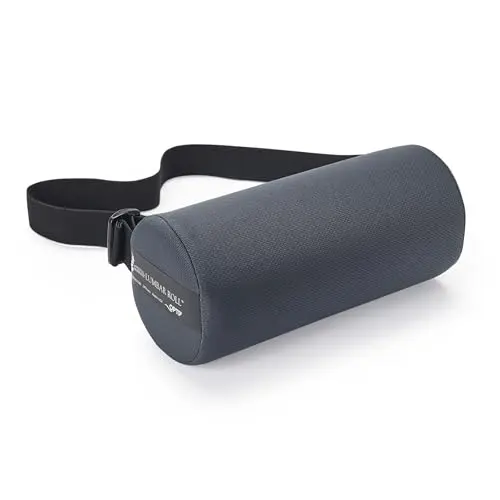
The Original McKenzie Lumbar Roll – Targeted Low Back Support
A cylindrical foam roll from the McKenzie line, designed to support the lower back while sitting. It has a removable moisture-wicking cover and an elastic strap, and it works as a compact travel roll or an office chair accessory.
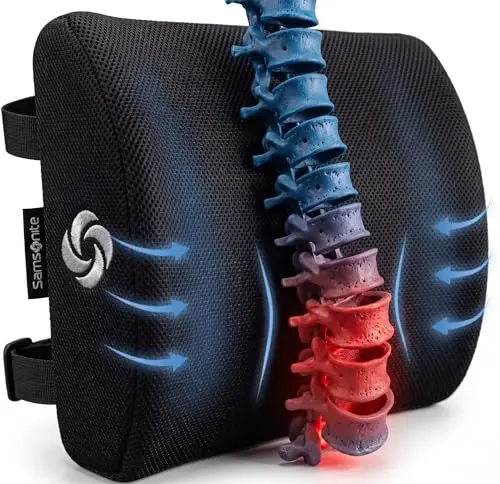
Lumbar Support Pillow – Compact Memory Foam Backrest
A compact memory foam backrest with a ventilated mesh cover and adjustable straps. It’s built for office chairs, car seats, and travel, with a shape that aims to maintain neutral posture without adding much bulk.
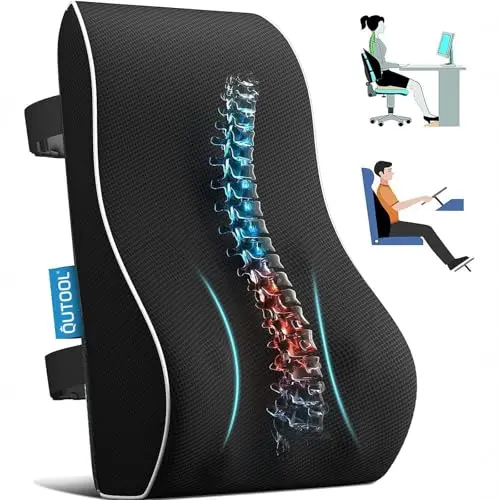
Lumbar Support Pillow – Adjustable Straps and Memory Foam
A larger memory foam lumbar cushion with two adjustable straps and a 3D mesh cover. It’s designed to stay put on office chairs and car seats, and the cover is removable for machine washing.
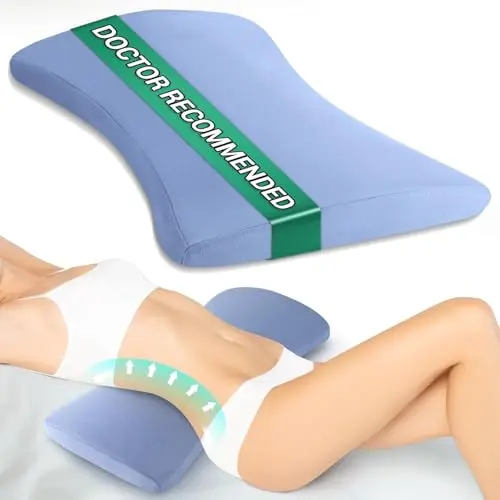
Lumbar Pillow for Sleeping – Bed Support for Side and Back Sleepers
An H-shaped bed pillow made for reclined lower back support. It can also go under the knees or legs, and the breathable cover is removable and machine washable.

Memory Foam Lumbar Pillow – Breathable Grey Support
A soft memory foam lumbar pillow with 4D air-cool mesh and a machine-washable cover. It’s sized for office chairs, car seats, and beds, with a grey finish that blends into most setups.
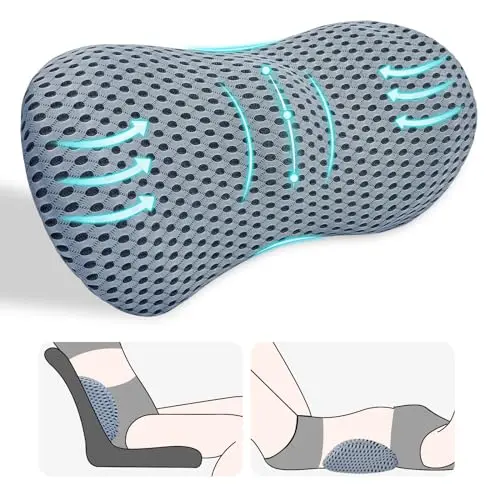
Memory Foam Lumbar Pillow – Ergonomic Streamline Support
A memory foam lumbar pillow with an ergonomic streamline shape and a 4D air-cooled mesh cover. It’s intended for office chairs, car seats, recliners, and beds, and the pillowcase removes for washing.
How We Evaluated These Pillows for Lower Back Support
We didn’t put these pillows through months of nightly sleep trials or lab-measured pressure mapping. What we did: cross-referenced 7 lumbar support pillows from 7 distinct brands across 6 decision axes – shape and firmness, strap security, breathability, portability, cleaning, and fit for seated versus reclined use. We triangulated published specifications, feature sets, and owner feedback where available, then mapped each option against typical lower back support scenarios: desk work, driving, reclining, and sleeping. We also weighed how each pillow behaves across different seat depths and body types, because a cushion that feels right on an office chair can be too bulky in a compact car. Where a pillow’s published details were limited, we kept the assessment narrow rather than filling gaps with speculation.
The scoring framework weighted real-world fit (70%) – how well each pillow supports the lower back in its intended position – against feature differentiation (30%) – strap design, cover breathability, portability, and care. We have no commercial relationship with any brand here; recommendations track fit and differentiation, not brand preference. That balance matters because a pillow can be feature-rich and still land wrong for your seat or posture. If you want a set-and-forget office chair cushion, the Everlasting Comfort Lumbar Support Pillow is the most balanced choice. If you need a compact roll for travel or a chair you move between, the OPTP McKenzie Lumbar Roll is the better match.
How to Choose the Right Pillows for Lower Back Support
1. Start With Your Sitting Style, Not Just the Pillow's Loft
The best pillow for lower back support depends on how you sit. At a desk, you want a cushion that fills the gap between your lumbar curve and the chair back without pushing your hips forward. In a car, the seat is more upright and often narrower, so a compact profile matters more than a broad surface. On a recliner or in bed, the geometry changes again: support needs to follow a relaxed spine rather than hold you in a work posture.
Before comparing foam types, measure the space you’re trying to fill. Seat depth, backrest angle, and your torso length all affect where a pillow lands. A cushion that sits too high becomes a mid-back pad; too low, and it can push your pelvis into an uncomfortable tilt.
2. Firmness and Shape: Lumbar Roll vs. Memory Foam Pillow
Cylindrical rolls give a focused cue, which is why they’re common in physical therapy settings. They suit readers who want a gentle reminder to keep the lower back curve, but they can feel narrow or too firm for all-day sitting. Contoured memory foam cushions spread support across a wider area and often feel more forgiving on office chairs. If you want the classic roll shape, the OPTP McKenzie Lumbar Roll is the most direct pick. If you prefer a broader memory foam surface, the Everlasting Comfort Lumbar Support Pillow is the easier all-day match.
Firmness is personal. Medium-density foam works for many desks and cars, while soft foam can feel better for reclining but may not hold heavier torsos. High-density memory foam is not automatically better; it has to match your seat and how long you sit.
3. Strap Security and Chair Fit for Lower Back Support
A lower back support pillow only works if it stays where you put it. Adjustable straps are the difference between a cushion that holds its position and one you re-seat every hour. Look for straps that fit your chair’s width, and check whether the cushion has extension pieces for wider seats. The Samsonite Lumbar Support Pillow is a good example of a compact design with adjustable straps for commuting and office use.
Smooth upholstery, leather, and some mesh chairs let cushions slide. Elastic waist straps on a roll can help, but they don’t anchor as firmly as a two-strap chair cushion. Seat width also matters: a large cushion can crowd a compact car seat and push your hips forward.
4. Breathability, Cleaning, and Everyday Durability
You’ll sit against this pillow for hours, so cover material matters. Breathable mesh and 4D air-cool fabrics reduce heat buildup compared with smooth synthetic covers. Most models here have removable covers; check whether the cover is machine washable and whether the foam core must be spot-cleaned only. Memory foam should not go in the washer.
Durability is harder to judge from a spec sheet. High-density foam tends to hold its shape longer, while softer foams may compress faster. A lifetime replacement guarantee is a meaningful signal if the brand offers one, but it doesn’t replace the need to check firmness and fit.
5. Seated vs. Reclined: Matching a Pillow to Your Lower Back Support Routine
Office chairs and cars call for a cushion that maintains a neutral pelvis and supports the lumbar curve. Beds and recliners call for a different shape, often one that fills the space under the lower back when you’re lying on your side. The vamorry Lumbar Pillow for Sleeping is built specifically for that reclined role, and its H-shape can also go under the knees. Don’t assume a desk cushion will work in bed; the angles are different, and a too-thick pillow can tilt your spine the wrong way.
If you switch between sitting and reclining, a compact memory foam cushion is easier to move than a large one. If sleep is your main problem, choose a bed-specific lumbar pillow and keep a separate support for your desk.
6. Entry-Level, Mid-Range, and Premium Lumbar Pillows
Entry-level lumbar pillows usually use standard memory foam and a basic mesh cover. They can work well for occasional sitting, but the foam may soften faster and the straps may be less adjustable. Mid-range options add contoured shaping, better covers, and more secure straps. Premium picks often bring lifetime warranties, denser foam, or more specialized shapes.
Spend based on hours of use and how often you move the pillow. A daily desk worker benefits from better foam and secure straps; a traveler who needs occasional support can do well with a simpler roll.
Frequently Asked Questions
1. What's the difference between the Everlasting Comfort lumbar pillow and the OPTP McKenzie Lumbar Roll?
The Everlasting Comfort is a contoured memory foam cushion with dual adjustable straps, so it covers more area and stays attached to a chair. The OPTP McKenzie is a cylindrical foam roll with a smaller contact patch and an elastic strap; it’s better for travel and targeted cues. Choose the Everlasting Comfort if you want set-and-forget office support, or the OPTP if you prefer a classic roll. The Everlasting Comfort Lumbar Support Pillow is the easier all-day pick for most desk workers.
2. Is the Samsonite lumbar pillow or the QUTOOL cushion better for long drives?
The Samsonite has a compact profile and ventilated mesh cover, which makes it easier to fit into a car seat without crowding your hips. The QUTOOL has a larger surface area and double straps, so it can feel more supportive but may be too bulky for small cars. For tight car seats, go with Samsonite; for a roomier seat and firmer feel, QUTOOL is the better match. The Samsonite Lumbar Support Pillow is the more travel-friendly choice.
3. How do I choose a pillow for lower back support if I sit all day?
Prioritize strap security, a contoured shape, and medium-density foam. A cushion that slides down your chair is worse than no cushion, and one that’s too thick can push your hips forward. Match the pillow height to where your lumbar curve meets the chair back, and keep the cover breathable for long sessions. If you move between chairs, a compact model is easier to live with.
4. How firm should a lower back support pillow be?
Firm enough to hold its shape, but not so firm that it feels like a brick. Medium-density foam is the safest starting point for desk and car use. Soft foam can work for reclining or lighter bodies, while high-density memory foam suits readers who want more pushback. Pay attention to temperature sensitivity too; some memory foam firms up in cold rooms.
5. Can a lumbar pillow help lower back pain while sleeping?
Yes, if the shape matches your sleep position. A bed-specific lumbar pillow can fill the gap under the lower back when you lie on your side, and a knee bolster can reduce strain on the spine. A desk cushion usually isn’t the right shape for bed use. Look for a breathable cover, soft-to-medium foam, and a size that doesn’t push your ribcage or hips out of alignment.
Final Verdict
For most buyers, the Everlasting Comfort Lumbar Support Pillow is the answer. It combines a contoured memory foam shape with dual adjustable straps and a breathable, washable cover, so it works across office chairs, cars, and recliners without constant fuss. If you need a compact roll for travel or a chair you move between, the OPTP McKenzie Lumbar Roll is the better fit. Budget-conscious commuters should look at the Samsonite Lumbar Support Pillow for its lower-profile build and ventilated cover. And if your problem is sleep rather than sitting, the vamorry Lumbar Pillow for Sleeping is purpose-built for reclined support. Start with your sitting posture, then choose the shape that matches it.
