
Best Pillows For Migraines And Neck Pain – 2026 Reviews

There’s a particular kind of morning where you wake up and your neck has clearly been in an argument with your pillow all night – stiff on one side, a dull ache settling in before you’ve had coffee. If that’s a familiar routine, the pillow on your bed is one of the few links in the chain you can actually change tonight.
The category has a real sorting problem, though. Words like cervical, orthopedic, and ergonomic get thrown around loosely, and plenty of pillows carrying them are just a firm slab with a bump in the middle. What separates a genuinely useful pillow is loft – whether the height matches your shoulders and the way you sleep – and contour geometry, meaning the pillow supports the curve of your neck instead of pushing your chin toward your chest.
Below we’ve mapped the field across brands: solid foam contours, shredded-fill adjustables, a hollow-center design built for airflow, and a layered pillow that goes genuinely low. Some are made for side sleepers who need height. Others exist for people who thrash between positions all night. The right one depends far less on the label than on how you actually sleep.
Best Pillows for Migraines and Neck Pain – 2026 Reviews
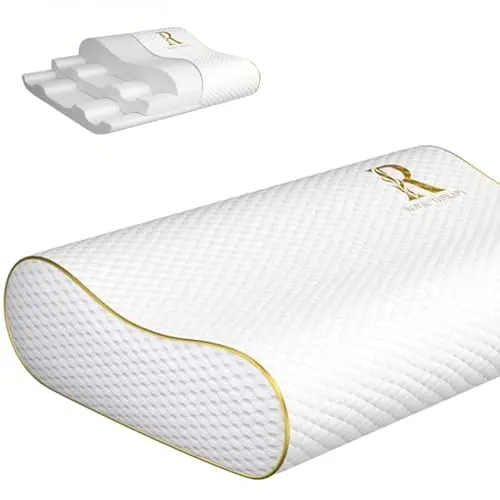
Memory Foam Cervical Pillow – Three-Layer Loft You Can Set
A queen-size 24 x 14 x 5 inch memory foam contour pillow built from three stacked layers, with the middle layer removable so you can drop the loft without buying a second pillow. Medium-firm density, a CertiPUR-US foam core, and a soft OEKO-TEX rayon-from-bamboo cover that lifts off for washing.

Adjustable Curved Pillow – Shredded Fill You Can Dial In
A queen-size 19 x 29 inch pillow stuffed with a shredded visco foam and polyester blend, shipped with an extra bag of fill so you can raise the loft or dial it back. The curved profile follows the neck line, and the plush cover unzips for machine washing.
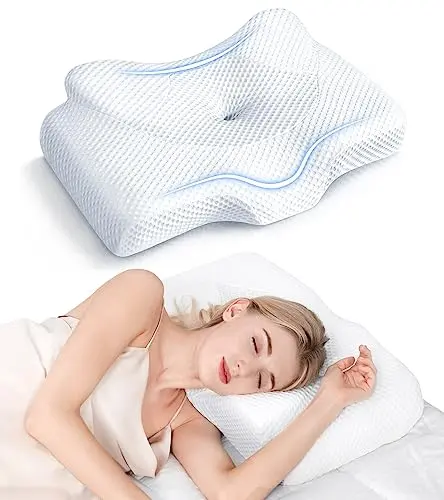
Hollow-Center Cervical Pillow – Cooling Support for Less
A hollow-center contour pillow with a breathable 3D mesh cover and a removable base insert. Rotate it 180 degrees for a high or low side, and the cutout is designed to keep pressure off the back of the head rather than pushing up against it.
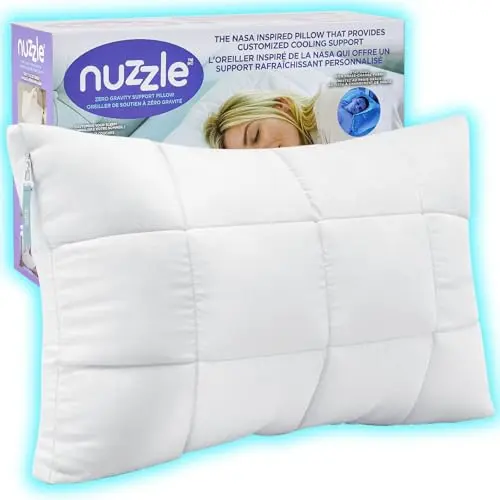
3-in-1 Adjustable Pillow – Layer Tuning for Every Position
A standard 16 x 24 inch pillow built from a patented nanocoil polyester fill and a phase-change fabric cover. Use one layer for a low, soft profile, two for a medium feel, or both stacked for a firmer side-sleeper setup.

Dual-Height Butterfly Pillow – Two Lofts in One
A butterfly-shaped contour pillow with two heights – a 3.9-inch side and a 4.9-inch side – built from high-density slow-rebound memory foam with a zippered cooling cover that lifts off for washing.
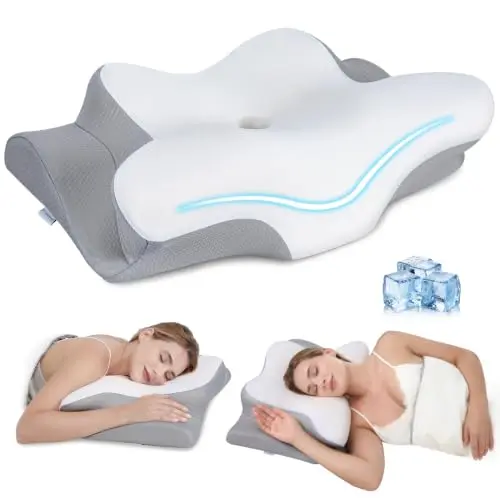
Dual-Height Cervical Pillow – Ice Silk Cover for Hot Sleepers
A butterfly contour pillow with two height settings, slow-rebound memory foam, and an ice silk cover that feels cool against the skin. The cover removes for machine washing, and the pillow is backed by a six-month warranty.

CloudAlign Memory Foam Pillow – Wide Dual-Height Contour
A dual-height gel memory foam pillow with contoured support zones and a removable OEKO-TEX cover. Flip it to switch between a low and high side, and the 28 x 15 inch footprint runs wider than most contour pillows.
How We Evaluated These Pillows for Migraines and Neck Pain
This review didn’t involve multi-week overnight sleep trials or pressure mapping. It’s built on published specifications, a close read of each pillow’s feature set, and owner feedback where available, all weighed against how people actually sleep on a contour pillow.
We cross-referenced seven pillows from seven distinct brands across six decision axes – loft and contour geometry, fill material and firmness, adjustability, cover fabric and breathability, sleep-position fit, and care requirements. Every model here is chasing the same job: keeping the head and neck closer to neutral rather than letting the pillow push the chin toward the chest or crank the neck sideways. We mapped each one against side, back, and stomach sleeping profiles, then triangulated published specs against what owners describe in their own words and flagged the tradeoffs that show up repeatedly.
The scoring framework weighted real-world fit (70%) – how well a pillow delivers on its stated neck-support job for its intended sleeper – against feature differentiation (30%) – adjustable loft, cooling covers, dual-height designs. We have no commercial relationship with any brand featured; recommendations track fit and differentiation, not brand preference. If you want the most adjustable option in the group, the Royal Therapy Memory Foam Pillow is the place to start. If you sleep hot and want a hollow design that breathes, the Osteo Cervical Pillow is the more targeted pick.
How to Choose the Right Pillow for Migraines and Neck Pain
1. Start With Loft and Contour, Not Brand
Height is the biggest variable in this category, and it’s the one most shoppers ignore. A pillow that’s too tall tilts your head forward and puts the neck into flexion; one that’s too flat leaves the neck unsupported and lets the shoulder roll down. The right loft puts your head roughly level with your spine when you’re lying down.
Cervical contour is the second piece. A contoured pillow has a raised edge under the neck and a dip for the head, so support lands where the curve actually is instead of pushing the chin up. Dual-height designs give you a high side and a low side, which is the cheapest way to remove the guesswork – flip it rather than boxing it back up.
2. How to Match a Pillow to Neck Pain and Your Sleep Position
Sleep position drives everything. Side sleepers need enough height to fill the gap created by shoulder width, back sleepers need a moderate loft plus neck support without lifting the chin, and stomach sleepers need something low and soft – a tall contour pillow is the wrong tool entirely. Neutral alignment is the goal in all three cases: ears, shoulders, and hips roughly stacked.
Most people don’t stay in one position all night. If you flip between your back and your side, an adjustable pillow beats a fixed one, because you can set it for the position you fall asleep in without wrecking the other. If you’re a committed stomach sleeper, the Nuzzle 3-in-1 Adjustable Pillow is the only pick here that goes genuinely low and soft.
3. Memory Foam, Shredded Fill, or Polyester Fiber
Each fill behaves differently. Memory foam holds a shape, resists flattening, and gives firm, consistent support – but it’s heavy, it sleeps warmer, and once the height is wrong, it stays wrong. Shredded fill is foam chopped into pieces, so you can add or remove it and get support without a hard pressure point; the tradeoff is fluffing. Polyester fiber is the softest and simplest path, and it’s the right call for stomach sleepers.
If you want to fine-tune loft without giving up contouring, the Sidney Sleep Adjustable Curved Pillow is the shredded-fill option that ships with extra fill. Solid foam suits people who want zero maintenance and a firm surface.
4. Cooling Covers and Breathability When You Run Hot
Memory foam traps heat, and heat is a common reason people wake up and start repositioning. A breathable cover helps more than the marketing suggests: 3D mesh allows real airflow, ice silk and nylon-spandex blends feel cool to the touch, and phase-change material is engineered to absorb and release heat as conditions shift. Gel-infused foam offers a modest improvement over plain foam.
None of these make a pillow cold – they reduce heat buildup. If you’re a hot sleeper, prioritize an airflow-friendly cover over a thicker foam core. The VYLEE Cervical Neck Pillow has the smoothest, coolest-feeling cover in this group.
5. What to Spend on a Pillow for Migraines and Neck Pain
This is a category where price tracks adjustability more than comfort. Entry-level pillows give you a fixed contour or a two-height flip and a washable cover, and that’s genuinely enough for plenty of sleepers. The mid-range tier is where layered loft, better foams, and certifications show up – CertiPUR-US for the foam, OEKO-TEX for the fabric. Premium pricing buys finer tuning and longer warranties, but it doesn’t buy a better night; a mid-range pillow that matches your height beats a premium one that doesn’t.
6. Care, Break-In, and When to Replace Your Pillow
Almost every pillow here has a removable, machine-washable cover and a core you can only spot clean. Use a pillow protector and wash the cover monthly. Foam models need time to expand after unboxing – one maker suggests airing it for 48 hours first. Shredded fill wants regular fluffing and an occasional low-heat dryer cycle to redistribute the foam.
Replace a contour pillow when it stops holding its shape. If you’re folding it, punching it, or waking up with the same stiffness you had before, the foam has given up – and that’s usually a sign to change loft rather than buy the identical pillow again.
Frequently Asked Questions
1. Is a cervical pillow actually helpful for migraines and neck pain?
A contour pillow doesn’t treat migraines or neck pain – it changes what your head and neck do for eight hours a night. The premise is neutral alignment: the pillow fills the gap between shoulder and head so the neck isn’t cranked sideways, and the cutouts keep pressure off the back of the skull. Where pillows go wrong is height, which is why adjustable loft matters more than any single feature. A pillow that’s too tall for your shoulders is just a firmer version of the problem.
If neck pain or headaches persist despite a better pillow, that’s a conversation for a clinician, not a product page. Treat this as a comfort and alignment purchase, not a medical treatment.
2. What's the difference between the Royal Therapy pillow and the Sidney Sleep adjustable pillow?
Both let you change the height; they just do it differently. The Royal Therapy uses three stacked foam layers – you remove the middle one to drop the loft, which gives you two clean settings and a firm, consistent surface. The Sidney Sleep uses shredded fill, so you add or remove material and land anywhere between soft and firm, with more contouring and less resistance under your head.
If you want structural support and zero daily fuss, go with the Royal Therapy Memory Foam Pillow. If you’d rather fine-tune to the ounce and don’t mind fluffing, the Sidney Sleep is the better tool.
3. How do the Osteo and Mellow dual-height pillows compare?
They serve different sleepers. The Osteo has a hollow center plus a removable base insert, so you’re choosing between thicknesses and can drop the pillow lower still – it runs firm and breathes well through a 3D mesh cover. The Mellow is gel memory foam with a wide, low profile and a soft-to-medium feel, which suits back and combination sleepers who don’t want pressure behind the ears.
If you want maximum height control and a firmer surface, the Osteo wins. If you want the softest dual-contour landing pad, the Mellow CloudAlign Memory Foam Pillow is the one.
4. How long does it take to adjust to a contour pillow?
Plan on a week, not a night. Contour pillows put your head somewhere your old pillow didn’t, and that transition can show up as temporary soreness for some sleepers. Give yourself a few nights of tweaking before deciding – swap to the other height, remove a layer, add or subtract fill. Foam pillows also need time to fully expand after unboxing, and some manufacturers suggest 48 hours of airing first.
If it’s still wrong after two weeks, the loft is the problem, not you.
5. Can a side sleeper use a cervical contour pillow?
Yes, as long as the loft is tall enough to fill the space between your shoulder and your head. Side sleeping is where contour pillows earn their keep, because a flat pillow leaves the neck hanging at an angle all night. Look for a higher side profile or adjustable fill so you can raise the pillow without turning it into a wedge.
Sleepers with broad shoulders usually need more height than the box suggests, which is why the adjustable options in this lineup are the safer bet for side sleepers.
Final Verdict
For most people shopping this category, the Royal Therapy Memory Foam Pillow is the answer. The three-layer build lets you set the loft instead of guessing, and the medium-firm core delivers the steady neck support a flat pillow simply can’t. It’s the one we’d hand to a friend with a stiff neck and no idea where to start.
Sleep on your side? The Sidney Sleep Adjustable Curved Pillow and its shredded fill will fill the shoulder gap better than any solid foam here. Working with a tighter budget? The Osteo Cervical Pillow brings a hollow-center design and the most breathable cover in the lineup at an entry-level price. And if you flip between your stomach and your back all night, the Nuzzle 3-in-1 Adjustable Pillow goes lower and softer than a contour pillow can.
Set your loft first, then pick your fill. That order of operations beats any brand name.
