
Best Pillows For Neck Pain And Headaches – 2026 Reviews

Waking up with a stiff neck is annoying. Waking up with a stiff neck and a headache that follows you until lunch is the reason most people finally break down and buy a new pillow. The frustrating part is that the pillow causing the problem usually feels fine at eleven at night. It’s the eight hours of quiet misalignment after that which decide how your morning goes.
Two things separate pillows that genuinely help neck pain and tension headaches from ones that just sound medical. The first is height: your pillow has to fill the gap between your shoulder and your head, and that gap changes with sleep position, frame size, and mattress firmness. The second is how the pillow holds its shape – a contour that collapses by three in the morning isn’t support, it’s decoration.
So we cross-shopped the market – hollow-center cervical designs, layered contours with removable foam, shredded fill you can add by the handful, and even one pillow that skips foam entirely – and mapped each approach to the sleeper it actually suits. Here’s what’s worth your money, and what to expect before you spend it.
Best Pillows for Neck Pain and Headaches – 2026 Reviews
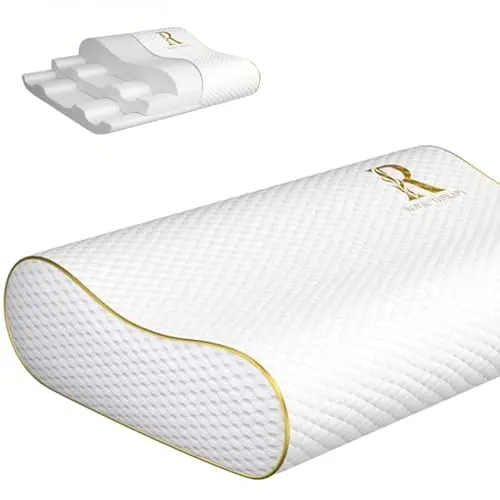
Memory Foam Cervical Pillow – 3-Layer Adjustable Loft
Royal Therapy takes the cervical contour idea and makes the height adjustable instead of fixed. The pillow is built in three foam layers, so you can pull out the middle one and drop the loft roughly an inch. That single move is what makes it work for a wider range of shoulders than most contours. The medium-firm foam is CertiPUR-US certified and wrapped in a moisture-wicking bamboo-derived rayon cover.
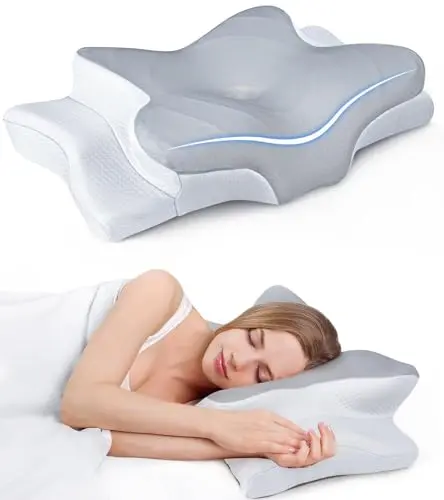
Hollow Concave Cervical Pillow – Cooling Contour Support
Cozyplayer leans hard into the hollow-center idea: a concave surface tilted at fifteen degrees lets the head settle while raised edges support the neck and shoulders. Six cut contour zones give your arm and jaw somewhere to go. The Arc-Chill Q-Max cover is designed to feel cool on contact, backed by a breathable 3D mesh rather than a plain knit case.

Signature Adjustable Pillow – Hotel Soft with Bonus Fill
DreamyBlue blends cross-cut shredded memory foam with down-like polyester tufts, so the pillow molds like foam but shifts like down. The fill sits behind an easy-access zipper, and an extra bag of fill ships in the box – side sleepers add, stomach sleepers subtract. The foam is CertiPUR-US certified and wrapped in a breathable bamboo-derived rayon cover.

Adjustable Curved Pillow – Shredded Fill You Can Dial In
Sidney Sleep takes the shredded-fill approach and adds a gentle curved edge designed to cradle the neck. The Queen size runs generous at 19 by 29 inches, and the fill is a visco foam and polyester fiber blend you can add or remove through the zipper. Extra fill and a plush removable cover are included in the box.
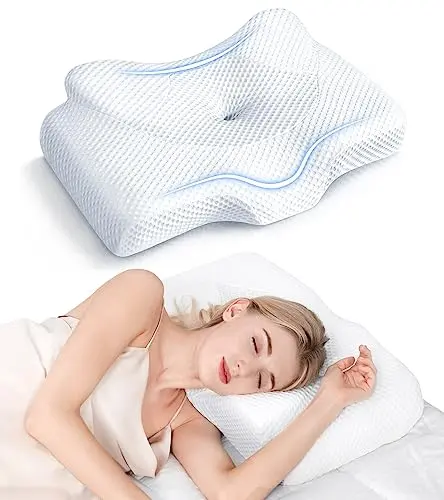
Hollow Center Cervical Pillow – Flip for Two Heights
Osteo uses a patented hollow-center design: the middle dips so your head settles while the surrounding foam supports the cervical curve. Height is adjustable two ways – rotate the pillow 180 degrees for a different profile, or remove the bottom insert entirely. The 3D mesh cover is built to vent heat, and the foam carries both CertiPUR-US and OEKO-TEX approvals.
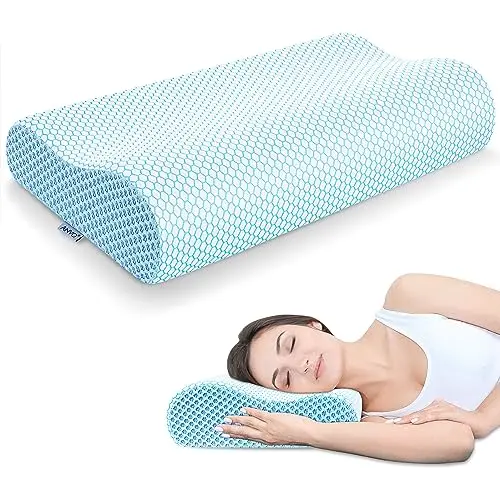
Contour Cervical Pillow – Two Fixed Heights, Low Cost
Anvo’s cervical pillow is the straightforward entry point: a two-level contour cut into slow-rebound memory foam and sized to fit a standard pillowcase. The outer cover is breathable with mesh side panels for airflow, and the foam is CertiPUR-US certified with the lab report listed. Two neck heights let you flip the pillow to match your sleep position.

Reversible Gel Memory Foam Pillow – Cooler Side Up
This is the least orthopedic pick here and the most conventional: a standard-size memory foam pillow with a gel-infused face you can flip to for a cooler surface. The open-cell foam is cut to a medium-firm loft aimed at side sleepers, and the soft knit cover comes off for washing and fits standard pillowcases.
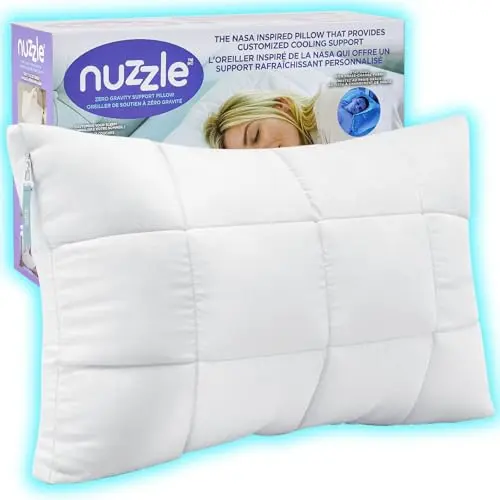
3-in-1 Layer Pillow – Hotel Feel Without Foam
Nuzzle skips foam entirely. The pillow uses a patented Nanocoil polyester fiber fill split into two stackable layers, so you can run one slim layer for a soft stomach-sleeper loft, both layers for a firm side-sleeper height, or the middle configuration for back sleeping. The cover uses PCM fabric designed to absorb, store, and release heat.
How We Evaluated These Pillows for Neck Pain and Headaches
A few things we can’t tell you: we didn’t run sleep-lab polysomnography, measure cervical alignment with imaging, or spend a month on each pillow. What we did: cross-referenced 8 pillow models from 8 distinct brands across 6 decision axes – fill material and density, loft and adjustability, contour geometry, cover and temperature behavior, care requirements, and sleep-position fit. We triangulated published specifications, feature sets, and owner feedback where available, then mapped each pillow against representative buyer profiles for neck pain and tension headaches.
The scoring framework weighted real-world fit (70%) – how well a pillow’s height and contour support the neck in its intended sleep positions – against feature differentiation (30%) – adjustable loft, cooling construction, certifications, and anything else that separates one option from the pack. We audited every listing for the details that matter to a sore neck: whether the loft is fixed or tunable, whether the fill rebounds slowly or collapses under a shoulder, and whether the cover comes off for washing. We have no commercial relationship with any brand featured here; recommendations track fit and differentiation, not brand preference.
If you sleep on your side and want to correct your height rather than guess at it, the Royal Therapy is the natural starting point. If you run hot and want a hollow contour that lets your head settle, the Cozyplayer covers that ground better than anything else in the lineup.
How to Choose the Right Pillow for Neck Pain and Headaches
1. Why Loft and Height Matter More Than Firmness
The single most common cause of morning neck pain is a pillow at the wrong height, not the wrong firmness. Your pillow’s job is to fill the space between the mattress and your head so the cervical spine stays roughly parallel to the bed. Overfill it and your head tips forward all night; underfill it and the neck hangs. Both positions load the muscles at the base of the skull, which is where a lot of tension headaches begin.
That’s why adjustable loft is the feature worth paying for. A pillow you can add fill to, remove a layer from, or flip to a second height lets you correct the mismatch instead of living with it. Fixed-height pillows can work beautifully – but only when the factory height happens to match your shoulder width and sleep position.
2. What a Cervical Contour Actually Does
A cervical contour pillow has either a raised edge or a recessed center designed to support the natural curve of the neck. On a hollow-center design, your head settles into a dip while the surrounding foam holds the neck level. On a traditional contour, a ridge sits under the neck with a flatter area behind the head.
These shapes help most when your discomfort comes from forward head posture during sleep. They help least when the ridge is too aggressive – a pillow that feels like a rolled towel under your neck at eleven at night will still feel like one at three in the morning.
3. Matching a Pillow for Neck Pain and Headaches to Your Sleep Position
Side sleepers need the most loft because the shoulder creates a bigger gap. Back sleepers need moderate support with a defined neck curve. Stomach sleepers need very little height, which is why so many of them find contour pillows unusable – the ridge pushes the head up and back. A layered or adjustable pillow is usually the only way a stomach sleeper gets a workable height.
If you’re a back sleeper who wants a fixed contour without spending much, the Anvo is a sensible entry point; if you flip between side and back all night, adjustable loft matters more than any single contour shape.
4. Memory Foam vs Shredded Fill vs Fiber: Which Helps a Sore Neck?
Solid memory foam holds a shape and delivers consistent support, and slow-rebound versions conform gradually instead of pushing back. The tradeoffs are heat retention, a hard feel under a broad shoulder, and no adjustability. Shredded memory foam is tunable and molds more closely, but it needs fluffing and can pack down unevenly.
Fiber fills are springier and closer to a hotel pillow, but most pack down within months. Higher-end options such as Nanocoil fiber resist that better. None of these fills is inherently better for neck pain – the right one is the one that holds your chosen loft all night.
5. Cooling, Odor, and Break-In: Setting Realistic Expectations
Almost every foam pillow here arrives with some off-gassing odor. Air it out for a day or two before you judge it – judging a pillow on night one is a mistake people make constantly. Cooling covers, gel faces, and mesh panels genuinely change how a pillow feels at contact, but none of them change the temperature of the room.
Contour pillows also have a real break-in period. Give any new shape a week before deciding, and start on the lower of the available heights so you aren’t fighting an overfilled pillow while your neck adjusts.
6. Royal Therapy vs Cozyplayer: Two Contour Philosophies Compared
These are the two strongest picks in the lineup and they solve the same problem in opposite ways. The Royal Therapy is a layered contour: a familiar cervical shape where the middle foam layer comes out to change height, with medium-firm foam that suits most sleepers. It’s the more forgiving of the two.
The Cozyplayer is a hollow-center contour: your head drops into a concave surface while bolsters hold the neck. That’s better for people whose pain comes from the head being pushed up and forward, and the Arc-Chill cover makes it the stronger warm-weather choice. It’s also the less forgiving of the two during the first week.
7. What a Pillow for Neck Pain and Headaches Costs
Entry-level cervical pillows sit in the budget tier and typically give you a fixed two-height contour with basic foam. The mid-range is where adjustable loft, better covers, and meaningful certifications start showing up – this is the sweet spot for most people. At the premium end you’re paying for fill quality, bonus fill, and covers that feel genuinely nice against the skin.
Spending more doesn’t guarantee a better fit. A well-chosen mid-range pillow beats an expensive one that’s an inch too tall for your shoulders.
Frequently Asked Questions
1. Do cervical pillows actually help with neck pain and headaches?
They can, mostly by correcting alignment rather than treating anything. A contoured or hollow-center pillow keeps your head in a neutral position so the muscles at the base of the skull aren’t under tension all night, and that tension is where a good share of morning headaches originate.
What a pillow won’t do is resolve pain from an injury, a disc issue, or clenching. The honest framing is that a good pillow removes one common contributor. If pain persists after a couple of weeks of better alignment, it’s worth talking to a clinician rather than buying a fourth pillow.
2. Royal Therapy vs Osteo: which cervical pillow is better for side sleepers?
Both work for side sleeping, but they’re built on different assumptions. The Royal Therapy uses a three-layer build so you can remove the middle layer and fine-tune height – better if your shoulder width puts you between standard sizes. The Osteo relies on a hollow center with a flip-to-change-height profile, and it feels firmer under the shoulder.
Broader-shouldered side sleepers who wake with a pinched neck usually do better with the finer adjustment on the Royal Therapy. Lighter side sleepers often prefer the more defined cradle. If you want the firmer, more sculpted feel, the Osteo is the one to try first.
3. DreamyBlue vs Sidney Sleep: which adjustable shredded pillow should you choose?
Both are shredded-fill pillows with a zipper and extra fill in the box, so the difference is feel. The DreamyBlue blends shredded foam with down-like poly tufts, so it moves more and reads closer to a hotel pillow – it’s also the pricier of the two. The Sidney Sleep has a curved edge that behaves more like a cervical contour, and its foam-and-fiber blend holds shape with less fluffing.
Pick DreamyBlue for a softer, more moldable feel. Pick the Sidney Sleep if you want contour-style neck support wrapped in a fill you can still adjust.
4. What's the best pillow for neck pain and headaches if I sleep on my stomach?
Stomach sleeping is the hardest position to support because your head is already rotated to one side and your neck is twisted. You want the lowest loft you can tolerate – often a single slim layer rather than a full pillow.
Contour pillows are usually a poor match here, since the ridge pushes the head up and back. A layered pillow such as the Nuzzle, run with only its slim layer in place, is the more workable option in this lineup.
5. How long does it take to get used to a contoured pillow?
Expect three to seven nights before a contour stops feeling foreign, and up to two weeks before you can honestly judge whether it’s helping. Start on the lower of the available heights and add height only if your neck feels unsupported.
If a pillow is still uncomfortable after two weeks of small adjustments, it’s the wrong shape for you – not a matter of persistence. Shape mismatch is real, and no amount of break-in fixes a pillow that’s an inch too tall.
Final Verdict
For most people shopping for neck pain and headaches, the Royal Therapy is the answer – a medium-firm cervical contour with a three-layer loft you can actually correct, which is the single most useful thing a pillow can offer a sore neck. If you sleep hot and want a hollow-center design, the Cozyplayer does that job better than anything else here.
Budget-conscious buyers should start with the Anvo; it gives you a two-height contour and certified foam for very little, and it’s a low-risk way to learn whether contour support suits you before spending more. And if you’d rather have hotel-soft, moldable fill than a rigid contour, the DreamyBlue is the premium pick that earns its keep.
