
Best Pillows For Neck Pain And Snoring – 2026 Reviews

A pillow that’s too high pushes your chin toward your chest all night. Too low, and your head tips back while your neck carries the load. Neither ends well at 6 a.m. – and if you or your partner has noticed more snoring lately, head angle matters there too, because a neutral neck is usually where better airway positioning starts.
The category has gotten crowded and the labels are loose. Plenty of pillows call themselves cervical without offering any real height adjustment, and plenty of so-called adjustable pillows are adjustable in theory only – one bag of fill and a zipper you’ll open exactly once. What actually separates the good options comes down to two things: whether the loft can genuinely change with you, and whether the surface supports your neck without forcing your head into a fixed position.
We looked across brands at both families – contoured memory foam with shaped neck ridges, and adjustable fill pillows you build yourself – and weighed them against two buyer profiles: someone waking with neck and shoulder tension, and someone whose snoring is disrupting the whole household. What follows is a market survey, not a brand pitch. The right pillow for you depends on your sleep position and how much room your shoulders need.
Best Pillows for Neck Pain and Snoring – 2026 Reviews

Signature Adjustable Pillow – Custom Loft, Less Snoring
A cross-cut shredded memory foam fill blended with down-like polyester tufts, wrapped in a bamboo-derived rayon cover. The zippered shell lets you add or remove fill in either direction, and an extra bag of fill ships in the box. It’s the most adaptable pillow in this lineup by a wide margin.
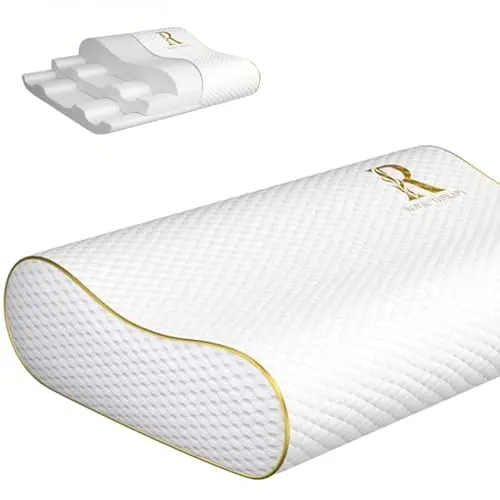
Memory Foam Contour Pillow – Three-Layer Adjustable Support
A medium-firmness contoured memory foam pillow with a three-layer build – pull the middle layer out and the loft drops, put it back and you get full cervical height. Channeled foam and a washable rayon-from-bamboo cover keep it breathable for a solid foam block.
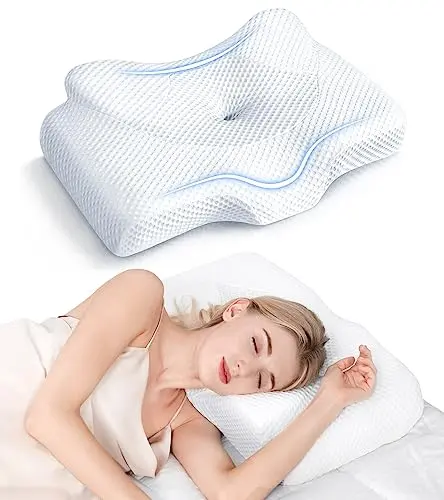
Cervical Pillow – Hollow-Center Cooling Support
A hollow-center cervical pillow that cradles the head in a recessed channel while a raised rim supports the neck. Rotate it 180 degrees for a higher or lower profile, and pull the bottom insert for a third option. The 3D mesh case is built for hot sleepers.
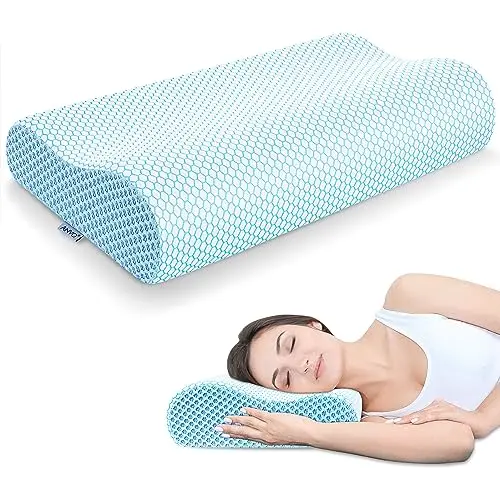
Memory Foam Cervical Pillow – Dual-Height Entry Point
A two-height contour pillow – flip it 180 degrees and you get either a lower 3.5-inch profile or a taller 4.7-inch one. The foam is slow-rebound and CertiPUR-US certified, and the cover has mesh side panels to help with airflow.

Butterfly Cervical Pillow – Dual-Height Contour
A butterfly-shaped contour pillow with two heights – roughly 3.9 and 4.9 inches depending on which way you turn it – cut from high-density slow-rebound memory foam. The removable cover is a cooling nylon-spandex blend that zips off for washing.
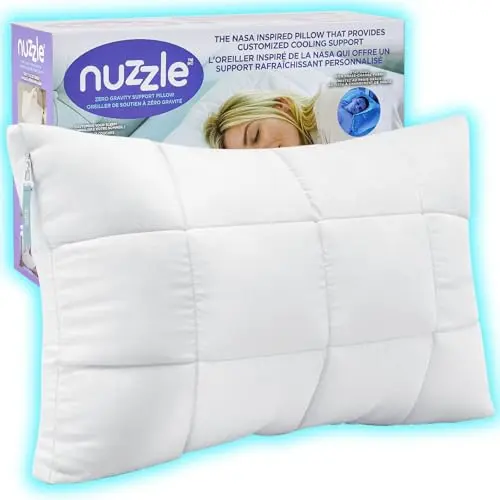
Adjustable Layer Pillow – Hotel Softness by Configuration
A layered fiber pillow, not a foam one. Three configurations – slim, medium, or both layers together – shift you between a soft stomach-sleeper profile and a firmer side-sleeper build, and the PCM fabric is designed to buffer temperature swings rather than just venting heat.
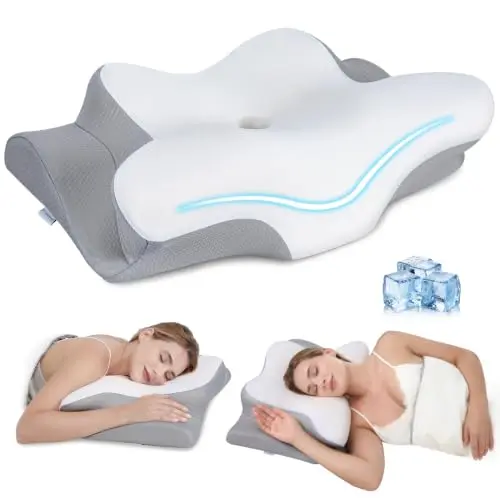
Cervical Neck Pillow – Cool Ice Silk, Two Heights
A butterfly-contour memory foam pillow with two heights, a slow-rebound feel, and a silky ice-silk cover that’s removable and machine washable. The foam carries OEKO-TEX, CertiPUR-US, and ISPA certifications, and the maker includes a six-month warranty.
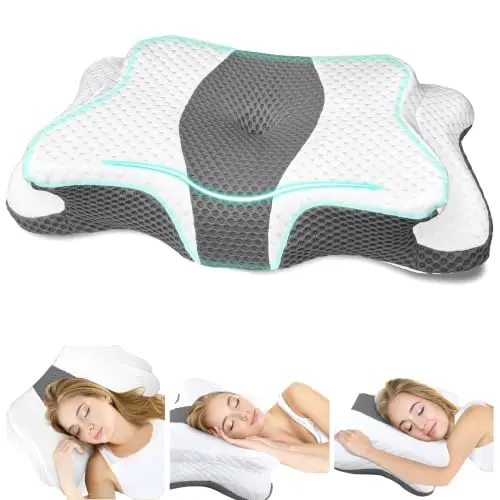
Memory Foam Cervical Pillow – Pronounced Neck Ridge
A butterfly-contour memory foam pillow with a thickened neck ridge, a hollowed center, and a massage point at the base of the neck. Rotate it 180 degrees for two heights, or pull the bottom foam piece for a third. The cover is ice silk and machine washable.
How We Evaluated These Pillows for Neck Pain and Snoring
We didn’t sleep a full night on each of these pillows with a neck-angle sensor strapped to us. What we did: cross-referenced 8 pillow models from 8 distinct brands across six decision axes – loft adjustability, contour geometry, fill material and rebound, cover fabric and breathability, coverage of side, back, and stomach positions, and care instructions. We triangulated published specifications, feature sets, and owner feedback where available, then mapped every option against two buyer profiles: someone waking with neck and shoulder stiffness, and someone whose snoring is costing them and their partner sleep. A few things we can’t tell you: how a pillow will feel against your specific shoulder width, or whether you’ll adapt to a contoured shape in three nights or three weeks. What we can tell you is which designs give you room to correct course.
The scoring framework weighted real-world fit (70%) – whether a pillow’s height and shape genuinely serve a given sleep position – against feature differentiation (30%) – the adjustments, cooling materials, and certifications that separate one model from the next. We audited care instructions in that second bucket too, because a pillow you can’t wash is a pillow you’ll resent by month three. We have no commercial relationship with any brand in this guide; recommendations track fit and differentiation, not brand preference. If you want one pillow that adapts as your needs change, the DreamyBlue Signature Adjustable Pillow is the safest starting point; if you want a firm contoured ridge under the neck, Royal Therapy is the better match.
How to Choose the Right Pillows for Neck Pain and Snoring
1. Why Loft and Contour Matter More Than Fill for Neck Pain
Loft is the height of the pillow under your head, and it’s the single most consequential number in this category. Side sleepers usually need more of it to fill the gap between shoulder and ear. Back sleepers need a moderate profile with support under the cervical curve. Stomach sleepers need very little. A pillow that’s off in the wrong direction will undo everything else it does well.
Contour is the second variable. A shaped cervical pillow puts a raised ridge under your neck and a recess under your head, which helps hold the natural curve whether you’re on your back or your side. Flat pillows rely on your own fill placement, which is fine if you’re disciplined about it and frustrating if you’re not. Foam density matters less than you’d expect – medium-firm slow-rebound foam works for most people, while very soft foam lets the head sink past the point of support. Buy on height and shape first, material second.
2. Cervical Contour Pillows vs. Adjustable Loft Pillows for Snoring
There are two ways to solve the same problem. Contoured pillows – the butterfly shapes from Osteo, Anvo, and VYLEE, and the ridged design from Royal Therapy – hold your head in a fixed channel and support the neck from underneath. They work beautifully if the pillow’s built-in height happens to match your frame, which is exactly why dual-height designs are worth prioritizing over single-height ones.
Adjustable fill pillows take the other route: add or remove material until the height is right. Shredded and layered fills give you a much wider range, which helps if you switch positions during the night. For side sleeping in particular – the position most often recommended for snoring – the ability to build real height at the shoulder is the difference between a pillow that works and one that doesn’t. If that’s your priority, the DreamyBlue Signature Adjustable Pillow is the pick here.
3. Matching Pillow Height to Side, Back, and Stomach Sleeping
Side sleepers get the most out of a taller profile – enough to fill the shoulder gap without lifting the chin. Back sleepers do better with a moderate height and a defined neck ridge. Stomach sleepers need the flattest option available, which often means the thin layer configuration rather than any contoured shape.
That’s why dual-height designs earn their keep. A pillow you can rotate for a higher or lower side gives you a genuine fallback if the first guess is wrong. The Anvo is the most straightforward example in this lineup – two profiles in one pillow, with a contour that’s shaped enough to matter without being aggressive about it.
4. Cooling Covers, Foam Odor, and the Break-In Period
Memory foam off-gasses. Most of the picks here are CertiPUR-US certified, which limits the compounds involved, but a new foam pillow still usually needs a day or two of airing before the smell settles – one maker asks for 48 hours specifically. Don’t judge a foam pillow on night one for this reason alone.
Cover fabric is where the real comfort difference shows up. Ice silk and nylon-spandex blends feel cooler than standard polyester, 3D mesh cases vent better than solid knits, and PCM-treated fabric actively buffers temperature instead of just breathing. All of that matters more for a foam pillow than a fiber one, because foam traps heat. If you run hot, the Osteo and its mesh case are the most heat-conscious pick in this group.
5. What a Pillow Can Realistically Do About Snoring
A pillow can improve your head and neck position, and better position can make snoring less likely – particularly if you’re currently sleeping with your head pushed forward or tilted back. That’s a real benefit, and it’s why adjustable height matters so much in this category.
What a pillow can’t do is treat sleep apnea. Several manufacturers say this outright in their own product copy, and they’re right. If the snoring comes with gasping, pauses in breathing, or daytime exhaustion, that’s a conversation with a clinician, not a shopping decision. Treat a new pillow as a comfort and positioning upgrade, not a medical fix.
6. What to Spend: Entry-Level vs. Premium Cervical Pillows
The entry tier in this category is genuinely good now. Budget-friendly contoured pillows come with CertiPUR-US foam, two height options, and washable covers – the things that matter most. If you’ve never slept on a cervical pillow, starting here is sensible, because a meaningful share of people discover they dislike the shape entirely.
The mid-range buys you better covers, more thoughtful height adjustment, and longer warranties. Premium pricing tends to go toward adjustable fill systems with extra material included, which makes sense if you expect your needs to change or you’ve already bounced off fixed-shape pillows. Match the tier to your certainty, not to a brand name.
Frequently Asked Questions
1. Do cervical pillows actually help with neck pain and snoring?
For neck pain, the mechanism is straightforward: a shaped pillow supports the cervical curve and gives your head a consistent resting height instead of letting it drift night to night. People switching off a worn-out flat pillow often notice a difference within a week or two.
For snoring, the benefit is more indirect – better head and neck alignment can help keep the airway in a more open position, especially if you sleep on your side. It’s a contributing factor, not a cure. Neither use is a substitute for medical advice if the snoring is severe or the pain persists.
2. Royal Therapy vs. DreamyBlue: which is better for side sleepers?
They solve side sleeping differently. Royal Therapy is a contoured foam pillow with a three-layer build – you remove the middle layer to drop the height, but the neck ridge stays put. That suits side sleepers who want firm, shaped support and roughly know what height they need.
DreamyBlue is shredded fill, so the height range is wider and the feel is softer, and you can keep tuning it months in. If you’re a side sleeper with broad shoulders or you’re not sure what height you need, go with the DreamyBlue Signature Adjustable Pillow; if you want a defined ridge under the neck, Royal Therapy is the better call.
3. How do the Osteo and Anvo contour pillows differ?
Both are contoured memory foam with two heights, but the shapes diverge. Osteo uses a hollow center that the head drops into, framed by a raised rim – more cradling, and a better match for back sleepers who move around at night. Anvo is a more traditional contour with a flatter surface and mesh side panels, and its two profiles run lower.
Osteo also puts more effort into heat management with its 3D mesh case, while Anvo leans on simplicity and price. If cooling is your priority, the Osteo is the pick; if you want the lowest-commitment way to try a contour shape, Anvo is the smarter entry.
4. How long does it take to adjust to a new cervical pillow?
Plan on one to two weeks. Contoured foam asks your neck to hold a position it may not have held in years, and plenty of people read that as discomfort and give up on night three. Give it a fair trial – but adjust what you can in the meantime by removing a layer, flipping the pillow, or pulling the insert.
If it’s still wrong after two weeks of genuine use, the height or shape is probably a mismatch rather than something to push through. That’s the core argument for adjustable designs over fixed ones.
5. Can a pillow stop snoring completely?
No. A pillow can change your head position, and for some people that’s enough to reduce snoring noticeably – particularly when the noise gets worse with the head tilted in a way that narrows the airway. But snoring has many causes, including congestion, alcohol, weight, and anatomy.
What a pillow can do is remove one variable: a pillow that’s too low or too high. Get the height right first, and if the snoring continues, that’s useful information to bring to a doctor rather than a reason to buy a fourth pillow.
Final Verdict
For most people, the DreamyBlue Signature Adjustable Pillow is the answer. It’s the only pick here where the loft keeps changing with you, and that flexibility covers both the neck pain and the snoring side of the equation without locking you into one shape.
If you want a firm, shaped ridge under your neck and you have a decent idea of your height, the Royal Therapy contour is the stronger choice. On a tighter budget, the Anvo gives you two profiles and certified foam for a trial that costs you very little. And if you sleep hot, the Osteo’s mesh case earns its spot.
Match the pillow to your sleep position first. Everything else is a refinement.
