
Best Pillows For Shoulder Pain And Neck Pain – 2026 Reviews

You wake up, roll your head to the side, and there it is again – that familiar pinch between the shoulder blade and the base of the skull. It rarely comes from nowhere. For a surprising number of people it traces straight back to the pillow: too tall, too flat, or shaped for a sleeper they aren’t.
Two things separate a pillow that actually helps from one that just feels nice for five minutes. The first is loft – the height that fills the gap between your shoulder and your ear without tipping your neck. The second is shape – whether there’s a contour that follows the cervical curve and a recess that lets your shoulder settle instead of rolling forward. Get either one wrong and the ache is back by morning.
We looked at the cervical, contour, and adjustable pillows sold across major brands and sorted them by how well they address neck and shoulder discomfort specifically, since those two problems so often travel together. Below are the ones worth your attention, and more usefully, which one fits how you actually sleep.
Best Pillows for Shoulder Pain and Neck Pain – 2026 Reviews

Adjustable Curved Pillow – Shredded Fill You Can Tune
A queen-size curved pillow filled with shredded visco foam you add or remove, so you dial loft to your own shoulder width instead of hoping a fixed molded height happens to fit.
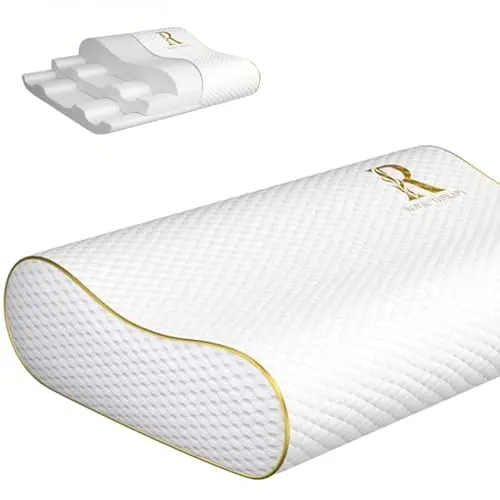
Memory Foam Cervical Pillow – Three-Layer Adjustable Contour
A three-layer memory foam contour where the middle slab lifts out to drop the height, paired with a moisture-wicking bamboo-blend cover.
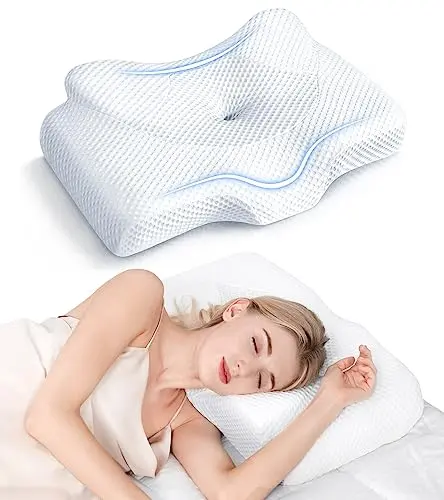
Cervical Pillow – Hollow-Center Dual-Height Support
A cervical pillow built around a recessed center well, with two heights you select by turning it around and a mesh case that moves air.
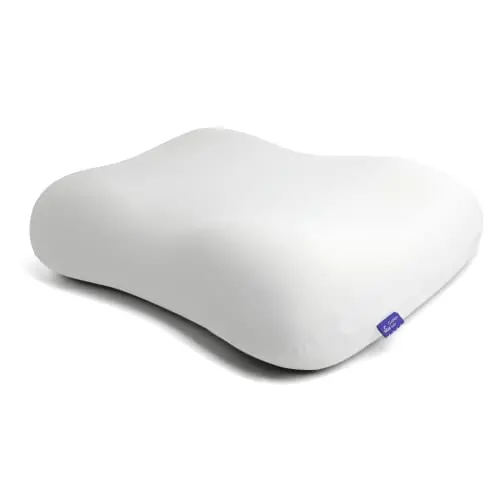
Deep Sleep Pillow – Ergonomic Contour for Side and Back Sleepers
A premium contoured pillow with sculpted side bolsters and dual-density foam, designed for people who rotate between back and side sleeping.

Cervical Neck Pillow – Dual-Height Butterfly Contour
A butterfly contour with a center dip and raised neck wings, offering two selectable heights and a cool-to-the-touch cover.
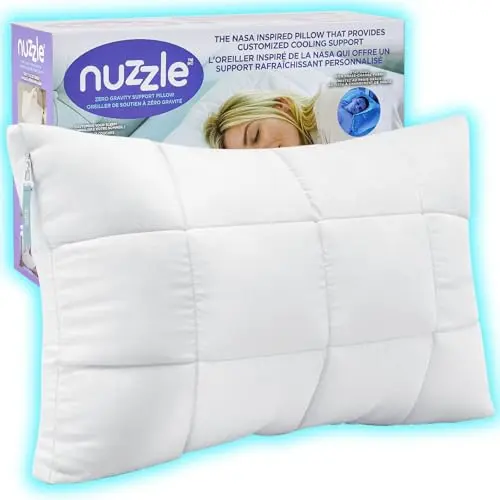
Adjustable Neck Pillow – Layered Loft for Every Sleep Position
A conventional-shaped pillow with removable layers of coil fiber, so you can go low for stomach sleeping or firm for side sleeping.
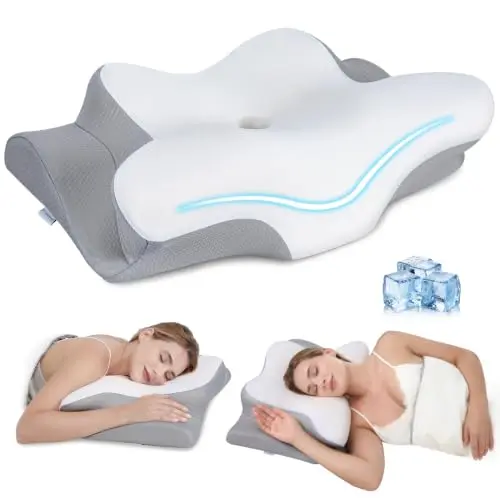
Cervical Neck Pillow – Two Heights With Ice Silk Cover
A two-height contoured foam pillow with a silky cooling cover and a genuinely budget-friendly place in the lineup.
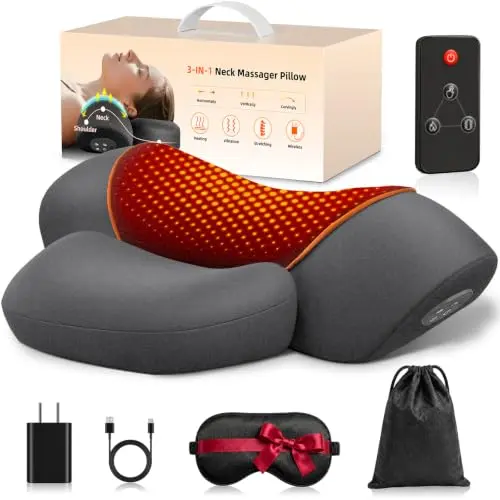
3-in-1 Neck Massager Pillow – Heat, Vibration, and Airbag Traction
Not a sleep pillow – a cordless device combining heat, vibration, and rhythmic airbag traction to loosen the neck and shoulders before bed.
How We Evaluated These Pillows for Shoulder Pain and Neck Pain
We didn’t sleep a full month on each of these pillows, and we can’t measure cervical alignment in a lab. What we did: cross-referenced eight pillow models from eight distinct brands built specifically for neck and shoulder discomfort, then mapped them across six decision axes – loft and height adjustability, contour geometry, fill material and density, cover breathability and washability, sleep-position suitability, and how much real customization each one offers. We triangulated published specifications, feature sets, and owner feedback where available, then weighed each option against representative buyer profiles: side sleepers with broad shoulders, back sleepers who wake up stiff, and people who have already cycled through two or three contour pillows without success.
The scoring framework weighted real-world fit for neck and shoulder pain at 70% – how well an option actually holds the cervical curve and clears the shoulder – against feature differentiation at 30%, covering adjustable fill, dual heights, cooling covers, certification, and durability signals. We have no commercial relationship with any brand featured here; recommendations track fit and differentiation, not brand preference. If you want one pillow you can tune to your own geometry, the Adjustable Curved Pillow from Sidney Sleep is the strongest starting point. If you’d rather spend less and test a hollow-center shape first, the Osteo is the smarter first experiment.
How to Choose the Right Pillow for Neck and Shoulder Pain
1. Start With Loft: Why Pillow Height Decides Whether Your Neck Hurts
Loft is just pillow speak for height, and it’s the biggest single lever for neck and shoulder pain. Side sleepers need a taller pillow to fill the gap between the mattress and their ear – roughly the width of their own shoulder. Back sleepers need less, or their chin gets pushed toward their chest. Stomach sleepers need the least of all. Get this wrong and no amount of fancy foam rescues you.
That’s why adjustable loft is worth paying for. Two designs do it well: shredded fill you can add or remove, like the Sidney Sleep adjustable pillow, or a solid contour with two molded heights you flip between. Either way you get a second and third attempt at the right height without buying another pillow.
If your shoulders are broad, err taller. If you’re a smaller sleeper or you wake with your chin tucked, err lower. A pillow an inch too tall produces exactly the shoulder ache you’re trying to get rid of.
2. Contour Shape vs. Adjustable Fill: Two Routes to Shoulder Pain Relief
Contoured pillows have a molded neck roll and a dip for the head. They hold the cervical curve passively – you lie down and the shape does the work. Shredded-fill and layered pillows conform instead, and you shape them. Neither is universally better. Contour foam suits people who want a fixed, repeatable position every night. Shredded fill suits people whose shoulders need more clearance than any molded shape provides.
Cutouts and shoulder lines matter more than the marketing suggests. A pillow that lets your bottom arm and shoulder slide underneath keeps your spine stacked; a flat one pushes your shoulder up and your neck sideways. If you consistently wake with one shoulder sitting higher than the other, look for a design with a defined shoulder recess.
3. Matching a Cervical Pillow to Your Sleep Position
Side sleepers get the most out of cervical designs because they’re the ones with a real gap to fill. Firm support plus a shoulder recess is the combination to look for. Back sleepers should prioritize a lower center profile and a gentler neck roll, since an aggressive contour will tip the head back. Stomach sleepers are the hardest fit – most contour pillows are simply too tall, and a low, soft layered pillow usually works better.
Combination sleepers need something that doesn’t punish movement. If you flip between back and side several times a night, an adjustable layered pillow like the Nuzzle Adjustable Neck Pillow is more forgiving than a strongly sculpted one, because the shape isn’t fighting you when you turn.
4. Foam, Shredded Fill, or Fiber: What Each Fill Does for Neck Pain
Memory foam holds a shape and gives consistent support, but it traps heat and feels unfamiliar for the first week. Shredded visco foam breathes better and adjusts more easily, though it needs regular fluffing. Polyester fiber is the softest and cheapest option, but it compacts and won’t hold a cervical curve through the night.
Density is the number most people skip. Low-density foam softens within months, which is why a slightly firmer pillow often outlasts a plush one. If a pillow feels perfect in the store but collapses by month four, density was the problem.
5. Covers, Certifications, and Care: The Details That Affect Daily Use
A washable cover is not a small detail – you’ll wash it weekly, and a cover that shrinks or pills makes an otherwise good pillow annoying. Cooling fabrics such as ice silk, nylon-spandex blends, and 3D mesh genuinely sleep cooler than a plain cotton case stretched over warm foam.
On certifications, CertiPUR-US covers foam content and emissions, while OEKO-TEX covers textile safety. Both are worth having if you’re sensitive to smell. And note that most memory foam cores are not washable – only the cover is – so plan on spot cleaning and airing rather than laundering the whole thing.
6. What Pillows for Neck Pain Actually Cost
Budget pillows sit in the entry-level tier and usually deliver one good idea – a hollow center, or a pair of heights – without premium covers or finishing. Mid-range is where the real engineering lives: adjustable fill, dual-density foam, branded cooling covers, broader size options.
Premium pricing buys patented contours and better finishing, and it’s only worth it if the shape suits your neck. An expensive contour that fights your sleep position is worse than a cheap one that doesn’t. Buy the geometry first, the materials second.
Frequently Asked Questions
1. What's the difference between the Sidney Sleep Adjustable Curved Pillow and the Royal Therapy Memory Foam Pillow?
They solve the same problem in opposite directions. Sidney Sleep uses shredded visco foam you add or remove, so the pillow changes shape around your shoulders – better if you want a soft, conforming surface and full control over loft. The Royal Therapy Memory Foam Pillow is a molded three-layer contour adjusted by pulling out the middle slab for a lower profile – better if you want a firm, repeatable neck position night after night.
Sidney Sleep is the more forgiving starting point if you’ve never used a contour pillow. Royal Therapy suits people who already know molded foam works for them.
2. How does the Osteo Cervical Pillow compare with the C Cushion Lab Deep Sleep Pillow?
Osteo is built around a hollow center – a recessed well for the back of your head so the raised edges can support your neck – and gives you two heights by flipping it 180 degrees, plus a removable insert for a third option. It’s the cheaper way to try a cervical shape.
Cushion Lab goes the other direction with a patented contour and sculpted side bolsters, designed for people who switch between back and side sleeping. Its dual-density foam is softer on contact and the cover is notably smooth. If you want maximum shape control on a tight budget, Osteo. If you want a premium, movement-friendly contour, Cushion Lab.
3. Do pillows for shoulder pain work differently than pillows for neck pain?
They overlap more than the marketing suggests, because most shoulder pain from sleeping traces back to the same misalignment that causes neck pain. The emphasis differs, though. For neck pain, the priority is cervical support – a roll or contour that holds the natural curve. For shoulder pain, the priority is clearance – enough height and a shoulder recess so your body can lie flat instead of rolling forward.
Side sleepers usually need both at once, which is why an adjustable pillow tends to outperform a fixed shape for people dealing with both problems.
4. How long before I know if a cervical pillow is helping?
Give it roughly a week of consistent use, not one night. Memory foam and shredded fill both feel foreign at first, and night-one comfort tells you very little.
Watch for these instead: whether morning stiffness eases, whether you’re waking up fewer times to reposition, and whether the pillow still feels supportive by 4am. The adjustability features – removable fill, flip-to-change heights, layered builds – exist precisely so you can make small corrections during that first week rather than starting over.
5. Is a contoured memory foam pillow safe if I have a neck injury?
A pillow isn’t a treatment, and nothing here replaces a clinician’s advice – especially with a diagnosed injury, disc issue, or recent surgery. What a cervical pillow can reasonably do is hold your head and neck in a more neutral position while you sleep, which many people find reduces morning soreness.
Start on a lower height setting, give it a week, and stop if you get numbness, tingling, or radiating pain. If a contour feels too aggressive, a layered or adjustable-fill pillow lets you dial the shaping back without giving up support.
Final Verdict
For most people dealing with neck and shoulder pain together, the Sidney Sleep Adjustable Curved Pillow is the pick – shredded fill you can tune to your own shoulder width, a curved profile that clears your arm, and a washable cover, all at a mid-range price. If you’d rather test a cervical shape without committing much, the Osteo gives you a hollow center and two heights for less. Want the premium version of a contour pillow? The C Cushion Lab Deep Sleep Pillow is the most thoughtfully shaped option here, provided your neck tolerates a pronounced curve.
And if contour foam has never worked for you, the Nuzzle Adjustable Neck Pillow delivers adjustable loft and hotel-style softness in a normal pillow shape. Start with the shape that matches how you actually sleep – that’s the decision that matters most.
