
Best Pillows For Side Sleepers With Shoulder Pain – 2026 Reviews

You wake in the dark, roll onto your other side, and there it is again. A dull ache that starts somewhere under the shoulder blade and climbs into your neck. Side sleeping puts a lot of weight on one shoulder, and most pillows simply don’t sit tall enough to bridge the gap between your ear and the mattress. So the shoulder quietly takes the load for eight hours.
That gap is the whole problem in one sentence. A pillow for a side sleeper with shoulder pain has to do two jobs at once: hold your head high enough that your neck stays level, and cushion the shoulder so it can settle instead of getting pinched. Miss the loft and you’re either craning your neck downward or propping it up until your chin tucks. Neither feels good by morning.
We looked across the pillow market rather than down one brand’s catalog, because the fix isn’t a single material or a single shape. Some of the strongest options are adjustable fill pillows you mold by hand. Others are contoured foam with a shoulder recess and a flip-for-height profile. Both approaches work – they just suit different frames, different mattress firmness, and different tolerances for fiddling.
Best Pillows for Side Sleepers with Shoulder Pain – 2026 Reviews
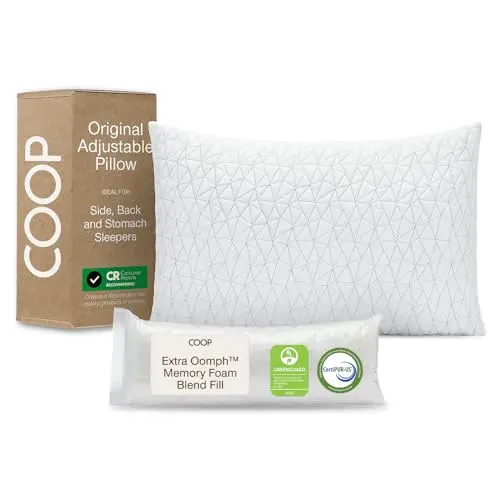
Original Adjustable Pillow – Custom Loft for Side Sleepers
A shredded memory foam and microfiber pillow you fill to your own loft, with a spare bag included so a side sleeper can build real height.
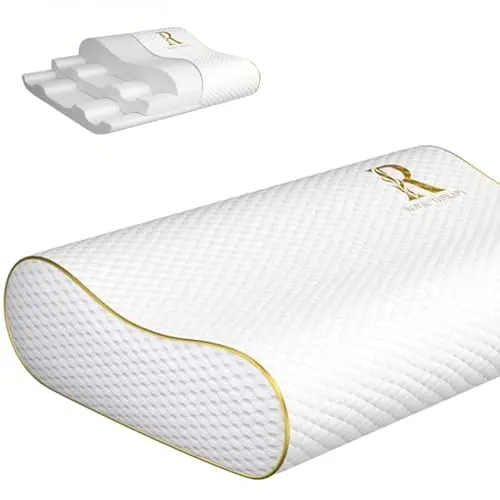
Memory Foam Contour Pillow – Three-Layer Shoulder-Friendly Support
A three-layer contoured pillow you rebuild by pulling the middle slab, shaped around differing shoulder widths rather than one generic neck curve.
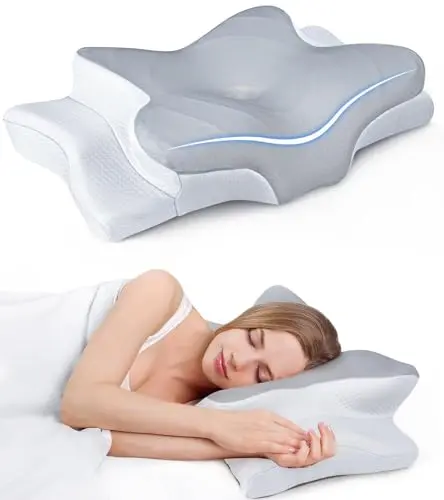
Cooling Cervical Pillow – Six-Zone Contour With a Cool Cover
A hollow-center cervical pillow with six contour zones and a cooling cover, adjustable through a 180-degree flip or a removable bottom insert.

Signature Adjustable Pillow – Foam-and-Tuft Fill You Can Tune
A shredded-foam pillow with down-like tufts for spring, a bonus fill bag, and a breathable bamboo rayon cover in a full queen footprint.

Adjustable Curved Pillow – Curved Cradle With Extra Fill
A curved, shredded-fill pillow that arrives medium firm and includes extra fill for tuning side-sleeper loft.
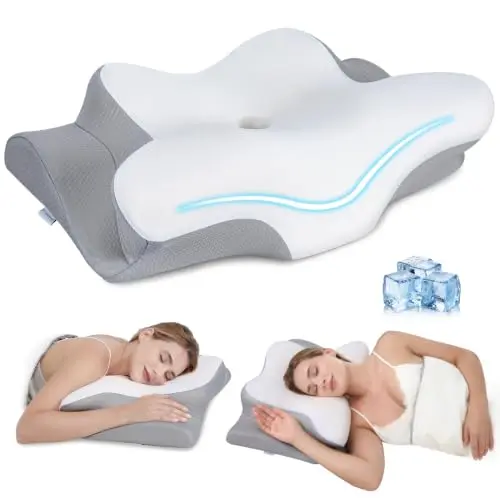
Cervical Neck Pillow – Two Heights in One Profile
A two-height cervical pillow with a butterfly contour, slow-rebound foam, and a removable ice silk cover.
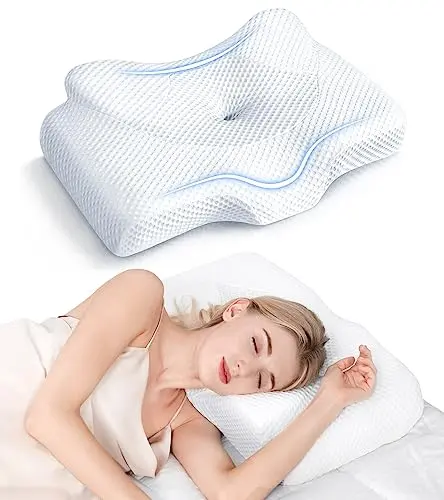
Cervical Pillow – Hollow-Center Relief Without the Markup
A hollow-center cervical pillow with a removable bottom insert and a breathable 3D mesh cover.
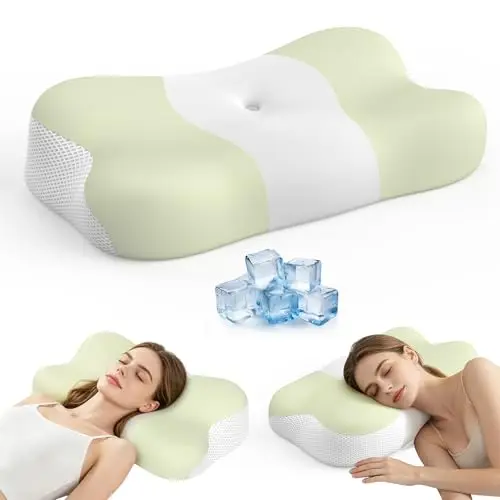
High-Low Cervical Pillow – Zoned Support for Side Sleeping
A zoned high-low cervical pillow with quick-rebound memory foam and a cooling mesh cover.
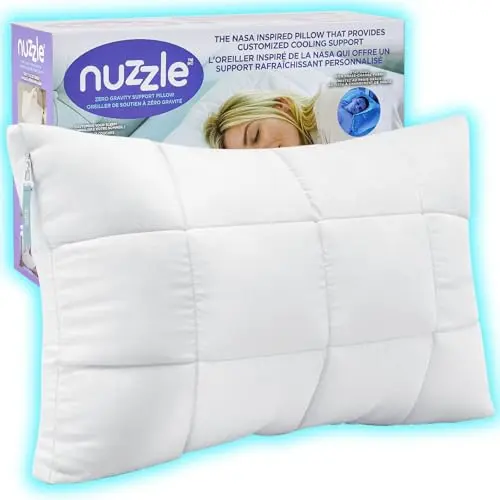
Standard Adjustable Pillow – Layered Loft You Stack Yourself
A layered pillow with three stackable slabs and a plush hotel-style feel, in a standard footprint.
How We Evaluated These Pillows for Side Sleepers with Shoulder Pain
We didn’t run multi-week sleep trials or pressure-mapping tests. What we did: cross-referenced 9 pillow models from 9 distinct brands across six decision axes – loft and height range, contour shape, fill material and firmness, cover fabric and breathability, adjustability, and how directly each design accounts for shoulder width. We triangulated published specifications, feature sets, and owner feedback where available, then mapped all of it against the specific demands of sleeping on your side with shoulder pain.
Loft carried the heaviest weight. A side sleeper’s pillow has to fill the space between the mattress and the ear, and that space changes with shoulder width, mattress firmness, and how far you sink in. Adjustable fill and flip-for-height designs scored well because they let you correct a wrong guess instead of buying again. Contour shape came second: a recess or channel under the shoulder reduces the pressure that builds overnight.
The scoring framework weighted real-world fit (70%) – how well each pillow serves a side sleeper with shoulder or neck discomfort – against feature differentiation (30%) – materials, certifications, cover breathability, and adjustment range. We have no commercial relationship with any brand here; recommendations track fit and differentiation, not brand preference. If you want a pillow you can shape by hand, the Coop Home Goods Original is the place to start; if you’d rather have the contour built in, the Royal Therapy is the better match.
How to Choose the Right Pillow for Side Sleepers With Shoulder Pain
1. Why Loft Is the Make-or-Break Number for Side Sleepers With Shoulder Pain
Here’s the measurement that decides whether you wake up sore. A side sleeper needs a pillow tall enough to fill the gap between the mattress and the side of the head – roughly the distance from your ear to the outer edge of your shoulder. Standard pillows land in the middle of that range, which is why so many side sleepers end up stacking two pillows or folding one in half.
All the contouring in the world won’t fix a pillow that’s a couple of inches short. If your neck angles downward toward the mattress, the muscles on that side stay contracted all night. If the pillow is too high, your neck bends the other way and the shoulder rolls forward. Either way you get the same morning ache. That’s why adjustable fill and flip-for-height profiles are worth more here than any single foam density claim.
If you’d rather not guess, the Coop Home Goods Original is the pick here – you add or remove fill until the height is right, and it ships with a spare bag specifically for that.
2. Contoured Foam vs. Adjustable Shredded Fill for Shoulder Pain
Two designs dominate this category, and they solve the same problem from opposite directions. Contoured foam pillows have a fixed shape with a cervical roll and often a recessed channel where the shoulder sits. Adjustable shredded pillows are loose fill in a zippered case, so the shape comes from you molding it.
Contour wins on consistency – the shape is identical every night, and that shoulder recess genuinely reduces the pressure point. It loses on flexibility: if the fixed height is wrong for your frame, there isn’t much to do about it. Shredded fill wins on range, because you can build the loft a broad-shouldered side sleeper needs. It loses on tidiness, since fill migrates and you’ll be re-shaping.
Broad shoulders and a tall frame usually point toward adjustable fill, and the DreamyBlue Signature is built around exactly that. Narrower shoulders and a preference for structure point toward a contour, and the Royal Therapy is the most tunable of that group.
3. Firmness, Fill, and Cover Materials That Change How a Pillow Feels
Firmness gets described as if it were a fixed property of a pillow, but on an adjustable model it’s simply what you make it. What matters more is rebound speed – how quickly the foam returns after you shift. High-density slow-rebound foam holds a shape through the night; cheaper fast-rebound foam collapses under a shoulder and leaves you bottoming out on the mattress.
Cover fabric matters more than most shoppers expect. Bamboo-derived rayon and polyester blends breathe differently, and a hot sleeper who overheats will roll around more – which is exactly what you don’t want with a sore shoulder. Cooling covers help at the margin, but treat the temperature claims with some skepticism, since the effect depends heavily on your room.
4. What the Pillow Market Looks Like at Each Price Tier
The market splits into three rough tiers. Entry-level cervical pillows give you a fixed-shape foam core and a basic cover; they’re the least expensive way to try a contour design before committing. Mid-range adjustable pillows add zippered fill access and a spare fill bag, which is where most side sleepers end up. Premium pillows layer in better cover fabrics, third-party certifications, and longer trial windows.
What you’re really buying as you move up is correctability – the ability to fix a wrong guess without repurchasing. A pillow you can tune is worth more than a pillow with a nicer cover.
5. How to Match a Pillow to Your Shoulder Width and Frame
Measure roughly from the base of your neck to the outer tip of your shoulder, then think about how much you sink into your mattress. A soft mattress swallows more of you, which effectively increases the loft you need. A firm mattress does the opposite.
Frame size matters too. A compact 24-by-14 footprint suits lean or smaller sleepers; broader shoulders and larger frames do better with a full queen footprint around 29 to 30 inches wide. And if you flip between side and back during the night, favor a gentle contour rather than a deep cervical roll, since a pronounced ridge can feel like a lump when you’re lying on your back.
Frequently Asked Questions
1. Do side sleepers with shoulder pain need a firmer pillow?
Usually, yes – but height matters more than firmness. A side sleeper’s head has further to travel before it reaches the mattress, so the pillow has to hold its loft under load rather than compress flat. That’s why shredded fill packed a little fuller, or a medium-firm molded foam, tends to work better than a soft down pillow. The caveat is that too firm creates a new pressure point at the ear and jaw. Aim for firm enough to stay tall, soft enough that your shoulder sinks in slightly.
2. What's the difference between the Coop Home Goods Original and the DreamyBlue Signature?
They’re close cousins: both are zippered shredded-fill pillows with a spare fill bag and a breathable rayon-blend cover. The Coop Home Goods Original uses a foam-and-microfiber blend that reads slightly denser and holds its shape with less fluffing, and it carries both CertiPUR-US and GREENGUARD Gold. The DreamyBlue Signature mixes shredded foam with down-like poly tufts for a springier, more hotel-pillow feel. Dense and moldable points to Coop; motion and plushness point to DreamyBlue.
3. Royal Therapy vs. Osteo: which suits shoulder pain better?
They’re different tools. The Royal Therapy is a three-layer contour you rebuild by removing the middle slab, and its taller profile is aimed at sleepers with wider shoulders. The Osteo relies on a hollow center that cradles the head and drops the shoulder into a recess, with height changes coming from a flip or the removable bottom insert. Osteo is the better bet if you specifically want the shoulder recess; Royal Therapy is the better bet if you want to adjust height in defined, repeatable steps.
4. How high should a pillow be for side sleeping with shoulder pain?
Tall enough that your nose stays roughly parallel to the mattress when you’re lying on your side, with no downward tilt at the chin. In practice that lands somewhere between 4 and 6 inches of compressed height for most adults, scaling upward with shoulder width. If you wake with your bottom arm numb, the pillow is too low or too soft. If your chin is tucked toward your chest, it’s too high.
5. How long should you give an adjustable pillow before deciding?
Plan on a week of small tweaks. Remove or add fill in modest handfuls, sleep one night, then adjust again – most people overshoot on the first attempt. Memory foam also needs 48 hours to fully expand after unboxing, and a pillow that arrives feeling firm often softens once it has had air. If it’s still wrong after that, the shape is probably a mismatch rather than a tuning problem.
Final Verdict
For most side sleepers dealing with shoulder pain, the Coop Home Goods Original is the answer – it’s the one design here you can genuinely rebuild around your own shoulder width, and the spare fill bag means your first guess doesn’t have to be your last. If you’d rather have structure baked in, the Royal Therapy gives you a contoured, shoulder-aware profile with three adjustable layers. Working to a tighter budget, the Missleep delivers two heights and slow-rebound foam for the least money here. And if you overheat at night, the Cozyplayer pairs a six-zone contour with the most convincing cooling cover in this lineup. Start with loft, correct it early, and give any new pillow a week before you judge it.
