
Best Pillows For Sleep Apnea And Snoring – 2026 Reviews

You have probably tried the trick where you stack two pillows, shove one under your shoulders, and hope for the best. It works for about twenty minutes. Then the tower collapses, you roll onto your back, and the snoring starts again – yours or your partner’s.
Pillows made for sleep apnea and snoring take two different routes to the same goal: keeping your airway open. Wedge pillows raise your whole upper body on a steady incline, the same principle behind elevating the head of a hospital bed. Cervical contour pillows work more locally, cradling the head and supporting the neck so your chin does not tuck toward your chest. Neither is a treatment for diagnosed obstructive sleep apnea, but both can meaningfully change how you breathe at night.
The hard part is fit, not features. A 10-inch wedge that is perfect for reflux can be too steep to sleep on sideways, and a contour pillow with the wrong loft can push your chin down instead of holding it neutral. We compared the options across the market and grouped them by approach, so you can start from the shape that matches your actual problem rather than the loudest label on the box.
Best Pillows for Sleep Apnea and Snoring – 2026 Reviews
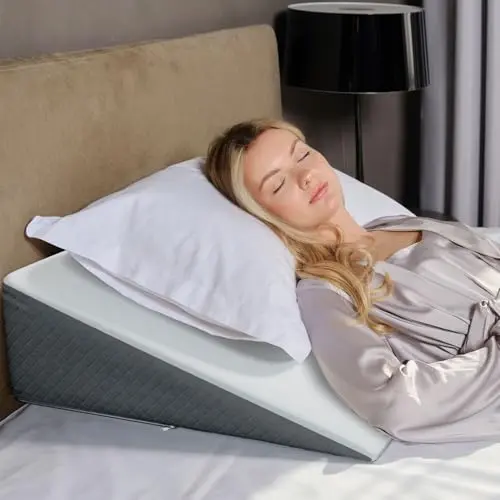
Bed Wedge Pillow 7.5-Inch – Gentle Incline for Easier Breathing
A triangular wedge that lifts your torso on a 7.5-inch incline, with a 1.5-inch memory foam top layer over a high-density foam core. The removable jacquard cover is machine washable, and the 24 x 24-inch footprint fits most beds without taking over the mattress.
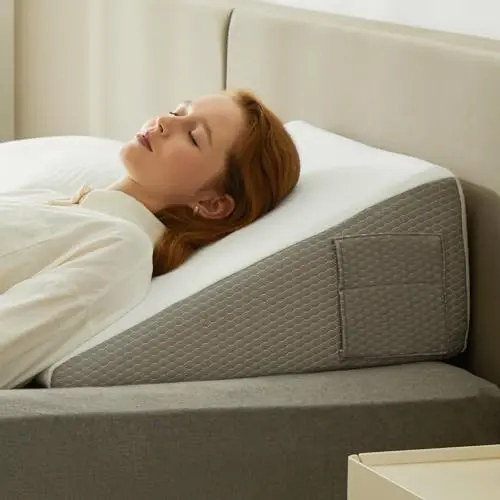
Wedge Pillow 10-Inch – Steeper Incline with Cooling Gel
A 10-inch wedge with a cooling gel-infused memory foam top over a high-density base, plus built-in side pockets, a carry handle, and a breathable removable cover. The steeper angle suits reflux and stronger elevation needs.
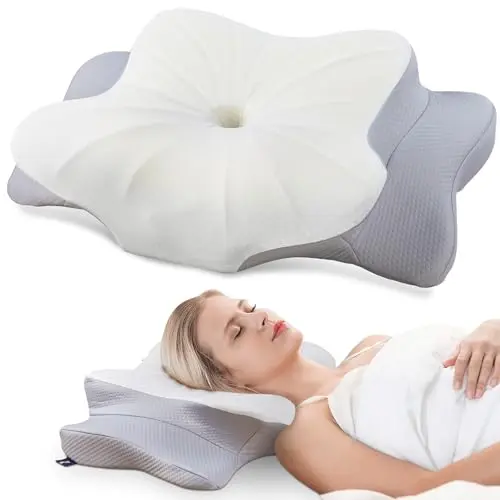
Cervical Contour Pillow – Dual-Height Support for Side Sleepers
A butterfly-shaped contour pillow with two height options, armrest grooves, and a breathable cotton-blend cover. Slow-rebound memory foam holds its shape, and the zippered cover comes off for machine washing.
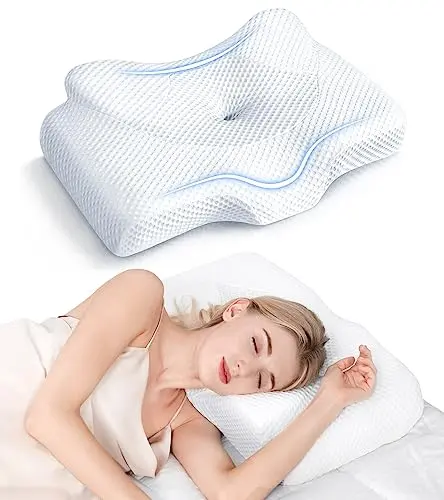
Hollow-Center Cervical Pillow – Adjustable Orthopedic Support
A hollow-center cervical pillow with a reversible two-height profile and a removable insert for finer loft adjustment. The 3D mesh cover is breathable, and the foam is CertiPUR-US certified and Oeko-Tex approved.
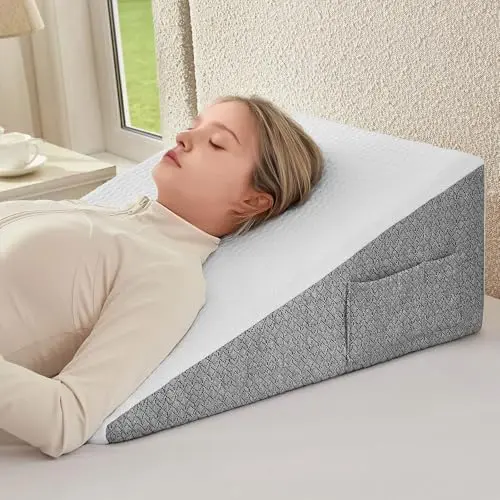
Wedge Pillow 10-Inch – Firm, Non-Slip Incline
A 10-inch wedge with 1.2 inches of slow-rebound memory foam over a supportive foam base, a non-slip bottom, two oriented side pockets, and a carrying handle. The cover is removable and machine washable.
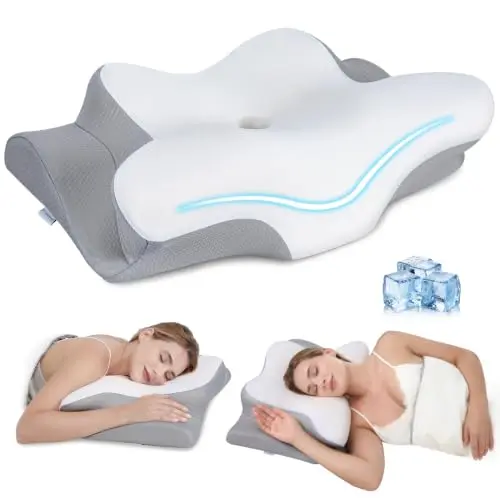
Cervical Neck Pillow – Ice Silk Cover, Two Contour Heights
A two-height butterfly contour pillow with a silky ice-silk cover, slow-rebound memory foam, and CertiPUR-US, Oeko-Tex, and ISPA certifications. The cover is removable and machine washable.

Ergo Pillow – Airway-Friendly Contour for Side Sleepers
A butterfly-style orthopedic pillow with dual loft levels, slow-rebound memory foam, and a breathable ice-silk cover with a hidden zipper. It is positioned specifically for airway support and side sleeping.
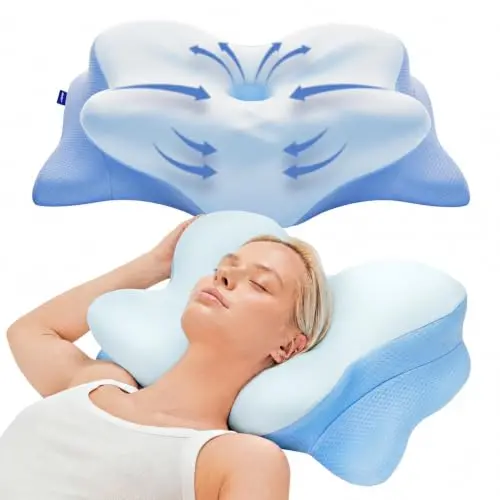
Ergo Cervical Pillow – Butterfly Contour with Cooling Case
A butterfly-shaped memory foam contour pillow with a cooling zip-off pillowcase included, a breathable temperature-regulating cover, and CertiPUR-US and OEKO-TEX certification.
How We Evaluated These Pillows for Sleep Apnea and Snoring
We did not run overnight sleep studies, measure airway resistance, or track snoring decibels in a lab. What we did: cross-referenced 8 pillows from 8 distinct brands across 7 decision axes – incline height and footprint, loft and contour adjustability, foam density and firmness, cover breathability and washability, third-party certifications, sleep-position compatibility, and how each design actually positions the head and neck. We triangulated published specifications, mapped owner feedback where available, and weighed each option against the two buyer profiles this category serves: the sleeper who needs torso elevation and the sleeper who needs cervical alignment.
The scoring framework weighted real-world fit for apnea and snoring support (70%) – how convincingly each pillow opens the airway and stays comfortable for a full night – against feature differentiation (30%) – adjustment range, cooling, washable covers, and build quality that separates one option from the next. We have no commercial relationship with any brand here, and recommendations track fit and differentiation rather than brand preference. If you want an incline you can sleep on all night, the Kolbs Bed Wedge Pillow is the one; if you would rather address neck position than torso angle, the DONAMA Cervical Pillow is the better starting point.
One honest limit: comfort in this category is highly individual, and body shape, neck curve, and mattress firmness all shift the result. Treat these rankings as a starting filter, not a guarantee.
How to Choose the Right Pillow for Sleep Apnea and Snoring
1. Wedge Pillow vs Cervical Pillow for Sleep Apnea and Snoring
These are two different tools, and the wrong one will feel like wasted money. A wedge pillow raises your torso and head together on a fixed incline – typically 7.5, 10, or 12 inches at the tall edge – which is the same logic as elevating the head of a hospital bed. Gravity pulls your soft palate and tongue forward instead of back, and reflux stays down where it belongs.
A cervical contour pillow keeps your head flat on the bed but changes the angle of your neck. A hollow center or butterfly shape cradles the skull, supports the curve of the neck, and discourages your chin from tucking toward your chest – the position that narrows the airway and produces the worst snoring. If you wake with a dry mouth and a sore neck, contour is usually the more relevant fix. If you wake with a sour taste, start with a wedge.
2. How Much Incline Do You Actually Need for Snoring?
Steeper is not automatically better. A 7.5-inch wedge is the sweet spot for all-night sleeping – enough elevation to matter, shallow enough that you can stay on it for seven or eight hours without sliding down. 10-inch wedges deliver a more decisive angle and suit reflux and heavier snoring, but they are harder to sleep on sideways. Twelve-inch wedges are recovery and reading tools more than sleep tools, and most people find them too steep for a full night.
Body type matters too. Taller sleepers and broader shoulders usually want the steeper option; petite sleepers often do better with the shortest incline available. If you want one pillow that handles elevation without turning your bed into a recliner, the Bedluxe Wedge Pillow and its 10-inch rise is a sensible upper limit for sleeping.
3. Matching Loft and Contour to Your Sleep Position
Side sleepers need the most loft, because the pillow has to fill the gap between the mattress and the ear while keeping the neck level. Look for a dual-height design so you can rotate the pillow to the taller side, and check whether there is room for your bottom arm – otherwise you will wake up with a dead hand. Back sleepers want a lower profile with firm support under the neck and a dip for the skull. Stomach sleepers need the least loft of all and should avoid aggressive contours entirely.
This is where adjustment range earns its keep. The Osteo Cervical Pillow offers the widest tuning of the contour options here – two loft levels plus a removable insert – which makes it the safer pick if you are not sure where you land.
4. Foam, Cooling, and Washable Covers
Almost everything in this category is memory foam, but the layering matters. A plush memory foam top over a high-density core gives you softness at the surface without losing support – the opposite of a single-density block that feels hard on night one and flat by night ninety. Wedges with a gel-infused top layer run cooler, and contour pillows with mesh or ice-silk covers vent heat better than smooth synthetic cases.
Check certifications if you are sensitive to off-gassing. CertiPUR-US covers foam content and emissions, Oeko-Tex covers textile safety, and a pillow carrying both is a lower-risk purchase. A removable, machine-washable cover is non-negotiable in my book – you are breathing into this thing for a third of your life.
5. What to Budget for a Sleep Apnea Pillow
Wedges sit at the budget-friendly end of this category. A well-made foam wedge with a washable cover lands at an entry-level price, and you do not gain much by spending more unless you want cooling gel or a taller incline. Contour pillows cluster in the mid-range, with the premium tier mostly buying better covers, extra certifications, and more elaborate contouring rather than dramatically better support.
One thing worth knowing: the most expensive pillow in a lineup is not automatically the best fit. Several premium contour pillows cost more than a wedge and offer a narrower range of adjustment. Spend for the shape that matches your sleep position, not the price tag.
Frequently Asked Questions
1. Do pillows actually help with sleep apnea and snoring?
For snoring and mild positional breathing issues, yes – with caveats. Elevating your upper body or holding your neck in a neutral position can keep your airway more open, and that is the mechanism behind both wedges and cervical contour pillows. Plenty of people find their snoring quiets down and their mouth is less dry in the morning.
What a pillow cannot do is treat diagnosed obstructive sleep apnea. If you have been prescribed a CPAP or an oral appliance, a pillow is a comfort accessory, not a replacement. Think of it as improving the conditions you sleep in, not as therapy.
2. What's the difference between the Kolbs bed wedge and the Bedluxe wedge pillow?
Mostly the angle and the surface. The Kolbs Bed Wedge Pillow rises 7.5 inches and pairs a 1.5-inch memory foam top with a firm core, which makes it the easier one to sleep on all night and the better choice for side sleepers. The Bedluxe goes to 10 inches, adds a cooling gel-infused layer and side pockets, and delivers a steeper incline that suits reflux and heavier snoring – but it is less forgiving if you roll onto your side.
Short version: Kolbs for sleeping comfort, Bedluxe for maximum elevation.
3. How does the DONAMA cervical pillow compare with the Osteo cervical pillow?
Both are contour pillows with dual-height designs, so the decision comes down to shape preference. The DONAMA Cervical Pillow uses a butterfly contour with armrest grooves and a medium-soft feel, which most side sleepers find easier to settle into. The Osteo uses a hollow-center cradle plus a removable insert, giving it more height tuning and a firmer, more structured feel.
Choose DONAMA if you want comfort out of the box; choose Osteo if you want to dial in the loft precisely or you switch sleep positions often.
4. What height wedge should I choose for snoring?
Start at 7.5 inches unless you have a specific reason to go steeper. It is the height most people can actually stay on through the night, and consistency matters more than maximum angle. Move up to 10 inches if you have reflux, chronic congestion, or a snore that a gentle incline does not touch.
Reserve 12-inch wedges for recovery and reading, where you are awake and sitting up anyway.
5. How long does a memory foam pillow take to fully expand?
Usually 24 to 48 hours after you unzip the packaging, sometimes longer in a cold room. Foam ships compressed, and a pillow that feels thin on arrival often fills out by the second night. Give it the full window before you judge the loft, and air it near a window if there is an off-gassing smell – most of it fades within a few days.
A washable cover helps you keep it fresh without washing the foam core, which you should never do.
Final Verdict
For most people shopping this category, the Kolbs Bed Wedge Pillow is the right first move. A 7.5-inch incline is steep enough to change how you breathe and gentle enough to sleep on all night, which is more than most wedges can claim. If reflux or a heavier snore is the driver, step up to the Bedluxe Wedge Pillow and its 10-inch angle – just go in knowing side sleeping gets harder at that pitch. And if you would rather correct neck position than torso angle, the DONAMA Cervical Pillow is the most adaptable contour option here.
One caveat worth repeating: if you have been diagnosed with obstructive sleep apnea, use whichever pillow helps you sleep, but keep it in the supporting cast alongside whatever your doctor has prescribed.
