
Best Pillows For Spinal Stenosis – 2026 Reviews

You wake up with a stiff neck, numb fingers, or a dull ache between the shoulder blades, and the first thing you do is punch the pillow into a different shape. With spinal stenosis, that morning routine is more than an annoyance. The wrong pillow height can push your head forward, tilt your neck, or let your shoulders collapse, all of which can make nerve pressure feel worse.
The pillow that works best for spinal stenosis usually has two things in common: it keeps your head, neck, and shoulders in neutral alignment, and it lets you change the loft as your sleep position or symptoms shift. A pillow that is too high can jam the chin toward the chest; one that is too low lets the head drop and the neck curve flatten. Side sleepers need enough fill to bridge the gap between the shoulder and the head. Back sleepers need gentle support under the cervical curve without a wedge that pushes the head forward.
We looked across brands at adjustable shredded pillows, structured cervical contours, cooling covers, and one lumbar option for lower-back stenosis. The goal is not to find the softest pillow or the most orthopedic-looking one. It is to find a pillow you can tune to your body, then keep using after the first week.
Best Pillows for Spinal Stenosis – 2026 Reviews

Adjustable Curved Pillow – Contoured Support for Spinal Alignment
A curved, adjustable pillow that combines a contoured neck edge with shredded memory foam fill you can tune. It is built for side and back sleepers who need the pillow to meet the shoulder without forcing the head forward.
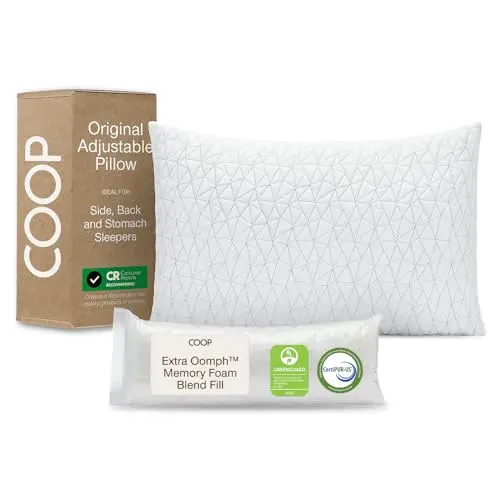
Original Adjustable Pillow – Custom Loft for Neutral Alignment
The original adjustable pillow from Coop uses cross-cut memory foam and microfiber fill, so you can remove or add loft. It is a strong choice if you want a conventional bed pillow shape with custom support.
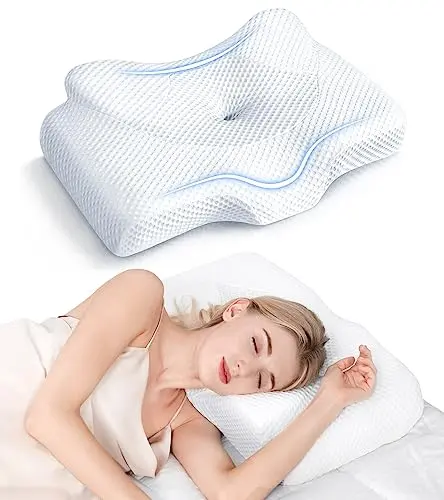
Cervical Pillow – Hollow-Center Neck Relief
A cervical contour pillow with a hollow center and two height options. It is designed to cradle the head while supporting the natural curve of the neck, and it suits back, side, and stomach sleepers who want a more structured pillow.

Cervical Neck Pillow – Dual-Height Contour Support
A butterfly-shaped cervical pillow with two height sides and a cooling cover. It is built for side, back, and stomach sleepers who want a contour that supports the head, neck, and shoulders.

Cooling Cervical Pillow – Contoured Neck Support
A cooling cervical pillow with a hollow concave surface and six contour zones. It is adjustable by rotation or by removing the bottom insert, and it is aimed at side, back, and stomach sleepers.

Signature Adjustable Pillow – Shredded Foam Alignment
A premium adjustable pillow with shredded memory foam and down-like poly tufts. It is designed to move like down while molding like foam, and it comes with extra fill for custom loft.
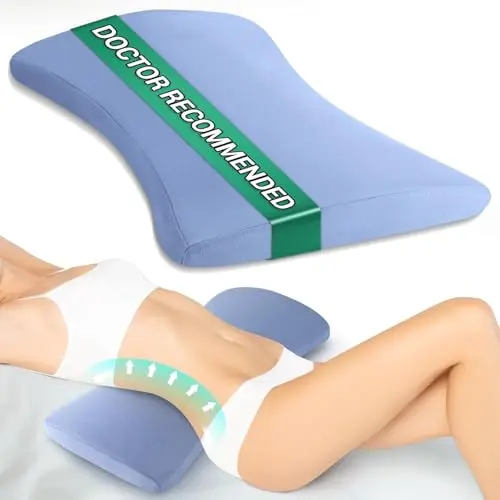
Lumbar Pillow for Sleeping – Lower Back Support
A lumbar pillow designed for sleeping, not just sitting. It supports the lower back in bed and can also be used under the knees or legs for positioning.
How We Evaluated These Pillows for Spinal Stenosis
We didn’t run sleep-lab pressure mapping or clinical assessments of spinal stenosis symptoms. What we did: cross-referenced 7 pillow models from 7 distinct brands across 6 decision axes – loft and height adjustability, contour geometry, fill material and firmness, cover breathability, sleep-position fit, and care and durability. We triangulated published specifications, owner feedback where available, and use-case fit for sleepers managing cervical or lumbar spinal stenosis. We also mapped each pillow against realistic buyer profiles: side sleepers who need shoulder clearance, back sleepers who need gentle cervical support, and shoppers who want a tunable loft rather than a fixed shape. We treated a pillow’s ability to hold a set loft as more important than a plush first impression, and we asked whether a sleeper could realistically change height without buying a new pillow.
The scoring framework weighted real-world fit for spinal stenosis (70%) – how well each pillow supports neutral alignment and can be adjusted to the sleeper – against feature differentiation (30%) – contour design, cooling, fill quality, and care. We have no commercial relationship with any of the brands featured; recommendations track fit and differentiation, not brand preference. If you want the most balanced starting point, the Sidney Sleep Adjustable Curved Pillow is the pick; if you prefer a familiar bed-pillow shape with full fill control, the Coop Home Goods Original Adjustable Pillow is the better match.
How to Choose the Right Pillow for Spinal Stenosis
1. Why Pillow Height Matters More With Spinal Stenosis
For spinal stenosis, the pillow’s job is to keep the head, neck, and shoulders in neutral alignment. A pillow that is too high can push the chin toward the chest or tilt the head; too low lets the head drop and the neck curve flatten. Side sleepers need enough loft to fill the gap between the shoulder and the head. Back sleepers need gentle support under the cervical curve without a wedge that pushes the head forward. Loft and adjustability matter more than a luxury cover. If you want a curved pillow that lets you tune fill, the Sidney Sleep Adjustable Curved Pillow is a sensible starting point.
2. Contour Shape and Cervical Support for Spinal Stenosis
Cervical contour pillows use raised edges, a hollow center, or a butterfly shape. These shapes can support the natural curve of the neck and reduce the tendency to roll the head backward. But contour is personal: a deep cradle can feel restrictive, and a shallow contour may not do enough. Hollow-center designs suit back sleepers who want the head to settle; butterfly contours add shoulder and upper-back support. The Osteo Cervical Pillow is a good example of a structured hollow-center design, while the VYLEE Cervical Neck Pillow is the dual-height alternative.
3. Adjustable Fill vs. Fixed Memory Foam: Which Pillow Fits Better?
Adjustable pillows let you add or remove fill; fixed memory foam gives a set shape. For spinal stenosis, adjustable is often more forgiving because you can fine-tune loft after a few nights. Fixed contour pillows can work if the height matches your body, but they are harder to modify. Shredded fill moves and can be redistributed; solid memory foam provides a more consistent cradle. If you want a familiar shape with fill control, the Coop Home Goods Original Adjustable Pillow is the pick.
4. Sleep Position, Firmness, and Spinal Stenosis Comfort
Side sleepers usually need a higher loft and a firmer fill to keep the neck from dipping. Back sleepers need moderate loft and a softer surface that supports the cervical curve without pushing the head forward. Stomach sleepers need a very low pillow, and many contour pillows are too tall. Firmness is not a virtue by itself; the right firmness is the one that keeps your spine level. The VYLEE Cervical Neck Pillow gives you two height sides to compare.
5. Materials, Breathability, and Care for a Pillow Used Nightly
Memory foam can sleep warm, so cover material matters. Breathable mesh, bamboo rayon, and cooling nylon blends are common. Certifications like CertiPUR-US and GREENGUARD Gold are useful signals that the foam meets low-emission standards. Check whether the cover is removable and machine washable, and whether the foam core can be aired out. A pillow you use every night should be easy to keep fresh.
6. Budget, Mid-Range, and Premium Pillows: What Changes
Budget pillows usually use simpler foam and fixed shapes. Mid-range options add adjustable fill, better covers, or contour designs. Premium pillows tend to offer more fill, more refinement, and extra fill bags. For spinal stenosis, the sweet spot is often a mid-range adjustable or contoured pillow: you get height control without paying for cosmetic extras. Adjustability is worth more than a fancy cover. Contour quality matters more than thread count.
Frequently Asked Questions
1. What's the difference between the Sidney Sleep Adjustable Curved Pillow and the Coop Home Goods Original Adjustable Pillow?
Both are adjustable, but they solve the fit problem differently. The Sidney Sleep has a curved neck edge and a shredded fill you can tune, so it gives you a bit more contour guidance. The Coop Home Goods Original is a conventional rectangular pillow with a cross-cut foam and microfiber blend; it is more about custom loft than a shaped cradle. For spinal stenosis, choose the Sidney if you want a nudge toward cervical alignment; choose the Coop if you prefer a familiar pillow shape and want to control firmness by adding or removing fill.
2. Is a cervical contour pillow better than an adjustable bed pillow for spinal stenosis?
Not automatically. A cervical contour pillow can help maintain the natural neck curve, especially for back sleepers, but the height has to match your body. An adjustable bed pillow gives you more control over loft and firmness, which is useful when your symptoms change or when you are not sure which height works. The best choice is the one that keeps your head, neck, and shoulders in neutral alignment and lets you fine-tune without fighting the shape. Many sleepers do best with a contour that is also adjustable.
3. How do the Osteo Cervical Pillow and VYLEE Cervical Neck Pillow compare?
Both are structured cervical pillows, but the Osteo uses a hollow-center design with a removable insert and two thicknesses, while the VYLEE uses a butterfly contour with two height sides. The Osteo feels more like a cradle for the back of the head; the VYLEE adds more support around the shoulders and upper back. If you want a deep hollow and a more guided neck position, the Osteo is the closer fit. If you want a dual-height contour that is easy to flip, the VYLEE is the simpler choice.
4. Can a lumbar pillow like the vamorry help if my spinal stenosis affects my lower back?
Yes, if your stenosis is in the lumbar spine and you need support while sleeping on your side or back. The vamorry Lumbar Pillow for Sleeping is shaped to fill the gap behind the lower back, and it can also go under the knees to reduce pull on the spine. It is not a replacement for a head pillow or a cervical contour, but it can be a useful positioning aid. Look for a high-density foam that holds its shape and a washable cover; a pillow that goes flat will not do much for alignment.
5. How long should I give a new pillow for spinal stenosis before deciding it's not working?
Give it at least a week, and adjust the fill or height before you give up. Memory foam and shredded fill need time to settle, and your body needs time to adapt to a new sleep position. If you wake up with numbness, tingling, or a stiff neck after several nights of proper adjustment, the loft is probably wrong. A pillow that feels too high or too low on night one may be fine after you remove or add fill. If it still feels wrong after a week of fine-tuning, return to a lower or higher profile.
Final Verdict
For most people shopping for a pillow for spinal stenosis, the Sidney Sleep Adjustable Curved Pillow is the best starting point. It combines a curved neck edge with shredded fill you can tune, so you can chase neutral alignment instead of accepting a fixed loft. If you prefer a familiar rectangular pillow, the Coop Home Goods Original Adjustable Pillow gives you even more fill control and a proven adjustable design. If you want a structured cervical cradle with two height options, the VYLEE Cervical Neck Pillow is the simpler pick. And if your spinal stenosis affects the lower back, the vamorry Lumbar Pillow for Sleeping is a practical add-on for side or back sleeping. Start with the pillow that matches your sleep position and your need for contour versus pure loft control; that is the one you will actually keep using.
