
Best Pillows For Upright Sleeping – 2026 Reviews

Stacking three pillows behind your back at 2 a.m. is a ritual more people know than will admit it. You get the angle roughly right, drift off, then wake up an hour later having slid halfway down the mattress with a kink in your neck and a pillow on the floor.
Sleeping upright isn’t just flat sleeping with extra height. The pillow has to hold a steady incline all night, support your upper back rather than just your head, and stay put when you shift. Those three things separate a pillow that actually helps from one that just feels good for the first twenty minutes.
We looked across the formats people actually buy for this – single wedges, adjustable multi-piece sets, and backrest pillows for genuinely seated positions – and weighed them against the reasons people sleep upright in the first place. Below you’ll find which format suits which situation, where firmness splits opinion, and which picks are worth the step up.
Best Pillows for Upright Sleeping – 2026 Reviews
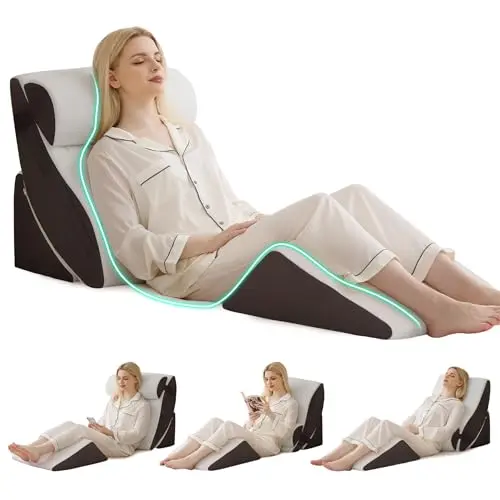
4-Piece Orthopedic Wedge Set – Adjustable Upright Sleep Support
The Bambulex set splits upright support into four modules joined by side-mounted hook-and-loop fasteners. You can dial the angle from a gentle lounging incline to a steep post-surgical position, and the whole stack breaks down for storage or travel.
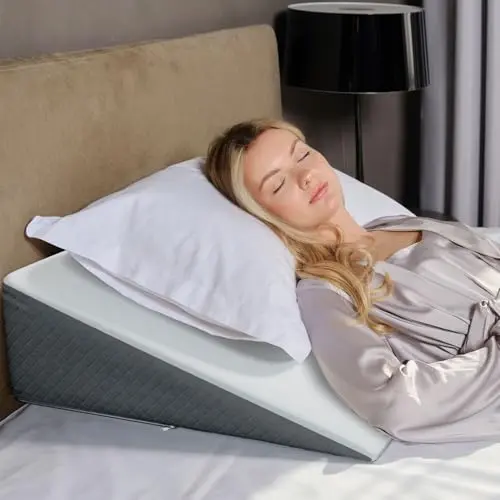
Bed Wedge Pillow – Proven Low-Profile Incline
A low-profile wedge that raises your upper body about seven and a half inches at the head end. The jacquard cover is a step up from the plain white hospital look, and the pillow is light enough to move between bed and couch.
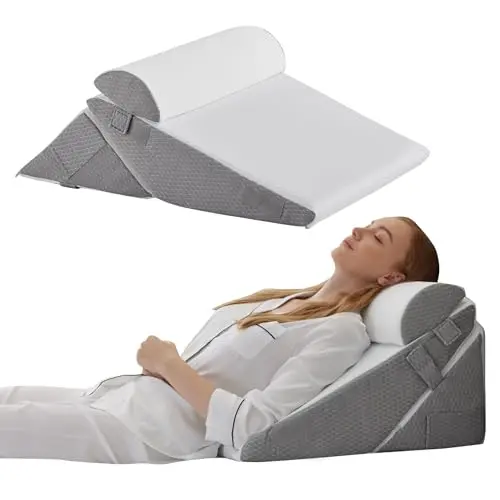
Adjustable Wedge Set – Bolster Plus Base for Torso Support
A three-piece set built around a flippable triangle base and a separate head-and-neck bolster. The base can be flipped and repositioned for back, lumbar, knee, or ankle support, so it does more than hold you at one fixed angle.
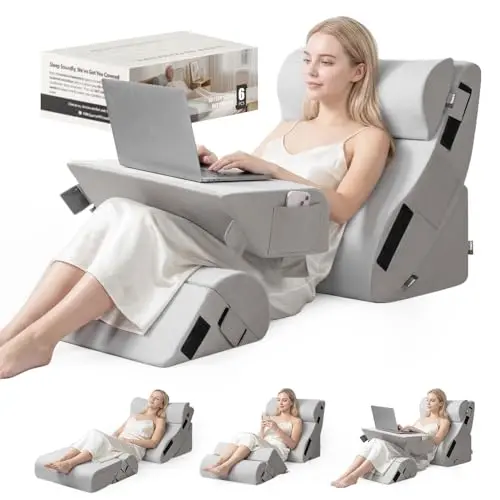
6-Piece Orthopedic Wedge Set – Modular Recovery Positioning
The most configurable set here: six modular pieces that assemble into an elevated, zero-gravity-style position, plus a leg cushion that doubles as a lap desk. It’s aimed squarely at people recovering from surgery who can’t lie flat.
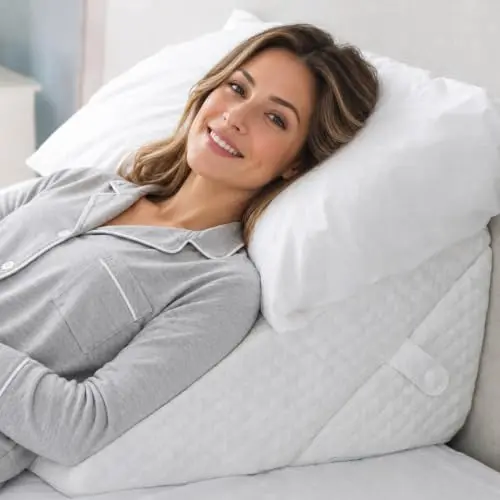
Adjustable Wedge Pillow – Tall 12-Inch Incline
A tall triangular wedge that can be configured at twelve inches or broken down to a flatter nine-inch profile. The combination of a supportive foam base and memory foam top targets people who need a substantial incline rather than a modest lift.

7.5-Inch Cooling Wedge – Certified Foam on a Budget
A mid-height triangle wedge with a cooling cover and a memory foam top over a high-density core. It’s the budget-friendly entry point into the category without dropping to a bare foam block.
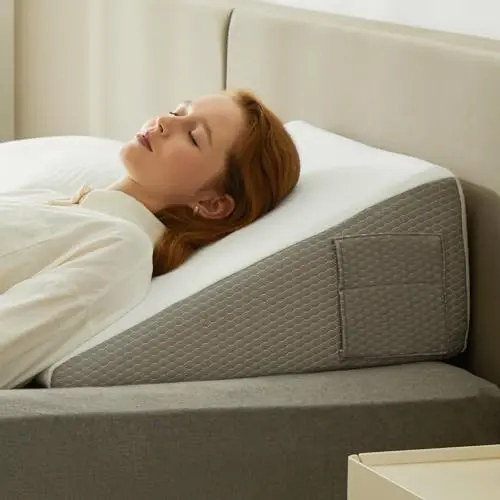
10-Inch Gel Wedge – Mid-Height Incline with Pockets
A ten-inch wedge sitting between the low-profile options and the tall recovery wedges. Gel-infused memory foam on top, a firmer base underneath, plus a handle and pockets for daily handling.
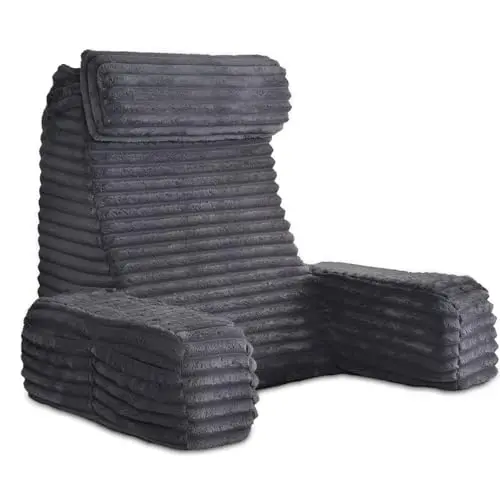
XL Backrest Pillow – Sit-Up Support with Armrests
A backrest pillow rather than a wedge – a tall, firm sit-up support with a sixty-degree angle, armrests, and oversized side pockets. It’s for reading, working, and resting upright in bed rather than dozing at an incline.
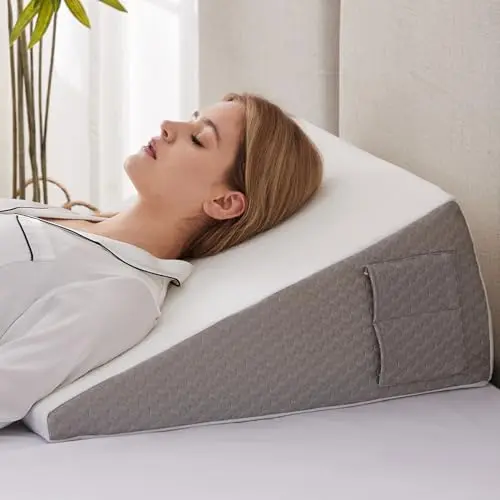
10-Inch Jacquard Wedge – Straightforward Incline Support
A ten-inch jacquard-covered wedge with a high-density foam core, a carry handle, and pockets on both sides. Straightforward incline support with a slightly dressier cover than the typical white triangle.
How We Evaluated These Pillows for Upright Sleeping
We didn’t run overnight sleep studies, measure spinal angles with instruments, or log months of nightly use. What we did: cross-referenced nine pillows for upright sleeping from eight distinct brands across six decision axes – incline height and adjustability, foam composition and firmness, torso versus head-only support, cover washability, footprint and portability, and how well each option handled the specific demands of sleeping at an angle.
We triangulated published specifications, feature sets, and owner feedback where available, then mapped each pillow against representative buyer profiles: the reflux sufferer who needs a modest nightly incline, the post-surgical sleeper who can’t lie flat at all, and the person who simply wants to sit up comfortably for hours. The scoring framework weighted real-world fit (70%) – how well a pillow delivers on upright sleeping rather than just propping up a head – against feature differentiation (30%) – modularity, cooling, adjustability, and the details that separate one wedge from the next.
We have no commercial relationship with any brand here, and recommendations track fit and differentiation, not brand preference. Firmness is the single most subjective variable in this category, so where owner reports split, we say so rather than smoothing it over. If you want one setup that flexes across gentle and steep angles, the Bambulex 4-Piece Orthopedic Wedge Set is the pick; if you just want a proven, low-profile incline, the Kolbs Bed Wedge Pillow is the simpler answer.
How to Choose the Right Pillows for Upright Sleeping
1. What Actually Makes a Pillow Work for Upright Sleeping
Sleeping at an angle is a different job than sleeping flat, and the pillow has to do two things at once: hold a consistent incline through the night and keep your torso aligned rather than folding your chin toward your chest. A pillow that only lifts the head fails both tests. You end up with a bend in your neck and a slow slide down the mattress.
The category has converged on a few workable formats. Single-piece wedges are simple and budget-friendly. Modular sets trade simplicity for adjustability. Backrest pillows provide a near-seated angle for waking hours. Which one fits depends entirely on why you’re sleeping upright in the first place.
2. Incline Height: The Spec That Decides Everything
Height is the first thing to lock down, and it’s where most buyers guess wrong. A seven-and-a-half-inch wedge is a gentle lift – enough for mild reflux or snoring, easy to sleep on, and the least disruptive to your normal sleep position. A ten-inch wedge is a real incline that still reads as sleeping. A twelve-inch wedge, or an adjustable set that reaches it, is closer to reclining and is the right call when a doctor has told you not to lie flat.
If you’re unsure, adjustable wins. Sets that let you slide the base out or flip between two heights let you find your tolerance instead of committing to one angle blind. If you already know you want a moderate nightly incline and nothing more, the Bedluxe 10-Inch Gel Wedge is the pick – steep enough to matter, shallow enough to sleep on.
3. Foam Composition and Why Pillow Firmness Splits Opinion
Nearly every wedge in this category pairs a memory foam top layer with a high-density base. The top layer is what you feel; the base is what keeps the incline from collapsing. A soft top over a weak base becomes a ramp by morning. Too firm a base feels like sleeping on a board.
That’s why firmness feedback is so polarized. Someone recovering from surgery wants firm, non-sagging support and will call a hard wedge perfect. A side sleeper who wants to sink in will call the same pillow unbearable. Read the firmness language literally – firm, medium firm, and soft are doing real work in these listings.
Certifications are a reasonable proxy for foam quality, and CertiPUR-US shows up even at the budget end now. If certified foam and a genuinely cool cover are what you’re after without spending much, the Cozymaker 7.5-Inch Cooling Wedge is the pick.
4. Torso Support vs. Head-Only Elevation
The most common mistake in this category is buying something that lifts your head and leaves your torso flat. That creates neck flexion – the exact thing you were trying to avoid. What you want is a surface that supports the upper back and ribcage so the whole upper body rises together.
Look for wording about full torso elevation rather than head support. Multi-module sets handle this naturally because the back cushion and base work as one continuous surface. If you want that behavior in a three-piece format, the Bedluxe Adjustable Wedge Set is the pick – the connected base plus separate bolster lets you build real torso support instead of stacking a pillow behind your head.
5. Covers, Cleaning, and Bedroom Practicalities
A wedge is against your skin every night, so the cover matters more than it sounds. Removable, machine-washable covers should be a baseline requirement, not a bonus. Cooling claims deserve some skepticism, but gel-infused foam and breathable mesh side panels do make a difference when your back sits against foam for eight hours.
Two details get overlooked. First, non-slip bottoms – without one, a wedge on a smooth sheet migrates overnight. Second, storage footprint. Modular sets are the most comfortable and the most awkward to put away, and several only sit securely when braced against a headboard or wall.
6. Budget, Mid-Range, and Premium Pillows for Upright Sleeping
The budget tier gets you a single wedge with a memory foam top and a washable cover. That’s genuinely enough for mild reflux or occasional congestion, and there’s no strong reason to spend more if your needs are simple.
The mid-range is where certified foam, cooling covers, and two-height adjustability show up. Premium is almost entirely about modularity – four- and six-piece sets that let you dial in a recovery angle, then reconfigure for reading or leg elevation afterward. If you’ll be in it for weeks rather than a night or two, that flexibility earns the step up. The FifthQuarter 6-Piece Set is the pick at the top of the range.
7. Common Mistakes When Shopping for an Upright Sleeping Pillow
Three traps come up again and again. Buying for height you can’t tolerate is the big one – a twelve-inch wedge is not a gentle upgrade from a seven-inch one, and plenty of people find their first steep wedge unusable. Expand time is the second: most of these ship vacuum-compressed and need a day or two before they hit full size, and judging one at hour three leads to a bad return. The third is skipping the brace – several sets only stay put when pushed against a wall or headboard, and a free-standing wedge in the middle of a mattress will drift.
Frequently Asked Questions
1. What's the difference between the Bambulex 4-piece set and the FifthQuarter 6-piece set?
Both are modular, and both let you build a torso-supported incline rather than just propping your head. The difference is scope. The Bambulex set works with four modules and a broad angle range, which covers upright sleeping, lumbar support, and leg elevation in one compact setup. The FifthQuarter set goes further with six pieces, a widened back for broader shoulder contact, and a leg cushion that doubles as a lap desk.
If you want flexibility for nightly reflux plus occasional reading, four modules is plenty. If you’re recovering from surgery and will be repositioning constantly for weeks, the extra pieces earn their keep. The Bambulex 4-Piece Set is the more versatile everyday choice; the FifthQuarter is the deeper recovery investment.
2. How does the Kolbs wedge differ from the Cozymaker wedge?
They’re similar in format – both single-piece wedges with a memory foam top over a firmer core – but they target different sleepers. The Kolbs leans toward quality and simplicity: a jacquard cover that looks like bedding, a medical-grade foam core, and a modest height that suits people who want a light lift rather than a steep angle.
The Cozymaker leans toward features per dollar: certified foam, a cooling cover with mesh side panels, non-slip dots, and two pockets. If heat is your problem when sleeping propped up, the Cozymaker cover is the more useful design. If you want the more polished, minimal object next to your bed, the Kolbs wins.
3. What height pillow should you use for upright sleeping?
Match height to the reason you’re upright. A seven-and-a-half-inch wedge handles mild reflux, snoring, and congestion while staying easy to sleep on. A ten-inch wedge is the practical middle – a real incline that still feels like sleeping. Twelve inches and up is for people who have been told not to lie flat, or who are managing post-surgical restrictions.
If you don’t know your tolerance, buy adjustable. Going straight to the steepest option is the most common regret in this category, and a set that lets you start shallow and escalate avoids that entirely.
4. Can you actually sleep all night on an upright pillow?
Yes, with caveats. Most people adapt within a few nights, and the ones who don’t usually picked an angle that was too steep or a foam that was too firm for their sleep position. Side sleepers tend to need a softer surface and a lower angle; back sleepers tolerate firmer foam and steeper inclines.
Two practical adjustments help. Put a thin pillow under your knees to stop the slow slide down the mattress, and brace the wedge against a headboard so it can’t creep. If you’re still uncomfortable after a week, the problem is usually the height, not the pillow.
5. Is a reading pillow the same as a pillow for upright sleeping?
No, and the difference matters. A reading pillow like the ENITYA XL Backrest Pillow holds you at a near-seated angle with armrests, which is ideal for reading, working, gaming, or nursing – but it isn’t shaped for overnight sleep. A wedge holds a shallower, more stable incline that your body can relax into for hours.
If you need to be upright and awake, a backrest pillow is the better tool. If you need to sleep elevated through the night, a wedge or a modular set is the right choice.
Final Verdict
For most people who need to sleep at an angle, the Bambulex 4-Piece Orthopedic Wedge Set is the answer. It covers the widest range of angles without losing stability, and it converts from a gentle reflux incline into a proper post-surgical position without a second purchase.
If your needs are simpler, the Cozymaker 7.5-Inch Cooling Wedge is the budget-friendly route – certified foam, a genuinely cool cover, and a modest incline that’s easy to sleep on. If you’re recovering from surgery and need to fine-tune every angle, the FifthQuarter 6-Piece Set earns its premium. And if upright to you means sitting up awake for hours rather than dozing at an incline, the ENITYA XL Backrest Pillow is purpose-built for exactly that.
Match the format to the reason you’re upright, and the choice gets simple fast.
