
Best Plastic Free Coffee Makers – 2026 Reviews

That first sip of morning coffee should taste like coffee, not like the inside of a plastic reservoir. If you have started reading labels the way you read a coffee bag, the coffee maker is the next place to apply that standard. Plastic-free coffee makers are less about a marketing badge and more about what the hot water actually touches: the filter, the brew basket, the carafe, and the lid.
The tricky part is that plastic-free can mean very different things from one brand to the next. Some models are all stainless steel and glass; others keep plastic out of the coffee path but still use silicone seals or plastic trim. Brewing method matters too. A French press, pour-over, percolator, and electric drip maker each put materials in different places, so the right pick depends on how you brew and how much cleanup you will tolerate.
We looked across major brands and brewing styles to find the options that make the most sense for plastic-conscious buyers. The picks below range from strict all-metal French presses to stovetop percolators and glass pour-over setups, with clear tradeoffs around capacity, heat retention, and daily maintenance.
Best Plastic Free Coffee Makers – 2026 Reviews
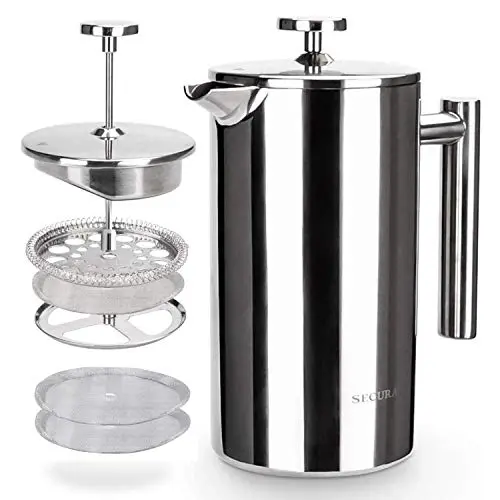
SFP-34DS French Press – Stainless Steel Brewing for Daily Coffee
A 34-ounce stainless steel French press with a three-layer filter and dishwasher-safe parts. It is built for everyday brewing and clean, full-bodied coffee without a paper filter.
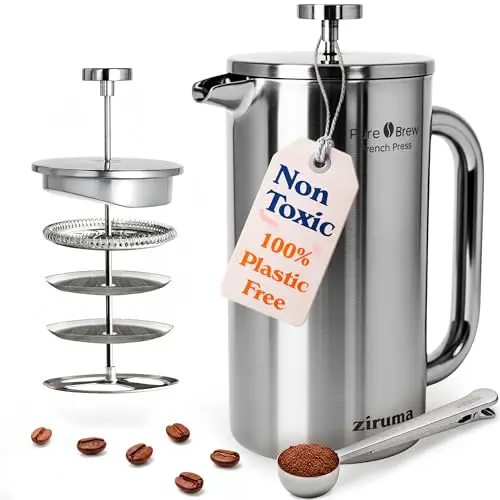
Stainless Steel French Press – 316 Surgical-Grade, Plastic-Free
A 34-ounce French press built from 316 surgical-grade stainless steel with a four-layer filter, double-wall insulation, and measuring marks. It is designed for a fully plastic-free brew path and easy dishwasher cleanup.

Bozeman Percolator – No Aluminum or Plastic
A 9-cup stainless steel stovetop percolator with a glass view top and no aluminum or plastic in the brewing structure. It works on camp stoves, grills, and compatible stovetops for coffee without electricity.
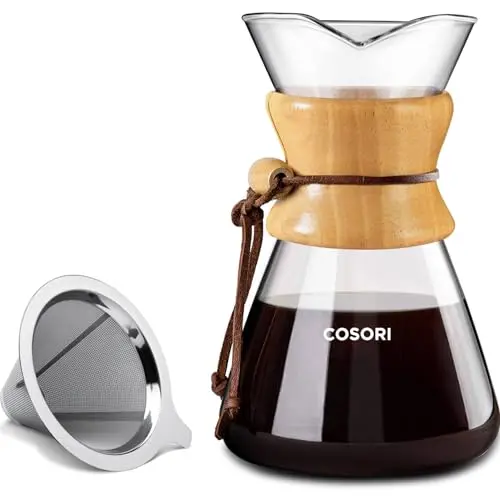
Pour Over Coffee Maker – Double-Layer Steel Filter
A 34-ounce pour-over brewer with a double-layer 304 stainless steel filter, borosilicate glass carafe, and wooden sleeve. It is built for manual brewing and dishwasher-safe cleanup.
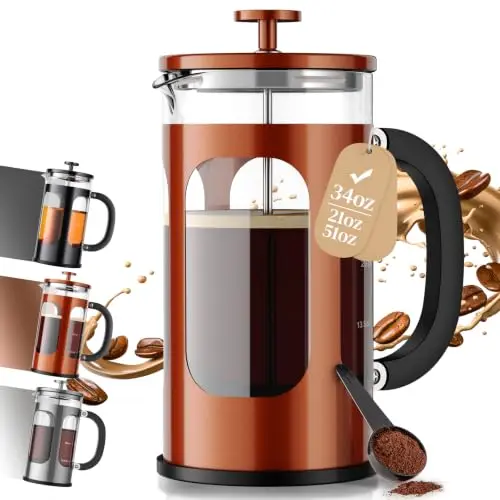
French Press – No Plastic Touching Coffee
A 34-ounce French press with a borosilicate glass carafe, 304 stainless steel filter, and food-grade silicone seals. It is designed so no plastic touches the coffee during brewing.
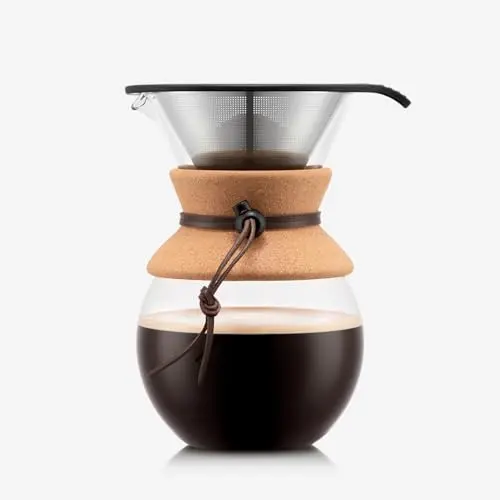
Pour Over Coffee Maker – Glass, Cork, and Steel Filter
A 34-ounce pour-over brewer with a borosilicate glass carafe, cork grip, and reusable stainless steel mesh filter. It is a simple manual setup for coffee without paper filters.

02811 Stainless Steel Percolator – Electric Brewing Without a Glass Carafe
A 12-cup electric percolator with a stainless steel body and reusable filter basket. It brews quickly, keeps coffee hot automatically, and avoids a glass carafe.
How We Evaluated These Plastic Free Coffee Makers
We did not run controlled kitchen lab tests or long-term reliability trials. What we did: cross-referenced 7 plastic-free coffee makers from 7 distinct brands across six decision axes – brewing material in contact with coffee, filter design, capacity, heat retention, cleanup, and portability. We triangulated published specifications, feature sets, owner feedback where available, and use-case fit for French press, pour-over, percolator, and stovetop brewing. We also mapped which parts actually touch the coffee, because a stainless body does not always mean a plastic-free brew path. That matters for anyone who has tasted stale plastic notes in a drip machine and wants a cleaner cup. This is a materials-first category, so a beautiful carafe can still miss the mark if the filter housing, lid, or reservoir is plastic.
The scoring framework weighted real-world fit (70%) – how well each coffee maker delivers clean-tasting coffee with minimal plastic contact – against feature differentiation (30%) – filter layers, insulation, capacity, and cleanup convenience. We have no commercial relationship with any brand featured; recommendations track fit and differentiation, not brand preference. We compared electric and manual designs on purpose, because plastic-free shoppers often care less about automation than about what the hot water touches. If you want the most balanced all-steel French press, the Secura SFP-34DS is the pick; if you want the strictest plastic-free build, the Ziruma Stainless Steel French Press is the one to beat.
How to Choose the Right Plastic Free Coffee Makers
1. What Plastic Free Means in Coffee Makers
Plastic-free is not a single certification; it is a materials question. The parts that matter most are the brew path: the filter, filter housing, water reservoir, lid, and carafe. A machine can have a stainless steel body and still route hot water through plastic. For a stricter standard, look for stainless steel and borosilicate glass in the parts that touch coffee.
Silicone seals are common in French presses and are not plastic, but strict shoppers should note them. If the goal is zero plastic contact, check the plunger assembly and lid as carefully as the carafe.
2. Brewing Method Changes the Plastic-Free Math
French presses and pour-over brewers are the simplest plastic-free formats because the coffee sits in glass or steel and you control the water. A stainless steel French press like the Secura SFP-34DS is a good daily pick if you want body and easy cleanup. Pour-over gives you a cleaner cup and a slower ritual, but the filter holder and carafe materials still matter.
Percolators add another option: a stovetop percolator needs no electricity, while an electric percolator keeps coffee hot automatically. Both can be low-plastic, but percolator coffee has a distinct, cyclic brew style.
3. Check the Filter, Lid, and Water Path
The filter is where plastic hides most often. Reusable stainless steel mesh and double-layer filters are good signs, but the housing and lid can still be plastic. For pour-over, a glass carafe with a stainless steel filter is a cleaner setup; the Cosori Pour Over Coffee Maker is a strong example with a double-layer steel filter and wooden sleeve.
On electric brewers, the water reservoir and brew basket are the parts to inspect. A stainless steel body alone does not guarantee a plastic-free brew path.
4. Capacity, Heat Retention, and Cleanup for Plastic Free Coffee Makers
Match capacity to your routine: a 34-ounce French press or pour-over suits one or two people, while a 12-cup percolator is better for a crowd. Double-wall insulation helps heat retention, and borosilicate glass handles temperature swings without cracking as easily as basic glass.
Dishwasher-safe stainless parts and glass carafes are easier to live with, while percolators and electric machines often have more nooks. If you will not clean promptly, choose a simple manual brewer over a complex electric one.
5. When to Choose Manual vs. Electric Plastic Free Coffee Makers
Manual brewing gives you the most control over materials and usually the simplest cleanup. A stainless steel French press or glass pour-over is a low-plastic default for daily coffee. If you need off-grid brewing, the COLETTI Bozeman Percolator is built for stovetops and camp stoves.
Electric brewers add convenience, programmed brewing, and keep-hot plates, but they are harder to make fully plastic-free. Choose electric only when the brew path and reservoir are clearly specified, and accept that some models trade convenience for stricter materials.
Frequently Asked Questions
1. What does plastic-free actually mean in a coffee maker?
In this category, plastic-free usually means the hot water and coffee do not contact plastic during brewing. That includes the filter basket, brew path, carafe, and lid. A stainless body with a plastic reservoir or filter housing is not truly plastic-free for the coffee. Pay attention to silicone seals too: they are not plastic, but strict shoppers may want to know they are present.
2. Secura SFP-34DS vs. Ziruma Stainless Steel French Press: which is better for plastic-free brewing?
The Secura SFP-34DS is the better everyday value if you want a large, dishwasher-safe stainless French press with a proven three-layer filter and cool-touch handle. The Ziruma Stainless Steel French Press is the stricter plastic-free pick, with 316 surgical-grade steel, double-wall insulation, and a four-layer filter. Choose Secura for capacity and familiar cleanup; choose Ziruma for the most literal no-plastic build and better heat retention.
3. COLETTI Bozeman vs. Presto 02811: which percolator should you choose?
The COLETTI Bozeman is the stovetop and camp pick, because it needs no electricity and uses a glass view top with no aluminum or plastic in the brewing structure. The Presto 02811 is the electric choice: it brews 12 cups, keeps coffee hot automatically, and has a reusable filter basket. Pick COLETTI for off-grid brewing; pick Presto for countertop convenience and a larger pot. Just note that Presto is not dishwasher safe.
4. Are plastic-free coffee makers harder to clean?
Not necessarily, but cleanup depends on the design. Dishwasher-safe stainless French presses and glass pour-over carafes are straightforward, while percolators have more parts and glass view tops that need gentle handling. Manual brewers usually rinse clean faster than electric machines with reservoirs. The main habit is to clean promptly so oils do not build up.
Final Verdict
For most buyers, the Secura SFP-34DS is the answer. It pairs a genuinely useful all-stainless build with a three-layer filter, generous capacity, and dishwasher-safe parts, so plastic-free brewing does not feel like a chore. If you want the strictest no-plastic interpretation, the Ziruma Stainless Steel French Press is the one to beat, with 316 surgical-grade steel and double-wall insulation.
Campers and stovetop brewers should go with the COLETTI Bozeman Percolator, which needs no electricity and keeps aluminum and plastic out of the brewing structure. And if you want the lowest-cost glass-and-steel entry point, the Bodum Pour Over Coffee Maker is the budget-friendly pick. Match the brewer to your routine, and the material question becomes much simpler.
