
Best Plastic Free Espresso Machines – 2026 Reviews

Most espresso machines hide plastic where you can’t see it: water tanks, internal tubing, and the brew path itself. If your goal is to keep hot water and coffee away from plastic, the category narrows fast. The useful question isn’t whether a machine has a stainless-steel shell; it’s whether the parts that touch your coffee are metal or glass.
That makes plastic-free a material-sourcing problem more than a feature-list problem. The strongest options in this niche are stovetop moka pots with aluminum brew chambers, plus a few electric models that use an aluminum carafe. You’ll want to weigh brew-path material, heat-source compatibility, capacity, and cleaning routine before you commit.
We compared the cross-brand market with that lens, not by chasing the longest feature list. The goal is to help you choose the right plastic-free espresso maker for your counter, your stove, and your morning routine.
Best Plastic Free Espresso Machines – 2026 Reviews
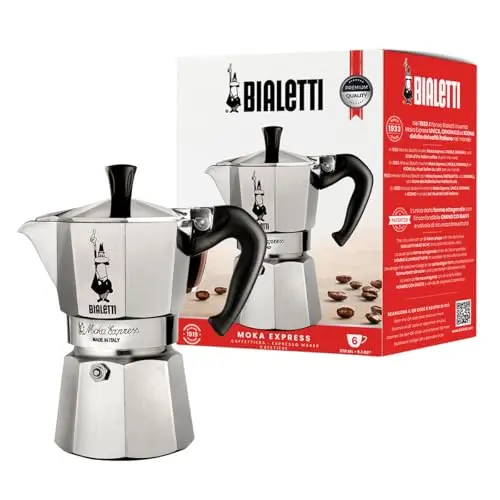
Moka Express – Iconic Aluminum Stovetop Brewer
A stovetop moka pot with an aluminum brew chamber and reusable filter. It works on gas and electric burners, and induction with an adapter. The six-cup rating is in espresso cups, so it suits one or two people rather than a crowd.

Classic Stovetop Espresso – Six-Cup Aluminum Moka Pot
A cast-aluminum moka pot that brews six espresso cups and works on gas, electric, ceramic, and propane stovetops. The flip-top lid and heat-resistant handle make it a straightforward camping or small-kitchen option.
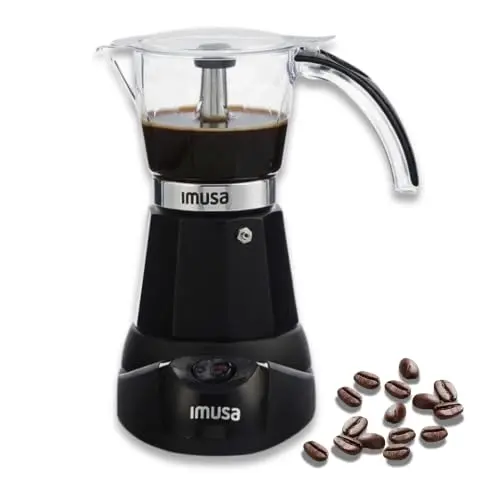
Electric Espresso Maker – Aluminum Carafe for Cuban Coffee
An electric espresso maker with a cast-aluminum carafe and a detachable base. It brews six or three espresso cups and is aimed at Cuban coffee, moka-style coffee, and everyday countertop use.
How We Evaluated These Plastic Free Espresso Machines
We didn’t run lab tests for plastic migration or long-term durability trials. What we did: cross-referenced 3 espresso makers from 3 distinct brands across 6 decision axes – brew-path material, cup capacity, heat-source compatibility, cleaning routine, owner-feedback patterns where available, and fit for stovetop versus electric routines. We triangulated published specifications, feature sets, and use-case fit against representative buyer profiles for plastic-free brewing. We also weighed whether replacement gaskets and filters are easy to source, because a metal brew path only stays useful if the machine remains serviceable.
The scoring framework weighted real-world fit (70%) – how well each option keeps hot water and coffee out of plastic while matching a realistic brewing routine – against feature differentiation (30%) – unique advantages like electric convenience, capacity flexibility, and stovetop compatibility. We audited the lineup for genuine brew-path materials rather than accepting a stainless-steel exterior as proof. We mapped each pick to a specific buyer: the commuter who wants a fast stovetop pot, the camper who needs propane compatibility, and the countertop brewer who wants electric convenience without a plastic carafe. We have no commercial relationship with any brand featured; recommendations track fit and differentiation, not brand preference. If you want the most established stovetop route, the Bialetti Moka Express is the pick; if budget and simplicity matter more, the Primula Classic Stovetop Espresso is the value alternative.
How to Choose the Right Plastic Free Espresso Machines
1. What Plastic-Free Really Means for an Espresso Machine
In this category, plastic-free usually means the brew chamber, filter, and water path are metal or glass rather than plastic. It does not always mean zero plastic anywhere: handles, knobs, bases, and gaskets can still use non-metal or plastic parts. The practical question is whether hot water and coffee sit in plastic during brewing. A stainless-steel shell with a plastic water tank is not the same as an aluminum moka pot with a metal brew chamber.
Check the brew-path material first, then look at replacement gaskets and cleaning instructions. A machine that needs harsh descaling or dishwasher cycles may be harder to keep in good shape.
2. Brew-Path Materials: Aluminum, Stainless Steel, and Gaskets
Aluminum is the classic moka-pot material: light, responsive to heat, and affordable. It can react with acidic coffee over time and should be rinsed rather than scrubbed with detergent. Stainless steel is more inert and easier to clean aggressively, but it heats more slowly and often costs more. Gaskets are the hidden part to check; they are usually silicone or rubber and need periodic replacement.
If you want the most established aluminum route, the Bialetti Moka Express is the pick. If you prefer a lower-cost aluminum moka pot, the Primula Classic Stovetop Espresso is the value choice.
3. Stovetop Moka Pots vs Electric Espresso Makers
Stovetop moka pots are the simplest plastic-free brew-path option: no pump, no water tank, no electronics. They need a matching heat source and a little hands-on timing. Electric espresso makers add convenience and consistent heating, but many use plastic water tanks or internal tubing. If zero plastic anywhere is the goal, stovetop is the safer route. If electric convenience matters more, choose a model with an aluminum carafe and check the base and handle materials.
For an electric option with a metal carafe, the Imusa Electric Espresso Maker is the practical pick, but treat it as a brew-path compromise rather than a fully plastic-free machine.
4. Capacity and Cup Size: Matching the Machine to Your Morning
Moka-pot sizes are listed in espresso cups, not mugs. A six-cup pot is usually enough for one or two people who drink small espresso-style servings; it will not fill two large lattes. The Bialetti and Primula six-cup models are comparable in nominal capacity, while the Imusa lets you brew six or three cups. If you regularly make coffee for a crowd, size up; if you drink one shot, a smaller pot is easier to manage.
5. Cleaning and Care for Plastic-Free Espresso Machines
Most aluminum moka pots should be rinsed with warm water and dried before reassembly. Avoid dishwashers and harsh detergents, which can dull the finish and affect taste. Electric models need the detachable base kept dry and the gasket checked for coffee residue. Replace worn gaskets before they start leaking; a slow leak is often a maintenance issue, not a reason to replace the whole machine.
6. Common Pitfalls When Shopping for a Plastic-Free Espresso Machine
Don’t confuse a stainless-steel exterior with a plastic-free brew path. Look for the water tank material, portafilter, and internal tubing if the listing provides them. Also check heat-source compatibility: some moka pots need an adapter plate for induction. Finally, ignore vague BPA-free claims if your goal is plastic-free; BPA-free still means plastic.
Frequently Asked Questions
1. What does plastic-free actually mean for an espresso machine?
It usually means the brew chamber, filter, and water path are metal or glass, so hot water and coffee do not sit in plastic. The handle, base, and gaskets may still use non-metal materials. For a stricter standard, ask whether the water tank and internal tubing are plastic-free too.
2. Bialetti Moka Express vs Primula Classic Stovetop Espresso: which is better for daily use?
For daily stovetop use, the Bialetti Moka Express is the more established pick: the aluminum brew chamber, reusable filter, and patented safety valve are proven, and the six-cup size suits one or two people. The Primula is budget-friendly and brews a similar six-cup batch, but its handle and lid seal are the parts to watch. Choose Bialetti if you want the reference design; choose Primula if the lower upfront cost matters more.
3. Bialetti Moka Express vs Imusa Electric Espresso Maker: which should you choose?
Choose the Imusa Electric Espresso Maker if you want electric convenience and a detachable base without giving up an aluminum carafe. Choose the Bialetti if your priority is a stovetop brew path with no electronics or water tank. The Imusa is not a zero-plastic machine: its base and handle introduce non-metal parts, and some units develop gasket leaks. The Bialetti is simpler and more serviceable, but it needs a stove and hands-on timing.
4. Do plastic-free espresso machines work on induction cooktops?
Some aluminum moka pots do not work on induction without an adapter plate. The Bialetti Moka Express is listed for gas, electric, and induction with the Bialetti adapter; the Primula is listed for electric, ceramic, gas, and propane, but not induction. Check the heat-source compatibility before buying, especially if you have a glass-top induction range.
5. How do you clean an aluminum moka pot without damaging it?
Rinse the parts with warm water, avoid detergents, and do not put aluminum moka pots in the dishwasher. Dry all components before reassembling so the gasket and filter do not trap moisture. If coffee residue builds up, use a soft cloth or a mild coffee cleaner recommended for aluminum; skip abrasive scrubbing.
Final Verdict
For most buyers, the Bialetti Moka Express is the answer – it keeps the brew path in aluminum, uses a reusable filter, and has the most established design in this niche. If you want the lowest-cost entry into plastic-free moka brewing, the Primula Classic Stovetop Espresso gets you most of the way there with a similar six-cup capacity, though the handle and lid seal are the tradeoffs. And if electric convenience matters more than zero-plastic purity, the Imusa Electric Espresso Maker is the countertop pick, as long as you accept its non-metal base and handle. Choose stovetop for the cleanest plastic-free brew path; choose electric for ease.
