
Best Pool Float Storage – 2026 Reviews

The pool float pile is one of those problems that starts small and then takes over the deck. A couple of noodles lean against the fence, a raft dries on the patio table, and suddenly there’s no clear path to the water.
Pool float storage splits into a few practical families: hanging mesh nets for fence lines, rolling bins for bulky rafts, hard deck boxes for lockable weatherproof storage, and soft seasonal bags for off-season gear. The useful differences come down to airflow, footprint, and how much effort you want to spend moving wet toys.
This guide surveys the category across major brands, with an eye on daily-use convenience rather than showroom looks. The right pick should dry gear, keep it corralled, and still fit the space you actually have.
Best Pool Float Storage – 2026 Reviews
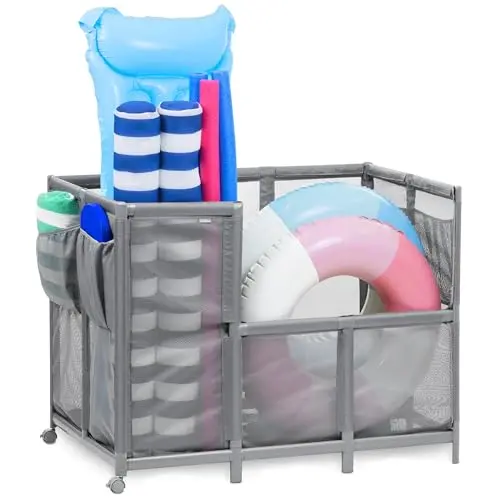
Extra Large Mesh Pool Storage Bin – Breathable Rolling Organizer
A freestanding mesh bin built for wet pool gear. The 23.6-cubic-foot capacity, breathable fabric, and locking wheels make it a practical daily-use organizer for noodles, rafts, and small toys.
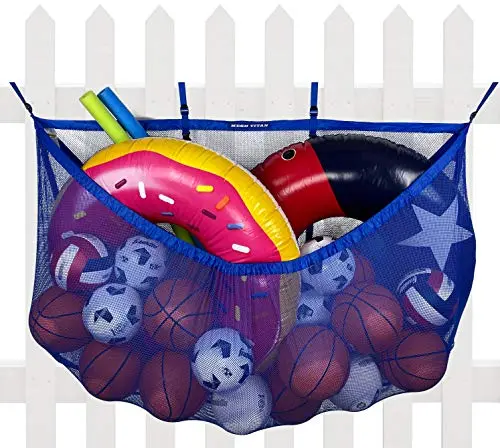
Hanging Mesh Organizer – Fence-Mounted Float Storage
A hanging mesh organizer for fences, deck rails, and garage racks. It expands to hold long rafts and pool noodles, with adjustable straps and breathable netting that lets wet gear drain.
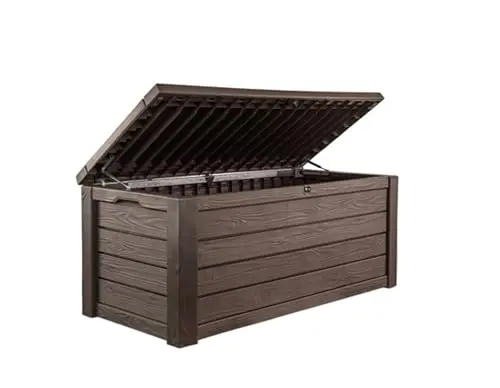
Westwood 150 Gal Deck Box – Weatherproof Multi-Use Storage
A lockable 150-gallon resin deck box that doubles as outdoor seating. It keeps cushions, floats, and pool accessories out of the weather, with hydraulic pistons for easy opening.
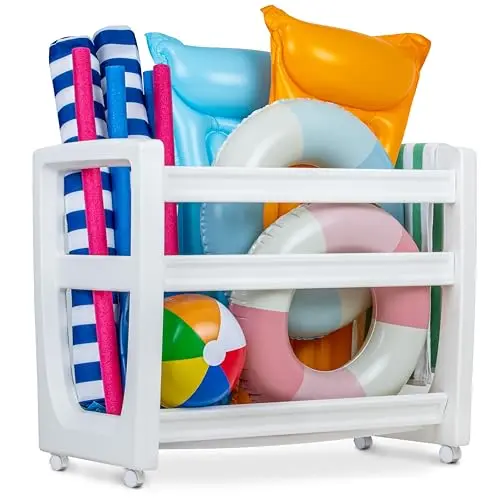
HDPE Pool Organizer – Sturdy Weatherproof Storage Rack
A rigid HDPE storage rack with a raised floor, bungee dividers, and locking wheels. It’s built for poolside gear that needs a sturdy, weather-resistant home rather than a soft mesh sack.
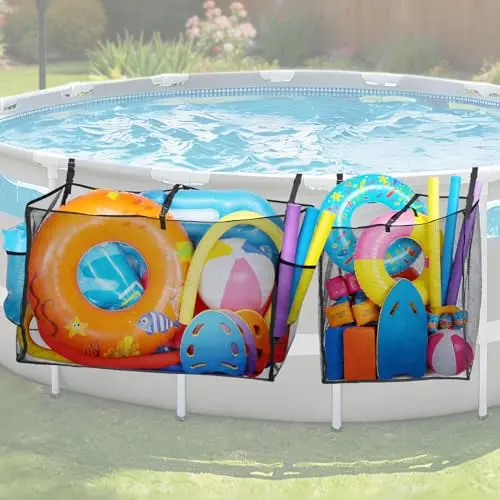
2-Pack Hanging Mesh Bags – Dual-Size Float Organizer
A two-pack of hanging mesh nets in large and small sizes. The set mounts to fences or rails with adjustable straps and gives wet floats, noodles, and kids’ toys a place to drain.
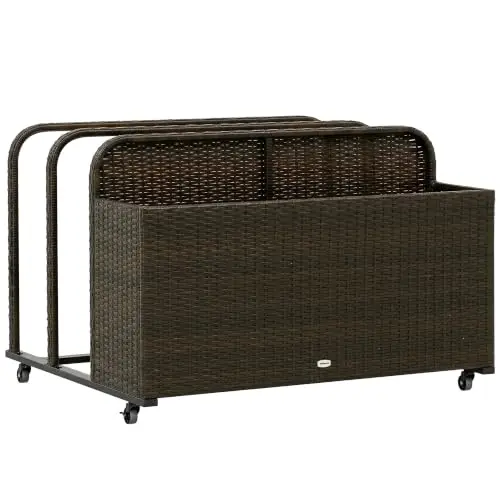
Wicker Rolling Pool Caddy – Three-Slot Float Cart
A wicker-style rolling caddy with three storage sections. The PE rattan basket and steel frame are meant to move noodles, life jackets, and pool toys around the patio.
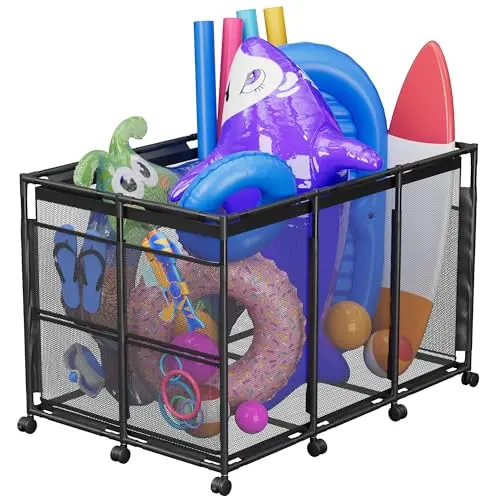
XXL Mesh Storage Bin – Rolling Pool Toy Cart
A large rolling mesh bin with a rust-resistant metal frame, side pockets, and ten wheels. It’s sized for noodles, swim rings, and bulky pool toys, with mesh walls for ventilation.
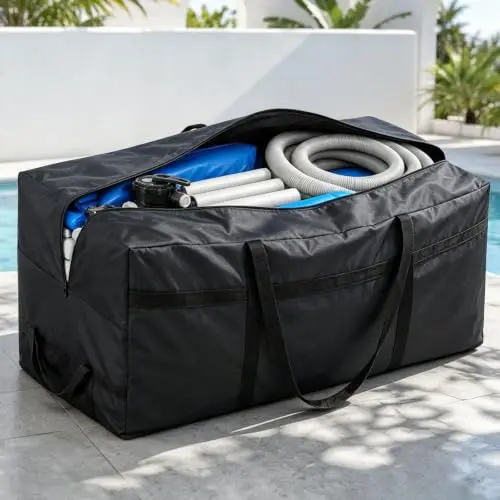
140 Gallon Storage Bag – Seasonal Pool Gear Tote
A soft-sided 140-gallon storage bag for seasonal pool gear. The 600D Oxford fabric, double zippers, and four reinforced handles are aimed at storing covers, hoses, and disassembled pools.
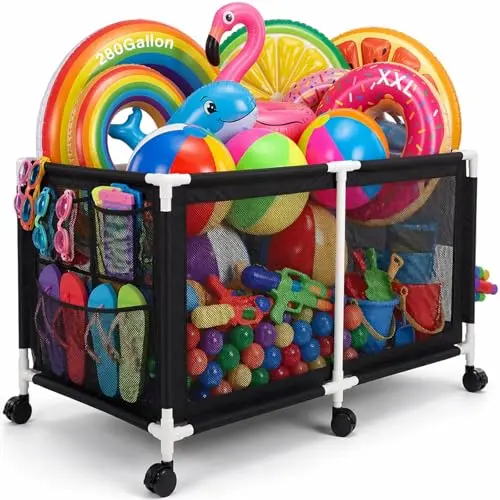
280 Gallon Rolling Mesh Bin – Extra-Large Pool Toy Corral
An extra-large rolling mesh bin with a PVC frame, six braked wheels, and side pockets. It’s designed to corral floats, noodles, and surfboards in a busy pool area.
How We Evaluated These Pool Float Storage
We didn’t see these through a full swim season or leave them out through a coastal storm. What we did: cross-referenced 9 pool float storage models from 8 distinct brands across 7 decision axes – capacity, ventilation and drainage, weather resistance, mobility, assembly, footprint, and included organization. We triangulated published specifications, feature sets, and owner feedback where available against real poolside use cases: daily float wrangling, fence-mounted storage, and off-season packing.
The scoring framework weighted real-world performance (70%) – how well each option handles wet floats, bulky noodles, and daily access – against feature differentiation (30%) – unique design choices like raised floors, braked wheels, dividers, and hanging straps. We also weighed assembly fuss, because a bin that’s a pain to put together tends to stay in the garage. We also noted whether the design made wet-gear drying easy or turned it into an afterthought. We have no commercial relationship with any of the brands featured; recommendations track fit and differentiation, not brand preference. If you want a freestanding daily bin, the Coast Modern mesh bin is our top fit; if you’re mounting to a fence, the MeshTitan is the better route.
A few things we can’t tell you: how each bin survives five summers of chlorine and UV exposure. What we can: map the specs, feature tradeoffs, and owner feedback that separate a useful pool float storage setup from a frustrating one.
How to Choose the Right Pool Float Storage
1. Why Ventilation and Drainage Matter for Pool Float Storage
Wet pool floats are the whole reason this category exists, and airflow is the first thing to get right. A breathable mesh bin or hanging net lets water drain away and gives trapped moisture somewhere to go. A sealed deck box can be excellent for dry cushions and off-season storage, but load it with dripping floats and you’re asking for standing water, chlorine odor, and mildew.
If you plan to store floats straight from the pool, prioritize mesh or open-frame designs. If you mostly store dry gear and want rain protection, a sealed deck box makes more sense.
2. Match Capacity and Footprint to Your Poolside Space
Measure the space before you fall for a giant capacity number. A large footprint can swallow every noodle in the neighborhood, but it also dominates a small patio. Look at door clearance, deck traffic, and whether the bin needs to move.
For tight spaces, hanging organizers use vertical fence or rail space. For big families, a rolling bin with a generous daily load is easier than stacking three smaller totes.
3. Weatherproofing vs. Breathability: What Actually Protects Pool Floats
Weather resistance is not the same as ventilation. HDPE, resin, and powder-coated steel handle sun and chlorine better than flimsy hardware, while UV resistance keeps mesh from fading and weakening. But a solid-walled bin that shrugs off rain can still trap moisture inside.
Think in two modes: daily wet storage and protected dry storage. Mesh wins for the first; a rigid box wins for the second. A water-resistant bag is useful for seasonal gear, but check whether seams are actually waterproof. If your priority is lockable, rainproof storage for dry gear, the Keter Westwood is the pick.
4. Wheels, Handles, and Hanging Mounts: Mobility Checks
Wheels are only useful if they roll when loaded. Look for locking casters, braked wheels, and a base that doesn’t flex under weight. Swivel wheels help with tight turns; fixed wheels track straighter on long decks.
Hanging designs trade wheels for mounting points. Check the load rating and make sure the fence or rail can take the weight. A sagging strap or weak rail turns a neat organizer into a hazard.
5. Hanging Mesh Bags vs. Rolling Bins: Which Pool Float Storage Fits Your Setup?
Hanging mesh bags are ideal when you have a fence line and want floats off the ground. They breathe, drain, and cost less than furniture-style bins. Rolling bins are better when you want one central container and don’t mind a larger footprint.
For heavy rafts, look at the strap system and load rating, not just the bag size. For a freestanding setup, check wheel quality and whether the frame feels sturdy when full. If you have fence space, the MeshTitan is the pick; if you want a freestanding bin, the Coast Modern mesh bin is the better fit.
6. Seasonal Storage and Off-Season Care for Pool Floats
At the end of the season, clean and dry everything before it goes into long-term storage. Mesh bags and bins should be rinsed, dried, and emptied of grit. Hard boxes should be wiped down and left open for a day so trapped moisture can escape.
For folded above-ground pool parts, covers, and hoses, a soft-sided bag is easier to stash in a garage or shed. The Hyperzoo bag is the right shape. Just don’t expect any soft bag to double as a daily wet-float rack.
Frequently Asked Questions
1. MeshTitan vs. Cosweet 2-Pack: Which hanging pool float storage is better?
Choose the MeshTitan if you need one heavy-duty net for long rafts and noodles. It has a 30-pound capacity, expands to handle rafts up to 60 inches, and uses a customizable strap and buckle system for fences, rails, or racks. The Cosweet 2-pack is the better fit for smaller toys and tighter budgets: you get a two-net set with a large net and a small net, plus side pockets on the large one. The MeshTitan is stronger for heavy rafts; the Cosweet set is more budget-friendly and flexible for kids’ gear.
2. Coast Modern mesh bin vs. Jotesnew 280-gallon bin: Which holds more for a busy family pool?
The Jotesnew 280-gallon bin wins on raw stated volume, and its six braked wheels make a loaded bin easier to park. The Coast Modern mesh bin is the more balanced choice: 23.6 cubic feet of capacity, a breathable mesh body, and a more balanced daily-use design. If you need maximum capacity and accept lighter-duty durability, Jotesnew is the volume pick. If you want the better all-around organizer for daily use, Coast Modern is the safer buy.
3. Can I use a Keter Westwood deck box for pool float storage?
Yes, with one caveat: it’s best for dry or off-season storage. The Westwood is weatherproof, lockable, and sturdy enough to double as bench seating, so it’s a strong choice for cushions, noodles, and deflated floats that aren’t dripping. Because it’s a sealed box, wet gear can sit in trapped moisture if you load it straight from the pool. Dry floats first if you want to avoid chlorine odor and mildew.
4. Do mesh pool float storage bins really dry wet floats?
They help, but they’re not a dryer. Mesh walls let airflow move through and give water a path out, which is a big improvement over a sealed tote. For best results, shake off excess water, avoid packing floats tight against each other, and make sure the bin isn’t sitting in standing water. If you smell mildew, the gear went in too wet or stayed packed too long. Even mesh storage works best when you let floats dry fully before long-term storage.
Final Verdict
For most buyers, the Coast Modern mesh bin is the answer – it balances breathable mesh, 23.6 cubic feet of capacity, locking wheels, and useful pockets without the bulk of a hard deck box. If you’re hanging storage on a fence, the MeshTitan is the more purpose-built pick, with a 30-pound capacity and a drain-friendly mesh body. If you want lockable, rainproof storage that doubles as seating, the Keter Westwood is the one to get; just dry wet floats first. And if you need two low-cost hanging nets for noodles and kids’ toys, the Cosweet 2-pack is the budget-friendly route. Start with where your wet gear will drain, then choose the form factor that matches your poolside space.
