
Best Portable Air Purifiers For Travel – 2026 Reviews

You notice it about ten minutes after you drop your bag. The room smells like carpet cleaner and someone else’s perfume, the window is sealed shut, and the air feels thick. A rental with a resident cat, a hotel near a highway, a dorm room in an old building – same story every time. You can’t renovate the air in a room you’re borrowing, but you can put a small purifier on the nightstand and let it run while you sleep.
Travel changes what matters in a purifier. At home you’d chase maximum coverage; on the road you want something that fits in a carry-on, weighs little enough to justify the space, and runs quiet enough that a roommate or a partner never notices it. Two things separate the good options here from the mediocre ones: how honest the coverage rating is and how much setup the device demands before it actually starts cleaning.
One clarification before the picks. Nothing in this lineup runs on battery – every model needs an outlet, so treat “portable” as packable rather than cordless. That’s fine for hotels, Airbnbs, dorms, and guest rooms, just not for a tent. We cross-shopped across brands to find the ones that genuinely earn their luggage space.
Best Portable Air Purifiers for Travel – 2026 Reviews
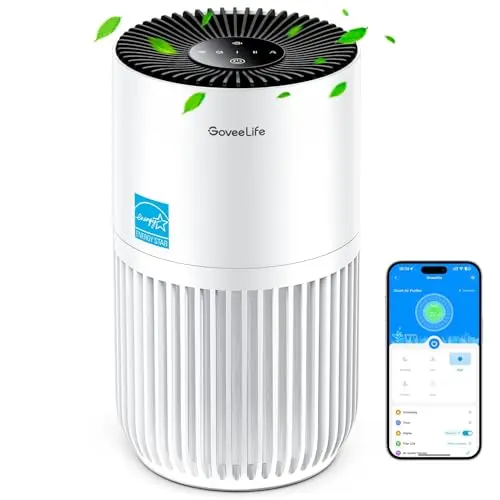
H7126 Smart Mini – Packable Air with App Control
A genuinely small purifier that still gives you real controls: three fan speeds, a sleep mode, and custom schedules you can set from your phone or with a voice command. The dual-channel 360 intake pulls from all sides, and the built-in fragrance pad lets you add a drop or two of oil if the room needs extra help.
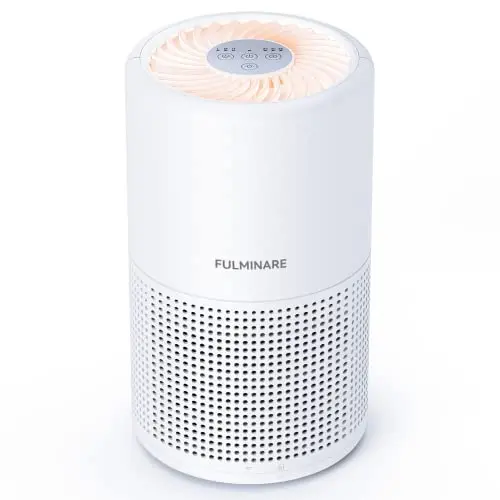
PU-P05 – Featherweight Purifier with Night Light
The smallest and lightest thing on this list, and the easiest to toss in a bag without thinking about it. It runs an H13 HEPA filter, has a soft night light built in, and offers five timer settings so it can shut itself off after you’ve already fallen asleep.
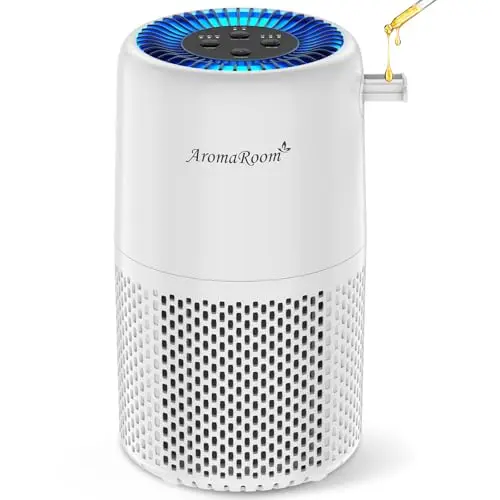
AP103-A – Slim Tower with Aromatherapy
A slim tower shape that fits narrow nightstands and crowded hotel desks, with True HEPA filtration in the 0.1-to-0.3 micron range, a quiet sleep mode, and three timer settings. The fragrance pad adds a scent option on top of purification.
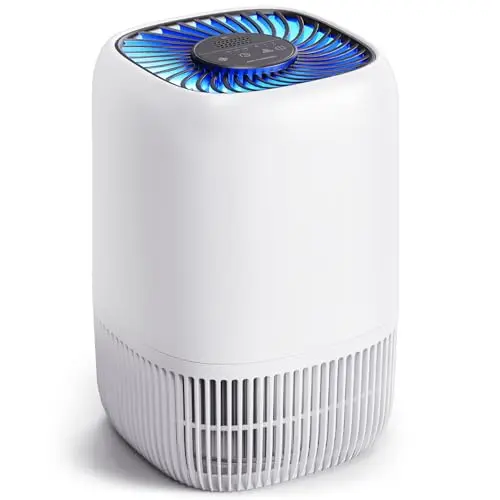
DH-JH12 – One-Touch Purifier with Aroma Tray
A one-button purifier with a triple-layer filter, 360-degree intake, three fan speeds, and a timer. The essential oil tray takes a generous dose of oil, and the unit carries an unusually long list of safety and performance certifications.
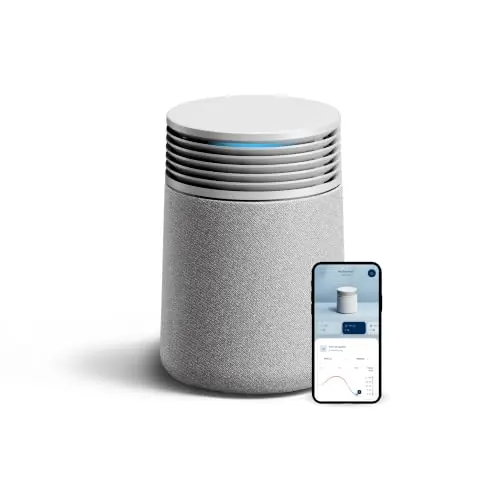
Signature SP1i – Hotel-Grade Filtration with Auto Mode
The most capable unit here by a wide margin: seven-stage HEPASilent filtration with OdorFence gas and VOC removal, app control with auto mode, and a five-color air quality indicator built into the outlet. It’s also the biggest and heaviest of the group.
How We Evaluated These Portable Air Purifiers for Travel
We didn’t spend a week living out of a suitcase with each of these running on a hotel nightstand. What we did: cross-referenced 5 compact purifier models from 5 distinct brands across six decision axes – physical size and weight, filtration class, noise floor, control simplicity, coverage rating methodology, and filter replacement cost and cadence. We triangulated published specifications, feature sets, and aggregated owner feedback where available, then mapped everything against a realistic travel profile: a carry-on bag, a shared room, unreliable WiFi, and exactly one available outlet. None of these units runs on battery, so outlet dependence was a pass-or-fail filter rather than a scoring criterion.
The scoring framework weighted real-world fit for travel (70%) – does this thing earn its luggage space and run quietly enough to sleep beside – against feature differentiation (30%) – smart control, certified filtration stages, gas removal, and anything else that separates one unit from another. We have no commercial relationship with any of the brands here; the ranking tracks fit and differentiation, not brand preference. If you want schedule-and-forget control, the H7126 Smart Mini is the pick; if you’d rather pack the smallest thing available without stretching the budget, the PU-P05 is the better call.
One caveat we want to be upfront about: coverage numbers in this category are not apples to apples. One brand here quotes a big square footage figure at five air changes per hour, another quotes a nearly identical figure at roughly one. Weigh the underlying math, not the headline.
How to Choose the Right Portable Air Purifier for Travel
1. What Portable Actually Means for an Air Purifier
In this category, portable doesn’t mean cordless. Every unit here needs a wall outlet, so the practical test is whether the thing earns its space in a bag. Two numbers decide that: weight and footprint. Under three pounds and roughly the size of a large mug is the sweet spot – anything bigger starts competing with your shoes for room.
Watch for a second trap: travel purifiers are all designed for small rooms. A hotel room, a dorm, a guest bedroom, an office cubicle. If you’re trying to clean an open-plan living space, none of these will do it, no matter what the box promises.
2. Reading Coverage Claims on Travel Air Purifiers
This is where the spec sheets get slippery. Coverage ratings depend entirely on air changes per hour, and brands pick whichever number produces the biggest headline. One unit here claims over a thousand square feet at five air changes per hour; another claims a nearly identical figure at roughly one. Same headline, wildly different real performance.
Ignore the big square footage and look for a stated ACH figure or a time-based claim – something like cleaning a 248 square foot room in about twelve and a half minutes tells you far more than a single large number. For a hotel room or a bedroom, two to four air changes per hour is a reasonable target.
3. Quiet Operation Matters More When You Travel
A purifier that’s merely audible in your own living room becomes unbearable in a shared hotel room at 2 a.m. Sleep mode noise ratings in this lineup run from a claimed 19 dB up to around 24 dB – a range that genuinely changes whether you can leave it on overnight. Lower is better, and the gap between the high teens and the mid-twenties is more noticeable in a quiet room than the numbers suggest.
Placement helps too. Put it on the far side of the room from the bed, aim the outlet away from your pillow, and use sleep mode rather than the lowest manual fan speed, because the two aren’t always the same thing. If silence is your top priority, the Signature SP1i claims the lowest noise floor in this group.
4. Filtration Class and What Each Stage Buys You
Most of these units use H13 HEPA or an equivalent true HEPA filter, which captures the fine particles that matter: dust, pollen, dander, and smoke. That’s the baseline. What varies is what comes after it.
Activated carbon layers and gas-targeted stages like OdorFence address smells and VOCs, which HEPA alone never touches – and hotel rooms are full of both. Aroma pads are a different thing entirely: they add fragrance rather than removing anything, so don’t confuse a pleasant scent with actual filtration. If odors are your main complaint, buy for the carbon stage, not the oil tray.
5. Filters, Spares, and What to Pack for a Trip
Every unit here needs a replacement filter every few months, and replacement costs vary more than the purifiers themselves do. Before you commit, price the filter – a cheap unit with expensive consumables isn’t cheap. Off-brand filters can reduce efficiency, so factor in the branded option.
Two setup details trip people up. The power adapter on several of these ships tucked inside the base of the unit, which reads as a missing part at first. And the filter usually arrives wrapped in plastic that has to come off before the unit does anything at all. For longer trips, pack a spare filter – a saturated filter in a rental is worse than none. The DH-JH12 is the simplest of the group to service, with no app dependency in the way.
6. GoveeLife H7126 vs. Blueair Signature SP1i: Which Suits a Trip?
These two sit at opposite ends of the travel tradeoff. The H7126 Smart Mini is the packable one: about two and a half pounds, app and voice control, aromatherapy, and a coverage rating built around a single small room. It’s designed to be stowed and forgotten.
The Signature SP1i is the desk-side one: seven-stage filtration, gas and VOC removal, auto mode, and a live air quality readout, at roughly twice the weight and in a much bigger body. It’s the better purifier and the worse travel companion.
If you’re moving between rooms every few nights, take the GoveeLife. If you’re parked in one place for a week or more and want to know what you’re breathing, the Blueair earns its space.
Frequently Asked Questions
1. What's the difference between the GoveeLife H7126 and the AromaRoom AP103-A?
The H7126 is the smart one: app and voice control, custom schedules, and a sleep mode that runs quiet. The AP103-A is the simpler, slimmer one, with a narrow tower footprint, three preset timers, and a fragrance pad instead of an app.
Pick the GoveeLife if you want to control it from your phone and set a schedule. Pick the AromaRoom if you’d rather press a button and get a shape that stands in a tight corner.
2. Are portable air purifiers actually portable, or is that just marketing?
Both, depending on what you mean. None of these run on battery, so portable here means packable – light enough and small enough to travel in a bag and plug in when you arrive. The lightest units here come in under two pounds; the heaviest runs closer to six.
What they don’t do is clean a large space. Every one of these is built for a single small room, and expecting more is how people end up disappointed.
3. Is a small air purifier enough for a hotel room or Airbnb?
Yes, for the square footage. A standard hotel room or a one-bedroom rental is well within range for any unit here. What varies is how quickly each one cycles the air and whether it’s quiet enough to leave running overnight.
If smells are the issue rather than dust, prioritize a gas or carbon stage over a bigger fan – plain HEPA won’t touch odors. For a room that just feels stale, the AromaRoom AP103-A is sized for hotel square footage and adds a scent option on top.
4. How is the Blueair Signature SP1i different from the VOOPNU DH-JH12?
Different philosophies. The SP1i is instrumented: seven filtration stages, gas and VOC removal, auto mode, and a color-coded air quality readout, all controlled from an app. The DH-JH12 is a one-button box – you plug it in, press once, and it works.
The Blueair is the more capable purifier and the heavier travel item. The VOOPNU is lighter, needs nothing but an outlet, and carries the broadest certification list here. If you don’t want another device on your WiFi, that settles it.
5. Can a portable purifier help with hotel smoke and cooking smells?
Partly. A true HEPA filter handles smoke particles, and units with a dedicated smoke-focused layer do a better job of it. What HEPA alone won’t fix is the gas phase – the lingering odor molecules from cooking, cleaning products, or tobacco.
For that you need a carbon or gas-filtration stage. Otherwise you’re filtering the air and still smelling the room. Scent pads mask the problem; they don’t solve it.
Final Verdict
For most trips, the H7126 Smart Mini is the one to pack. It’s small enough to disappear into a weekender, quiet enough to leave running, and the scheduling takes the guesswork out of a room that’s been shut up all day. If luggage space is the deciding factor, the PU-P05 gets you H13 filtration, a night light, and the smallest body here without stretching the budget. And if you’re staying in one place for a while – a long trip, a work assignment, a room you can’t ventilate – the Signature SP1i is the only one that will tell you whether the air is actually getting better. Skip all three if you’re camping; none of them run on battery.
