
Best Portable Air Purifiers – 2026 Reviews

A good portable air purifier earns its place by disappearing into the background – until wildfire smoke rolls in or the cat starts shedding. The best ones are small enough to move from bedroom to office, quiet enough to leave on overnight, and honest about how much room they can actually clean.
The portable label covers a lot of ground. Some units are true carry-between-rooms purifiers; others are larger floor models that happen to be plug-in appliances. Weight, footprint, and airflow matter more than the word on the box.
The two axes that separate good options from mediocre ones are real room coverage and livability. Coverage math is easy to inflate, and a purifier that is too loud or too annoying to maintain will spend most of its life switched off. We cross-shopped the category with those practical realities in mind.
Best Portable Air Purifiers – 2026 Reviews
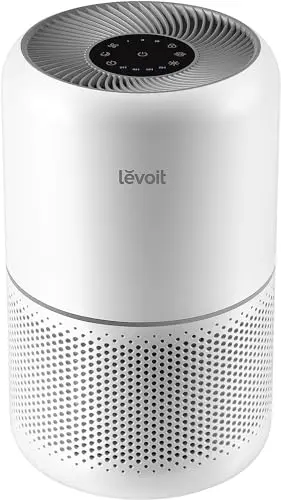
Core 300-P – Quiet HEPA for Bedrooms
The Core 300-P is the compact workhorse most people should start with: AHAM-verified performance, a true HEPA-grade three-stage filter, and a sleep mode quiet enough for a bedside table. It covers a bedroom quickly and can be moved from office to living room without feeling like a chore.
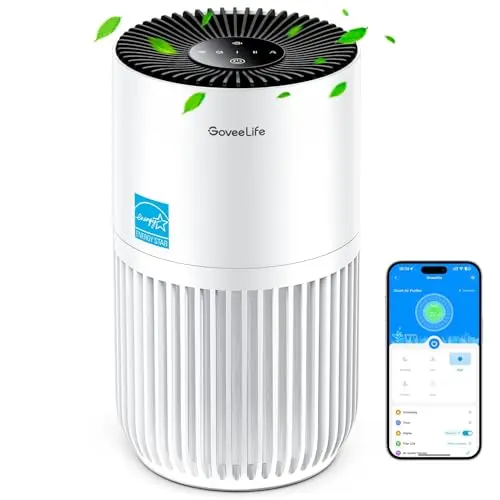
H7126 – Smart Mini With App Control
A genuinely small smart purifier that covers a bedroom or dorm room and adds app, voice, and aromatherapy features without taking over the floor. The H7126 is best for buyers who want scheduling and remote control more than maximum square footage.
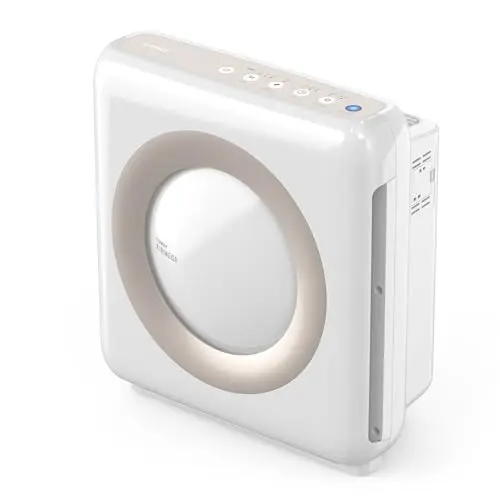
AP-1512HH(W) – Large-Room Air Quality Monitor
A larger-room air purifier with a useful air-quality readout, auto mode, and a four-stage filtration path. It’s movable rather than pocketable, so think of it as a room-to-room unit for a primary living space.
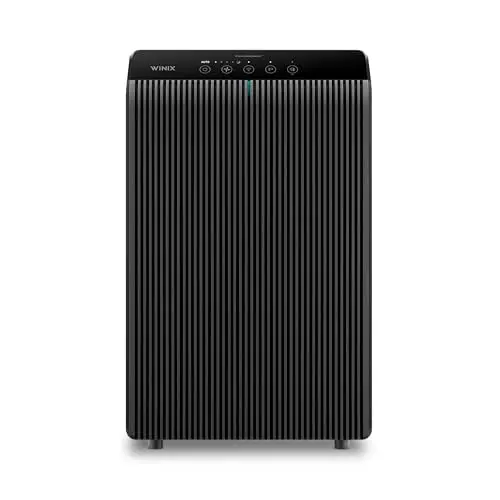
5510 – Large-Room Allergen Control
A large-room purifier with strong allergen capture, a washable pre-filter, and a light-sensing sleep mode. It’s best for buyers who want serious filtration for a living area and can leave it in place.

130i – Smart HEPA for Allergies
A compact smart purifier with app control and a three-layer CarbonTech filter. It’s a good middle ground for allergy-focused buyers who want Wi-Fi controls without a huge footprint.
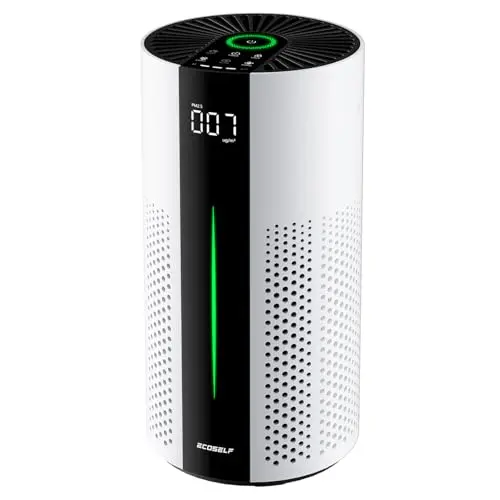
HAP609 – PM2.5 Display and Quiet Sleep
A compact purifier with a PM2.5 readout, 360-degree intake, and a genuinely quiet sleep mode. It’s aimed at buyers who want visible air-quality feedback in a bedroom or home office.
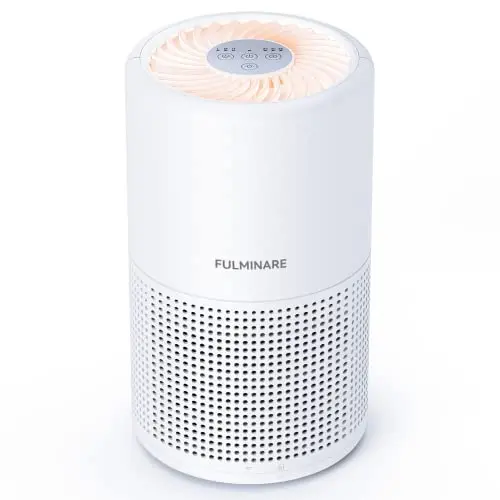
PU-P05 – Ultra-Light Budget Purifier
An ultra-light budget purifier with a night light and multiple timer settings. It’s best for a dorm, nursery, or small office where low cost and small size matter most.
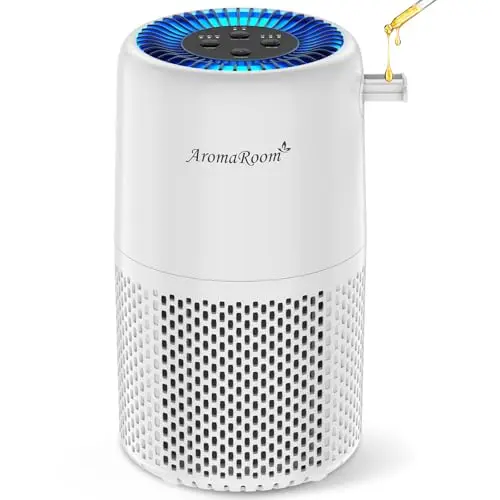
AP103-A – Small-Room Aromatherapy Purifier
A small-room purifier with a fragrance pad, sleep mode, and simple timer. It’s best for a nursery or guest room where a light scent and compact footprint are welcome.
How We Evaluated These Portable Air Purifiers
We didn’t run lab-grade CADR tests or measure sound pressure with calibrated meters. What we did: cross-referenced 8 portable air purifier models from 8 brands across six decision axes – published filtration specs, room-coverage math, noise and sleep behavior, smart controls, filter upkeep, and physical portability. We triangulated manufacturer specifications, feature sets, owner feedback where available, and use-case fit for bedrooms, dorms, home offices, and larger living rooms.
The scoring framework weighted real-world fit and performance (70%) – how well each unit cleans the spaces it claims and how livable it is day to day – against feature differentiation (30%) – unique controls, filtration layers, and portability advantages. We have no commercial relationship with any brand here; recommendations track fit and differentiation, not brand preference. If you want the safest all-around small-room choice, the Core 300-P is the pick. If app control and a tiny footprint matter more, the GoveeLife H7126 is the stronger match.
Coverage claims were audited rather than accepted at face value: a room-size number based on one air change per hour means something very different from a high-CADR rating in a bedroom. We mapped each unit to realistic room scenarios and weighed filter availability, replacement reminders, and noise at low speed. We also treated plug-in portability as a placement feature, not a promise of cordless operation. Where owner feedback was thin, we leaned on published specifications and kept the recommendation narrower.
How to Choose the Right Portable Air Purifier
1. What Makes a Portable Air Purifier Actually Portable
The word portable gets stretched in this category. A true portable air purifier is one you can move from bedroom to office without rearranging furniture: usually under roughly eight pounds, with a small footprint and a simple carry-friendly shape. Larger units with air-quality monitors and big carbon filters are still movable, but they behave like room-to-room appliances rather than something you tuck under a desk. Battery-powered purifiers exist in the market, but most of the models here are plug-in AC units. If you want a true carry-between-rooms unit, the Core 300-P is the pick; if you need a larger-room anchor, shop for coverage first and accept the extra weight.
2. Match Room Coverage and CADR to Your Real Space
Room-coverage claims are where shopping gets slippery. Many numbers assume one air change per hour, which is a light pass, not a deep clean. For allergies, smoke, or a bedroom you want to feel different in, aim for four to five air changes per hour and size the unit to the room you actually use. CADR – clean air delivery rate – is the spec to compare when it’s published, because it reflects smoke, dust, and pollen removal rather than a marketing footprint. A compact purifier with a modest CADR can still be excellent in a 150-square-foot bedroom and disappointing in an open living area.
3. Noise, Sleep Mode, and Bedroom-Friendly Portable Air Purifiers
Noise is the spec that decides whether a purifier stays on at night. Look for a Sleep Mode that lowers fan speed and shuts off display lights, because a bright LED can be more disruptive than a low hum. The quietest compact units land in the low-20-decibel range on their lowest setting, which is close to a whisper. For a small bedroom with app scheduling and voice control, the GoveeLife H7126 is the pick; if you need more airflow for a larger room, accept a higher low-speed noise floor.
4. Filters, Replacement Costs, and Maintenance
Filters are the long-term cost center. A True HEPA or HEPA-grade filter handles particles; an activated carbon layer handles odors and some VOCs; a washable pre-filter catches hair and lint before they reach the expensive layers. Check replacement availability before you buy, and note whether the unit has a filter-change indicator. Compact purifiers often have smaller filters that need more frequent changes, so the lowest purchase tier isn’t always the lowest ownership cost. Genuine filters are worth prioritizing when the manufacturer warns that off-brand options can affect performance.
5. Smart Controls and Air-Quality Sensors
Smart features range from genuinely useful to decorative. App control matters if the purifier sits behind furniture or you want schedules; Alexa or IFTTT support is convenient but not essential. An air-quality sensor with a PM2.5 readout or color indicator is more valuable than a simple power light because it lets the unit respond to real conditions. If you want a built-in air-quality readout and a larger-room ceiling, the Coway AP-1512HH(W) is the pick. For a small room, app scheduling on a compact unit is usually the better fit.
6. Portable Air Purifiers vs. Larger Room Units
Portable air purifiers trade maximum airflow for placement flexibility. They shine in bedrooms, dorms, home offices, nurseries, and guest rooms where a large unit would be overkill. Larger room units justify their weight with higher CADR, bigger filters, and more sensors, but they only make sense if the unit stays put. The right compromise is usually one compact purifier per bedroom and a larger unit for the main living space, rather than asking a single small purifier to clean an entire open floor plan.
Frequently Asked Questions
1. What's the difference between the Levoit Core 300-P and Coway AP-1512HH(W)?
The Core 300-P is the compact, bedroom-first choice: AHAM-verified CADR, a three-stage filter, and a sleep mode that stays quiet. The Coway AP-1512HH(W) is larger and more sensor-driven, with a real-time air-quality indicator, four-stage filtration, and a three-year warranty. If you need a true carry-between-rooms unit, the Core 300-P is the pick; if the purifier will live in a larger living area, the Coway’s coverage and feedback justify the extra bulk.
2. Is the GoveeLife H7126 or PuroAir 130i better for app control?
Both are app-connected compact purifiers, but they aim at different buyers. The GoveeLife H7126 adds Alexa and IFTTT support, custom fan schedules, and an aromatherapy pad in a smaller body. The PuroAir 130i leans harder into filtration with a three-layer CarbonTech filter and a Wi-Fi app, but its smart routines are less flexible. For app-heavy routines, the GoveeLife H7126 is the pick; for allergy-focused filtration in a compact room, the PuroAir 130i is the better match.
3. Are portable air purifiers battery-powered?
Most portable air purifiers are plug-in AC appliances, not battery-powered devices. The portability comes from size and weight: a compact unit can move from bedroom to office, but it still needs an outlet. Some models are explicitly limited to 120V US outlets, so check the power requirement before buying. If you need cordless operation, that’s a different category of product; don’t assume the portable label means battery power.
4. How many air changes per hour do I need for a bedroom?
For a bedroom, aim for four to five air changes per hour if you want a noticeable difference in allergies or smoke. Many coverage claims use one air change per hour, which is a lighter cleaning cycle. A CADR rating helps you compare units more honestly than room-size math alone. In a standard bedroom, a compact purifier with a modest CADR can be enough; in a larger primary suite, step up to a unit with more airflow and a bigger filter.
5. Do portable air purifiers help with pet hair and smoke?
Yes, with the right expectations. A True HEPA or HEPA-grade filter captures pet dander, hair, pollen, and smoke particles, while an activated carbon layer helps with odors and some VOCs. For pet hair, a washable pre-filter is a practical feature because it catches the big stuff first. Smoke and strong cooking odors often need source control plus a higher fan speed, not just a small purifier on low. In a small room, a compact unit can make a real difference; in an open living area, give it more airflow or add a second unit.
Final Verdict
For most buyers, the Core 300-P is the answer: it does the unglamorous work of proven filtration, quiet sleep mode, and easy filter changes without demanding floor space. If you want the smartest small-room unit, the GoveeLife H7126 is the better match for app schedules and voice control. If your portable purifier is really going to stay put in a larger living area, the Coway AP-1512HH(W) gives you a real air-quality readout and a stronger large-room ceiling. And if the goal is simply cleaner air in a dorm or nursery for the least fuss, the FULMINARE PU-P05 is the budget-friendly pick. Start with the room you actually need to clean, then choose the unit that fits that space rather than the other way around.
