
Best Portable Bidets For Travel – 2026 Reviews

You notice it on the second morning of a trip. The hotel bathroom has the good towels and the rainfall shower head, but no bidet – and the stack of paper on the counter is the only thing standing between you and a routine you’ve had at home for years. That’s the moment a portable bidet stops being a niche gadget and starts earning its place in a packing list.
Two things separate the options that actually work on the road from the ones that end up in a drawer. The first is form factor: a manual squeeze bottle and a rechargeable sprayer are solving different problems, and picking the wrong family for your trip is the most common regret. The second is how honestly the product treats the word portable. A folding handle that packs to six inches and a two-and-a-half-liter tank both get labeled travel bidets, but only one of them belongs in a carry-on.
We surveyed the market across brands to sort out that split, then looked at what each design is genuinely built for – a hotel room with no plumbing, a campsite with limited water, a hospital bag, or a long postpartum recovery at home. What follows is a guide to choosing from the category, not a pitch for any one label.
Best Portable Bidets for Travel – 2026 Reviews
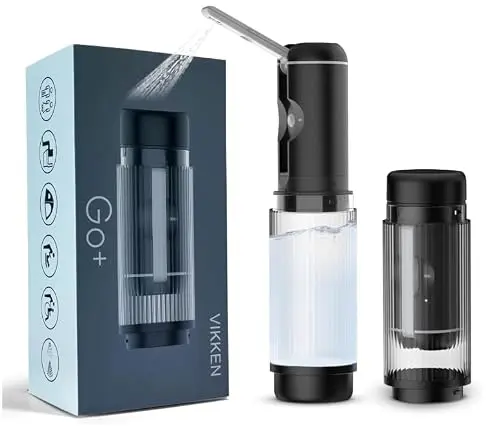
Go+ 300ml – Rechargeable Spray With Bottle-Adapter Freedom
A rechargeable handheld sprayer with a 300ml reservoir, three spray modes, and a USB-C port that charges from the same brick as your phone. The nozzle unit threads directly onto most standard water or soda bottles when you need more capacity, and the kit includes a carry bag, cable, and spare seals.
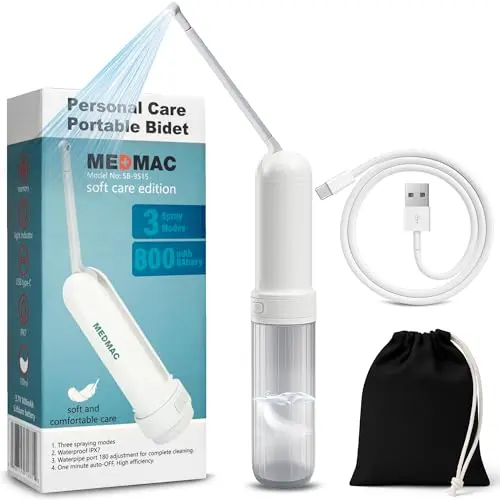
V6.0 – Folding Electric That Packs to Six Inches
An electric handheld bidet that collapses to about 6.6 inches and extends to 11.4 inches for use, with a 180-degree rotating nozzle, three spray modes, and an IPX7 waterproof body. It charges over USB-C and carries a 180ml reservoir at roughly half a pound.
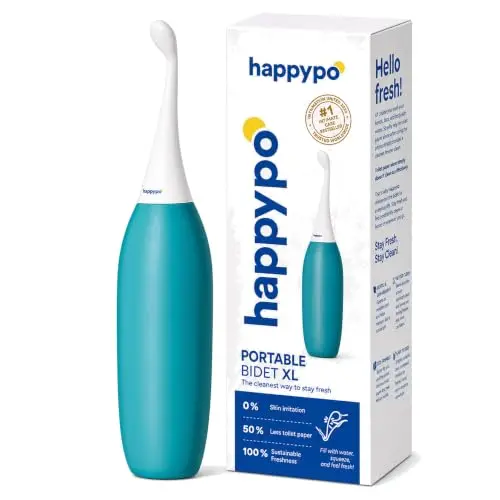
Original XL – Squeeze Bottle With Extra Volume
A squeeze bottle with no batteries, no cables, and no charging routine. The XL version carries roughly half again the volume of the standard bottle, so one fill covers a full bathroom trip, and the BPA-free, plasticizer-free body is available in multiple colors and sizes.
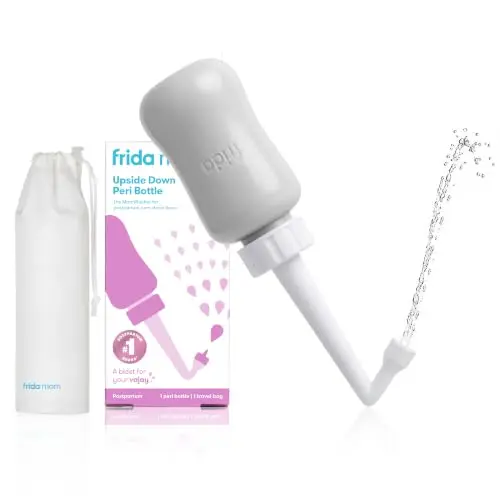
Upside Down Peri Bottle – Postpartum Cleaning Without the Wrist Twist
A 10-ounce peri bottle built to be held upside down, so the stream aims where you point it without a wrist twist or an awkward lean. A narrow angled neck keeps the flow continuous, and a waterproof travel bag is included.
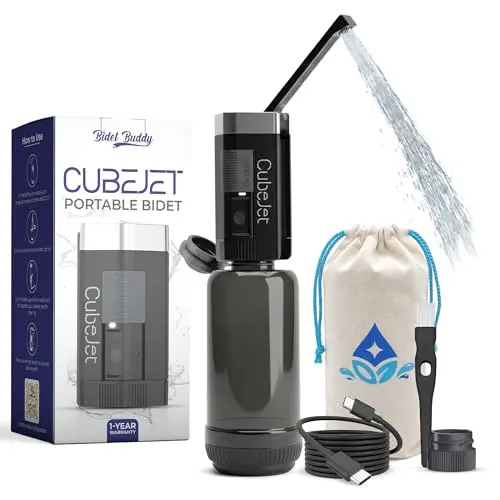
CubeJet – Wand Nozzle and a Real Warranty
An electric travel bidet with a wand-style nozzle, a 1100mAh rechargeable battery, USB-C charging, and a 380ml bottle included. The kit adds a travel pouch, charging adapter and cable, and a micro-brush, and it’s covered by a one-year manufacturer warranty.
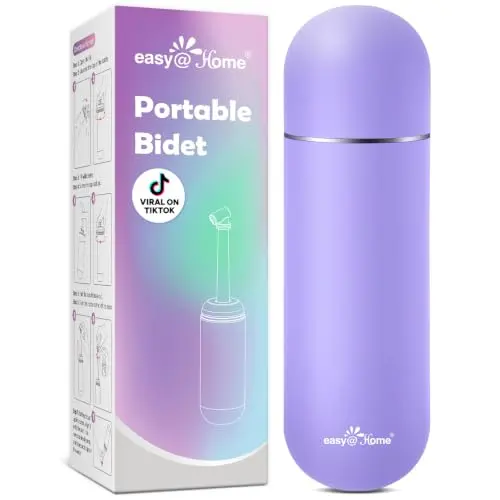
EPB-01 – Locking 380ml Bottle for Weekend Bags
A 380ml squeeze bidet with a lock function designed to stop accidental spills in a bag. Fill it, invert it, squeeze – no batteries, no setup, and the BPA-free body weighs about five ounces.
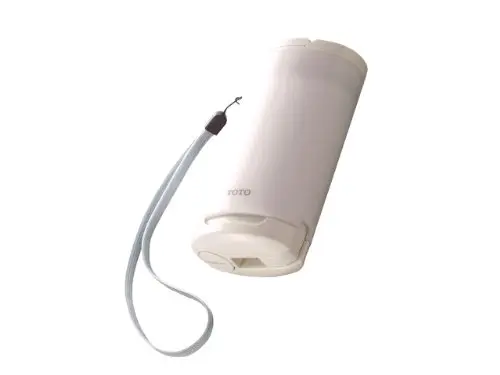
Travel Handy Washlet YEW350 – Telescoping Single-AA Bidet
A battery-powered travel washlet that collapses from about eleven and a half inches in use to roughly five inches for carrying, with a 180ml tank that delivers a spray of around 23 seconds on a single AA battery.
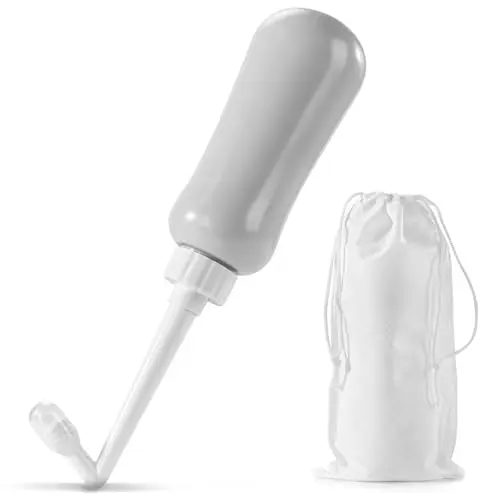
450ml Squeeze Bidet – Big Reservoir, No Batteries
A 15.8-ounce squeeze bottle with a long-reach nozzle that takes cool or warm water and needs no batteries. It’s one of the largest manual bottles here, and it weighs under four ounces dry.
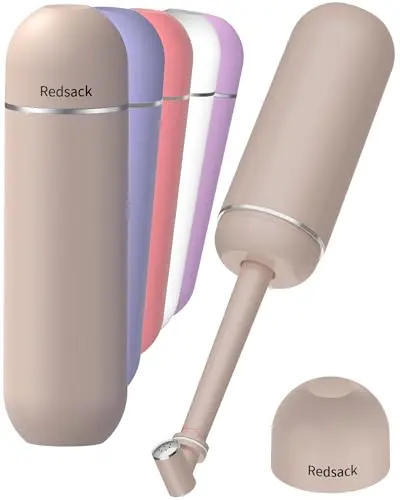
PB-01 – Triple-Seal Bottle With an Extendable Nozzle
A 380ml manual bidet with three leak-proof seals, a locking cap, and an extendable sprayer nozzle. Food-grade PP construction, BPA-free, and light enough to live in a backpack pocket.
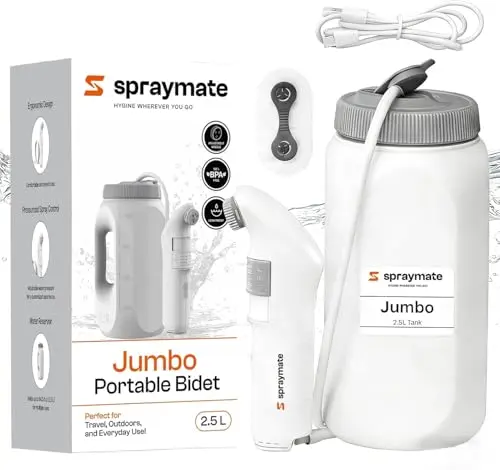
Jumbo – 2.5L Tank for Base Camp and Long Recoveries
A 2.5-liter electric bidet with a 1600mAh battery rated for up to 70 minutes of use, dual pressure modes, a 1.2-meter hose, and a suction base that holds it steady on a counter or tailgate. IPX6 rated and USB-C rechargeable.
How We Evaluated These Portable Bidets for Travel
We didn’t spend a week testing these in hotel bathrooms across three time zones. What we did: cross-referenced 10 portable bidet models from 10 distinct brands across six decision axes – packed dimensions and dry weight, reservoir capacity, spray control, power source, leak-proofing, and cleaning routine. We triangulated published specifications, mapped each design against real travel scenarios like carry-on flights, car camping, shared bathrooms, and postpartum recovery on the go, and weighed owner feedback where available to catch the gap between the spec sheet and daily use.
The scoring framework weighted real-world fit for travel (70%) – how well a bidet actually packs, seals, and cleans away from home – against feature differentiation (30%) – the specific engineering that separates one design from another. We have no commercial relationship with any brand here; recommendations track fit and differentiation, not brand preference. If you want a rechargeable sprayer that slips into a dopp kit, the VIKKEN Go+ is the match; if packed size is the only thing you care about, the MEDMAC V6.0 gets you there.
A few things we can’t tell you: we didn’t run multi-week leak trials inside a stuffed suitcase, and we didn’t measure spray force on a bench. What we can say is grounded in specifications, design intent, and how each option performs against the use cases it claims to serve.
How to Choose the Right Portable Bidets for Travel
1. Squeeze Bottle vs. Rechargeable Sprayer: Which Portable Bidet Travels Better
Almost every travel bidet falls into one of two families. Manual squeeze bottles use nothing but hand pressure – no batteries, no cables, no charging routine, and they weigh next to nothing. Rechargeable sprayers use a small pump to deliver consistent pressure and multiple modes, but they add weight, a charging habit, and usually cost.
The split matters more than any spec on the box. If you’re flying carry-on only and might not have a usable outlet for days, a squeeze bottle is the lower-risk choice – the HappyPo Original XL is the easiest place to start. If you want the closest thing to a plumbed bidet in a hotel room, go electric and accept the cable.
2. What Actually Makes a Bidet Portable Enough for Travel
The word portable is doing a lot of work in this category. A folding electric handle that packs to six inches and weighs half a pound is portable. A 2.5-liter tank that weighs over a pound and stands ten inches tall is a car-camping appliance with a travel-friendly name. Both are legitimate products; only one fits in a dopp kit.
Three measurements tell you more than any marketing claim: packed length, dry weight, and whether the cap has a positive lock. A bottle that seals with a twist and a click will ride in a suitcase. One that relies on friction will not. If folding is your priority, the MEDMAC V6.0 collapses further than anything else here.
3. Tank Size and Refills: Planning Water for Travel Days
Capacity ranges from roughly 180ml on the smallest electric handles up to 2.5 liters on tank-style units, and the practical difference is refills. A 180ml reservoir is one thorough use. A 380ml bottle is two or three. Anything past a liter and you’re planning around water rather than topping up mid-trip.
Pressure matters just as much, and it isn’t the same thing as tank size. A squeeze bottle delivers exactly what your grip does. A pump-driven sprayer delivers a repeatable jet regardless of hand strength, which is why electrics tend to suit anyone with reduced grip. If you’re going off-grid for days, the Spraymate Jumbo trades packability for a reservoir you won’t refill often.
4. Leak-Proofing, Seals, and Cleaning a Travel Bidet
Leaks are the failure mode that ruins a trip. Look for a lock function or a cap with a gasket rather than a simple screw-top, and count the seals – one is common, three is a deliberate design choice. Even a well-sealed bottle should be dried before packing; trapped water plus a pressurized cabin is how bags end up damp.
Cleaning is simpler than most people expect. Warm soapy water and thorough air drying covers most manual bottles; skip the dishwasher, the sterilizer, and the boiling pot unless the manufacturer explicitly allows it. Electric units rated IPX6 or IPX7 can be rinsed under a tap, but the nozzle still benefits from a brush every few days.
5. Portable Bidet Price Tiers: What Extra Spend Actually Buys
At the entry level you’re buying a plastic squeeze bottle, and the honest differences are capacity, seal quality, and nozzle shape. Nothing here is complicated, and a well-made bottle at the bottom of the market does the job.
Moving into the mid-range gets you larger reservoirs, better seals, and shaped grips that are easier to squeeze repeatedly. The rechargeable tier buys a pump, spray modes, USB-C charging, and water-resistance ratings – real engineering, and the reason those units run several times the price of a bottle. At the top end you’re paying for brand hardware, folding mechanisms, and warranties, not necessarily more cleaning power.
Our advice: decide whether you want electricity first, then buy the best-sealed option in that family.
Frequently Asked Questions
1. What's the difference between the VIKKEN Go+ and the Bidet Buddy CubeJet?
Both are rechargeable electrics with three-mode control and IPX6 bodies, but they’re built for different priorities. The VIKKEN Go+ is lighter at 8.8 ounces, carries a 300ml reservoir, and threads onto standard water bottles for extra capacity – the better pick for carry-on travel. The CubeJet carries a 380ml bottle, uses a longer wand nozzle for reach, and includes a one-year warranty, but it’s over 13 ounces.
If you’re packing light and want the bottle-adapter trick, go with the VIKKEN Go+. If reach and a warranty matter more than weight, the CubeJet is the stronger choice.
2. How does the HappyPo XL compare to the Frida Mom Upside Down Peri Bottle?
Both are manual squeeze bottles, so neither needs charging or a cable. The HappyPo XL is a general-purpose travel bidet: BPA-free and plasticizer-free, available in multiple colors and sizes, and designed for everyday hygiene on the road. The Frida Mom bottle is purpose-built for postpartum recovery, with a narrow angled neck that keeps the stream continuous when held upside down, plus a waterproof travel bag in the box.
For a hospital bag or recovery at home, the Frida Mom Upside Down Peri Bottle is the more considered design. For years of ordinary trips, the HappyPo is the more flexible buy.
3. Are all portable bidets actually portable enough to fly with?
No – and the gap is wide. Folding electrics pack down to roughly six to seven inches and half a pound, which disappears into a dopp kit or a backpack pocket. Squeeze bottles are lighter still, though some carry 380ml or more in a body that’s tall enough to rule out a small handbag. Tank-style units sit at the other end: over a pound, nearly ten inches tall, and genuinely a car or campsite tool.
Check three things before you buy for flights: packed length, dry weight, and whether the cap locks positively. Traveling with it empty is also simpler than explaining a full reservoir.
4. Can I use a travel bidet for postpartum care away from home?
Yes, and several models here are designed for exactly that. The Frida Mom bottle, the Easy@Home EPB-01, and the Redsack PB-01 all list postpartum and perineal care as a primary use, and the HappyPo is marketed for pregnancy and recovery too. Warm water is the norm; the Frida guidance suggests a drop or two of witch hazel for extra soothing.
What to prioritize: a seal you trust in a hospital bag, enough capacity for one uninterrupted trip, and a gentle, adjustable stream. Powered units like the MEDMAC give you a soft mode without relying on grip strength.
5. How do I stop a portable bidet from leaking in my luggage?
Three habits cover most of it. First, buy something with a lock function or a cap gasket rather than a friction-fit top – the models with multiple seals are the ones you can pack without a ziplock. Second, drain and dry it before it goes in a bag; residual water is what escapes.
Third, test it before you trust it. Fill it, invert it, shake it over a sink, and leave it upside down for a few minutes. If a seam or cap weeps at home, it will absolutely weep inside a suitcase at altitude.
Final Verdict
For most travelers, the VIKKEN Go+ is the answer. It’s small enough to vanish into a toiletry bag, the three spray modes are usable rather than decorative, and the direct-connect bottle thread solves the capacity problem that limits every compact electric. If you’d rather not think about charging at all, the HappyPo Original XL is the squeeze bottle we’d hand to a friend – nothing to break, nothing to top up.
Heading into a hospital stay or a postpartum recovery? The Frida Mom Upside Down Peri Bottle was designed for exactly that and comes with a waterproof bag. And if packed size is your one non-negotiable, the MEDMAC V6.0 folds smaller than anything else in this lineup.
Pick your power source first, then buy the best-sealed option in that family. That single decision eliminates most of the market.
