
Best Pour Over Coffee Makers – 2026 Reviews

There’s something quietly satisfying about the pour over ritual – the kettle hissing, the bloom rising, the slow spiral of water over fresh grounds. But the gear you choose shapes how that ritual actually feels. A cone that drains too fast leaves you with a thin, sour cup; one that clogs turns your morning into a chore. The right brewer makes the whole thing feel effortless, whether you’re chasing a bright single-origin or just want a reliable mug before work.
The two axes that separate a great pour over setup from a frustrating one are control and consistency. Control is about how much say you get over pour speed and flow – a single large hole behaves very differently from a slow-draining cone. Consistency is about heat retention, filter quality, and whether the brewer helps you saturate the grounds evenly instead of channeling water down one side.
This guide walks through the pour over makers that actually earn counter space – from complete starter kits to reusable-filter carafes to single-serve units that skip the kettle entirely. We’ll help you match the brewer to how you actually drink coffee, not how you imagine you might.
Best Pour Over Coffee Makers – 2026 Reviews
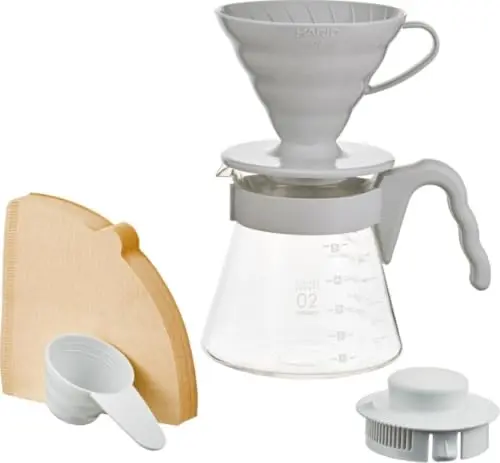
V60 Starter Set – Complete Pour Over Kit
A complete entry point into pour over: the V60 02 plastic dripper, a heatproof glass server, and a starter pack of paper filters all in one box. The single large drain hole gives you full control over pour speed, so you can push a brighter cup with a fast pour or a deeper one by slowing down.
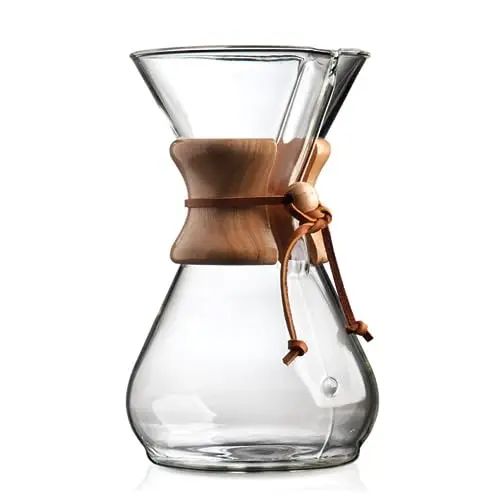
Classic 8-Cup – Iconic Glass Brewer
The hourglass silhouette that’s been on kitchen counters and in coffee shops for decades. Its thick bonded paper filters trap fines and oils for an exceptionally clean, tea-like cup, and the borosilicate body won’t hold onto odors.
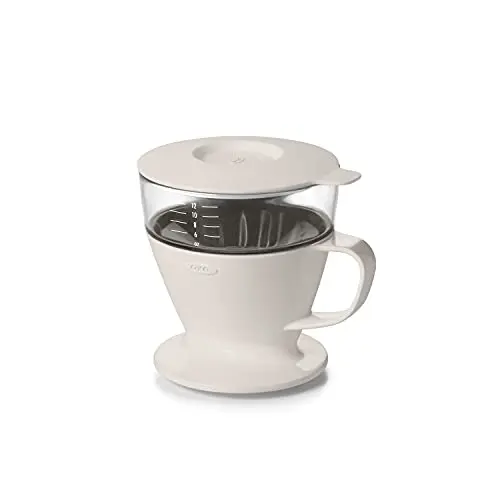
Single Serve Pour-Over – No-Kettle Simplicity
A clever single-cup pour over that takes the kettle out of the equation. Fill the reservoir, and the auto-drip tank releases water at a controlled rate over the rainmaker showerhead for an even, hands-off extraction – up to 12 ounces at a time.
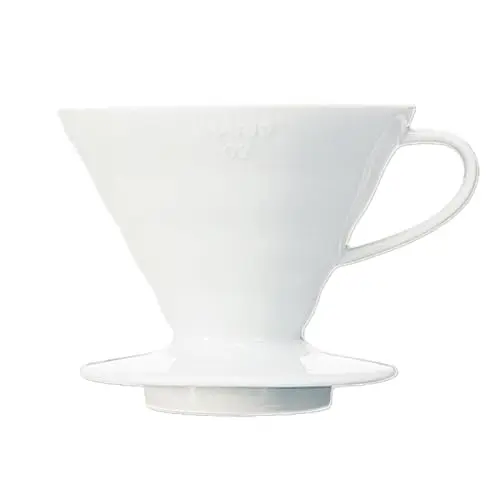
V60 Ceramic Dripper 02 – Heat-Retaining Cone
The same V60 cone geometry, cast in handmade Arita-yaki ceramic. The material holds heat through the brew, and the spiral ridges plus single large hole give you fine control for accenting floral and fruit notes.
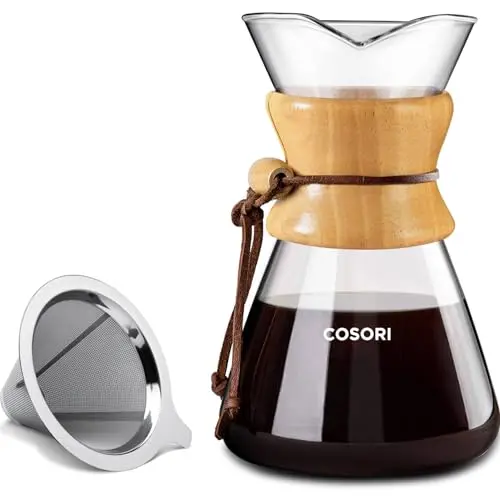
Pour Over Coffee Maker – Double-Layer Steel Filter
A 34-ounce glass decanter paired with a double-layer stainless steel filter, wrapped in a wooden sleeve. No paper filters to buy, no pods to toss – just grounds, hot water, and a rich cup.
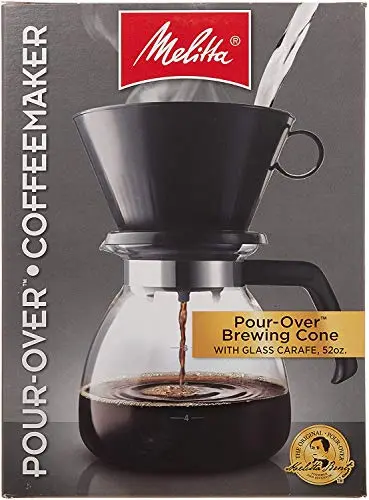
52 oz Pour-Over Brewer – Budget Pot Brewing
A straightforward cone-and-carafe setup that brews up to 52 ounces at once. The open design lets you watch your pour and avoid overfilling, and it ships with a starter supply of #6 cone filters.
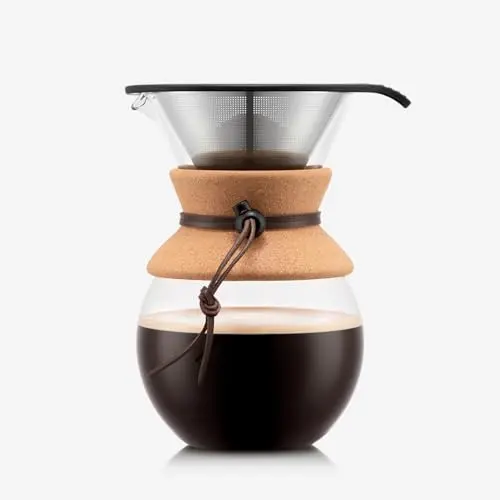
34 oz Pour Over – Cork-Grip Reusable Brewer
A heat-resistant borosilicate carafe with a reusable stainless steel mesh filter and a cork grip band. The permanent filter lets coffee’s aromatic oils through for a fuller flavor, and the whole thing is dishwasher safe.
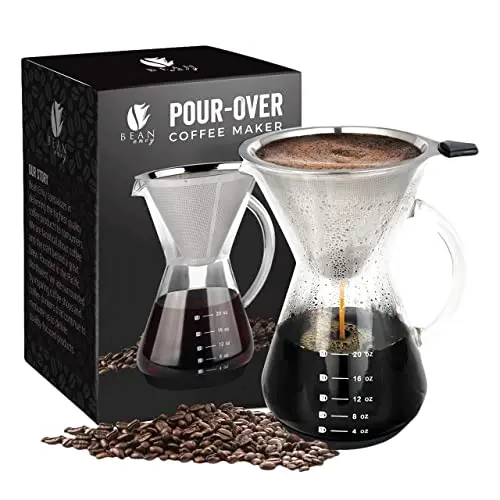
Pour Over Coffee Maker – Glass and Steel Simplicity
A 20-ounce borosilicate glass carafe with a reusable stainless steel mesh filter and a non-slip silicone base. Three components, fully dishwasher safe, and sized to brew straight into a mug or the included carafe.
How We Evaluated These Pour Over Coffee Makers
We didn’t brew side-by-side pots under lab conditions or measure extraction yields with a refractometer. What we did: cross-referenced 8 pour over coffee makers from 7 distinct brands across five decision axes – brew capacity, filter type, material and heat retention, ease of cleanup, and pour control. We triangulated published specifications, absorbed owner feedback where available, and mapped each brewer against real buyer profiles: the single-cup drinker, the weekend host, the no-paper-filter convert, and the first-timer who just wants a good cup without a learning curve.
The scoring framework weighted real-world brewing fit (70%) – how reliably each maker delivers a good cup for its intended use – against feature differentiation (30%) – unique advantages like auto-drip tanks, double-layer steel filters, or heat-retaining ceramic. We audited capacity claims against real-world serving sizes, noted which brewers include filters versus which expect you to buy them, and weighed cleanup against daily-driver convenience. We have no commercial relationship with any of the brands here; recommendations track fit and differentiation, not brand preference. If you want the most complete starting point, the V60 Starter Set is the easy call; if a clean, filter-forward cup is the goal, the Chemex Classic earns its following.
How to Choose the Right Pour Over Coffee Maker
1. What Separates a Good Pour Over Coffee Maker From a Great One
Almost any cone can make coffee. What separates a brewer you’ll love from one that gathers dust comes down to three things: even saturation, heat retention, and a filter that matches your taste. If water channels down one side of the bed, you extract unevenly – some grounds over-extracted and bitter, others under-extracted and sour. A well-designed cone, whether it uses spiral ridges or a wide flat bed, guides water through the grounds more consistently.
Heat matters just as much. Pour over relies on keeping the slurry hot through a brew that can run several minutes; a cone that bleeds heat gives you a flatter, duller cup. That’s the whole argument for ceramic and thick glass over thin plastic, though the tradeoff is usually weight and cost.
2. Paper Filters vs Reusable Steel Mesh
The filter you choose shapes the cup as much as the cone does. Paper filters trap fine particles and much of the coffee’s oils, producing a clean, tea-like clarity that lets delicate floral and fruit notes stand out – the Chemex and V60 both lean on this. Reusable steel mesh lets more oils and sediment through, giving you a fuller, heavier body and no ongoing filter cost.
Neither is objectively better. If you love a bright, articulated cup, paper is your friend. If you want richness and hate restocking filters, a reusable mesh brewer like the Bodum 34 oz is the practical pick. Some people keep both and switch by mood.
3. Capacity and Cup Count: Match the Brewer to Your Morning
Pour over cup counts use a small serving size – typically 4 to 5 ounces – so a ’10-cup’ carafe is closer to six generous mugs than ten. Think in people, not numbers. Single-serve units cap out around 12 ounces, mid-size carafes and cones land in the 20- to 34-ounce range, and the largest carafes push past 50 ounces for a full household or a small office.
If you routinely brew for a crowd or want leftovers for iced coffee, a big glass carafe like the Melitta 52 oz saves you from brewing twice. If it’s just you, a smaller cone or single-serve brewer wastes less and keeps the cup hotter.
4. Material and Heat Retention: Why Ceramic Earns Its Keep
Cone material is a heat question in disguise. Ceramic holds temperature best through a slow brew, which is why the Hario V60 Ceramic is a favorite for lighter roasts that reward stable heat. Thick glass is a close second and lets you watch the brew, while thin plastic is light and cheap but bleeds heat fastest.
Glass carafes add their own considerations: they’re easy to clean and beautiful to look at, but they can crack if handled roughly or moved between hot and cold quickly. Treat glass as a long-term relationship, not a rugged travel companion.
5. How Much Pour Control Do You Actually Need?
Some brewers hand you all the control and expect you to use it; others automate the pour entirely. A single large drain hole gives you the most freedom – pour fast for a lighter, brighter cup, or slow down for more body. Cones with restricted or auto-drip flow remove the guesswork but also take away your ability to adjust mid-brew.
The honest question is whether you want a skill or a shortcut. If you enjoy dialing in a recipe, a wide-open cone rewards the effort. If you just want a good cup before you’re fully awake, a metered brewer is the kinder choice.
6. Chemex vs Hario V60: Two Schools of Pour Over Coffee
These two classics are the easiest way to understand the spectrum. The Chemex uses thick paper filters and a slow, wide brew for a clean, oil-free cup with maximum clarity – it flatters bright, delicate coffees and forgives a slightly sloppy pour. The Hario V60 uses a faster cone with a large hole that puts you fully in charge, rewarding precision with more texture and aroma but punishing a rushed pour.
If you want consistency with minimal fuss, lean Chemex. If you want to learn and tinker, the V60 is the better teacher. Neither is ‘better’ – they’re just aimed at different temperaments.
Frequently Asked Questions
1. What's the difference between the Chemex and the Hario V60?
They represent two philosophies. The Chemex brews through a thick paper filter in a slow, wide bed, giving you a very clean, oil-free cup that highlights delicate flavors and is forgiving of an uneven pour. The Hario V60 uses a fast cone with a single large hole, putting you in charge of flow – it delivers more texture and aroma but rewards a careful, even pour. If you want consistency and clarity, the Chemex Classic is the safer bet; if you want to learn and tinker, go with the V60.
2. Do I need a gooseneck kettle for pour over?
You don’t strictly need one, but it’s the single biggest upgrade to your results. A gooseneck kettle gives you a slow, controlled stream, which is exactly what makes even saturation possible – and even saturation is the difference between a balanced cup and a sour, channeled one. A standard kettle works in a pinch, but you’ll pour faster and less precisely. If you’re buying a manual cone, budget for a gooseneck eventually.
3. Paper filters or a reusable steel filter – which is better?
It depends on the cup you want. Paper filters absorb oils and trap fines for a clean, bright, tea-like cup with more clarity between flavors. Reusable steel mesh lets oils through for a heavier, richer body and eliminates restocking costs and waste. Paper is the pick for clarity and light roasts; steel is the pick for body and convenience. Many brewers keep a paper cone and a mesh carafe side by side and choose by mood.
4. How does the OXO Single Serve compare to the Melitta carafe brewer?
They solve opposite problems. The OXO Single Serve automates the pour with a metered water tank and brews one mug at a time – ideal if you drink alone and don’t want to stand over a cone. The Melitta 52 oz is a manual cone-and-carafe setup that brews up to ten small cups at once, better for a household or office where you’re pouring for several people. Pick the OXO for a hands-off single cup, the Melitta for volume.
5. Is a pricier pour over maker worth it?
Only up to a point. The cone design, filter, and your technique matter far more than price. A budget glass carafe with a good reusable filter can brew a cup that rivals a premium setup. Where extra money buys something real is material and craft – a handmade ceramic cone holds heat better and lasts longer – and completeness, like a kit that includes a server and filters. Past that, you’re paying for design, not a better cup.
Final Verdict
For most people, the Hario V60 Starter Set is the answer – it hands you a dripper, a server, and filters in one box, so there’s nothing to figure out before your first brew. It’s the setup I’d hand a friend who’s curious about pour over but doesn’t want to research five separate purchases.
If you mostly brew a single mug and hate babysitting a kettle, the OXO Single Serve does the pouring for you. And if you want to brew by the pot on a budget, the Melitta 52 oz covers a crowd without the fuss. For a clean, filter-forward cup and a countertop showpiece, the Chemex remains the classic choice. Start with how you drink coffee, pick the brewer that matches, and the ritual takes care of itself.
