
Best Pro Espresso Machines – 2026 Reviews

A pro espresso machine earns that label at the group head, not on the box. The difference shows up in a shot that tastes balanced on a Tuesday morning and again on Saturday – not thin and sour one day and harsh the next. It’s also in the parts you can’t see: a stable pump, real temperature control, a serviceable group, and a steam wand with enough power to texture milk instead of just heating it.
Shopping this tier is less about chasing the highest bar number and more about matching the machine to your actual morning. Some pro-minded buyers want a manual workflow they can learn and tweak; others want a built-in grinder, guided dosing, or a fully automatic routine that still makes a proper cappuccino. The right answer depends on how much control you want and how much counter space you’re willing to give up.
We cross-shopped the standout pro espresso machines across major brands, focusing on the features that separate a genuinely capable machine from a dressed-up starter unit: pressure stability, temperature control, grinder integration, steam performance, and long-term serviceability. Here’s how the field shakes out.
Best Pro Espresso Machines – 2026 Reviews
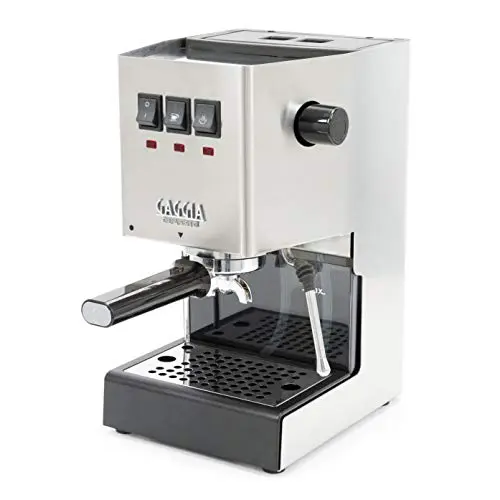
Classic Evo Pro – Commercial Components for Home Baristas
The Gaggia Classic Evo Pro is the old-school prosumer pick: a 9-bar semi-automatic machine with a commercial 58mm portafilter, a three-way solenoid valve, and a full-size steam wand. The steel housing and made-in-Italy build give it a more serviceable, upgrade-friendly feel than most starter machines. It doesn’t include a grinder, so you’ll need a good burr grinder to pair with it.
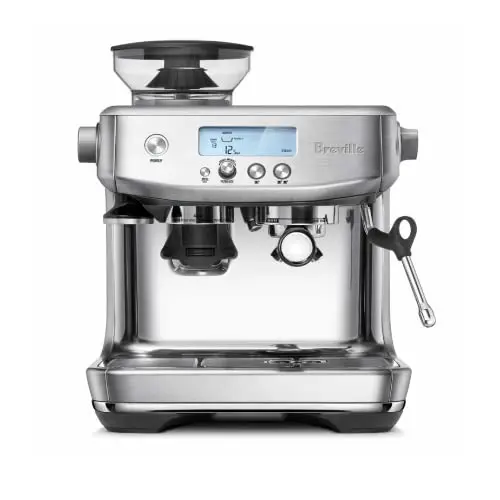
Barista Pro – Built-In Grinder and Fast Heat
The Breville Barista Pro is the all-in-one prosumer option: a built-in conical burr grinder, PID temperature control, low-pressure pre-infusion, and a ThermoJet heating system that reaches extraction temperature in about three seconds. The LCD walks you through grind and shot progress, while the manual steam wand handles microfoam for latte art. It’s a strong fit if you want one machine to do the grind-and-brew job without giving up hands-on control.
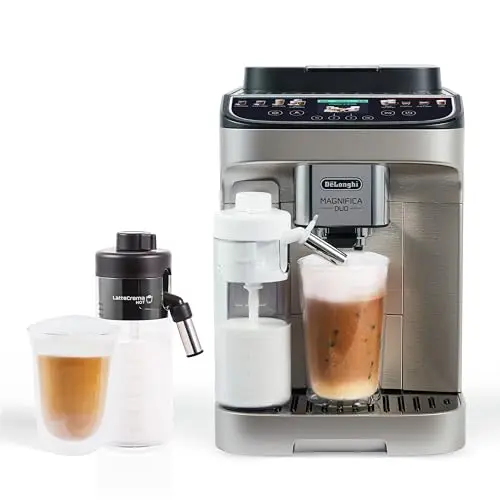
Magnifica Duo – 20-Recipe Automatic Espresso
The De’Longhi Magnifica Duo is a super-automatic pro espresso machine for people who want cafe-style drinks without a manual workflow. It offers 20 one-touch recipes, three brewing technologies for espresso, drip coffee, and cold brew, plus a hot-and-cold milk frother. The built-in conical burr grinder and touchscreen keep the routine simple, while the removable dishwasher-safe carafe makes cleanup easier.
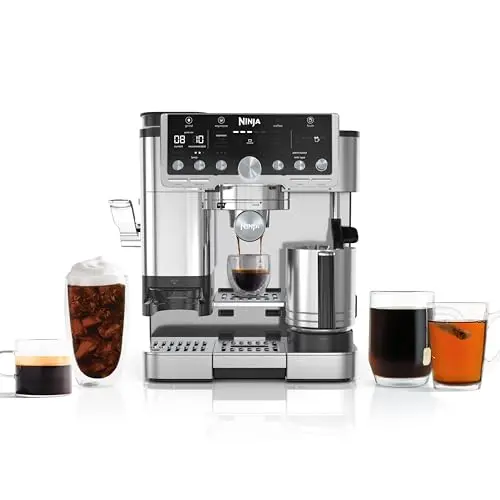
Luxe Cafe Pro – 4-in-1 Espresso and Cold Brew
The Ninja Luxe Cafe Pro is a 4-in-1 machine that covers espresso, drip coffee, cold brew, and hot water. It has a built-in conical burr grinder with 25 settings, a hands-free frother, an integrated tamper, and Barista Assist guidance that adjusts temperature and pressure by drink. It’s built for convenience and drink variety rather than old-school manual control.
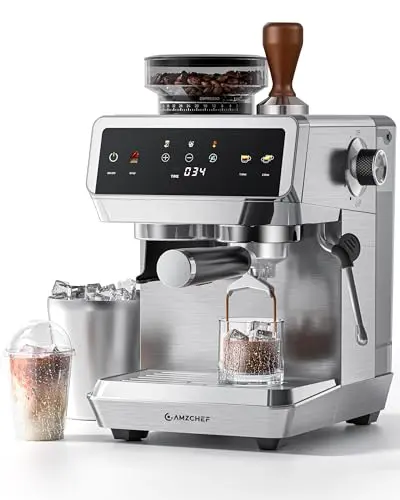
CM1626 – Budget Grinder-and-Brew Combo
The AMZCHEF CM1626 packs a built-in grinder, 44 grind settings, and adjustable brew temperature from 190F to 201F into a compact, budget-friendly body. It also adds a one-touch cold brew mode, a 60-ounce water tank, and a steam wand for microfoam. It’s a semi-automatic machine for buyers who want grinder integration and temperature control without stepping into premium pricing.
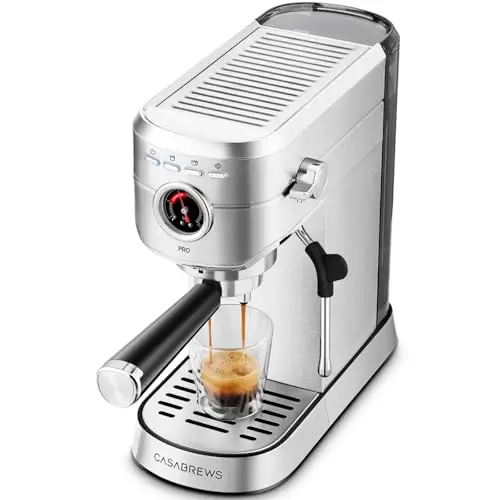
5418 PRO – Fast-Heat Budget Prosumer
The CASABREWS 5418 PRO is a compact semi-automatic with a 20-bar pump, PID temperature control, a built-in pressure gauge, and a fast-heating system that reaches brew temperature in under five seconds. Steam switching is also quick, and the 51mm portafilter setup keeps the footprint small. It’s for buyers who want pro-minded features like PID and a gauge at a budget-friendly price.
How We Evaluated These Pro Espresso Machines
We didn’t run lab-grade extraction tests or measure pressure and temperature with bench instruments. What we did: cross-referenced six pro espresso machines from six distinct brands across six decision axes – extraction pressure and temperature stability, build materials and serviceability, grinder integration, milk-frothing capability, heat-up and workflow speed, and footprint and capacity. We triangulated published specifications, feature sets, aggregated owner feedback where available, and use-case fit for buyers moving up from starter machines. We also weighed how each machine handles the unglamorous parts of ownership: filling the reservoir, emptying the drip tray, switching between brew and steam, and keeping the group head clean.
The scoring framework weighted real-world performance (70%) – how well each machine delivers repeatable shots and a workable daily routine – against feature differentiation (30%) – unique technical advantages like PID control, commercial portafilters, built-in grinders, or automatic milk systems. We audited the spec sheets for pressure, wattage, capacity, and included accessories, then mapped those details to the way people actually make espresso at home. We have no commercial relationship with any of the brands featured; recommendations track fit and differentiation, not brand preference.
If you want the classic prosumer path, the Classic Evo Pro is your match; if you want an all-in-one grinder setup, the Barista Pro serves you better. A few things we can’t tell you: we didn’t pull hundreds of shots or track long-term reliability in a test kitchen. What we can tell you is which machines make the most sense for different pro-minded buyers based on published specs, feature sets, and the patterns in owner feedback.
How to Choose the Right Pro Espresso Machine
1. What Makes an Espresso Machine 'Pro'?
The word pro gets used loosely, but a genuinely pro-capable espresso machine usually shares a few traits. Look for stable pressure at the group, not just a big pump number on the box. Temperature control matters just as much – a machine that swings hot and cold will make even good beans taste inconsistent. And serviceable parts matter if you plan to keep the machine for years rather than replace it when something wears out.
Other signals: a standard portafilter size, a steam wand with real drying power, and a build that doesn’t feel disposable. You don’t need every feature to make great espresso, but the more of these boxes a machine checks, the more it behaves like a tool rather than an appliance.
2. Pressure, Temperature, and the Parts That Matter
Espresso brews at roughly 9-bar extraction pressure. A 15-bar or 20-bar pump rating is a ceiling, not a brewing pressure, so don’t assume the higher number makes a better shot. What matters is whether the machine holds pressure steadily through the puck. PID temperature control is the other big one: it keeps the brew water within a narrow range, which helps you taste the coffee instead of the temperature swing.
Also look for pre-infusion, which wets the puck gently before full pressure, and a heating system that recovers quickly between shots. Thermoblock and ThermoJet designs heat fast and suit milk-heavy routines, while traditional boilers can feel more stable for back-to-back espresso. Neither is automatically better – it depends on how you drink your coffee.
3. Built-In Grinder vs Separate Grinder
A built-in grinder is the convenience play. It saves counter space, reduces the number of steps between bean and shot, and makes the machine feel like one complete system. The trade-off is that you’re locked into that grinder until you replace the whole machine, and the built-in units on budget models may not match a dedicated burr grinder for consistency.
A separate grinder gives you a clearer upgrade path. You can start with a capable burr grinder and upgrade later without replacing the espresso machine. If you want one less box on the counter, the Barista Pro is the all-in-one pick here. If you already own a grinder you trust, the Gaggia Classic Evo Pro keeps the machine simple and lets your grinder do the heavy lifting.
4. Manual, Semi-Automatic, or Super Automatic?
Semi-automatic machines like the Gaggia and Breville give you hands-on control over dose, tamp, and steam. You’ll learn more, and you’ll have more room to dial in a bean, but you’ll also do more work every morning. Super-automatic machines like the De’Longhi Magnifica Duo grind, dose, brew, and froth with minimal input. You trade some manual control for speed and consistency, which is a fair swap for busy households or anyone who wants a latte without thinking about puck prep.
If you’d rather press one button, the Magnifica Duo is the automatic pick. If you want to learn the craft, stay with a semi-automatic and put the savings into a good grinder. There’s no wrong answer, but there is a wrong match for your patience level at 7 a.m.
5. Gaggia Classic Evo Pro vs Breville Barista Pro: Which Pro Espresso Machine Fits You?
The Classic Evo Pro is the old-school choice. Its commercial 58mm portafilter, three-way solenoid, and steel housing make it feel like a small commercial machine, and its serviceability is a real long-term advantage. It doesn’t have a grinder or a screen, so you’ll need to bring your own grinder and your own patience for manual workflow.
The Breville Barista Pro is the more automated prosumer pick. It adds a built-in grinder, PID temperature control, and fast ThermoJet heating, so you can go from whole bean to shot with fewer appliances and less counter clutter. Choose the Gaggia if you want a serviceable, manual machine and already own a grinder. Choose the Breville if you want the grinder and the espresso machine in one box and don’t mind a larger footprint.
6. Milk Frothing, Heat-Up, and Daily Workflow
A steam wand gives you control and better microfoam once you learn it, but it also adds a manual step and a cleaning routine. A hands-free frother is easier for beginners and better for back-to-back drinks, though it can leave less room for texture adjustments. If you drink iced lattes, look for cold foam capability or a cold-brew mode.
Don’t overlook heat-up time and transition speed between brew and steam. A machine that takes a long time to recover will make a second cappuccino feel like a chore. Cup warmers, drip tray clearance, and water tank access are small details that become big ones in daily use. The best pro espresso machine is the one whose workflow you’ll actually repeat tomorrow.
Frequently Asked Questions
1. What's the difference between the Gaggia Classic Evo Pro and the Breville Barista Pro?
The Gaggia Classic Evo Pro is a classic semi-automatic with a commercial 58mm portafilter, 9-bar extraction, a three-way solenoid, and a full-size steam wand. It does not include a grinder. The Breville Barista Pro adds a built-in grinder, PID temperature control, low-pressure pre-infusion, and ThermoJet heating that reaches brew temperature in about three seconds.
Choose the Classic Evo Pro if you already own a good grinder and want a more serviceable, manual machine. Choose the Barista Pro if you want the grinder and espresso machine in one box and a faster daily workflow.
2. De'Longhi Magnifica Duo vs CASABREWS 5418 PRO: Which is better for milk drinks?
The De’Longhi Magnifica Duo is a super-automatic with 20 one-touch recipes, a hot and cold frother, a built-in burr grinder, and three brewing technologies. The CASABREWS 5418 PRO is a semi-automatic with a 20-bar pump, PID temperature control, a pressure gauge, and 3-second steam switching.
For hands-off milk drinks and iced coffee, the Magnifica Duo is the easier machine. For manual control and a smaller counter footprint, the CASABREWS 5418 PRO is the more prosumer-style pick.
3. Do you need a built-in grinder on a pro espresso machine?
Not strictly. A built-in grinder adds convenience and saves counter space, but it also locks you into that grinder until you replace the machine. A separate grinder gives you a clearer upgrade path and often better grind consistency at a given price tier.
If you want one appliance and a simple routine, an all-in-one like the Breville Barista Pro or AMZCHEF CM1626 makes sense. If you already own a capable burr grinder, spend the budget on the espresso machine itself.
4. Are 20-bar espresso machines better than 9-bar machines?
No. Espresso extraction happens around 9-bar pressure; a 20-bar pump is a maximum rating, not a brewing pressure. A higher ceiling doesn’t automatically make a better shot. What matters is whether the machine holds stable pressure at the group and controls temperature through the shot.
You’ll see 15-bar and 20-bar machines at many price tiers, but don’t use the pump number as a quality shortcut. Look for PID control, pre-infusion, and a build that can recover between shots.
5. What should I look for in a pro espresso machine for lattes and cappuccinos?
Prioritize steam power, transition time between brew and steam, and a milk jug that fits your routine. A hands-free frother is easier for beginners, while a manual steam wand gives more control for latte art. If you drink iced drinks, look for cold foam or a cold-brew mode.
Also check cup clearance and whether the machine has a cup warmer. Small workflow details matter more than a long recipe list when you’re making the same drink every morning.
Final Verdict
For most pro-minded buyers, the Classic Evo Pro is the answer. It gives you the parts that matter – a commercial 58mm portafilter, 9-bar extraction, a three-way solenoid, and a steam wand that can actually texture milk – without forcing you into a fully automatic routine. You’ll need a grinder, but that’s the trade-off for serviceability and long-term upgrade potential.
If you want an all-in-one setup, the Barista Pro adds a built-in grinder, PID control, and fast heat-up in one package. If convenience is the priority, the Magnifica Duo automates the whole drink with 20 recipes and a hot/cold frother. And if you’re working with a tighter budget, the CM1626 gets you a built-in grinder, temperature control, and a steam wand for a lot less. Start with the workflow you’ll actually use every morning, then pick the machine that fits it.
