
Best Professional Hooded Hair Dryers – 2026 Reviews

A hooded dryer should make salon-style drying feel almost boring: you sit down, set the timer, and get on with your reading list while heat does the work. The wrong one makes you fidget under a hood that never quite fits, or worse, babysit a stand that wobbles every time you shift.
That is why professional hooded hair dryers separate so sharply. The useful ones pair even airflow with a hood that holds its angle and a stand that stays planted. Wattage is part of the story, but heat control, hood size, and height adjustment decide whether a dryer works for roller sets, deep conditioning, or a real salon chair.
This guide looks across the market rather than pushing one brand. We will help you match the dryer to your space, your chair, and the way you actually dry hair.
Best Professional Hooded Hair Dryers – 2026 Reviews
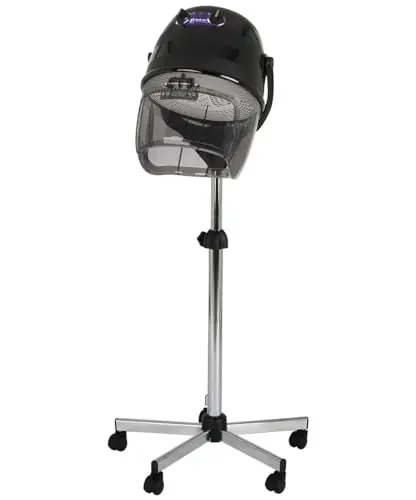
514 Kwik Dri – Salon-Grade Italian Build
The Pibbs 514 Kwik Dri is built for salon chairs that never sit empty. Its 1100-watt motor, adjustable hood and stand, and 60-minute timer are aimed at stylists who need repeatable drying without babysitting the unit. The five-caster base rolls smoothly across a salon floor, and the Italian-made, CE-certified build gives it a more substantial feel than most home-focused hood dryers.
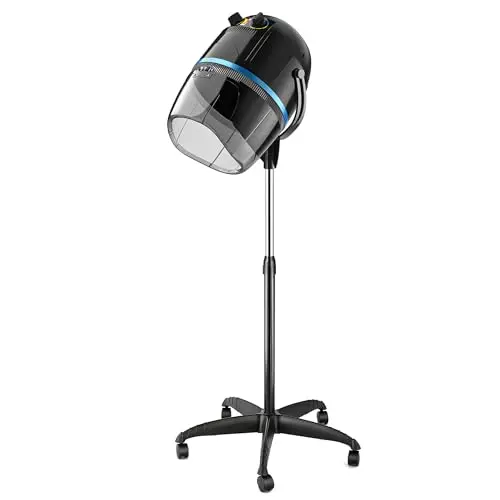
Professional Hooded Floor Dryer – Rolling Stand with Timer
The Nova Microdermabrasion hooded floor dryer brings salon-style hands-free drying into a home setup. It pairs a 1300-watt heating system with a 0-60 minute timer, a large tilting hood, and a rolling five-caster base. The stand adjusts from roughly 49 to 65 inches, so it can fit different chairs and user heights.
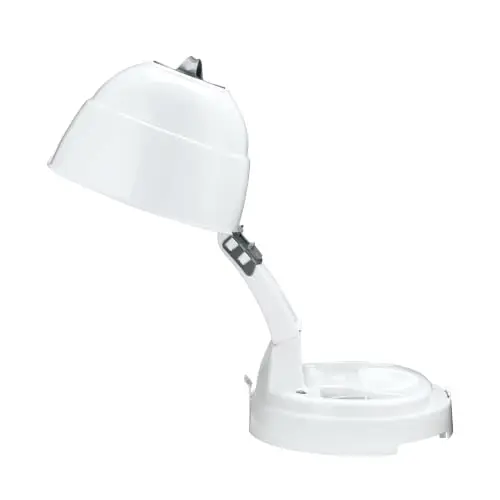
HH320RNX – Compact Hands-Free Bonnet Dryer
The Conair Bonnet Hair Dryer is a compact tabletop option for hands-free drying at home. Its 1875-watt airflow system and roomy bonnet are designed for rollers, wraps, and conditioning treatments, while the carrying handle makes it easy to move between rooms. Heat and speed settings are adjustable, and the 6-foot cord gives a little more placement flexibility.
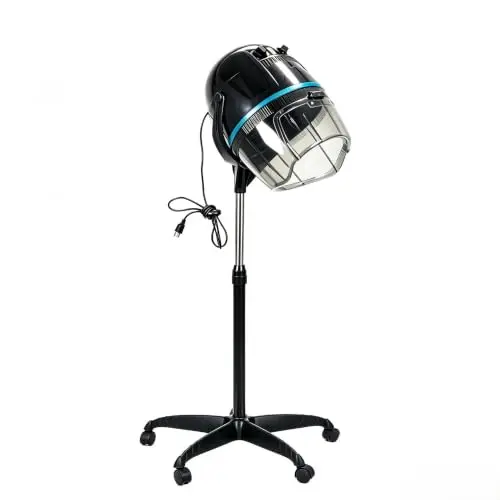
Stand Up Bonnet Dryer – Adjustable Rolling Stand
The ZENY Professional Stand Up Hair Dryer is a floor-standing bonnet dryer with a telescoping stand, tilting hood, and rolling five-star base. A 1300-watt stainless steel heating element supports drying, hot perming, and deep conditioning, while the 0-60 minute timer and temperature dial let you set a session and step away.
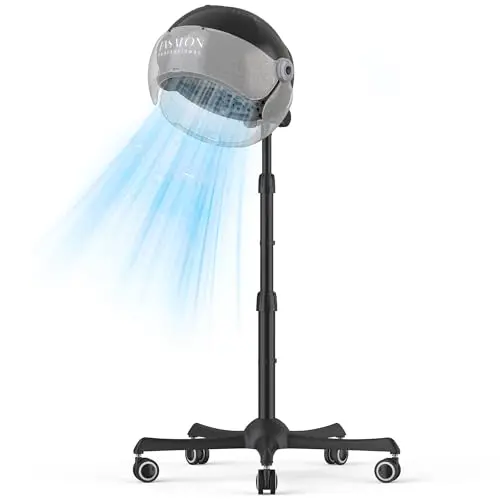
Ionic Hooded Hair Dryer – 1875W with Three Heat Settings
The TASALON Ionic Hooded Hair Dryer combines 1875 watts with an ionic generator and three heat settings, making it one of the more feature-forward home and salon hood dryers. A removable airflow vent and filterable intake help with cleaning, while the adjustable hood and five upgraded casters make it easy to position and move.
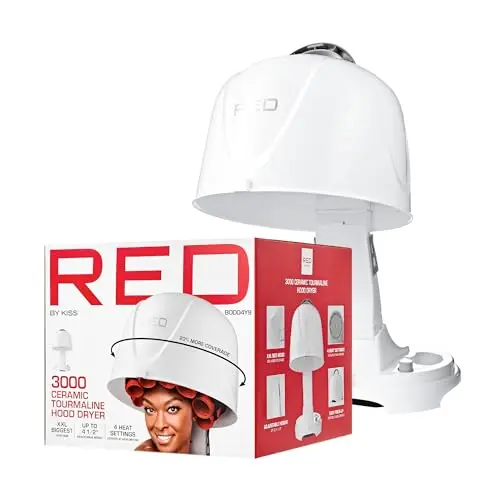
3000 Ceramic Tourmaline Hood Dryer – Large Hood Coverage
The Red by Kiss 3000 Ceramic Tourmaline Hood Dryer is built around a large 14-inch adjustable hood and four heat settings. Ceramic tourmaline technology is paired with a 1875-watt motor for even heat distribution, and the compact body is designed for home salons where storage space is tight.
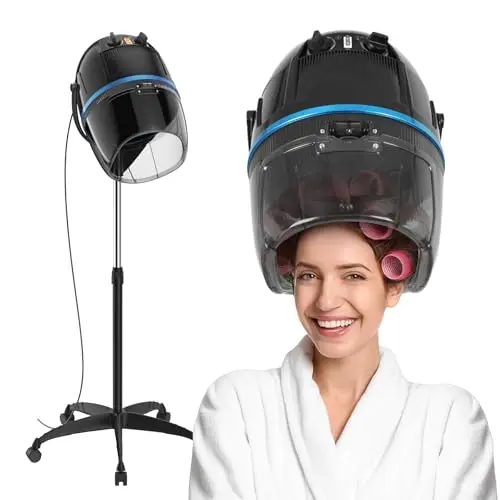
Professional Hooded Floor Dryer – Adjustable Stand and Timer
The JupiterForce Professional Hooded Floor Hair Dryer is a 1300-watt standing unit with a 0-60 minute timer, adjustable temperature up to 167°F, and a height range from 48 to 63 inches. The large 9-inch tilting bonnet and five-wheel rolling base make it a practical floor dryer for home or salon use.
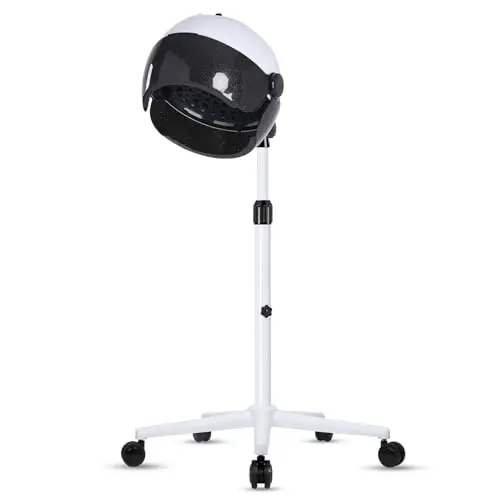
Hooded Hair Dryer on Wheels – Digital Display and Ionic Care
The Findabetter Hooded Hair Dryer on Wheels adds a digital display, three heat modes, and an ionic generator to a rolling floor-stand design. The hood adjusts from 41 to 53 inches and tilts up to 90 degrees, while the removable air filter and five swivel wheels make it easy to clean and reposition.
How We Evaluated These Professional Hooded Hair Dryers
We didn’t run a salon throughput test or measure airflow with instruments. What we did: cross-referenced 8 professional hooded hair dryer models from 8 distinct brands across six decision axes – heat control, airflow consistency, hood fit and adjustment, stand stability, timer usability, and build materials. We triangulated published specifications, feature sets, and owner feedback where available, then mapped each dryer to likely buyer profiles: busy salon chairs, home roller sets, and deep-conditioning routines.
The scoring weighted real-world fit and performance (70%) – how well each hood dryer handles hands-free drying and salon-style treatments – against feature differentiation (30%) – ionic generators, ceramic tourmaline elements, timer ranges, and stand adjustments that actually change the experience. We have no commercial relationship with any brand here; recommendations track fit and differentiation, not brand preference. If you need a salon-grade workhorse, the Pibbs 514 Kwik Dri is the clearest match; for a home setup with a tighter footprint, the Nova Microdermabrasion Professional Hooded Floor Dryer makes more sense.
We also weighed how much assembly and storage each unit demands, because a professional hooded dryer is only useful if it fits your room and routine. We did not simulate daily salon chair turnover or long-term motor wear; those limits are worth naming explicitly. Where feedback was thin, we leaned on published specs and did not invent use-case claims.
How to Choose the Right Professional Hooded Hair Dryer
1. What Makes a Professional Hooded Hair Dryer Different?
A professional hooded hair dryer is built for repeatable, hands-free sessions, not occasional touch-ups. The best signs are a consistent heat control that does not fade halfway through, a hood that holds its angle, and a stand that does not wobble when you shift in the chair. Salon-oriented models usually add height adjustment and a timer, so different users can sit comfortably and step away without guessing.
If you need a salon workhorse, the Pibbs 514 Kwik Dri is the pick here. For lighter home use, a simpler floor or tabletop dryer can be enough.
2. Heat Control, Airflow, and Hood Seal: What Actually Speeds Drying
Wattage gets the attention, but airflow consistency and a good hood seal do more for real drying time. A 1300-watt unit with even circulation can beat a higher-wattage dryer that leaks heat around the edges. Look for variable temperature settings that go from cool to a comfortable high, and a timer that matches your usual treatment length.
Ionic or ceramic tourmaline features are worth considering if frizz and static are your main concerns, but they are not a substitute for a well-fitting hood. Cleaning matters too: a removable intake filter keeps airflow from dropping over time.
3. Hood Fit, Stand Stability, and Height Adjustment for Professional Hooded Dryers
Hood fit is the difference between even drying and hot spots. A tilting hood helps, especially if you use large rollers, and a height-adjustable stand keeps the hood at the right level for different chairs. Stand stability matters just as much: a lighter frame can feel tippy if the base is small or the casters are poor.
A five-caster base is a practical feature if you move the dryer often. If big rollers are the priority, the Red by Kiss 3000 gives the most hood room in this lineup. Otherwise, prioritize a stable base over extra hood diameter.
4. Hard Hood vs. Soft Bonnet: Which Hooded Hair Dryer Fits Your Routine?
A hard hood is the better fit for salon-style roller sets, deep conditioning, and repeatable sessions because it holds its shape and directs heat more evenly. A soft bonnet is cheaper and easier to store, but it can collapse against large rollers and does not offer the same stand-up hands-free experience.
If you mainly dry wraps or travel with your dryer, a soft bonnet can work. For standing floor units that mimic a salon chair, stay with a hard hood and a rolling base.
5. How Much Should You Spend on a Professional Hooded Hair Dryer?
Budget-friendly tabletop models can cover basic hands-free drying, but they usually skip the stand stability and service life of salon equipment. Mid-range floor dryers add rolling bases, timers, and taller height ranges, which is the sweet spot for home salons. Premium salon equipment buys heavier frames, better components, and more consistent performance under daily use.
If you dry hair several times a week, spend for a stable stand and a hood that holds its angle. For occasional use, the Conair Bonnet Hair Dryer is the budget-friendly route.
Frequently Asked Questions
1. What makes a hooded hair dryer professional-grade?
Professional-grade usually means repeatable heat, a sturdy stand, and a hood that holds its angle through a full session. Salon-focused models often add a 60-minute timer and height adjustment for different clients. High wattage helps, but even airflow and a good hood seal matter more than the number alone.
2. Pibbs 514 Kwik Dri vs. Nova Microdermabrasion Hooded Floor Dryer: Which is better for a home salon?
The Pibbs 514 Kwik Dri is the more salon-oriented machine, with a heavier build and Italian-made components meant for daily chair turnover. The Nova floor dryer is easier to justify for a home salon: it covers roller sets and conditioning with a 1300-watt system and a 60-minute timer. If you see clients regularly, the Pibbs 514 is the sturdier long-term pick; if you mainly dry your own hair, the Nova is the better fit.
3. Conair Bonnet Hair Dryer vs. TASALON Ionic Hooded Hair Dryer: Which should I choose?
The Conair Bonnet Hair Dryer is the compact, budget-friendly tabletop option. It is best for simple roller sets and wraps where you want a small footprint and a carrying handle. The TASALON Ionic Hooded Hair Dryer is a floor-standing unit with a 1875-watt motor, three heat settings, and an ionic generator. Choose Conair for occasional home use in a tight space; choose TASALON if you want a rolling floor dryer with more features.
4. Can a professional hooded hair dryer handle roller sets and deep conditioning?
Yes, as long as the hood is large enough and the heat stays consistent. Large rollers need a roomy hood and a tilting angle so the air reaches around the set, not just the top. For deep conditioning, a 60-minute timer and a low-to-medium heat setting are more useful than maximum temperature.
5. Do I need a floor-standing professional hooded dryer or a tabletop bonnet?
Choose a floor-standing hood dryer if you do roller sets, conditioning treatments, or regular sessions and want height adjustment and a rolling base. Choose a tabletop bonnet if space is tight and you mainly need occasional hands-free drying. Floor units are more stable and more salon-like; tabletop units are easier to store.
Final Verdict
For most people shopping a professional hooded hair dryer, the Pibbs 514 Kwik Dri is the clear top pick. It has the sturdy stand, height adjustment, and salon-grade build that separate a real workhorse from a home gadget. If you are setting up a home salon and want most of that experience for less, the Nova Microdermabrasion Professional Hooded Floor Dryer is the better-value route. On a tight budget or in a small bathroom, the Conair Bonnet Hair Dryer covers simple hands-free drying without a floor stand. And if thick hair or oversized rollers are the main event, the Red by Kiss 3000 gives you the largest hood in this lineup. Match the dryer to your chair, your space, and your roller size, and you will get more out of it than chasing extra wattage.
