
Best Professional Travel Backpacks – 2026 Reviews

The bag that got your laptop through college and the bag that survives a Tuesday morning flight, a client site, and a hotel room repack at 11 p.m. are not the same bag. Most packs marketed as travel-friendly are commuter bags with a trolley sleeve bolted on. That works fine until you’re living out of it for three days and notice your laptop has been resting against the bottom panel the whole time.
What separates a genuinely professional travel backpack from a decent weekend bag comes down to a few things: whether the laptop compartment is suspended or merely padded, whether the tech bay opens wide enough to get through security without repacking, and whether the pocket layout still makes sense when you’re tired and the overhead lighting is bad.
Then there’s the part the spec sheet never covers – how a loaded pack feels at hour six, and whether it looks like something you’d carry into a meeting rather than a hostel. This guide cross-shops the professional travel backpacks worth considering across the major brands, and points you toward the one that matches the way you actually travel.
Best Professional Travel Backpacks – 2026 Reviews
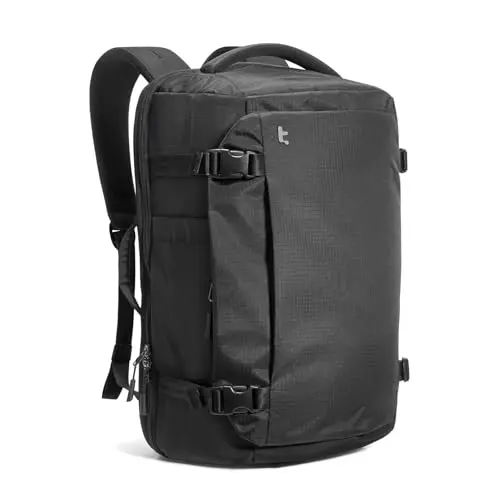
Navigator-T66 Liteway 40L – Clamshell Carry-On for Business Travel
A 40-liter carry-on built around a clamshell main compartment and a dedicated tech bay that opens flat for security. The laptop sleeve fits up to a 17.3-inch machine with a 13-inch tablet slot beside it, and the whole bag weighs a little over two pounds empty.
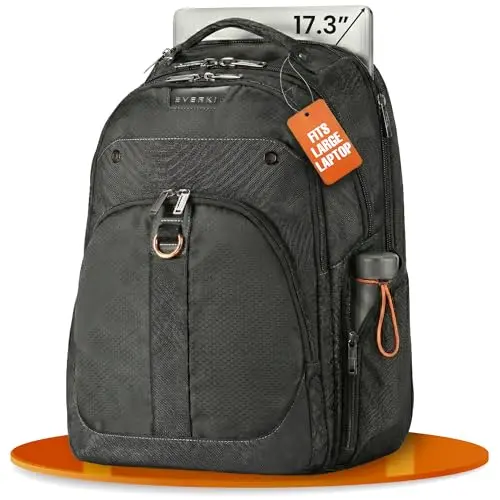
Atlas – Adjustable 17.3-Inch Fit for Gear-Heavy Days
A 32-liter business pack with a felt-lined laptop compartment that adjusts from 13 to 17.3 inches, a five-point balance strap system, and twelve pockets including a file divider and magazine slot. The exterior is water-repellent and the interior is high-contrast orange so small items don’t disappear.
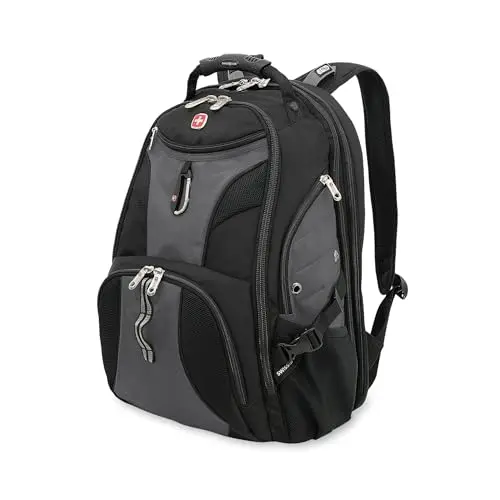
1900 ScanSmart – Lay-Flat Checkpoint Classic
A 31-liter checkpoint-friendly pack with a lay-flat ScanSmart laptop section that fits machines up to 17 inches, an RFID-blocking front compartment with card slots, and a document divider in the main bay. Built from 1200D polyester with compression straps and a trolley sleeve.
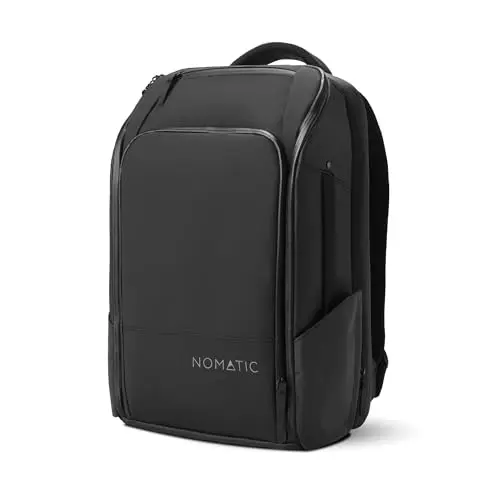
Travel Pack 20L – Expandable Premium Carry
A 20-liter pack that expands to 30 liters when a trip runs long, built around 22 compartments including a padded 16-inch laptop sleeve, an RFID-safe pocket, and separate personal and electronics bays. Water-resistant shell with a minimalist exterior.
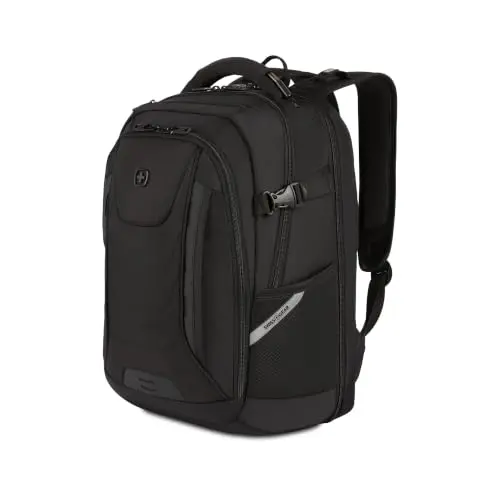
Travel Tech Pro – Organized 16-Inch Commuter
A 31-liter travel pack with a SmartScan compartment sized for a 16-inch laptop and an 11-inch tablet, plus built-in organizer panels for keys, cables, and eyewear. Airflow back panel, contoured suspension straps, wire-reinforced grab handle, and a pass-through trolley sleeve.
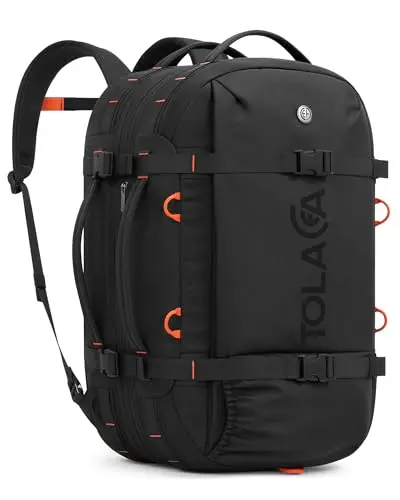
M03 Duffel Backpack – 40-50L Convertible Carry
A 40-liter duffel-backpack hybrid that expands to 50 liters, with a suspended shock-absorbing laptop compartment for machines up to 15.6 inches, a wet-dry pocket, and three carry modes. RPET fabric with lockable zippers and a detachable waist belt.
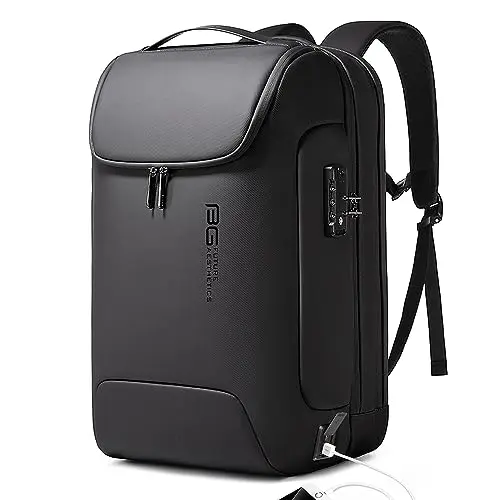
7216 Anti-Theft – Lockable 17.3-Inch Travel Pack
A 30-liter business pack with a zinc-alloy combination lock, a separate shockproof laptop compartment for 17.3-inch machines, waterproof YKK zippers, and an external USB 3.0 charging port. Three separated pockets keep shoes and kit away from electronics.
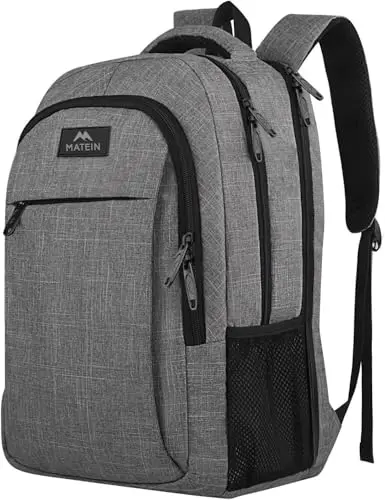
17-Inch TSA Travel Backpack – Big Capacity, Small Outlay
A high-capacity travel pack with a lay-flat checkpoint opening for 17-inch laptops, a hidden luggage sleeve, and enough main-compartment volume for a weekend of clothes and documents. Water-resistant polyester with unisex styling.
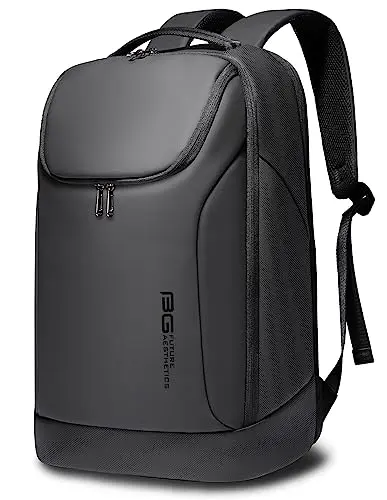
2930 Business Backpack – Waterproof 15.6-Inch Value
A 15.6-inch business backpack in high-density coated Oxford with a 180-degree opening front pocket, YKK zippers, and a multi-function shoulder strap with a card pocket and glasses loop. Structured, black, and aimed at commuting and short business trips.
How We Evaluated These Professional Travel Backpacks
We didn’t wear these through a full season of red-eyes and client-site weeks, and we didn’t load each one onto a scale at capacity. What we did: cross-referenced nine professional travel backpack models from seven distinct brands across six decision axes – laptop compartment sizing and protection, checkpoint-friendly access, pocket architecture, harness comfort, materials and weather resistance, and warranty coverage. We triangulated published specifications, manufacturer feature lists, and owner feedback where available, then mapped each bag against realistic traveler profiles: the weekly flyer with a 17-inch workstation, the field consultant carrying tools alongside a laptop, and the occasional-tripper who needs one bag to cover three days.
The scoring framework weighted real-world travel fit (70%) – how well a bag performs on an actual trip, from security-line handling to comfort at hour six – against feature differentiation (30%) – the technical and organizational advantages that separate one bag from another. We have no commercial relationship with any brand here; recommendations track fit and differentiation, not brand preference. If you fly often with a large laptop, the tomtoc Travel Backpack 40L is the closest thing to a default; if your carry includes tools and test gear alongside a notebook, the EVERKI Atlas was built for exactly that load.
Where the published information was thin, we wrote shorter and let the verifiable specs carry the assessment rather than padding it with guesswork.
How to Choose the Right Professional Travel Backpack
1. What Separates a Professional Travel Backpack From a Commuter Bag
Plenty of bags are sold as travel-ready that are really commuter packs with a trolley strap attached. The difference shows up in three places. First, suspended laptop protection: a professional-grade bag keeps the machine off the bottom of the pack, either through a raised sleeve or a padded false floor, so setting the bag down hard doesn’t send the impact straight into your device.
Second, checkpoint-friendly laptop access – a compartment that opens flat or swings wide so you’re not repacking at the security tray. Third, structured pocket architecture: dedicated slots for chargers, cables, passports, and documents rather than one deep bay you have to excavate. Aesthetics matter too, but they’re the easiest thing to fake.
2. Laptop Compartment Fit: Sizing a Travel Backpack to Your Machine
This is the spec people skip and then regret. A fixed 16-inch sleeve will not accept a 17-inch workstation, and forcing one in defeats the padding. An adjustable laptop compartment, like the one in the EVERKI Atlas, lets you cinch the sleeve to a 13-inch ultrabook on light days and open it up for a larger machine on heavy ones.
Look for floor clearance under the sleeve. A compartment that sits flush with the bottom of the bag will eventually take an impact. Check the tablet slot separately, too – a 13-inch tablet next to a 17-inch laptop needs its own padded space, not a shared pocket.
3. Checkpoint-Friendly Access and Airline Carry-On Reality
Two designs dominate. Lay-flat ScanSmart panels unzip so the bag opens like a book with the laptop still inside; 180-degree clamshell tech bays swing fully open from the side. Both speed up screening considerably. Neither guarantees you won’t be asked to remove the device – that’s an airport decision, not a bag feature.
Carry-on compliance is a separate axis, and dimensions matter more than liters. Most major airlines cap carry-ons around 22 inches in height, so a bag in the 20-to-21-inch range travels comfortably. If you want expandability for the return leg, the Tolaccea M03 runs from 40 to 50 liters, but check the expanded depth before you count on overhead space.
4. Harness Comfort, Load Distribution, and Long Travel Days
Most travel packs use two shoulder straps and call it done. Bags built for professionals who carry heavy gear add load distribution hardware – sternum straps, compression straps, and occasionally a multi-point balance system that spreads weight across the chest rather than hanging it all from the shoulders.
Ventilated back panels matter more than they sound. A mesh-and-channel back keeps you from arriving at a client meeting with a sweat patch, and heat buildup is the most common long-term gripe about budget travel packs.
5. Pocket Architecture, Zippers, and Weather Resistance
Pocket count is not a quality metric. Twenty-two compartments only help if the layout maps to how you actually travel. The bags that work put passport, cables, and a pen in predictable places while keeping a separate bay for clothes. Where build quality shows is zipper hardware: YKK zippers, metal pulls, and reinforced stitching at the corners.
On weather, the labels are loose. Water-resistant means a coating that handles drizzle; waterproof implies sealed zippers and a coated shell, which is what the BANGE packs claim. Neither survives a bag that’s soaked through, so treat both as a buffer rather than a guarantee. A pack with 22 discrete compartments, like the NOMATIC Travel Pack 20L, earns its keep through organization rather than armor.
6. Where the Price Tiers Land
The budget tier gets you large capacity, water-resistant polyester, and a checkpoint opening – the fundamentals, with basic interior organization and lighter padding. The mid-range is where build quality jumps: heavier denier fabric, better zippers, suspended laptop sleeves, and multi-year warranties. The premium tier buys layout design, expandability, and materials that hold up to weekly use – plus, usually, a more restrained look that travels well into a meeting.
Frequently Asked Questions
1. What actually makes a travel backpack professional rather than just a travel backpack?
The label usually comes down to three things: suspended laptop protection rather than a padded pocket, checkpoint-friendly access that opens flat or wide, and organization built around work kit – charger, cables, passport, documents – instead of one open bay. A restrained exterior and a harness that survives a full day of carrying round it out.
Plenty of travel packs hit one of those. The bags in this lineup that hit all three are the ones you can carry from an airport straight into a meeting without repacking.
2. What's the difference between the tomtoc Travel Backpack 40L and the EVERKI Atlas?
Capacity and structure, mostly. The tomtoc Travel Backpack 40L is a clamshell carry-on built for packing like a suitcase, with a flat-opening tech bay that handles a 17.3-inch laptop plus a 13-inch tablet. The EVERKI Atlas is smaller at 32 liters but more adaptable, with an adjustable laptop compartment that resizes between 13 and 17.3 inches and a five-point balance strap system for heavier loads.
Choose the tomtoc for volume and suitcase-style packing; choose the Atlas if your laptop size changes and you carry tools or files alongside it.
3. How does the SwissGear 1900 ScanSmart compare with the NOMATIC Travel Pack 20L?
They solve different problems. The SwissGear 1900 ScanSmart is the durability and security play: 1200D polyester, a lay-flat checkpoint section, RFID-blocking storage, and a long track record with frequent flyers. The NOMATIC is the design play: 20-to-30-liter expansion, 22 compartments, and a shell that looks at home in a boardroom.
If you want a bag that takes abuse and never changes shape, the 1900. If you want one bag for office and weekend and you’re careful with your gear, the NOMATIC.
4. Will a 40L professional travel backpack fit in an overhead bin?
Usually yes, but liters aren’t the number to check. External dimensions decide it: most major airlines cap carry-ons around 22 inches of height, and a bag in the 20-to-21-inch range clears them comfortably. A 40-liter pack built to those dimensions travels fine; a smaller pack with a tall frame might not.
If you plan to expand a bag for the return leg, verify the expanded depth as well – that’s where overhead fit gets tight.
5. Do expandable backpacks like the Tolaccea M03 make sense for business travel?
They do if your trips vary in length. The 40-to-50-liter expansion on the Tolaccea M03 covers a two-day client visit and a five-day trip with the same bag, and the three carry modes let you switch from backpack to briefcase for a meeting. The tradeoff is bulk – an expanded 50-liter bag is a weekender, not something you’ll enjoy on a commuter train.
If most of your travel is one or two nights, a fixed-capacity pack in the low 30s will be lighter and easier to live with.
Final Verdict
For most professionals, the tomtoc Travel Backpack 40L is the answer. It pairs suitcase-style packing with the fastest laptop access in this lineup, accommodates a 17.3-inch machine plus a tablet, and stays light enough to carry all day. If your carry includes tools and test gear, the EVERKI Atlas is the better specialist – its adjustable sleeve and balance-strap harness were designed for exactly that load.
Budget-conscious travelers should look at the MATEIN 17-Inch, which covers a weekend trip and keeps your laptop checkpoint-accessible for a fraction of the outlay. And if you want one good-looking bag that goes from office to weekend, the NOMATIC Travel Pack 20L is the premium pick – just confirm your laptop is 16 inches or smaller first.
