
Best Quality Ironing Boards – 2026 Reviews

A wobbly ironing board turns a five-minute touch-up into a wrestling match. You press down, the board shifts, the cover bunches, and the iron drags instead of gliding. That’s why quality matters more here than in almost any small household purchase: the frame, the surface, the padding, and the hardware all show up in the result.
Quality in an ironing board isn’t about a fancy print or a long feature list. It’s the stability of the legs, the size of the usable surface, how the cover handles steam and heat, and whether the height range fits your body and your storage. A board that nails those basics can last years; one that misses them makes every pressing session feel harder than it should.
We compared a cross-section of full-size, extra-wide, and tabletop boards from established brands, looking at how each one balances pressing room, frame rigidity, cover quality, and storage convenience. Some are built for dedicated laundry rooms, some for closets and apartments, and some for serious steam-generator setups. The right pick depends on which of those tradeoffs matches your home.
Best Quality Ironing Boards – 2026 Reviews
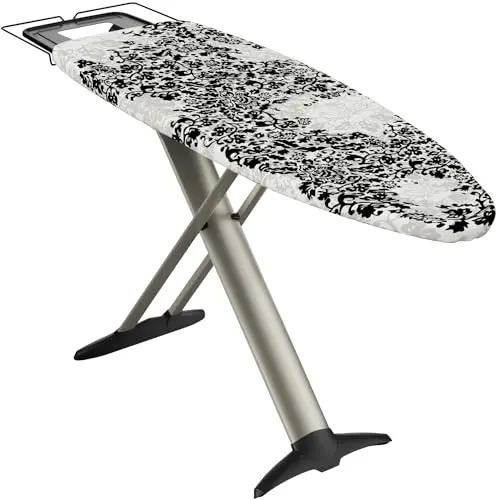
Pro Luxury 1105 – Extra-Wide Aluminum Pressing Surface
A premium extra-wide board with an aluminum build, cotton-over-foam cover, iron rest shelf, and folding storage. Built for a dedicated pressing station.
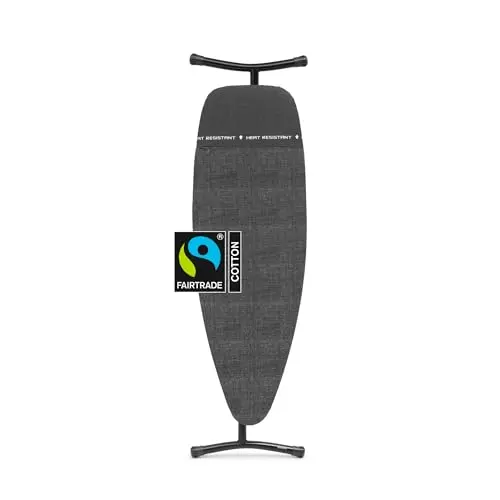
Premium Size D – Tall Extra-Large Steam-Ready Board
A tall, extra-large board with a heat-resistant parking zone, four-legged steel frame, and Fairtrade cotton cover. Built for frequent pressing and taller ironing positions.
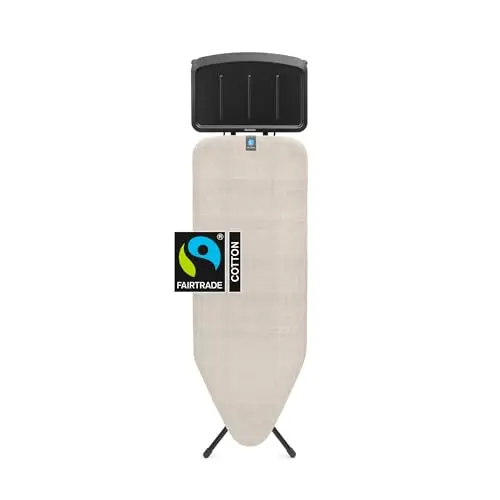
XL Comfort Size C – Steam-Generator Ready Board
A large steam-generator-ready board with a broad surface, extra-large iron rest, and four-legged steel frame. A long-warranty option for heavy laundry loads.
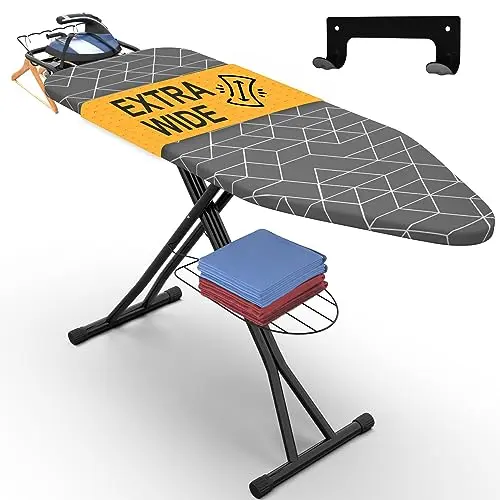
XAIB008 – Extra-Wide Wall-Hanging Board
An extra-wide board with a heat-resistant cover, wall hanger, garment rail, and laundry tray. Built for small homes and serious pressing volume.

Rorets Classic 9738 – EZ-Glide Full-Size Board
A full-size board with EZ-Glide zones, four-layer padding, and a heavy-duty steel frame. A practical everyday board with useful heat-management features.
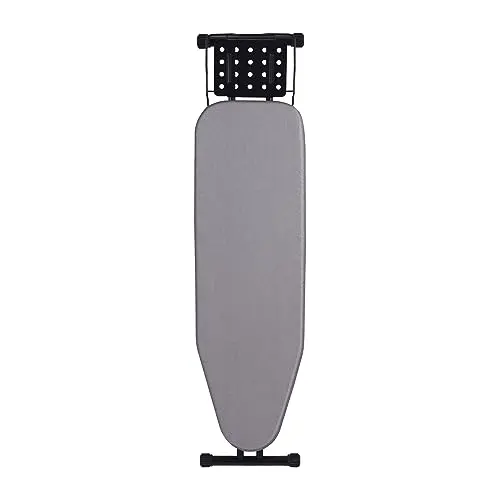
XLB-142CM – Full-Size Felt-Padded Board
A standard full-size board with a mesh top, thick felt padding, seven height settings, and a silicone-padded iron rest. A steady everyday choice.
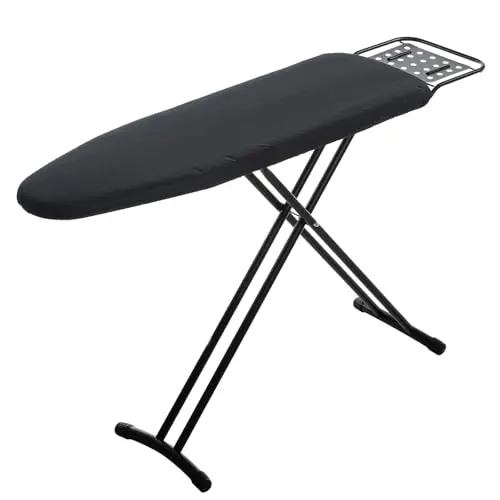
Y82-1501-03 – Compact Full-Size Ironing Board
A compact full-size board with a welded steel frame, twin pads, and an iron rest. Designed for routine ironing with easy storage.
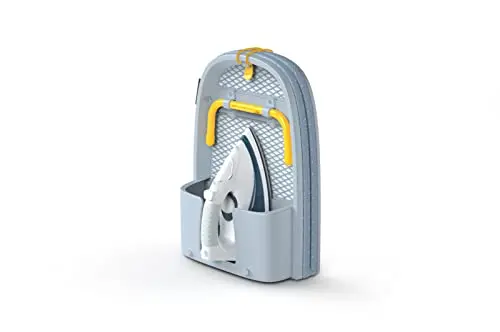
Pocket Max – Foldable Tabletop Space Saver
A tabletop board that folds in half and stores its own iron. Ideal for tight spaces and steam-heavy touch-up sessions.
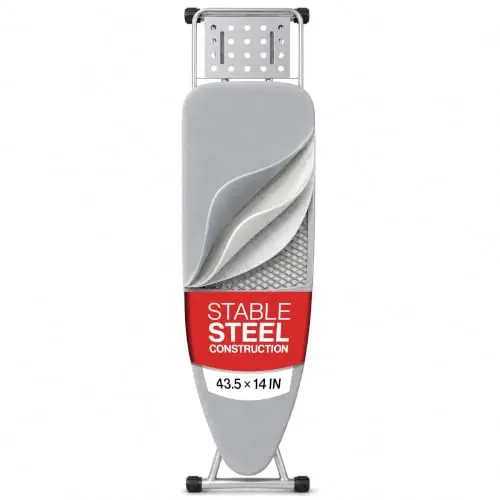
STB-2023 – Stable Steel Full-Size Board
A lightweight full-size board with a heat-resistant cover, iron rest, and anti-slip legs. A budget-friendly option for basic pressing.
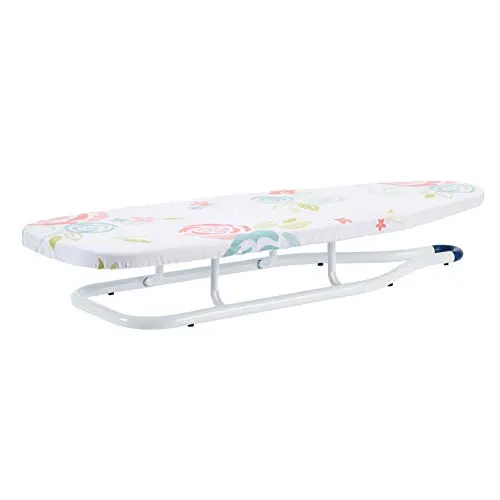
Foldable Space Saving Tabletop – Compact Apartment Board
A compact tabletop board with extra-thick padding, a safety lock, and anti-slip feet. Best for light-duty touch-ups and small spaces.
How We Evaluated These Quality Ironing Boards
We didn’t perform long-term load testing or multi-month durability trials. What we did: cross-referenced 10 ironing board models from 8 distinct brands across seven decision axes – ironing surface size, frame stability, height adjustment range, cover and padding quality, iron-rest design, folding and storage footprint, and build materials. We triangulated published specifications, feature sets, owner feedback where available, and use-case fit against representative buyer profiles for laundry rooms, apartments, and steam-heavy households. We also mapped warranty terms and storage requirements where the data was available, because a board that’s hard to fold or stow is a board you’ll use less often.
The scoring framework weighted real-world fit and performance (70%) – how well each board supports the way people actually iron – against feature differentiation (30%) – unique advantages like heat-resistant parking zones, steam-generator rests, wall hangers, and washable covers. We have no commercial relationship with any of the brands featured; recommendations track fit and differentiation, not brand preference. If you want the most balanced full-size board, the Bartnelli Pro Luxury is our top pick; if you need a tall, extra-large surface with a long warranty, the Brabantia Premium Size D is the stronger match.
How to Choose a High-Quality Ironing Board
1. What Separates a High-Quality Ironing Board From a Basic One
High-quality ironing boards share a few unglamorous traits: a rigid frame, a flat, well-supported surface, a cover that handles heat and steam, and a secure locking mechanism. A basic board can look similar in photos, but the difference shows up when you lean into a press and the board stays planted instead of flexing.
Look for a four-legged steel or aluminum frame and a cover with enough padding to prevent the mesh or perforated top from telegraphing through the fabric. Those details matter more than a decorative print.
2. Frame Stability: The Quality Signal You Notice First
Stability is the first quality test most people notice. A board with wobbly legs or a loose hinge makes every shirt feel like a chore. Four legs generally distribute weight better than a T-leg or tabletop design, and non-slip feet help on hard floors.
If you press often, prioritize a board with cross-bracing or a welded frame. The Xabitat XAIB008 is a good example of a wide board that leans on a full-metal frame and anti-skid feet rather than a flimsy folding mechanism.
3. Surface Size and Shape: Matching the Board to Your Laundry
Surface size is a tradeoff. A full-size board around 43 to 54 inches long handles shirts, trousers, and most household linens, while an extra-wide board in the 18- to 19-inch range gives you more room for sheets and quilting. Narrow boards are easier to store but require more repositioning.
Shape matters too: a pointed nose helps with shoulders and sleeves, and a shoulder shape can reduce bunching. If you mostly press shirts and pants, a standard full-size board is enough; if you regularly iron tablecloths or quilts, go wider.
4. Cover, Padding, and Heat Management
The cover and padding do more than protect the board. A thick cotton cover over foam absorbs steam and creates a smooth glide, while a heat-resistant or scorch-resistant top layer protects delicate fabrics. Washable covers are a practical quality marker because they extend the board’s usable life.
Steam-generator setups should look for a metal mesh or perforated top that lets moisture escape and a cover rated for high heat. The Brabantia XL Comfort Size C pairs a Fairtrade cotton cover with an extra-large steam-generator rest, which is the right combination for heavy steam sessions.
5. Height Adjustment, Storage, and Daily Convenience
Height adjustment is a comfort feature, not a luxury. A board that sits too low forces you to hunch; one that sits too high tires your shoulders. Look for a range that fits your standing or seated ironing position, plus a secure height lock that won’t slip mid-press.
Storage is the other daily convenience. Fold-flat legs, a transport lock, and a hanging hook make a board easier to live with in a small home. If you’re short on floor space, a Joseph Joseph Pocket Max folds in half and stows on a door or wall, though it’s a tabletop board rather than a full-size replacement.
6. Iron Rests, Steam Generators, and Budget Tiers
Iron rests range from a simple side shelf to a heat-resistant parking zone that lets you set a hot iron flat on the board. If you use a steam generator, check the rest dimensions before buying; not every board accommodates a large unit.
Budget tiers are fairly clear. Entry-level boards cover basic pressing with lighter frames and thinner covers. Mid-range boards add stability, better padding, and more height options. Premium boards bring larger surfaces, heavier frames, longer warranties, and specialized features like parking zones or integrated storage. The right tier depends on how often you iron and how much space you can dedicate to it.
Frequently Asked Questions
1. What makes an ironing board genuinely high quality?
Quality comes down to frame rigidity, surface flatness, cover and padding durability, and hardware that stays tight. A high-quality board doesn’t flex when you press, doesn’t wobble on the floor, and has a cover that handles steam without bunching or scorching. Warranties and replaceable covers are also good signals that the maker expects the board to last.
2. Bartnelli Pro Luxury vs Brabantia Premium Size D: which is the better high-quality board?
The Bartnelli Pro Luxury leans toward a 51 x 19-inch aluminum surface with a thick cotton cover and a built-in iron rest shelf, so it suits someone who wants maximum pressing room and a planted feel. The Brabantia Premium Size D counters with a tall 31-40-inch height range, an integrated heat-resistant parking zone, and a 10-year warranty. If you’re taller or use a steam generator, the Brabantia Premium Size D is the stronger fit; if you want the widest practical surface for shirts and quilts, the Bartnelli is the pick.
3. Brabantia XL Comfort vs Xabitat XAIB008: which extra-wide board should you choose?
The Brabantia XL Comfort has a 49 x 18-inch surface and an extra-large steam generator rest, which makes it the more polished choice for heavy steam users. The Xabitat XAIB008 goes wider with a 57 x 18-inch surface, adds a wall-mount hanger, garment rail, and lower laundry tray, and costs less in qualitative terms. Choose Brabantia for steam-generator support and warranty; choose Xabitat for extra width and storage on a budget.
4. Are tabletop ironing boards as stable as full-size boards?
Not usually. A tabletop board relies on a counter or table for support, so it can shift if the surface isn’t level or the feet aren’t grippy. That said, a well-built tabletop model like the Joseph Joseph Pocket Max can be stable enough for quick touch-ups and small apartments. For long pressing sessions or large items, a four-legged full-size frame is the more secure choice.
5. How much ironing surface do you need for shirts and sheets?
For shirts and trousers, a standard full-size surface around 43 to 54 inches long is usually enough. For sheets, tablecloths, or quilting, an extra-wide board in the 18- to 19-inch range saves a lot of repositioning. If you’re tight on space, a compact tabletop board can work for small items, but expect to trade surface area for storage convenience.
Final Verdict
For most households, the Bartnelli Pro Luxury is the quality benchmark: it pairs a wide 51 x 19-inch surface with a rock-solid aluminum frame, a smooth cotton cover, and practical storage hardware. It’s heavy, but that weight is part of why it feels so planted. If you’re taller or want a long warranty and a heat-resistant parking zone, the Brabantia Premium Size D is the better fit. For apartments and closets, the Joseph Joseph Pocket Max is the space-saving pick, while the Amazon Basics tabletop board covers light-duty touch-ups on a budget. Choose based on your space and pressing volume, not just the spec sheet.
