
Best Queen Bed Sheets – 2026 Reviews

Most bedding gets bought in a hurry. You strip the bed on a Sunday, notice the old set has a rip at the corner, and grab whatever looks soft in the search results. A week later the fitted sheet is balled up under the mattress and the fabric turns out to be thin enough to read a phone screen through.
Queen sits right in the awkward middle of the sizing problem. It’s large enough that corner fit genuinely matters, and common enough that nearly every brand sells something in the size – which means the differences between sets are buried in specs most listings barely surface. Two things separate a set you keep from one you replace by spring: fabric behavior and pocket fit.
We compared queen sets across brands and materials – brushed microfiber, long-staple cotton sateen, and rayon derived from bamboo – and mapped them against the failures that actually show up: sheets that pop off deep mattresses, fabric that thins out fast, and seams that give way after a handful of washes. Below is what holds up, and which set suits which kind of sleeper.
Best Queen Bed Sheets – 2026 Reviews
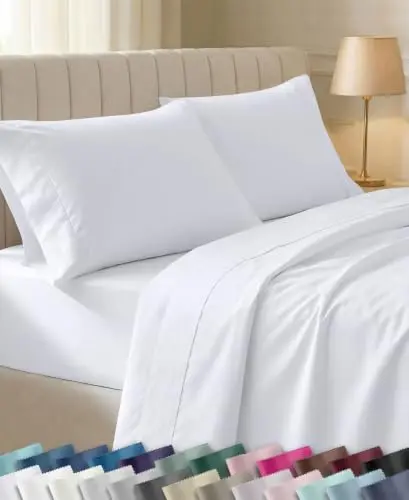
400 Thread Count Sateen – Breathable Long-Staple Cotton
A 400 thread count sateen weave made from single-ply long-staple cotton, and the one natural-fiber set in this lineup. The fitted sheet uses all-around elastic and fits mattresses from 8 to 16 inches, with top and bottom indicator tags so you’re not guessing which way it goes on.
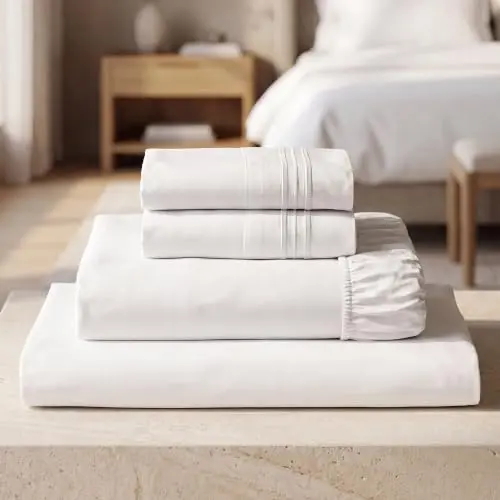
Iconic 4-Piece Set – Lab-Tested Everyday Microfiber
A double-brushed microfiber set with 16-inch deep pockets and a full four-piece configuration: flat sheet, fitted sheet, and two envelope-closure pillowcases. The fabric has been independently tested for breathability and for how it holds up through repeated washing.
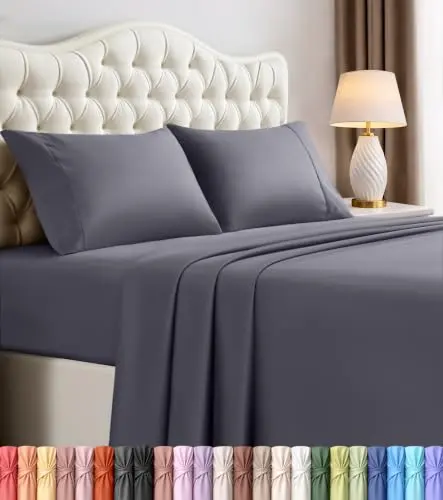
Brushed Microfiber 4-Piece – Budget-Friendly Deep Pocket Set
A four-piece brushed microfiber set with deep pockets rated to 16 inches and all-around elastic. Plain weave, wrinkle and fade resistant, and OEKO-TEX certified – the straightforward budget pick in this lineup.
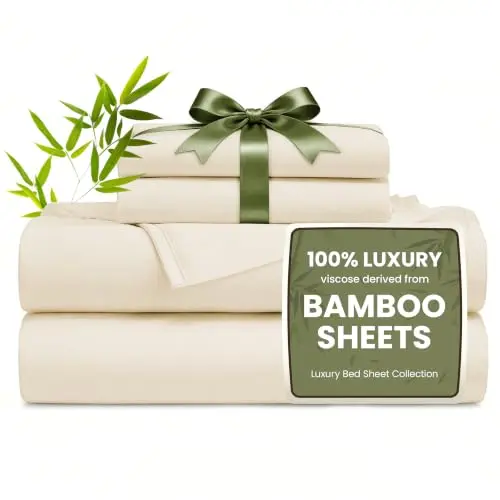
Bamboo Rayon 4-Piece – Cool-to-the-Touch Sleep
A four-piece set made from 100% rayon derived from bamboo in a twill weave, with a 16-inch deep pocket and thick elastic corner straps. Built around temperature regulation and moisture wicking rather than softness alone.
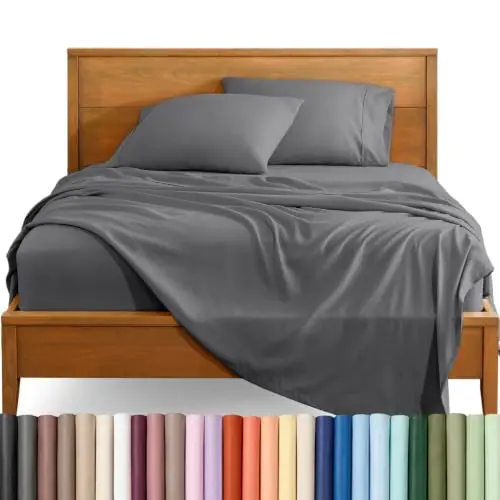
1800 Ultra-Soft – Hypoallergenic Microfiber Fit
A double-brushed 100 GSM microfiber set with a fully elasticized fitted sheet that grips mattresses from 6 to 15 inches deep. Hypoallergenic, fade and stain resistant, and backed by a 30-night trial.

4-Piece Brushed Microfiber – Silky-Soft Everyday Set
A four-piece double-brushed microfiber set with deep pockets rated to about 16 inches and a wide color range. Wrinkle-resistant and OEKO-TEX certified for material safety.
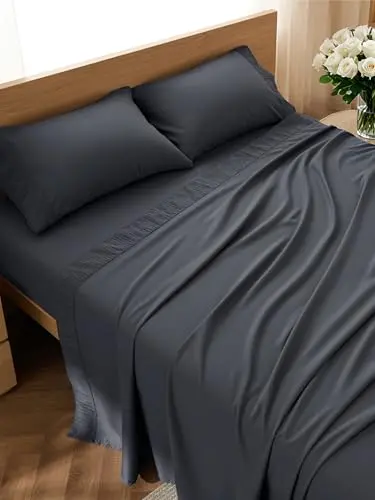
Embossed 4-Piece – Ruched-Hem Detail
A four-piece brushed microfiber set with a ruched hem detail on the flat sheet and pillowcases, deep pockets, and oversized pillowcases with an inner pocket to keep pillows in place. OEKO-TEX certified.
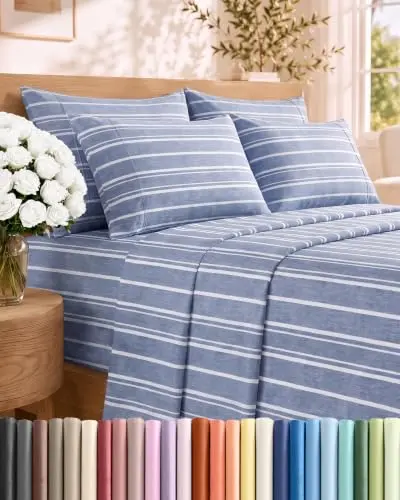
6-Piece Stripe Set – Four Pillowcases Included
A six-piece set: flat sheet, fitted sheet with pockets to about 16 inches, and four pillowcases in CGK’s brushed microfiber. OEKO-TEX Made in Green certified for responsible manufacturing.

Brushed Microfiber 4-Piece – Simple Everyday Value
A 120 GSM brushed microfiber four-piece set with wrinkle- and shrink-resistant finishing and one of the widest color selections in the category. Fitted sheet pockets are cut for 14-inch mattresses.
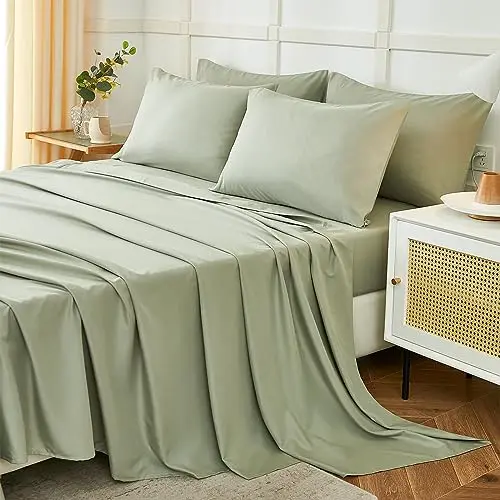
6-Piece 1800 Series – Extra Pillowcases Included
A six-piece microfiber set in a sage green colorway: flat sheet, fitted sheet with fully elasticized edges and 14-inch pockets, and four pillowcases. Wrinkle-resistant and machine washable.
How We Evaluated These Queen Bed Sheets
We didn’t sleep on each of these sets for a month or put them through a home laundry stress test. What we did: cross-referenced 10 queen sheet sets from 9 brands across five decision axes – fabric type and weave, pocket depth and corner fit, breathability and cooling behavior, care and durability claims, and what’s actually in the package. We triangulated published specifications, independent lab claims where the manufacturer named the testing lab, and owner feedback where it was substantive enough to read as a pattern rather than noise.
The scoring weighted real-world fit and performance (70%) – how well a set’s pocket depth, elastic design, and fabric actually serve a queen mattress – against feature differentiation (30%) – whether a set offers something genuinely distinct, like verified cotton thread count, bamboo-derived fiber, or extra pillowcases. Recommendations track fit and differentiation, not brand preference, and we have no commercial relationship with any brand here. That’s why the California Design Den cotton set lands on top despite being the most expensive option, and why the Mellanni microfiber set sits right behind it on the strength of named third-party testing.
Fit is where this category quietly fails, so we weighted it heavily. A set that publishes a single pocket number is telling you less than one that publishes a range, and a fitted sheet with all-around elastic is doing more work than one with corner-only elastic. Those are the specs that separate a set you stop thinking about from one you’re re-tucking every morning.
How to Choose the Right Queen Bed Sheets
1. What Actually Matters in Queen Bed Sheets
Fabric, weave, and fit decide whether a set survives a year of Sunday washes. Everything else – the color name, the packaging, the phrase hotel luxury – is marketing.
Queen is the size where fit starts to matter. A twin fitted sheet has less fabric to stretch across and a king has proportionally more margin, but queen sits close enough to the mattress edges that pocket depth and elastic placement decide whether you’re remaking the bed at two in the morning. After fabric, that’s the spec worth checking first.
2. Pocket Depth and Corner Fit: The Queen Sheets Problem Nobody Warns You About
A 14-inch pocket and a 16-inch pocket sound like a rounding difference. They aren’t. Most modern queen mattresses, especially anything with a pillow-top or a foam topper, run 12 to 16 inches deep. A 14-inch pocket fits a thin mattress fine and fights a thick one indefinitely.
Two things to look for: all-around elastic that runs the full perimeter rather than four corner tabs, and a stated fit range instead of a single number. Bare Home publishes a 6-to-15-inch range; California Design Den publishes 8 to 16. If your mattress sits at 15 or 16 inches, go with the California Design Den set – that published range and the all-around elastic leave real working margin.
3. Microfiber vs Cotton Sateen vs Bamboo Rayon for Queen Sheets
Most affordable sets in this category are brushed polyester microfiber, brushed on one or both sides to raise a soft nap. It resists wrinkling and it’s cheap to produce. The tradeoff is weight: microfiber sets tend to be thin and light, which is why so many draw complaints about seeing through the fabric.
Long-staple cotton sateen behaves differently. The sateen weave produces a smoother, faintly lustrous surface, and cotton breathes in a way polyester doesn’t. It wrinkles and it costs more, but it feels like fabric rather than fleece.
Rayon derived from bamboo sits between them: cool to the touch, moisture-wicking, with a silkier drape than microfiber. If you overheat at night, the Love’s cabin set is the one here built specifically around that.
4. Why 1800 Series Labels and Thread Count Numbers Mislead
Thread count is a real spec and a badly abused one. 400 thread count in single-ply long-staple cotton is genuinely high-quality sheeting. The 1800 series label printed on a microfiber package is a marketing name, not a measurement – microfiber is properly described in GSM, grams per square meter, and you’ll see 100 GSM and 120 GSM quoted where thread count would appear on cotton.
The practical rule: trust independently verified thread count on cotton, and ignore series numbers on microfiber. Ask instead about fabric weight and whether the set has named testing behind its pilling and shrinkage claims.
5. Care, Pilling, and How Long Queen Sheets Actually Last
Every set here is machine washable, but the details differ. Microfiber wants cold water and low heat. Cotton tolerates warm water, softens with washing, and should come out of the dryer promptly to limit wrinkles. Bamboo rayon wants a gentle cold cycle, no fabric softener, and immediate removal.
Pilling resistance and seam construction are where budget sets fail first. Named lab testing helps here: 50-cycle wash testing on one set and shrinkage and pilling testing on another are the kinds of claims that mean something because they’re tied to a specific test, not a slogan. In practice, most complaints in this category come down to thin fabric and seams that separate after a few months.
6. How Much to Spend on Queen Bed Sheets
Three rough tiers. At the entry level, you’re buying softness and color choice – lightweight microfiber, decent wrinkle resistance, and a lifespan measured in a year or two of regular washing. The Utopia Bedding set is the reference point there.
Mid-range buys better construction, deeper pockets, and more consistent sizing. The gap between a well-made microfiber set and a cheap one is mostly durability and fit, not feel.
Premium in this category usually means natural fiber plus verification. You’re paying for long-staple cotton, lab-tested shrinkage and pilling, and a published fit range. Whether that’s worth it comes down to how much breathability matters to you.
Frequently Asked Questions
1. What's the difference between the Mellanni Iconic set and the California Design Den cotton set?
Material, mainly. Mellanni is double-brushed microfiber with 16-inch pockets, third-party breathability testing, and 50-cycle wash testing – softer to the touch, less prone to wrinkling, and easier on the budget. California Design Den is single-ply long-staple cotton in a 400 thread count sateen weave with a published 8-to-16-inch fit range and all-around elastic.
Go with Mellanni if you want maximum softness with minimum care. Pick the California Design Den set if you want breathable natural cotton and don’t mind running an iron over the flat sheet now and then.
2. Do 16-inch deep pocket queen sheets fit a mattress with a topper?
Sometimes, and the wording matters. The Mellanni set is described as fitting mattresses up to 16 inches, with a thin topper fitting only when the mattress and topper measure no more than 16 inches combined. That’s a standard deep pocket, not an extra-deep one.
California Design Den publishes an 8-to-16-inch range with all-around elastic, which leaves more working room. If you’re running a thick mattress plus a topper, measure the total depth before ordering and treat pocket depth and elastic placement as the deciding specs.
3. How do the CGK Unlimited and Bedsure queen sets differ?
Both are brushed microfiber four-piece sets with similar softness. Bedsure is the more decorative option, with a ruched hem on the flat sheet and pillowcases and an oversized pillowcase pocket that keeps pillows inside. Its fitted sheet pockets top out around 14 inches.
CGK Unlimited’s four-piece set is plainer but fits deeper mattresses – pockets are rated to about 16 inches – and it comes in a wider color range. Thick mattress, go CGK; guest room where you want some visual interest, go Bedsure.
4. Are bamboo sheets actually cooler for hot sleepers?
The material properties are real. Rayon derived from bamboo is moisture-wicking and temperature-regulating in a way brushed polyester isn’t, and it has a cool, silky hand feel. The Love’s cabin set is built around exactly that, with a twill weave, thick elastic corner straps, and a 16-inch pocket.
Manage expectations on two fronts: bamboo rayon wrinkles readily and wants cold water with no fabric softener, and durability reports on the material are mixed. If you want the cooling benefit without the care routine, long-staple cotton sateen is the more forgiving breathable choice.
5. How often should you replace queen bed sheets?
With regular weekly washing, most lightweight microfiber sets start showing thinning, pilling, or seam stress within a year or two. Cotton sateen generally lasts longer if you rotate between at least two sets and avoid over-drying.
The signals to replace rather than repair: fabric that’s thin enough to see through when held to light, seams separating at the fitted sheet corners, or elastic that has stopped gripping. Keeping a second set in rotation is the single best way to extend the life of both.
Final Verdict
For most people, the California Design Den 400 thread count sateen set is the answer. It’s the only natural-fiber option here, it publishes a real 8-to-16-inch fit range, and the all-around elastic plus indicator tags solve the two most common queen-sheet annoyances. If you’d rather spend less and want maximum softness, the Mellanni set is the closest thing to a no-risk microfiber pick, with independently tested breathability and 16-inch pockets.
Hot sleepers should go straight to the Love’s cabin bamboo set for its cool hand feel and moisture wicking, accepting the fussier care and the mixed durability reports. And if you just need a decent spare for a guest room, the Utopia Bedding set delivers soft, breathable, deep-pocket bedding for less than nearly anything else in the lineup.
