
Best Quietest Air Purifiers – 2026 Reviews

A purifier that cleans the air but keeps you awake is a failed bedroom appliance. The quietest models aren’t just the ones with the lowest number on a spec sheet; they’re the ones that stay quiet at a speed that actually cleans the room, dim their lights, and don’t cycle up noisily every time someone walks past.
The tricky part is that quiet can be measured in different ways. Some brands publish a sleep-mode decibel rating, others lean on certification or reputation, and a few achieve low noise only at a fan speed that barely moves air. We looked at published noise specs, filtration and CADR claims, sleep-mode behavior, smart features, and owner feedback where available, then matched each purifier to realistic rooms.
This guide is built for cross-shopping, not brand loyalty. Whether you need a near-silent bedroom unit, a large-room purifier that won’t dominate the TV, or a budget pick for a child’s room, the right answer depends on how the unit behaves at night and how much cleaning power you’re giving up for the quiet.
Best Quietest Air Purifiers – 2026 Reviews
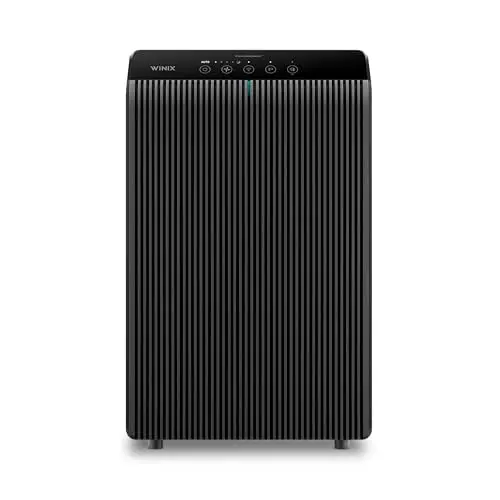
5510 – Quiet Large-Room Smart Purifier
A large-room purifier that treats quiet operation as a first-class feature. The 5510 combines True HEPA and carbon filtration with a light-sensing sleep mode that automatically drops the fan and dims the display when the room gets dark. The Winix Smart app adds scheduling and remote monitoring, while the washable pre-filter helps stretch the main filter’s life.
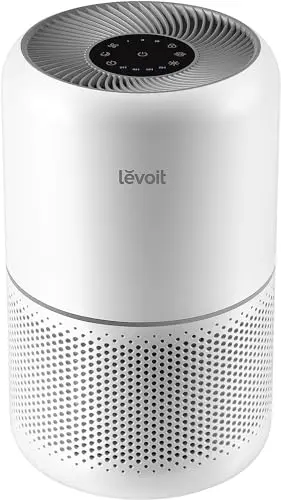
Core 300-P – Near-Silent Bedroom Value
A compact bedroom purifier with a sleep mode rated at 24 dB and an AHAM-verified CADR that belies its small footprint. The Core 300-P uses a three-stage filter, includes a timer and filter indicator, and can run with display lights off for darker rooms. It is the easiest quiet pick to fit on a nightstand or small shelf.
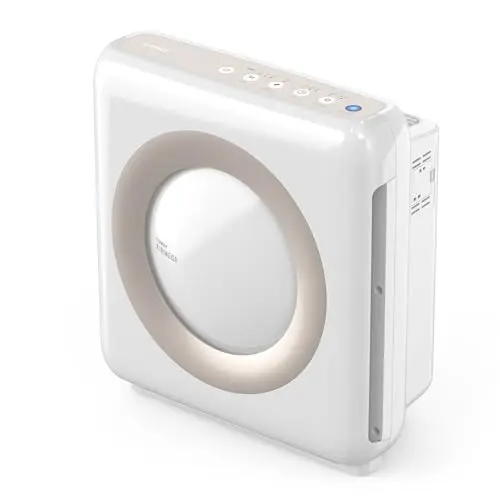
Mighty AP-1512HH – Quiet Whole-Room Performer
A long-running whole-room purifier with a reputation for quiet operation and a four-stage filtration system. The AP-1512HH includes auto and eco modes, a real-time air quality indicator, and filter alerts, plus a three-year warranty that is longer than many rivals. It’s a strong fit for allergy-focused households that want set-and-forget cleaning.
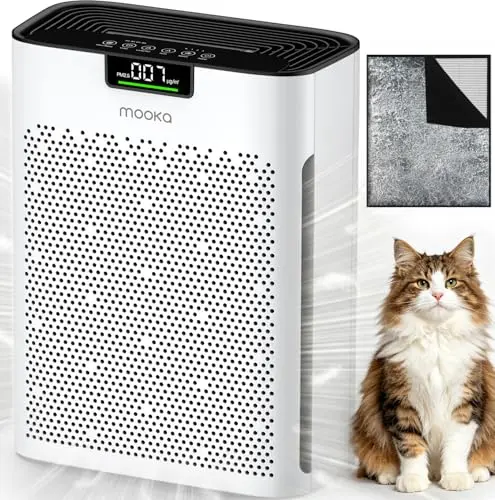
KJ190H – Ultra-Quiet Compact for Bedrooms
A compact purifier with a 20 dB sleep mode and a PM2.5 display that gives real-time feedback. The KJ190H uses a three-stage filter with a washable pre-filter, adds auto mode, timers, aromatherapy, and a child lock, and stays small enough for a bedside table or child’s room.
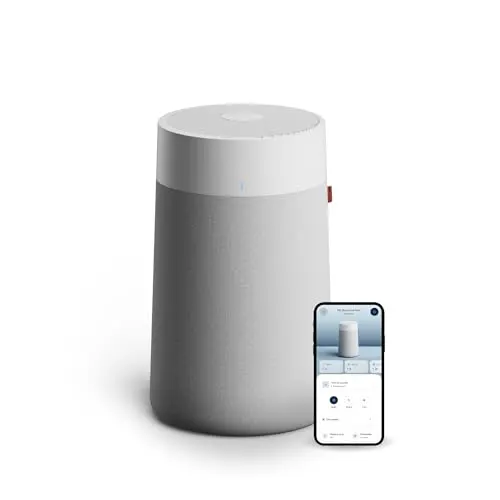
Blue Pure 311i Max – Whisper-Quiet Large-Room Purifier
A Scandinavian-designed purifier with QuietMark-certified operation and HEPASilent dual filtration. The Blue Pure 311i Max covers large rooms, adds Wi-Fi app control and auto mode, and uses a washable pre-filter. Its 23 dB quiet end makes it a strong fit for bedrooms, nurseries, and open living areas.
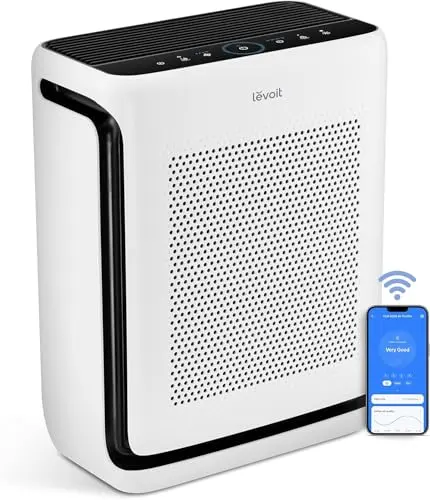
Vital 200S-P – Quiet Large-Room Allergy Relief
A large-room Levoit with a 27 dB sleep mode, AHAM-verified CADR ratings, and a dual-intake design aimed at pet hair and allergens. The Vital 200S-P adds app control and an air quality monitor, making it a more connected step up from compact bedroom purifiers.
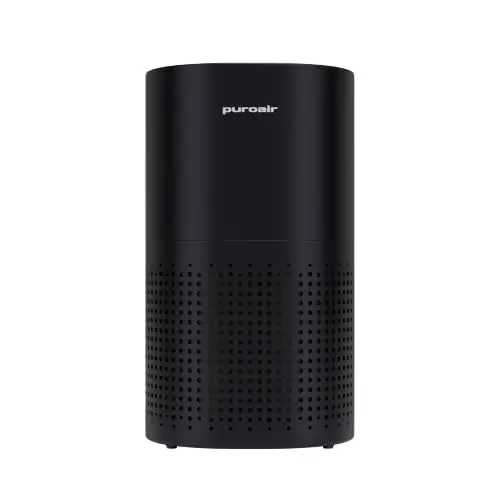
PuroAir 240 – Quiet Auto-Mode Purifier
A mid-size purifier with a particle sensor, auto mode, and a quiet sleep setting. The PuroAir 240 uses a three-layer HEPA and carbon filter, includes a 360-degree intake, and is designed to clean rooms up to 1,000 square feet in an hour. It’s a straightforward quiet option for bedrooms and living rooms.
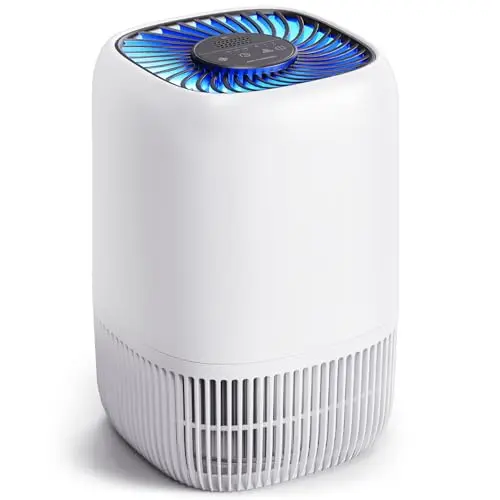
DH-JH12 – Tiny Quiet Budget Air Cleaner
A tiny, budget-friendly purifier with a 22 dB quiet mode and 360-degree airflow. The DH-JH12 uses a three-stage filter, adds an essential-oil tray and simple controls, and is small enough for a desk, child’s room, or small office. It favors a low entry point over large-room cleaning power.
How We Evaluated These Quietest Air Purifiers
We didn’t run controlled sound-chamber measurements or multi-month reliability trials. What we did: cross-referenced 8 air purifier models from 7 distinct brands across 5 decision axes – published noise levels and sleep-mode behavior, filtration and CADR claims, room coverage, smart/auto features, and filter upkeep. We triangulated published specifications, feature sets, and owner feedback where available, then mapped each model against realistic buyer profiles for bedrooms, living rooms, and open spaces. We also audited how each unit’s published quiet speed relates to its stated room coverage, and whether the design includes a washable pre-filter or filter indicator that supports long-term quiet operation.
Our scoring framework weighted real-world quiet operation and use-case fit (70%) against feature differentiation (30%). That means a low decibel rating mattered most when it held up alongside enough cleaning power for the room, not when it was achieved only on a barely moving fan speed. We also weighed whether sleep modes dim displays, whether auto mode can rev up noisily, and how much ongoing filter maintenance the design demands.
We have no commercial relationship with any brand here; recommendations track fit and differentiation, not brand preference. If you need a large-room purifier that can disappear into the background, the Winix 5510 is the natural starting point. If your priority is a compact bedroom unit, the Levoit Core 300-P is the easier fit.
How to Choose the Right Quiet Air Purifier
1. What Actually Makes a Quiet Air Purifier Quiet?
Quiet operation comes from the whole package: motor design, fan blade shape, airflow path, cabinet damping, and the control logic that decides when to ramp up. A low sleep-mode decibel rating is useful, but only if the unit still moves enough air to matter at that speed. The best quiet purifiers also dim or turn off display lights and avoid unnecessary beeps.
If you need a large-room unit that can disappear into the background, the Winix 5510 is the clearest match; its light-activated sleep mode handles the nighttime transition without input.
2. Decibels, Sleep Modes, and Fan Speeds: How to Read Quiet Claims
Air purifier noise is usually quoted at the lowest fan speed, which is why a published decibel rating tells only part of the story. Check whether the manufacturer also gives a CADR or cleaning rate at that quiet setting; if not, assume the quiet number applies to a speed that won’t clean a large room quickly. Sleep mode should also dim lights and lock out accidental changes.
A unit rated around low-to-mid 20s dB is generally a strong bedroom candidate. Mid-to-high 20s can still work in a large room, but it’s a step less discreet at night.
3. Match Quiet Air Purifier Coverage to the Room
Room coverage claims are often based on a single air change per hour, which is a loose benchmark rather than a guarantee. For a bedroom, a compact purifier with a strong sleep mode usually makes more sense than a huge unit running on low. For living rooms and open-plan spaces, prioritize higher CADR and multi-side intake so the purifier can clean effectively without living at maximum fan speed.
If compact bedroom duty is the priority, the Levoit Core 300-P is the easier fit. For larger rooms, look for a washable pre-filter and enough airflow to avoid constant high-speed noise.
4. Filtration, Odor Control, and the Noise Penalty
HEPA filtration captures particles, while activated carbon handles odors and some VOCs. More carbon and denser filter media can improve odor control, but they can also increase airflow resistance, which may push the fan to work harder and louder. A washable pre-filter helps protect the main filter from pet hair and dust, preserving both airflow and quiet operation.
Don’t assume a high fan speed is always better. Auto mode with a decent particle sensor is often the quieter long-term strategy because the purifier runs gently when the air is already clean.
5. Smart Features, Filter Costs, and Long-Term Quiet
App control, timers, and filter indicators are conveniences, not quietness guarantees, but they help you keep the purifier in its sweet spot. A filter indicator prevents the common mistake of running a clogged filter that forces the fan to strain. Replacement filters are the main ongoing cost; budget-friendly models can become less of a value if filters are scarce or expensive.
Price tiers matter here in a practical way: entry-level purifiers often trade coverage and app features for a low entry point, mid-range models add better sensors and larger filters, and premium picks may bring design, certification, or longer warranties. None of that guarantees quieter operation unless the fan and sleep logic are well sorted.
Frequently Asked Questions
1. Are quiet air purifiers actually quieter, or just slower?
Usually a bit of both. Many quiet air purifiers earn their rating by running at a low fan speed in sleep mode, where motor and airflow noise drop dramatically. That’s still real quietness for nighttime use, but it may not clean a large room quickly.
The better models also use damped cabinets, dimmed displays, and control logic that avoids sudden fan spikes. Check whether the quiet claim is tied to a usable cleaning rate, not just the slowest setting.
2. Winix 5510 vs. Blueair 311i Max: Which is quieter for a large room?
Both are strong quiet large-room options, but they lean different ways. The Winix 5510 pairs a 23.5 dB slowest speed with a light-activated sleep mode, True HEPA filtration, and app control. The Blueair 311i Max is rated around 23 dB, carries QuietMark certification, and uses HEPASilent dual filtration.
For most buyers, the Winix is the safer quiet pick because its sleep automation is more hands-off and the reliability story is steadier. Choose the Blueair if design and certified quiet operation matter more than the extra app polish.
3. Levoit Core 300-P vs. Coway AP-1512HH: Which is the better quiet bedroom purifier?
The Levoit Core 300-P is the easier bedroom fit: 24 dB sleep mode, a compact footprint, and AHAM-verified CADR for its size. The Coway AP-1512HH is larger and has a strong quiet reputation, plus four-stage filtration and a three-year warranty.
Pick the Levoit for a small bedroom or office where space is tight. Pick the Coway if you want more filtration depth and a longer warranty, and you have room for a bigger cabinet.
4. Do quiet air purifiers sacrifice cleaning power?
Not necessarily, but the trade-off is real at the quietest settings. A sleep mode usually lowers airflow, so a purifier that is near-silent at night may clean a large room slowly. Auto mode helps by running gently when air is clean and ramping up when sensors detect particles.
Look for a model with enough CADR for the room size so it doesn’t need to live at maximum speed. That’s the balance that keeps noise low without turning filtration into a token effort.
5. How quiet is quiet enough for a bedroom?
For most sleepers, a sleep mode around 20 to 24 dB is the target. That range is close to a whisper or soft hum, and it’s where a purifier can run all night without becoming the loudest thing in the room.
Also consider display dimming, fan ramp behavior, and whether the unit beeps when settings change. A slightly higher decibel rating with better nighttime manners can feel quieter than a lower number attached to a bright, beeping machine.
Final Verdict
For most buyers, the Winix 5510 is the answer: it pairs a genuinely low quiet-speed rating with enough coverage for a living room or large bedroom, and its light-activated sleep mode handles the nighttime transition automatically. If you want a smaller bedroom purifier that stays out of the way, the Levoit Core 300-P is the more sensible footprint and still has a near-silent sleep mode. For allergy-focused rooms where you’d rather trade a little quiet-mode precision for broader filtration and a strong track record, the Coway AP-1512HH is the steady alternative. And if the goal is the lowest-cost quiet option for a child’s room or small office, the MOOKA KJ190H gets you there without the bulk. Match the purifier to the room, and quiet becomes a feature you stop noticing.
