
Best Rain Sound Machines For Sleeping – 2026 Reviews

Rain is the sound most people reach for first. It’s broadband but soft, it covers a partner’s breathing and a neighbor’s bass without sounding like a jet engine, and the good tracks are the ones your brain stops noticing after ninety seconds. That’s also why this category is so hit-or-miss. A short rain clip that repeats every twenty seconds will wake you at 3 a.m. the moment the seam comes around.
Two things separate a rain machine that earns its outlet from one that collects dust. First, the sound engine: non-looping rain and thunder recordings with some low-end body mask noise far better than a thin, hissy sample. Second, sleep ergonomics – whether you can find the rain track in the dark without turning on a light, whether the volume dial goes low enough for a small bedroom, and whether the timer tapers off instead of snapping to silence.
We cross-shopped machines that actually carry a rain or water library – simple plug-in cubes, battery-powered travel units, and app-connected nursery devices – and sorted them by what they deliver across a full night. Some sit in the budget tier, one is a genuine splurge, and a couple of the more expensive options aren’t automatically the better ones. Here’s where each lands.
Best Rain Sound Machines for Sleeping – 2026 Reviews
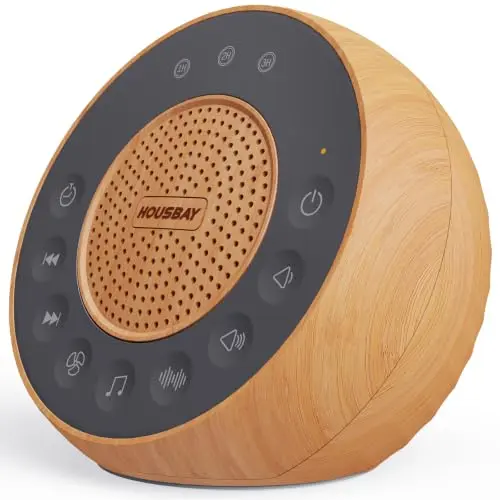
CAWS50S Wood Grain – Directed Sound for Shared Beds
The Housbay CAWS50S is built around one idea: point the sound at the person sleeping rather than at the whole room. Its forward-facing speaker carries clearly at low volume, and the top surface is angled so your hand finds the controls without you opening your eyes. Rain, thunder, and ocean sit inside a library of 31 sounds, and the timer fades rather than cuts.
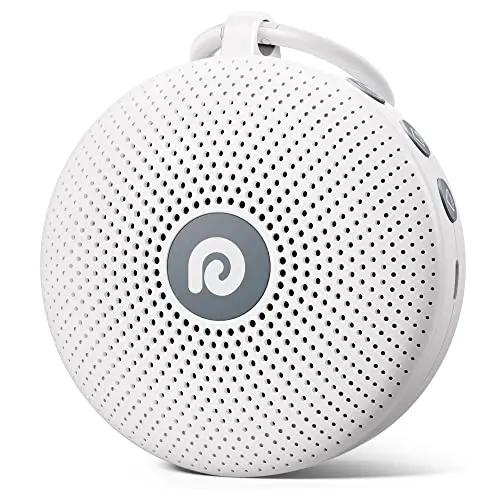
D11 Max – Rechargeable Rain for Travel and Power Cuts
The D11 Max is the rain machine you can carry to the next room, the car, or a hotel with no free outlet. A built-in 1800mAh battery runs through the night on a charge, and a child-lock keeps curious hands from changing the track mid-nap.
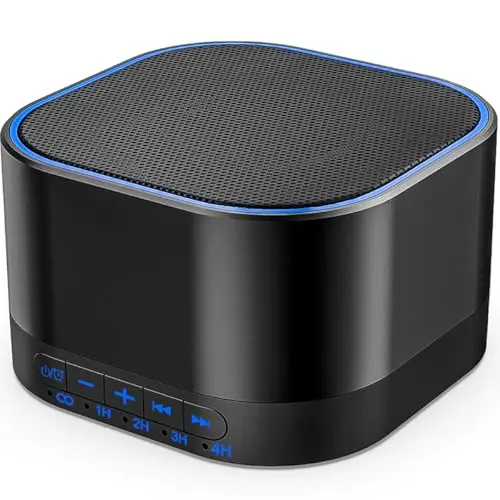
SN-A1 – Tiny Plug-In With a Quiet Low End
The SN-A1 is a small plug-in cube with an explicit rain library – rain, brook, and ocean all named on the box – plus a volume range that goes genuinely quiet. It’s the simplest machine here to live with if all you want is rain and a timer.
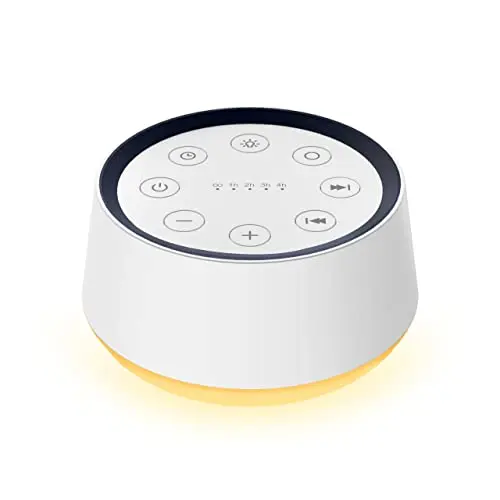
BWN-T8 – 30 Sounds and Twelve Light Colors
The BWN-T8 packs the widest sound-and-light spread in the budget tier: 30 sounds, twelve night-light colors with ten brightness steps, and a volume range that runs from barely audible to room-filling. Everything is driven from the top buttons.
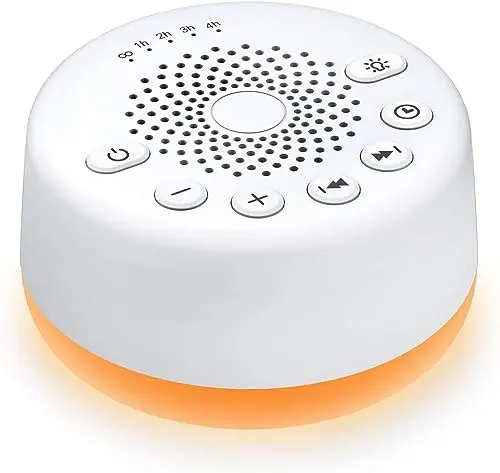
IS05 – Warm Night Light for Nurseries
The Easysleep IS05 pairs 25 non-looping sounds with a warm-white night light at four brightness levels – the right kind of glow for a nursery rather than a color display. It’s a small-footprint machine backed by an unusually long warranty.
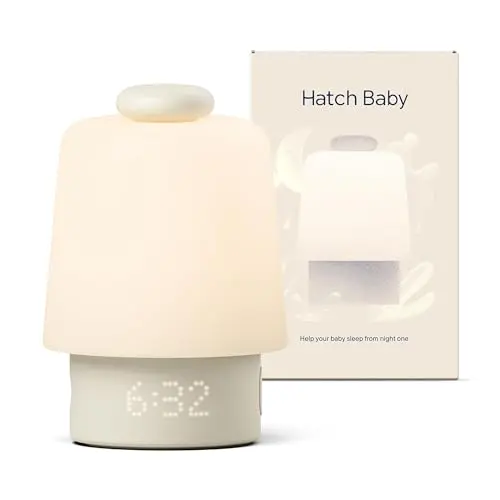
Hatch Baby Routine Builder – App-Scheduled Sleep Support
Hatch Baby turns the sound machine into a routine tool: schedule lights and sounds from an app, chat with a sleep consultant, and press the big button to start a favorite. It’s the most capable device here and the only one that assumes your phone is nearby.
How We Evaluated These Rain Sound Machines for Sleeping
This review didn’t involve overnight sleep trials or calibrated decibel measurements. It’s built on published specifications, feature documentation, and aggregated owner feedback where available, plus a plain read on how each machine handles the specific job of playing rain at bedtime. We cross-referenced six rain-capable sound machines from six distinct brands across six decision axes – sound-library depth and whether tracks loop, volume range at the quiet end, timer and fade-out behavior, night-light quality, power source and portability, and how quickly the controls work in a dark room. We compared rain libraries on the water sounds each machine actually names – rain, thunder, brook, sea waves, ocean – rather than on total sound count, since thirty tracks with one rain option is a poor fit for this topic.
We weighted real-world sleep fit (70%) – whether the machine actually masks noise with rain at a level a human can sleep through – against feature differentiation (30%) – the extras that separate one bedside cube from another, such as a directed speaker, a rechargeable battery, or app scheduling. We mapped each pick against three buyer profiles: a couple sharing a bed, a parent with a nursery, and someone who travels. Recommendations track fit and differentiation, not brand preference, and we have no commercial relationship with the brands featured. If you share a bed with a light sleeper, the Housbay CAWS50S is the match; if the machine has to move with you, the D11 Max is the better call.
How to Choose the Right Rain Sound Machine for Sleeping
1. What Actually Makes a Rain Sound Machine Good for Sleeping
Every machine in this category plays something it calls rain. The difference is whether the track is broadband enough to mask a partner’s breathing, a dripping tap, or traffic – and whether it stays pleasant at the volume required to do that. Thin, hissy rain forces you to turn it up until it becomes its own irritant. Good rain audio has body, a low-end wash underneath the patter.
The second test is variety within the rain family. A single rain loop goes stale in a week. Machines carrying rain, heavy rain, thunder, brook, and ocean give you somewhere to move when your brain stops hearing the first one. That’s the biggest single differentiator between a machine you keep for years and one that ends up in a drawer.
2. Non-Looping Rain Tracks Beat a Bigger Sound Count
A looping track repeats on a fixed cycle, and once your brain locks onto the seam it’s very hard to unhear. Non-looping or long-form recordings avoid that trap, and it matters more with rain than with white noise, because rain has structure your ear can follow. This is the one spec worth reading the fine print on.
Don’t buy on sound count alone. A machine advertising thirty tracks with one rain option is a worse fit for this topic than one with twenty sounds that names rain, heavy rain, brook, and ocean separately. If rain and thunder depth is what you’re after, the Housbay CAWS50S pairs them with a directed speaker that keeps the sound close to your ear.
3. Why the Quiet End of the Volume Dial Matters
Most sleep complaints about sound machines aren’t about loudness – they’re about the floor. A machine whose lowest setting is already room-filling is useless in a small bedroom or next to a crib. Look for a wide volume range with fine steps rather than a loud/soft switch.
This is where spec sheets earn their keep. Machines with 32 or 36 discrete volume levels let you creep up until the noise is just masked and stop there. Machines with a handful of settings make you choose between too quiet and too much.
4. Timers and Fade-Outs for Sleeping Through the Shutoff
A hard cut to silence at the end of a timer is worse than no timer at all, because you’ll wake on the transition. Gradual fade-out is the feature to look for, and it’s inconsistently implemented: some machines taper over several minutes, others simply stop.
The other question is whether you want a timer at all. If rain is part of your overnight sleep environment rather than a way to drop off, run it continuously and skip the timer entirely. Both approaches are valid – just know which one you’re buying before you set it up at 11 p.m.
5. Plug-In, Rechargeable, or App-Connected
Power source splits this category cleanly. Plug-in machines are the simplest and never need charging, but they’re tied to one outlet – usually beside the bed, which is where you want them anyway. Rechargeable units cost more and add a charging habit, but they’re the only sensible choice if the machine moves between a nursery, a stroller, and a hotel room.
App-connected machines sit in a third bucket. They buy you scheduling and remote control, which is genuinely useful for a child’s routine, but they add phone dependency and often a subscription. If the machine has to move with you, the D11 Max is the pick; if it lives on one nightstand forever, a plug-in cube does the same job for less.
6. Housbay CAWS50S vs Dreamegg D11 Max: Which Fits Your Night
These two get compared constantly because they cost similar money and do different jobs. The Housbay is a bedside machine: forward-facing speaker, wood-grain shell, angled controls, fade-out timer. It’s built to sit still and sound good in one room.
The Dreamegg D11 Max is built to leave the house – battery, lanyard loop, child-lock. What it gives up is the directed speaker and the more refined sound profile. Choose the Housbay for a shared bed; choose the D11 Max for a stroller, a suitcase, or a house with unreliable power.
7. What Rain Sound Machines Cost Across the Market
The budget tier covers most of what this category can do: twenty to thirty sounds, multiple timers, a night light, and memory function in a small plug-in cube. Spending more here buys build and sound direction, not more rain.
Mid-range machines add better materials, a directed speaker, or a rechargeable battery. Premium picks are almost always about a routine ecosystem – app scheduling, sleep coaching, subscription content – rather than audio quality. If you want the widest feature spread for the smallest outlay, the BWN-T8 is the value case here.
Frequently Asked Questions
1. Do rain sound machines actually block snoring and street noise?
Yes, if the machine has real headroom and a low noise floor. Masking works best when the rain sits just above the offending sound rather than far above it – the goal is to make a snore unremarkable, not to drown it out. Machines with 32 or more volume steps make that easier because you can land on the exact level.
A forward-facing speaker helps in a shared bed, since the sound reaches your ear without filling the whole room. For heavy snoring, look for brown-noise-adjacent rain with low-end weight; thin hiss won’t do it.
2. What's the difference between the Housbay CAWS50S and the Magicteam SN-A1?
The CAWS50S is the more refined bedside machine: a directed speaker, a wood-grain body, an angled control panel, and a soft fade-out at the end of a timer. It’s designed to sit in one place and stay out of your way.
The SN-A1 is smaller, simpler, and cheaper, with an explicit rain-and-brook library and an unusually quiet low end for its size. Where the Housbay wins on build and sound direction, the Magicteam wins on footprint and simplicity. If you share a bed with a light sleeper, spend more; if you just need rain in a small room, the SN-A1 is enough.
3. How does the Hatch Baby compare with a basic rain sound machine?
They solve different problems. A basic machine like the Housbay CAWS50S plays rain and gets out of the way. The Hatch Baby is a routine system – app scheduling, color-coded wake times, sleep guides, and consultant chat for the early months.
That’s genuinely useful if you’re building a toddler’s bedtime and mostly irrelevant if you’re an adult who wants rain at 11 p.m. It’s also the only pick here with a subscription attached once the included period ends. Buy it for the routine tooling, not for audio.
4. Can these machines run all night, or do they shut off?
Most run continuously if you want them to. The plug-in machines here – the Housbay, Magicteam, BrownNoise, and Easysleep – all offer a continuous-play setting alongside their timed modes, so the timer stays optional.
The Dreamegg D11 Max is the exception to plan around: it’s battery-powered, so an all-night run depends on a charge rather than an outlet. If you want rain from lights-out to alarm with zero variables, a corded machine removes the question entirely.
5. Do I need a night light on a rain sound machine?
Only if you’re feeding or checking on someone in the dark. For adult sleep, a night light is usually the feature you disable on night one.
For a nursery it’s the opposite. A warm, dimmable light is the reason to pick the Easysleep over a plain cube, and the 12-color light on the BrownNoise is handy for night feeds without waking anyone. Both let you run light and sound separately, which is the setting that actually matters.
6. Does rain sound better on a premium machine than a budget one?
Not necessarily, and this surprises people. The rain on a modest plug-in cube can be every bit as usable as the rain on a premium device, because the recordings are inexpensive to license and the speakers are doing similar work.
What extra money buys is build quality, a directed speaker, finer volume steps, and in the Hatch’s case a whole routine ecosystem. The gap that does show up is library depth: cheaper machines sometimes ship one rain track where a better one ships rain, thunder, and brook separately. Judge on that, not on price tier.
Final Verdict
For most people, the Housbay CAWS50S is the answer. It plays rain and thunder with enough low-end body to mask a room, points the sound at your pillow instead of the whole house, and fades out at the end of a timer instead of cutting. That combination – not its feature list – is what makes it a better sleeping machine than the cheaper cubes.
If the machine has to travel, the Dreamegg D11 Max earns its place with a battery that lasts the night. If you want the widest sound-and-light spread for the smallest outlay, the BrownNoise BWN-T8 is the value pick, and if you’re building a child’s bedtime routine rather than chasing rain audio, the Hatch Baby is purpose-built for exactly that.
