
Best Safe Dehumidifiers – 2026 Reviews

A safe is only as protective as the air inside it. Moisture sneaks into gun safes, closets, storage bins, and cabinets, and it doesn’t need a visible leak to cause rust, musty odors, or fogged windows. The right dehumidifier for a safe is less about raw power and more about matching capacity and maintenance style to the enclosure you’re trying to protect.
The category splits into passive desiccant packs, refillable moisture absorbers, and plug-in electric rods. Each has a different tradeoff: passive options are quiet and cordless but need recharging, refillable cups are simple but need upright placement, and electric rods run continuously but require an outlet. We compared the options across brands to help you pick the format that fits your space and your willingness to maintain it.
Best Safe Dehumidifiers – 2026 Reviews

500g x 2 Rechargeable Desiccant Packs – Color-Indicating Safe Protection
A pair of 500-gram silica gel packs with a clear window that shifts from orange to green as humidity climbs. Designed for gun safes, cars, cabinets, and storage rooms, they recharge in a microwave or oven and are formulated without harsh additives.
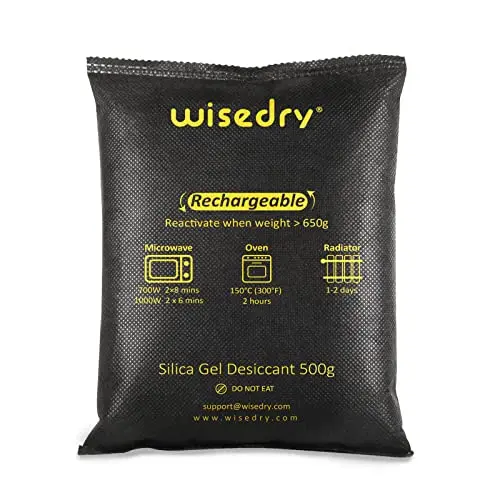
500g x 2 Rechargeable Silica Gel Packs – Fast Microwave Reactivation
Two 500-gram silica gel bags built for cars, closets, gun safes, and storage areas. Each bag absorbs a substantial amount of moisture before a short microwave recharge, and the twin-pack format lets you rotate one while the other dries.
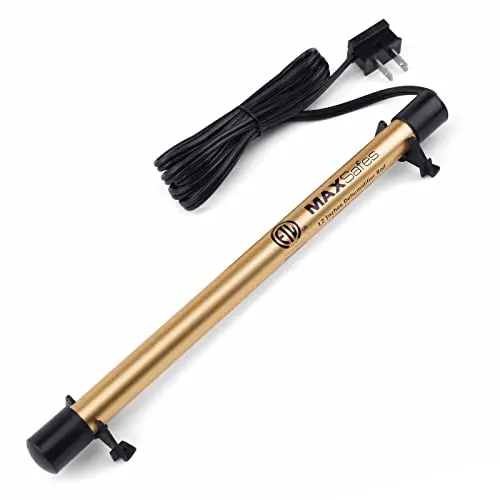
Gun Safe Dehumidifier Rod 12-Inch – Plug-In Continuous Protection
A 12-inch electric dehumidifier rod that gently warms the air inside a gun safe or cabinet to drive out excess humidity. It plugs in continuously, mounts with snap-on brackets, and is ETL listed for peace of mind.
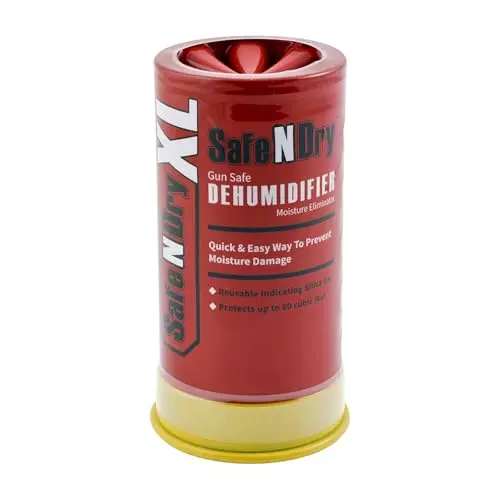
XL Gun Safe Dehumidifier 450g – Spill-Proof Reusable Canister
A 450-gram silica gel canister sized for safes up to 60 cubic feet. The spill-proof plastic housing improves airflow around the color-indicating beads, and the pouch recharges in an oven when the beads turn pink.

Refillable Moisture Absorber 6-Pack – Fresh-Scent Closet Defense
A six-pack of refillable 11-ounce moisture absorber cups with a fresh scent. The cups trap moisture in a visible reservoir, last up to 45 days depending on conditions, and are designed for closets, bathrooms, laundry rooms, and other damp spots.
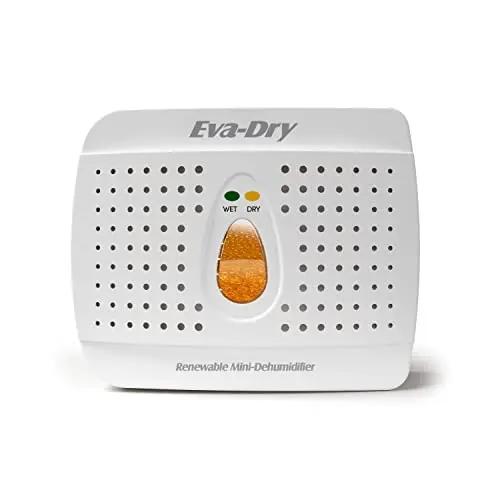
E-333 Wireless Mini Dehumidifier – Cordless Small-Space Protection
A cordless mini dehumidifier that hangs or stands in small spaces up to 333 cubic feet. The rechargeable silica gel core absorbs moisture without batteries or cords, and the unit carries a five-year warranty.

Rechargeable Desiccant Packs 5-Pack – Color-Indicating Storage Protection
Five 100-gram rechargeable desiccant packs with color-indicating silica gel. They are sized for storage bins, totes, suitcases, and 3D printer filament, and can be dried in a microwave or oven for reuse.

Moisture Absorber 6-Pack – Fragrance-Free Leakproof Defense
A six-pack of fragrance-free moisture absorbers that use spherical calcium chloride to pull dampness from closets, bathrooms, cars, and laundry rooms. Each cup has a separate water-collection layer so you can see the absorbed moisture.
How We Evaluated These Safe Dehumidifiers
We didn’t run controlled humidity-chamber tests or long-term sealed-safe trials. What we did: cross-referenced 8 safe dehumidifier models from 8 distinct brands across 6 decision axes – moisture capacity, coverage volume, power source, recharge or maintenance routine, enclosure safety, and fit for sealed spaces. We triangulated published specifications, feature sets, and owner feedback where available against representative buyer profiles, from gun-safe owners to closet organizers. We also mapped how each option handles the practical question of whether it needs a cord, a microwave, or a monthly refill. That matters because a product that excels in a closet can be a poor fit inside a steel safe, and a high-capacity desiccant can be overkill for a small cabinet. We weighed each option against the enclosure it is most likely to serve.
The scoring framework weighted real-world fit and performance (70%) – how well each product controls moisture in its intended enclosure – against feature differentiation (30%) – unique advantages like color indicators, spill-proof housings, or continuous electric operation. We benchmarked passive versus electric designs separately so neither format got penalized for being the wrong tool. We have no commercial relationship with any of the brands featured; recommendations track fit and differentiation, not brand preference. If you want visible, reusable coverage, the Wisesorb 500g pair is the strongest all-around; if you’re protecting a powered gun safe, the MAXSafes rod is the simpler set-and-forget route.
How to Choose the Right Safe Dehumidifiers
1. Capacity and Coverage: Match a Safe Dehumidifier to the Enclosure
Start with the volume of the space, not the size of the product. A compact silica gel pack can be right for a cabinet or closet, while a full-size gun safe may need a 450- to 500-gram desiccant or an electric rod. Manufacturers describe coverage in cubic feet or square feet, and those numbers are a starting point, not a guarantee. A sealed space with frequent opening and closing will demand more capacity than a tightly closed storage bin.
If you’re protecting a large safe and want a no-spill format, the SafeNDry XL is sized for roughly 60 cubic feet and keeps beads inside a canister. For smaller spaces, a pair of 500-gram packs gives you rotational flexibility: one works while the other recharges.
2. Passive Desiccant vs Electric Dehumidifier Rods
Passive desiccants absorb moisture without power, which makes them the safer default for closets, cars, and safes without outlets. Electric rods gently warm the enclosure and rely on continuous power; they don’t collect water, so there’s nothing to empty or recharge. The tradeoff is obvious: a rod only works where you can route a cord, and it gets warm to the touch. If you have an outlet inside the safe, the MAXSafes rod is the set-and-forget pick, with ETL certification and snap-on mounts.
Passive packs are more flexible but require a recharge routine. Look for color-indicating beads or a clear window so you can see when the desiccant is saturated. Without a visual cue, you’re guessing.
3. Safe Materials and Spill Risk in a Gun Safe
Inside a safe, the biggest practical risk is a mess. Silica gel packs are dry and spill-free until the fabric fails, while calcium chloride absorbers turn into liquid as they work. That’s why a spill-proof canister or a double-sealed bag matters more in a safe than in a bathroom. The SafeNDry XL is the tidier canister option for a large safe, and it uses non-toxic silica gel rather than a liquid brine.
Check for child and pet safe wording if the dehumidifier will sit in a living area, and keep calcium chloride cups upright and out of reach. No dehumidifier replaces a good safe seal, but the right format lowers the chance of rust and residue.
4. Recharge and Maintenance Realities
Reusable desiccants only work if you actually recharge them. Microwave reactivation is the fastest routine, often taking around ten minutes, while oven reactivation is slower but gentler on fabrics and windows. Color-indicating beads are helpful, but they’re a guide rather than a calibrated gauge; some packs need weighing to confirm saturation. If you want a quick microwave cycle and a twin-pack rotation, the wisedry twin pack is the practical pick.
Refillable cups and electric rods have different routines: cups need periodic refilling, and rods need continuous power. Choose the maintenance style you’ll actually keep up with, because a saturated desiccant stops protecting the space.
5. How to Choose a Safe Dehumidifier for Closets, Cars, and Cabinets
For a closet or cabinet, a cordless mini dehumidifier or a refillable cup is usually enough. Look for a hanging hook if shelf space is tight, and choose fragrance-free cups if odors bother you. In a car, a 500-gram silica bag can reduce window condensation, but avoid liquid cups that can tip. The Eva-Dry E-333 is the easiest hang-and-go option for a closet or small cabinet.
For a gun safe, prioritize capacity and spill resistance over portability. For a storage bin or suitcase, a 100-gram pack is often the right size. The category rewards matching the product to the enclosure, not buying the biggest option available.
Frequently Asked Questions
1. What's the difference between the Wisesorb 500g pair and the wisedry twin pack?
Both are twin 500-gram silica gel setups, but they emphasize different cues. The Wisesorb pair uses an orange-to-green window and is marketed for safes, cars, and cabinets; the wisedry twin pack leans on a 10-minute microwave recharge and double-sealed packaging. If you want the clearest visual indicator, the Wisesorb 500g pair is the pick; if fast microwave turnaround matters more, wisedry is the better fit.
2. Are electric dehumidifier rods safe for gun safes?
They can be, provided you choose a listed model and respect the heat. A rod like the MAXSafes 12-inch rod is ETL certified, uses low wattage, and is designed to raise the safe’s temperature slightly above ambient. It still gets warm to the touch, so keep items from resting against it and leave clearance around the mounts. It is not a substitute for a sealed safe or a dry location.
3. How often do reusable silica gel packs need recharging?
It depends on humidity, enclosure volume, and how often the space opens. A small pack in a closet may need weekly recharging in damp weather, while a larger pack in a tightly closed safe can last longer. Use the color indicator or the manufacturer’s weight threshold as your cue, and reactivate with microwave or oven heat only as directed. Don’t recharge an unsaturated pack just on a calendar schedule.
4. What's the difference between the Eva-Dry E-333 and the DampRid refillable cups?
The Eva-Dry E-333 is a cordless reusable silica unit that hangs or stands and recharges for repeat use. The DampRid cups are refillable calcium chloride absorbers that collect liquid and add a fresh scent. Eva-Dry suits a car, closet, or cabinet where you want no refill purchases; DampRid suits a bathroom or laundry room where you don’t mind periodic refilling. Neither is the right pick for a large gun safe on its own.
5. Do safe dehumidifiers work in cars and closets?
Yes, but choose the format for the space. A 500-gram silica bag can help with window condensation in a car, while a cordless mini dehumidifier or refillable cup is easier in a closet. Avoid liquid absorbers in moving vehicles because they can tip. For a closet, a hanging hook and a compact footprint matter more than maximum capacity.
Final Verdict
For most buyers, the Wisesorb 500g pair is the answer – it pairs visible color indication with enough capacity for a safe or large storage area, and it recharges without a cord. If you want the lowest-cost way to protect a closet or small cabinet, the Eva-Dry E-333 is the easiest hang-and-go pick. For a powered gun safe, the MAXSafes rod is the set-and-forget choice, while the SafeNDry XL is the tidier spill-proof canister when there’s no outlet. The right safe dehumidifier is the one you’ll actually maintain: passive packs need a recharge routine, electric rods need an outlet, and refillable cups need a refill schedule. Match that routine to your habits and the enclosure stays dry without becoming a chore.
