
Best Sateen Duvet Covers – 2026 Reviews

The duvet cover is the layer you actually touch, so a smooth sateen weave can make a bed feel more finished before you even add a throw. It’s also the layer that decides whether your comforter feels crisp, cool, or slightly clammy at 2 a.m.
Sateen is a weave, not a fiber, and that distinction matters. A cotton sateen cover can feel breathable and structured; a bamboo-derived sateen feels silkier and cooler; a polyester sateen may look smooth but sleep warmer. The best sateen duvet covers get the fiber and the finish right, then back it up with practical details like secure corner ties and a closure that doesn’t fight you.
This guide surveys the market across brands and focuses on the choices that separate a good sateen duvet cover from a frustrating one: fiber content, weave quality, tie count, closure style, and fit. We’ll help you pick the right cover for your bed and sleep style rather than pushing one brand’s whole lineup.
Best Sateen Duvet Covers – 2026 Reviews
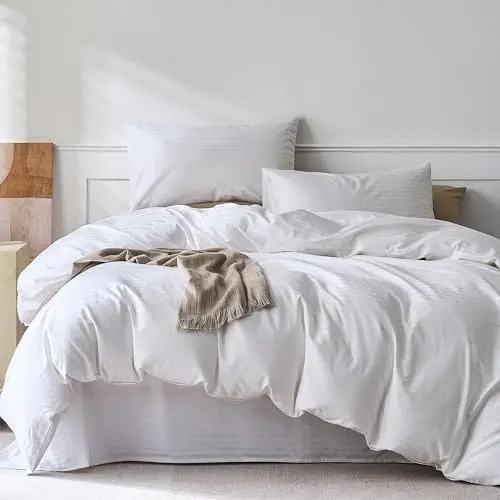
Cotton Sateen Striped Duvet Cover Set – Classic Stripes with Secure Ties
A 100% cotton sateen set with a classic stripe, eight interior ties, and a double hidden zipper. The 400-thread-count weave gives it a smooth hand and a subtle sheen without feeling heavy.
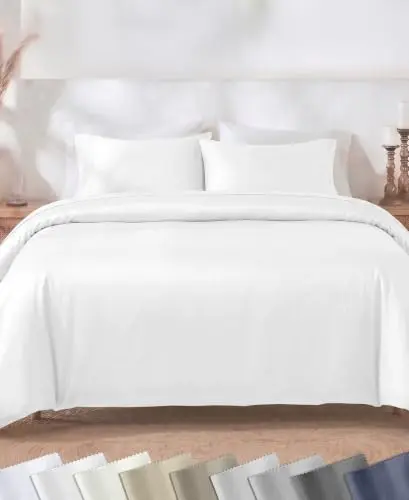
400 Thread Count Sateen Duvet Cover Set – Hotel-Style Cotton with Sham Pair
A three-piece cotton sateen set with a 400-thread-count weave, button closure, and four interior ties. The antique white shade is a soft, warm white rather than a bright optic white.
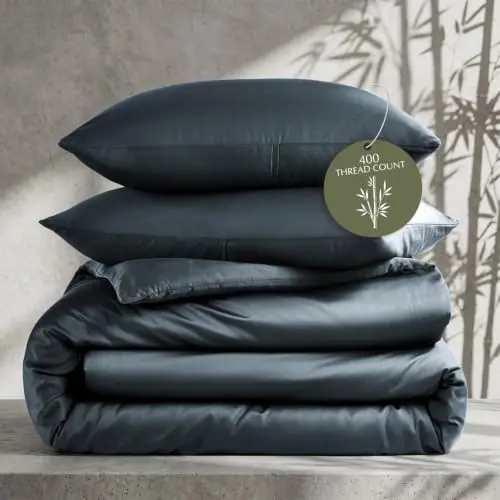
SoftBamboo 400TC Sateen Duvet Cover Set – Cooling Comfort for Hot Sleepers
A bamboo-derived sateen set in king size with a 400-thread-count weave, concealed button closure, and eight interior ties. The fabric is designed to feel silky and cooling, with a subtle sheen.
How We Evaluated These Sateen Duvet Covers
We didn’t sleep on these covers for months or run lab wash-cycle shrinkage tests. What we did: cross-referenced three sateen duvet cover models from three brands across six decision axes – fiber content, weave and thread count, closure and tie system, fit and size range, cooling and breathability, and care and durability. We triangulated published specifications, feature sets, and owner feedback where available, then mapped each option against representative buyer profiles for the category. That meant weighing cotton against bamboo-derived rayon, comparing zipper and button closures, and checking whether the corner-tie systems were actually designed to hold an insert in place.
The scoring framework weighted real-world fit and performance (70%) – how well each cover delivers on its stated sateen promise – against feature differentiation (30%) – unique construction details like tie count, closure type, and fiber choice. We have no commercial relationship with any of the brands featured; recommendations track fit and differentiation, not brand preference. We also treated thread count as one signal among several, not a headline number, because fiber quality and weave finish often matter more than the count alone. If you want the most complete cotton sateen package for most shoppers, the JELLYMONI cotton sateen set is the pick; if buttoned hotel style matters more, the California Design Den sateen set is the better fit.
How to Choose the Right Sateen Duvet Covers
1. What Makes a Duvet Cover Genuinely Sateen?
Sateen is a weave, not a fiber. It’s built with longer yarn floats that create a smooth surface, a subtle sheen, and a fluid drape. That’s why a cotton sateen duvet cover can feel dressier than a plain-weave cover without being slippery like satin, which is a different construction altogether. The weave also affects how the fabric catches light and how cool it feels at first touch.
Fiber still decides the personality. Long-staple cotton sateen feels crisp and breathable, while bamboo-derived sateen feels silkier and cooler. A polyester sateen can look smooth, but it won’t breathe the same way. If you want a classic cotton sateen set with stripes, the JELLYMONI is the pick.
2. Fiber Content Matters More Than Thread Count in Sateen Duvet Covers
Thread count gets the headline, but fiber quality and weave finish do more of the work. A 400-thread-count long-staple cotton sateen can feel smoother and more durable than a higher-count cover made from shorter fibers. Look for long-staple cotton or bamboo-derived rayon if you want a soft hand that holds up.
Thread count is still useful as a range. Around 300 to 600 is the practical zone for most sateen duvet covers; very high numbers can be a marketing number rather than a comfort upgrade. OEKO-TEX certification is a helpful safety signal, especially for sensitive sleepers.
3. Closure and Corner Ties: The Practical Side of Sateen Duvet Covers
A hidden zipper is fast and tidy, while a button closure gives a more traditional hotel look. Both work, but zippers are easier to manage alone and less likely to snag. Tie count matters too: eight interior ties do a better job than four at keeping a duvet insert from bunching, especially in larger sizes.
Check the inside seams and tie placement before you buy. If buttoned hotel style is the goal, the California Design Den sateen set is the pick.
4. How to Match Sateen Duvet Covers to Your Sleep Temperature
For hot sleepers, fiber choice matters more than the sateen label alone. Cotton sateen is breathable and works well year-round; bamboo-derived sateen adds a cooler, silkier feel and moisture-wicking behavior. Polyester sateen may feel smooth, but it traps heat more readily.
If you sleep warm, prioritize breathability and a lightweight insert. If you sleep cold, a sateen cover over a warmer duvet insert can still work because the weave is smooth rather than heavy.
5. JELLYMONI vs California Design Den: Which Sateen Duvet Cover Fits Your Bed?
The JELLYMONI set leans practical: a double hidden zipper, eight ties, a classic stripe, and a smooth cotton sateen hand. The California Design Den set leans traditional: a button closure, four ties, two pillow shams, and a warm antique white tone. Choose JELLYMONI if you want a secure, low-fuss cover with a little pattern. Choose California Design Den if you want a buttoned hotel look and a coordinated sham set.
6. Care, Durability, and What to Expect at Each Price Tier
Most cotton and bamboo sateen covers are machine washable. Wash cold, tumble dry low, and remove promptly to limit wrinkles. Avoid bleach and high heat, which can dull the sheen and weaken fibers over time. Sateen will wrinkle; that’s part of the fabric’s relaxed character, not a defect.
Entry-level sateen covers often use shorter fibers or polyester blends. Mid-range options usually move to long-staple cotton or bamboo-derived rayon with better ties and closures. Premium sateen covers add stronger certifications, more generous sizing, and finer finishing. Spend where the differences matter to you: fiber, closure, and fit.
Frequently Asked Questions
1. What is the difference between sateen and satin for a duvet cover?
Sateen is a weave, while satin is a fabric structure usually made from silk, polyester, or a blend. A sateen duvet cover can be cotton, bamboo-derived rayon, or polyester, and it gets its smoothness from the weave rather than a glossy finish. Satin tends to be slipperier and shinier; sateen is smoother than plain weave but generally more breathable and less high-gloss.
2. Is a sateen duvet cover good for hot sleepers?
Often, yes, but fiber content decides the outcome. Cotton sateen is breathable and a solid year-round choice, while bamboo-derived rayon feels cooler and more moisture-wicking. A polyester sateen can feel smooth but may sleep warmer. If you overheat, look for breathable fibers and a lightweight insert rather than relying on the word sateen alone.
3. JELLYMONI vs California Design Den: which cotton sateen duvet cover should you choose?
Choose the JELLYMONI if you want a zipper closure, eight corner ties, and a classic striped cotton sateen look. Choose California Design Den if you prefer a button closure, a warmer antique white shade, and a set that includes two pillow shams. Both are 100% cotton sateen; the decision comes down to closure style, tie count, and whether you want pattern or a solid hotel look.
4. How does the EverGrace bamboo sateen duvet cover compare with cotton sateen options?
The EverGrace uses bamboo-derived sateen with a silkier, cooler hand and a king-size only format. Cotton sateen options like JELLYMONI and California Design Den feel more structured and breathable, and they cover more sizes. EverGrace is the better match if you sleep hot, want a premium tier feel, and have a king bed; otherwise, cotton sateen is the more versatile route.
5. Do sateen duvet covers wrinkle easily?
Sateen can wrinkle, especially cotton sateen, because the smooth weave shows creases more than a textured cover. Wrinkle behavior varies by fiber and finish; some covers relax after a night on the bed, while others need a prompt removal from the dryer. Wash cold, tumble dry low, and smooth the cover while it’s still slightly damp. If you want a relaxed look, light wrinkling is normal and not a sign of poor quality.
Final Verdict
For most shoppers, the JELLYMONI cotton sateen set is the answer. It gives you a smooth 100% cotton sateen face, eight interior ties, and a double hidden zipper in one coordinated set, which is the practical combination most beds actually need. If you prefer a buttoned, hotel-style look and want pillow shams in a warmer white, the California Design Den sateen set is the better fit. And if you sleep hot on a king bed and want a silkier, cooling hand, the EverGrace bamboo sateen set is the premium route. Start with the JELLYMONI unless your bed size or closure preference points you elsewhere.
