
Best Shampoo Bars For Hair Growth – 2026 Reviews

Giving up the bottle is one thing. Believing a palm-sized slab of soap will somehow change what your scalp does is another. Yet here you are, reading about shampoo bars for hair growth, because the bottle hasn’t worked and the idea of a concentrated, plastic-free bar that treats your scalp like something worth tending to is genuinely appealing.
The category has moved well past novelty. What separates a bar that actually supports growth from one that just prints the word on the wrapper comes down to two things: what it does for the scalp and what it does for the strand. Bars built around circulation-style botanicals like rosemary and ginger work the first angle. Bars built around rice water, protein, and biotin work the second. The ones worth buying usually pick a lane and do it properly, and the ones worth avoiding throw every trending extract into a formula with no stated concentrations.
Shedding, thinning, breakage, and a scalp that itches every time you wash are four different problems, and they don’t share one solution. Below we’ve cross-shopped the solid bars on the market against those buyer profiles – what each one is actually for, where it lands on price tier, and who should skip it – so you can route yourself in a few minutes rather than a few weeks of trial and error.
Best Shampoo Bars for Hair Growth – 2026 Reviews
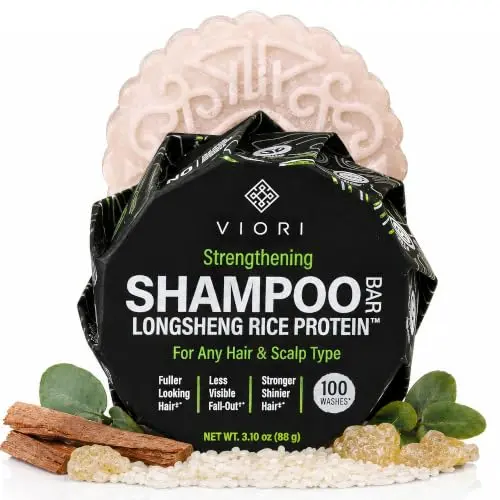
Hidden Waterfall Strengthening Bar – Rice Water for Stronger Strands
Built on Longsheng rice water – the ritually prepared rinse the Red Yao have used for generations – this bar produces a dense, bottle-like lather from something roughly the size of a hotel soap. The formula is sulfate-free and pH-balanced, scented with a warm vanilla-musk, and designed to pair with a matching conditioner bar if you want a full bottle-free routine.
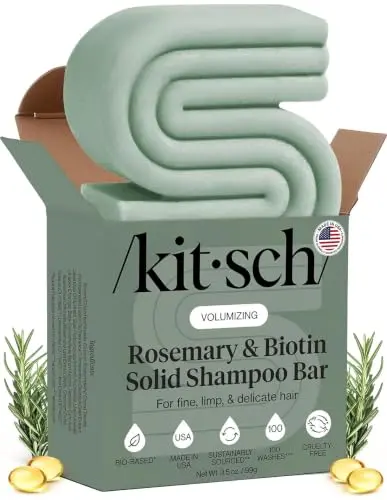
Rosemary & Biotin Shampoo Bar – Volume and Thickness Support
Rosemary extract and biotin do the headline work here, backed by amaranth protein and an antioxidant peptide blend aimed at breakage and split ends. The bar is pH balanced, free of sulfates, parabens, and silicones, safe for color-treated hair, and made in the USA from globally sourced ingredients.
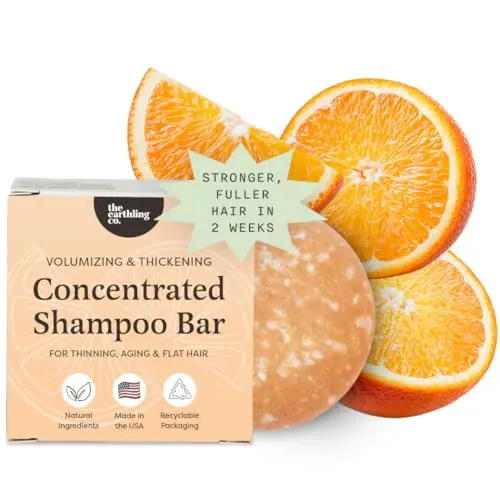
Citrus Sun Shampoo Bar – Botanical Defense for Thinning Hair
A scalp-first bar built on marshmallow root extract and elderberry, with glycerin and vitamin B5 holding moisture in the lengths. The formula is pH balanced, dermatologist-approved for sensitive skin, free of sulfates, parabens, silicones, phthalates, and artificial fragrance, and made in the USA at three ounces per bar.

Rice Water Shampoo & Conditioner Set – Protein Repair Duo
A two-bar system pairing rice protein, amino acids, and vitamins B, C, and E with a conditioning bar that detangles and smooths. Both are pH balanced, sulfate-free, silicone-free, and color-safe, and each bar stands in for roughly four plastic bottles over its life.
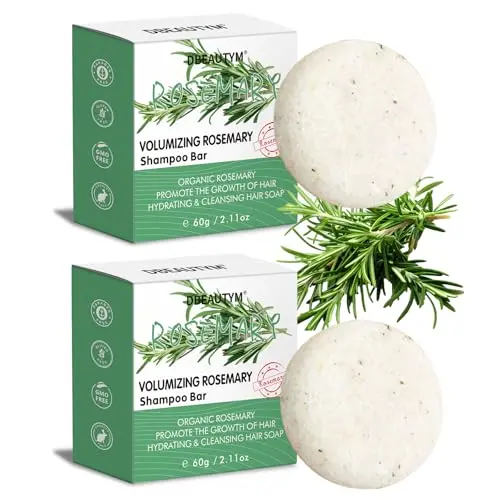
Rosemary Shampoo Bar 2-Pack – Deep Cleanse for Oily Scalps
A cleansing-first bar built on rosemary, olive oil, and shea butter, aimed at clearing excess oil, sebum, and styling buildup while keeping hair soft. It suits fine and oily hair best, lathers richly, and arrives as a two-bar pack so you can keep one in a travel bag.

Korean Scalp Revival Bar – Scalp-First Growth Support
A triangular solid bar built around Korean scalp-care botanicals – rosemary, green tea, ginseng, and centella – with amino acids and biotin for strand resilience. It’s free of sulfates, parabens, and silicones, formulated for dry, oily, and sensitive scalp types, and sized for travel.

Ginger Shampoo Bar 2-Pack – Circulation-Focused Formula
A ginger-forward solid bar combining ginger extract with camellia, olive oil, and shea, positioned around scalp circulation and follicle stimulation. The formula is mild enough for sensitive skin, gentle on the scalp, and sold as a two-bar pack.
How We Evaluated These Shampoo Bars for Hair Growth
We didn’t run these bars through a multi-month scalp trial or measure new growth under a microscope. What we did: cross-referenced 7 shampoo bar formulas from 6 brands across 5 decision axes – ingredient positioning, scalp compatibility, lather and rinse behavior, strength and breakage support, and how cleanly each bar fits a growth-focused routine. We triangulated published ingredient lists and specifications, owner feedback where available, and use-case fit against the buyer profiles that actually shop this category: thinning hair, postpartum shedding, oily and buildup-prone scalps, and color-treated strands.
The scoring framework weighted real-world fit (70%) – whether a bar’s ingredient story and reported results actually line up with the growth concern it markets – against feature differentiation (30%) – unique botanicals, solid-format practicalities like bar integrity and travel size, and how clearly each option stakes out its own lane. We mapped every bar to at least one concrete buyer profile, then pressure-tested the overlaps: two rice water formulas and two rosemary formulas had to justify why both earn a spot, and the expensive single bars had to clear a higher bar than the multipacks. We have no commercial relationship with any of the brands featured; recommendations track fit and differentiation, not brand preference. If your scalp is reactive and itchy, the Earthling Co. Citrus Sun bar is the calmer route. If you want the most direct rosemary-and-biotin play, the Kitsch Rosemary & Biotin bar is where to start.
How to Choose the Right Shampoo Bar for Hair Growth
1. What Hair Growth Claims on a Shampoo Bar Really Mean
A solid bar can’t regrow hair where the follicle has stopped producing it, and any listing implying otherwise is overselling. What a good bar can do is narrower and more useful: reduce breakage so the length you grow stays on your head, keep the scalp environment clean and calm enough that follicles aren’t fighting inflammation, and avoid the harsh surfactants that leave strands brittle. Most growth positioning runs through one of two levers – circulation-focused botanicals like rosemary and ginger, or structural ingredients like rice water, biotin, and amino acids. Read a label looking for which lever it pulls, and stay skeptical of bars claiming both plus a dozen unrelated extracts.
It’s also worth separating shedding from thinning. Seasonal and postpartum shedding usually resolves on its own, and a gentler wash routine genuinely helps during that window. Pattern thinning has deeper causes that no cleanser will fix.
2. The Ingredients Worth Looking For in a Hair Growth Shampoo Bar
Rosemary is the closest thing this category has to a signature ingredient, and it anchors the strongest-positioned bars here. Biotin supports keratin structure, ginger extract plays the warming, circulation-adjacent role, and rice water and rice protein are the traditional strength play with generations of use behind them. Marshmallow root and elderberry show up in formulas aimed at strand thickness and slip, while centella, green tea, and ginseng cover the soothing side of the equation.
What’s mostly noise: long extract lists with no stated concentrations, and vague “natural” claims that tell you nothing about the surfactant base actually doing the cleaning. If a listing leads with a growth claim and buries what the bar is made of, that’s a tell. The Kitsch Rosemary & Biotin bar is a useful reference for a label that names its actives and then stops talking.
3. Match the Bar to Your Scalp: Oily, Dry, or Sensitive
Growth support starts with a scalp that isn’t being mismanaged. If you’re oily or fine-haired, you need a bar that cuts buildup without over-drying – deep-cleansing formulas with rosemary and shea are the fit, and the DBEAUTYM Rosemary 2-Pack handles that brief well. If you’re dry or color-treated, prioritize sulfate-free formulas with protein or oil support, which is where rice water bars earn their keep.
Reactive, itchy, or flaky scalps need the gentlest option in the room. pH-balanced formulas built on centella, green tea, or marshmallow root are the safer bet, and the Pwkvsn Korean Scalp Revival Bar is built around exactly that approach.
4. Rosemary and Biotin vs Rice Water: Two Routes to Hair Growth Support
Nearly every bar here picks a side. The stimulation route – rosemary, biotin, ginger – is about scalp circulation and strand strength, and it’s the louder, more aggressively marketed lane. The structural route – rice water, rice protein, amino acids – is quieter and works by making each strand less likely to snap mid-shaft. Neither is magic, and plenty of people get the best result running both: a rosemary-forward wash paired with a protein conditioner.
If you have fine hair that breaks easily, the structural route tends to show visible results sooner. If your concern is a scalp that feels sluggish and under-stimulated, test the stimulation route first. The Viori Hidden Waterfall bar splits the difference, since rice water does double duty as a strength ingredient and a traditional scalp treatment.
5. Lather, Storage, and How Long a Solid Bar Lasts
Solid bars are not liquid shampoo in a different shape, and the first week is an adjustment. Lather in your hands rather than scrubbing the bar across your head – you’ll use less and get a denser foam. Hard water cuts lather noticeably, so don’t assume a bar is weak because it foams less at your sink. Keep it on a draining dish away from the spray; a bar that sits in water melts from the bottom and dies early, which is the single most common reason people conclude solid shampoo doesn’t last.
Expect a transition period of a wash or two if you’re coming off silicone-heavy liquid shampoo. Hair can feel different before it feels better. Bar life varies with hair length and wash frequency, and conditioner bars consistently outlast shampoo bars.
6. What Hair Growth Shampoo Bars Cost at Each Tier
Entry-level bars, usually sold as two-packs, get you into the category inexpensively and are a reasonable way to test whether ginger or rosemary agrees with your scalp. Mid-range single bars are where most of the well-formulated solids live, and that’s the sweet spot for ingredient quality. Premium pricing buys multi-bar sets, scalp-specific formulations, and higher-end botanical lists – worth it if you’re committing to a full routine, less so if you’re still experimenting.
Judge cost per wash, not per bar. A mid-range bar that lasts two months can undercut a cheap multipack that dissolves in three weeks.
Frequently Asked Questions
1. Can a shampoo bar actually support hair growth?
Not the way a prescription treatment does, and any bar promising regrowth is overreaching. What a well-formulated bar can genuinely do is reduce breakage, keep the scalp clean and calm, and deliver ingredients like rosemary, biotin, or rice protein that support strand strength and a healthier scalp environment. Those are the levers that make hair look fuller over time.
Think of it as removing obstacles rather than adding growth. If shedding is sudden, patchy, or hormonal, see a dermatologist – a bar won’t be the fix.
2. Viori Hidden Waterfall vs Earthling Co. Citrus Sun: which suits thinning hair better?
They attack the problem from opposite ends. Viori leans on rice water for strength and shine, so it suits hair that’s snapping and looks thinner because of it. Earthling leans on marshmallow root and elderberry with a dermatologist-approved, pH-balanced base, which suits scalps that are irritated, flaky, or reactive.
If your scalp is comfortable and your strands are fragile, the Viori Hidden Waterfall bar is the better bet. If washing itself leaves you itchy and tight, Earthling is the calmer choice.
3. Starhig Ginger vs Kitsch Rosemary & Biotin: which growth route is right for you?
Starhig is the ginger-forward, circulation-first option: warming botanicals, a two-bar pack, and the lowest barrier to entry if you simply want to experiment. Kitsch is the more complete formula – rosemary plus biotin, amaranth protein, and a peptide blend – so it layers volume and breakage protection on top of scalp stimulation.
If you have fine hair that needs lift and less snapping, the Kitsch Rosemary & Biotin bar is the more substantive pick. If you’re mainly curious whether ginger agrees with your scalp, Starhig is the cheaper experiment.
4. Are hair growth shampoo bars a good fit for oily or color-treated hair?
Both, with caveats. Oily hair benefits from a bar that cuts sebum and styling buildup – look for deep-cleansing formulas with rosemary, and expect to wash more often than you would with a moisturizing bar. Color-treated hair needs sulfate-free, pH-balanced formulas, which most of this lineup offers, though protein-heavy bars can leave treated hair feeling stiff if you use them daily.
One universal note: solid bars concentrate the product, so start with less and add water rather than reaching for more bar.
5. How long does a hair growth shampoo bar last, and how should I store it?
Longer than you’d guess, shorter than the packaging claims. A full-size bar typically covers weeks to a couple of months depending on hair length, wash frequency, and whether it’s stored dry. Conditioner bars generally outlast shampoo bars by a wide margin.
Storage matters more than anything else: a slatted or draining dish, out of the direct spray, never sealed wet in a travel tin. Do that and a two-bar pack genuinely replaces several bottles.
Final Verdict
For most people shopping this category, the Viori Hidden Waterfall bar is the answer – rice water does real work on strength and shine rather than just supplying a story, and it holds up across hair types. If thinning and flatness are the specific complaint, the Kitsch Rosemary & Biotin bar is the more targeted pick, pairing scalp stimulation with protein and peptides for less breakage. Sensitive, reactive scalps should go straight to the Earthling Co. Citrus Sun bar, where comfort comes first and growth support second. And if you’re testing the format on a tighter budget, the DBEAUTYM Rosemary 2-Pack delivers solid oil control plus a spare bar for your gym bag.
