
Best Shampoo Bars For Thin Hair – 2026 Reviews

Thin hair has a timing problem. It looks great right after you wash it, and then somewhere around mid-morning the roots give up and the whole shape collapses. The usual fix – a richer conditioner, a heavier oil, a co-wash – buys softness at the cost of exactly the lift you were trying to protect.
Shampoo bars are an interesting answer to that, though not for the reason the packaging suggests. The solid format doesn’t create volume on its own. What matters is what’s inside: a lightweight surfactant base that clears sebum without leaving film, no heavy butters or silicone sitting on the strand, and enough root-focused ingredients – rosemary, biotin, rice water, caffeine – to keep the scalp in decent shape. Get those right and a bar can outperform a bottle. Get them wrong and you’re essentially washing with a bar of conditioner.
We cross-shopped the market for bars that are actually built around thin, fine, and flat hair rather than just stamped with the word volumizing. Below you’ll find picks for oily roots, sensitive scalps, fragile color-treated lengths, and anyone who wants one bar that does the whole job – plus the tradeoffs worth knowing before you buy.
Best Shampoo Bars for Thin Hair – 2026 Reviews
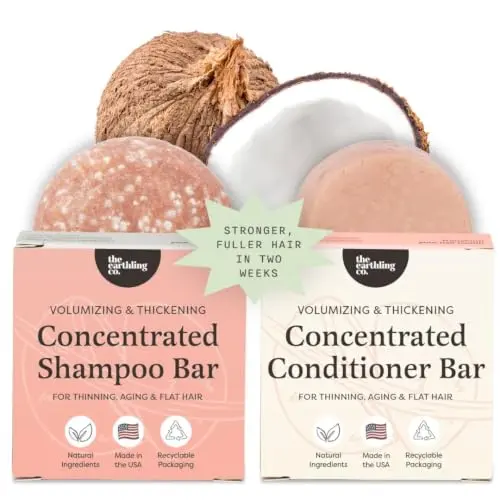
Volumizing Shampoo & Conditioner Bar Set – Volume Without Weight
The Earthling Co. built this pair specifically for thin, flat, and fine hair, and it’s the rare bar set where the conditioner doesn’t undo the shampoo’s work. The shampoo carries glycerin and pro vitamin B5 for lightweight hydration, while the conditioner leans on coconut oil and cocoa butter in a formula meant to detangle without coating. Both bars are pH balanced and dermatologist approved for sensitive skin.
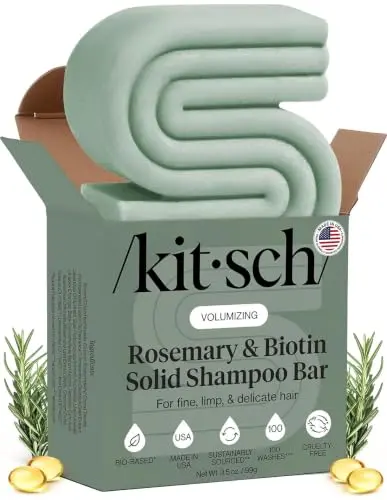
Rosemary & Biotin Shampoo Bar – Big Lather, Real Root Lift
Kitsch’s rosemary and biotin bar is the volume play for fine, delicate strands. Rosemary extract, biotin, and amaranth protein do the lifting, while an antioxidant peptide blend is aimed at breakage and split ends. It’s pH balanced, free of sulfates, parabens, silicones, and phthalates, and safe for color-treated hair – a useful combination if you’re growing out thin, fragile lengths.
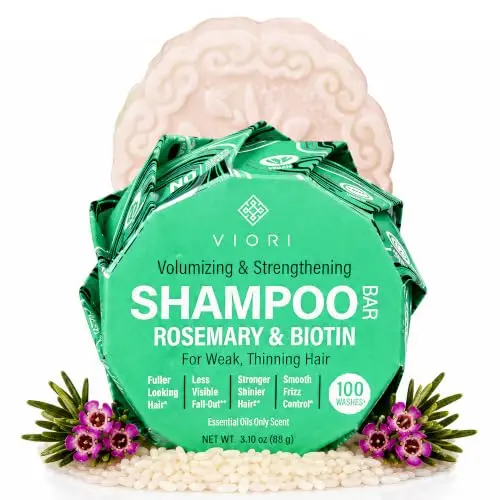
Rosemary Biotin Shampoo Bar – Rice Water for Thinning Hair
Viori’s rosemary biotin bar is built around Longsheng rice water – the same ritually prepared rice water the Red Yao have used for centuries – paired with rosemary, biotin, jojoba esters, and PQ10. The result leans toward scalp care and strand strength rather than aggressive clarifying, which suits thin hair that’s also brittle or color treated.
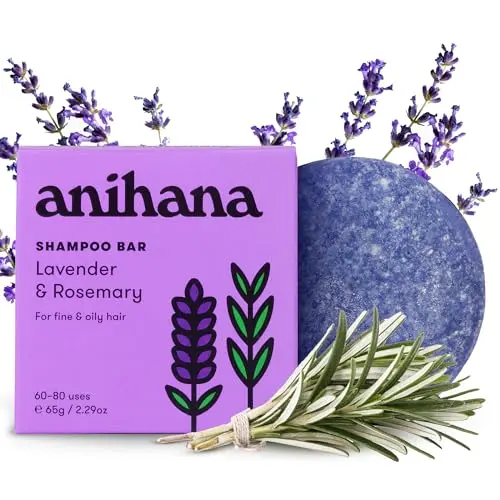
Thin, Fine & Oily Hair Shampoo Bar – Lightweight Root Volume
Anihana’s bar is one of the few built explicitly for thin, fine, and oily hair together – the combination that’s hardest to shop for. The formula is deliberately lightweight to avoid residue, scented with lavender and rosemary, and free of SLS/SLES, parabens, phthalates, and silicones. The packaging is home compostable.

Biotin & Rosemary Shampoo Bar – Affordable Root Lift
Arista’s biotin and rosemary bar goes after flat roots with a straightforward brief: lift, cleanse, don’t weigh down. Biotin and caffeine are there to wake up the scalp, the lather is creamy, and the formula skips sulfates, silicones, and parabens. It’s vegan, plastic-free, and the most affordable bar in this lineup.
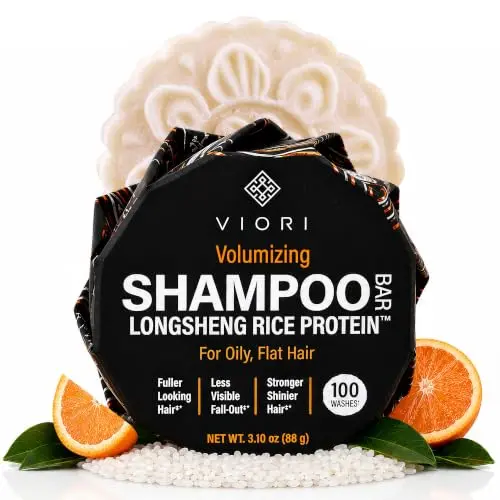
Clarifying Shampoo Bar – Citrus Yao Oil Reset
This is Viori’s oil-control bar: a sulfate-free, pH-balanced clarifying formula aimed at excess sebum and product buildup at the root. Longsheng rice water keeps it from over-stripping, and the citrus-grapefruit scent is bright rather than sweet. It’s the pick for thin hair where grease, not dryness, is the enemy.
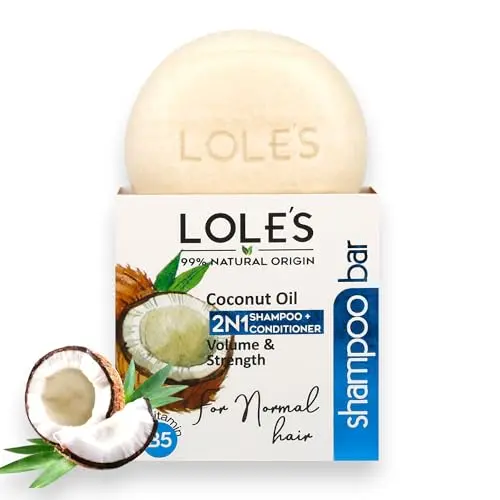
2-in-1 Shampoo & Conditioner Bar – Coconut Oil All-Rounder
Lole’s takes the simplest route: one bar that shampoos and conditions, built on coconut oil with 99% natural-origin ingredients and no preservatives, silicones, soap, or dyes. It’s the most travel-friendly option here and the easiest for anyone who doesn’t want a two-step routine.
How We Evaluated These Shampoo Bars for Thin Hair
We did not run a multi-week wash trial on a panel of volunteers, and we didn’t measure strand thickness under a microscope. What we did: cross-referenced 7 shampoo bar formulas from 6 brands across 5 decision dimensions – surfactant base and cleansing strength, residue and film-forming ingredients, root-support actives like rosemary, biotin, caffeine, and rice water, scalp compatibility and pH positioning, and format behavior including lather, bar hardness, and travel storage. We triangulated published ingredient and specification data, manufacturer formulation claims, and owner feedback where available, then mapped each bar against the buyer it actually suits.
The scoring framework weighted real-world fit for thin hair (70%) – how well a bar lifts fine strands without weighing them down, and how it behaves on an oily versus a dry scalp – against feature differentiation (30%), meaning the ingredients and format choices that separate one bar from the next. We have no commercial relationship with any of the brands featured; recommendations track fit and differentiation, not brand preference.
One thing worth saying plainly: the bar format does not create volume. Weight, residue, and oil control do. A bar that lathers beautifully but leaves a film is worse for thin hair than a plain one that rinses clean. If you want the most complete answer, the Earthling Co. Volumizing set covers shampoo and conditioner without weight; if your scalp runs oily, the Anihana bar is tuned to that instead.
How to Choose the Right Shampoo Bar for Thin Hair
1. Why Thin Hair Needs a Different Shampoo Bar
Fine hair has more surface area relative to its mass than coarse hair, which means anything that coats the strand shows up faster and reads as flatness rather than softness. The same rich, buttery bar that makes thick hair feel luxurious can leave thin hair looking stringy and limp by early afternoon.
The second half of the problem is oil. Thin hair tends to show sebum sooner, especially at the crown, so a good bar has to cleanse well without over-stripping – a balancing act between clarifying power and residue. Treat the word volumizing on a label as a claim to verify, not a feature. Look at what the bar leaves behind.
2. Which Ingredients Actually Add Volume in a Shampoo Bar for Thin Hair
Most volume claims rest on a small set of actives: rosemary extract, biotin, caffeine, and rice water, sometimes paired with amaranth protein or marshmallow root for strand strength. These are reasonable scalp-and-strand ingredients and they aren’t drugs. Rosemary and caffeine leave the scalp feeling stimulated; biotin and proteins target the look of thickness and breakage resistance. None of them will change your hair density, and any bar implying otherwise is overselling.
What actually creates the volume you feel is a clean, film-free root. A bar with a tight surfactant base and no heavy butters will do more for lift than a mediocre formula with a long rosemary label. If you want the most ingredient-forward volume play here, the Kitsch Rosemary & Biotin bar stacks rosemary, biotin, and amaranth protein in one formula.
3. Residue, Transition Periods, and the Oily-Root Problem
If you’re switching from liquid to a bar, expect a week or two of adjustment. Bars often cleanse differently, and hair used to silicone smoothing can feel rougher or more textured before it settles. That’s usually the coating coming off rather than damage – but if your scalp itches or flakes, stop and reassess.
Storage matters more than people expect. A bar left sitting in water softens, cracks, and dissolves early, and a wet bar transfers residue back onto your roots. A draining dish kept away from the shower stream fixes most of it. If oil control is your main problem, the Viori Citrus Yao bar is the clarifying option in this lineup; if your scalp is dry or reactive, a gentler bar plus a separate conditioner will serve you better.
4. How to Choose a Shampoo Bar for Thin Hair When Your Scalp Is Sensitive
Thin hair often comes with a reactive scalp, and solid bars concentrate their ingredients by design. Favor pH-balanced formulas, look for sulfate-free or gentle surfactant systems, and be honest about fragrance – a strong scent is fine if you don’t react, and a problem if you do. A dermatologist-approved or sensitive-skin positioning is worth paying attention to, though it isn’t a guarantee for every scalp.
One nuance worth knowing: SLS-free doesn’t automatically mean gentler, and naturally derived surfactants can still be effective cleansers. Judge a bar by how your scalp feels an hour after washing, not by the front label.
5. What Shampoo Bars Cost at Each Tier
Bar pricing splits into rough tiers rather than a smooth curve. The entry tier covers single compact bars, often the most affordable way to find out whether the format suits your hair at all – the Arista biotin and rosemary bar sits here and is a sensible first purchase even if you’re skeptical. Mid-range single bars buy better surfactants, more considered fragrance, and ingredient stories like rice water or peptide blends. Premium money goes to sets: shampoo plus a matching conditioner bar, usually with dermatologist review and a larger format. A set is worth it when the conditioner is genuinely lightweight, and a waste when it’s just a moisturizing bar repackaged.
6. Format Tradeoffs: Lather, Bar Hardness, Storage, and Travel
Solid shampoo behaves differently in the shower. Lather builds slower than bottled gel until you adapt, and lather expectations are the biggest reason people give up on bars in week one. Dense, hard bars last longer but can be slow to load onto thin hair; softer bars foam generously and wear down faster.
Travel is where the format wins outright – no liquids, no leaks, no decanting. Pair the bar with a vented travel tin, keep it out of standing water, and it will comfortably outlast a bottle of similar size.
Frequently Asked Questions
1. Do shampoo bars actually help thin hair, or is it just marketing?
The format itself does nothing for volume – the formula does. A well-made bar cleans the root thoroughly and rinses without film, and that’s what lets fine hair hold its shape past mid-morning. The marketing part is the implication that rosemary or biotin will change your hair density. Those ingredients support scalp condition and how strands feel, and that’s the honest ceiling.
Where bars genuinely beat bottles for thin hair is portion control. You apply less product per wash than you’d pour from a bottle, so there’s far less chance of conditioner residue sitting on the root. If you’ve been over-conditioning fine hair, a bar is an easy reset.
2. What's the difference between the Earthling Co. Volumizing set and the Kitsch Rosemary & Biotin bar?
They solve different halves of the problem. The Earthling Co. Volumizing set is a two-bar system: the shampoo lifts and cleans, then a genuinely lightweight conditioner bar handles tangles without flattening what you just built. It’s pH balanced and dermatologist approved, and it’s the better call if your thin hair tangles easily or your scalp is sensitive.
Kitsch is the single-bar, maximum-lather option. It stacks rosemary, biotin, and amaranth protein for root lift and is color-safe, but you’ll still want a separate conditioner for the ends. Choose it if simplicity matters more than a matched pair.
3. Viori Rosemary Biotin vs Kitsch Rosemary & Biotin: which suits thinning hair better?
Both are rosemary-and-biotin bars, and the difference is the base. Viori builds on Longsheng rice water, jojoba esters, and PQ10, which makes it the gentler of the two – better for thin hair that’s dry, brittle, or color treated, and for anyone whose scalp tightens under strong cleansers. Kitsch is the more lift-forward formula, with a creamier lather and more visible root volume on fine hair that leans oily.
If your ends are fragile, go Viori. If the problem is flatness, go Kitsch.
4. Will a shampoo bar make thin hair greasy or dry it out?
Both are possible, and the ingredient list tells you which way a bar leans. Formulas built on coconut oil, cocoa butter, or heavy butters can leave fine hair coated and limp within a day. Clarifying formulas built for oily scalps, like Viori Citrus Yao, strip more aggressively and can leave the ends dry and rough if you skip conditioner.
The practical fix is to match the bar to your scalp, not your ends, then condition the lengths separately. Thin hair with an oily scalp and dry ends is the most common combination, and it’s the one that most rewards a two-step routine.
5. How long does a shampoo bar last, and how should I store it?
Longevity depends on bar size, hardness, and how wet it gets. Most brands claim a single bar replaces multiple bottles of liquid shampoo, and that holds up reasonably well in practice – but a bar left in the shower spray can dissolve in a matter of weeks. Keep it on a draining dish, let it dry between uses, and it’ll go considerably further.
For travel, a vented tin beats a sealed case, since trapped moisture softens the bar. If a bar cracks or crumbles early, it’s usually a moisture problem rather than a bad batch.
Final Verdict
For most people with thin hair, the Earthling Co. Volumizing set is the answer. It’s the only pick here that handles volume and detangling at the same time – a lightweight conditioner bar is what keeps fine strands from turning into a tangle the moment they’re clean, and the pH-balanced formula won’t aggravate a sensitive scalp.
If you’d rather keep it to one bar, the Kitsch Rosemary & Biotin bar gives you the best lather and the most visible root lift for the least fuss. Oily scalps should go straight to Anihana, built for the flat-by-noon crowd, and anyone shopping carefully can start with Arista to see whether the format works for them at all.
