
Best Shoe Racks For Garage – 2026 Reviews

There’s a specific kind of chaos only a garage can produce. Six pairs of shoes fanned out by the door, work boots tipped over on the step, a pile of kids’ sneakers nobody claims. Indoors, a shoe rack is a convenience. In the garage, it’s the difference between a room you can park in and a room you can’t walk through.
Garages are harder on storage than closets are. The slab slopes toward the door, the air swings between humid and bone-dry, grit gets tracked in daily, and whatever you buy has to survive all of that while holding more pairs than a closet ever would. That narrows the field fast. Two things separate the racks worth buying from the ones that end up at the curb: stability on an imperfect concrete floor, and enough usable capacity to justify the wall space.
We compared the major options across brands and organized them by how they actually fit a garage – tall towers for narrow corners, wide low units for long walls, expandable frames for the awkward 20-inch gap you forgot you had. No single brand owns this category, and the right pick has more to do with your wall than with a logo.
Best Shoe Racks for Garage – 2026 Reviews
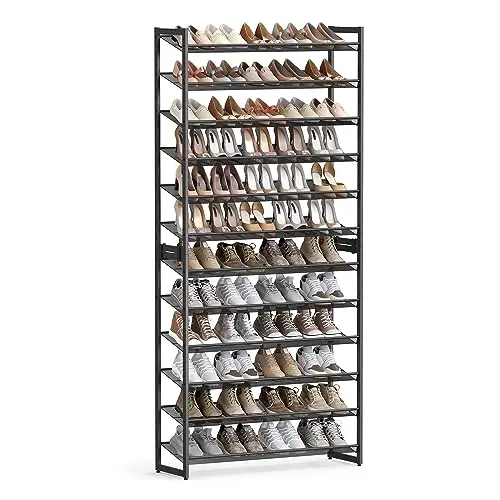
ULMR12B 12-Tier Organizer – Garage-Scale Storage That Splits in Two
A 12-tier steel tower that breaks down into two independent six-tier racks, which makes it the most flexible high-capacity option here for a garage wall. Dense mesh shelves, 7.3 inches of clearance between tiers, and shelves that can be set flat or angled.

Large 6-Tier Metal Organizer – Wide, Heavy-Duty, Boot-Friendly
A wide, low six-tier steel rack built around 42 pairs and a 43-inch footprint. The 6.5-inch tier spacing and removable shelves make room for boots and work shoes, and the frame stays under 38 inches tall so it tucks beneath shelving or a window.
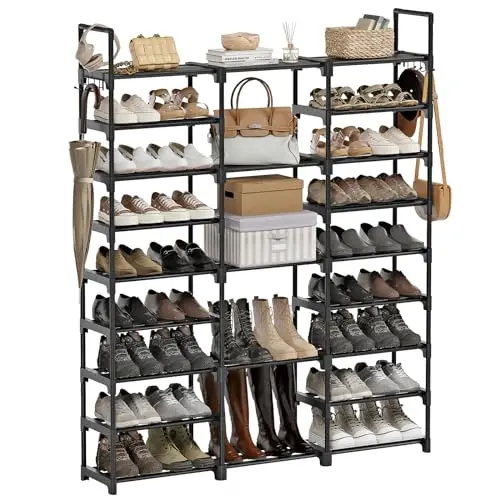
9-Tier 3-Column Rack – 50-Pair Capacity on a Tight Budget
Three columns, nine tiers, and room for 50-plus pairs from a footprint barely a foot deep. The removable shelves and split-apart design let you break one tall rack into several shorter ones for different corners of the garage.
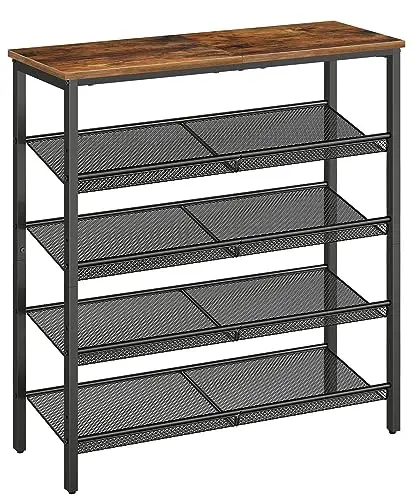
BF12XJ01 5-Tier Shelf – Wood Top Meets Tilting Mesh Shelves
A five-tier rack with mesh shelves that tilt or sit level, plus a solid engineered-wood top that doubles as a drop zone for keys, bags, and whatever else lands by the garage door.
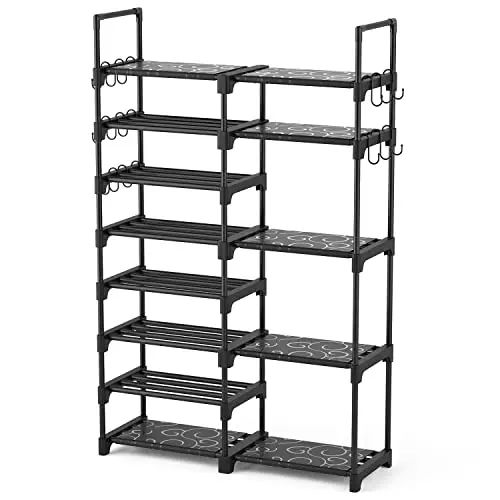
SS-XJ-012 8-Tier Rack – Hooks, Liners, and Split-Apart Versatility
An eight-tier metal rack rated for 26 to 32 pairs, with fifteen side hooks, dust-blocking shelf liners, and a frame that splits into two or more shorter units. Boots and high heels both fit thanks to the taller tier spacing.
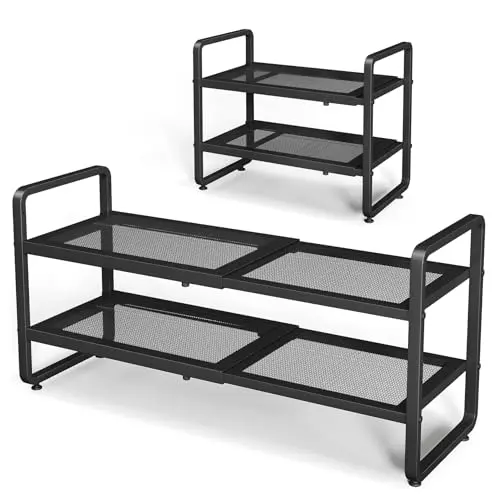
SN-NM-SR-BK Expandable Rack – Grows From Narrow to Wide
A two-tier metal rack that stretches from roughly 19 inches to 30 inches wide, adjusts in height for boots, and stacks with additional units to build four, six, or ten tiers over time.

BO-26B-K 3-Tier Grid Rack – The Stackable Building Block
A snap-together three-tier grid rack that holds nine pairs plus a bottom row for slippers and sandals. Units stack and connect, so you can build a storage wall one block at a time.
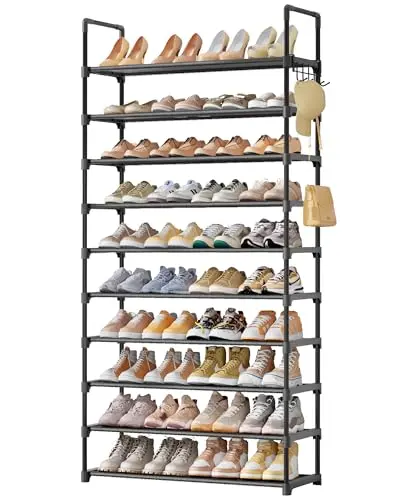
AU032 10-Tier Rack – Tall, Light, and Quick to Assemble
A tall, narrow ten-tier organizer with non-woven fabric shelves and a side hook rack, designed to fit into corners and doorways where a wide rack won’t go.
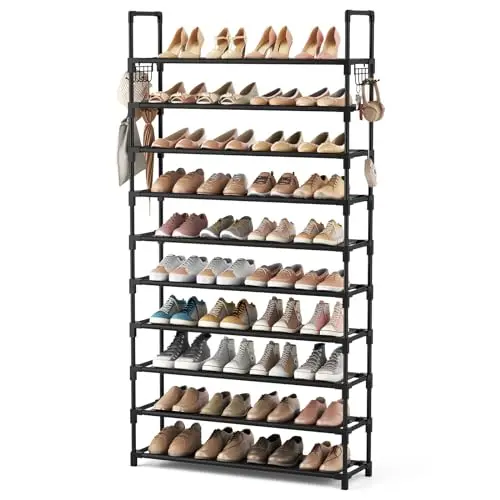
XJ-112 10-Tier Rack – Big Capacity, Low Entry Cost
A ten-tier rack with ten side hooks, fabric shelf layers over a metal tube frame, and a design that splits into two five-tier units. One of the lowest-cost ways to add serious pair capacity.
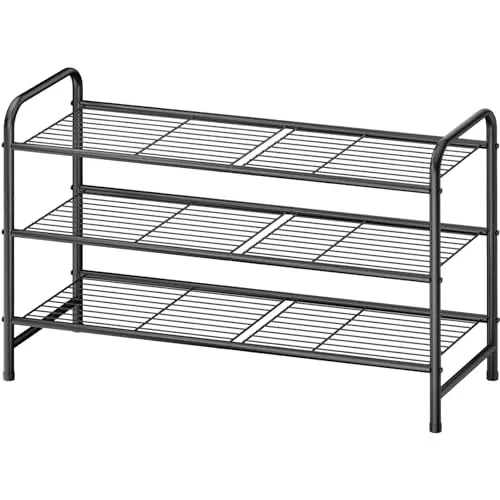
AU4012 3-Tier Rack – Compact Starter Shelf
A compact three-tier steel rack for closets and small garage corners, with snap-buckle assembly, detachable layers for boots, and stacking capability for growing collections.
How We Evaluated These Shoe Racks for Garage Use
A few things we can’t tell you: how a rack’s plastic connectors hold up after two humid summers in an unheated garage, or whether a shelf bows under a winter of wet work boots. What we can tell you is how 10 shoe rack models from 9 brands stack up across six decision axes – stated pair capacity, shelf spacing and adjustability, load rating per shelf, footprint and split-ability, frame and shelf materials, and assembly complexity.
We cross-referenced published specifications, audited each feature set for the details that actually matter on a garage floor – adjustable feet, anti-tip hardware, rust-resistant finishes, shelf depth – and weighed owner feedback where available against the way garages really get used: dusty, temperature-swinging, and chronically short of floor space. Pairs per square foot of wall got as much attention as raw capacity, because a rack that holds 60 pairs and blocks the car door isn’t solving anything.
The scoring framework weighted real-world fit for a garage (70%) – capacity per square foot, stability on concrete, and how well each rack handles tall boots – against feature differentiation (30%), meaning the modular, adjustable, and hardware details that separate one steel frame from another. We have no commercial relationship with any brand featured here; recommendations track fit and differentiation, not brand preference. If you’re outfitting a full wall, the ULMR12B is the straightforward match. If you need a wide, low unit that slides under existing shelving, the KEETDY 6-tier fits that bill.
How to Choose the Right Shoe Rack for Your Garage
1. How Many Pairs Should a Garage Shoe Rack Actually Hold?
Start with a real count, not a wish list. Walk through the house and tally the pairs that genuinely live near the garage door – the sneakers, work boots, yard shoes, and kids’ castoffs. That number, not the advertised maximum, is your target.
Published capacity is optimistic. A rack rated for 50 pairs is usually counting women’s flats and sandals; swap in men’s size 12 sneakers or a row of work boots and the realistic count drops by a third. Aim for a rack claiming roughly 25 to 30 percent more than your tally, and leave one tier of slack for guest shoes and seasonal swaps. Then check depth: a 10 to 12 inch shelf handles most footwear, and anything shallower leaves larger boots hanging over the front edge.
2. Why Stability Matters More in a Garage Shoe Rack Than in a Closet
A closet floor is flat and protected. A garage slab slopes toward the door, collects grit, and gets walked into by people carrying things. That combination tips more tall racks than any other single factor.
Look for adjustable feet that can take up half an inch of slope, an anti-tip kit or at minimum a wall-anchor point, and a per-shelf load rating you can actually use – 20 to 30 pounds covers everyday footwear, while anything under about 15 pounds is a sneakers-only proposition. Tube diameter and connector quality matter more than tier count; a nine-tier rack with loose push-fit joints is less stable than a five-tier frame with tight ones. If children or pets share the space, anchor tall racks to the wall regardless of what the box says.
3. Boot Storage: Getting the Shelf Spacing Right in a Garage
Garages collect the footwear that closets reject – work boots, snow boots, muddy trainers. Tier spacing decides whether those fit. Look for at least 6.5 inches between shelves for high-tops and heels, plus a design that lets you remove or reposition a tier when a permanent boot bay is needed.
Shelf surface matters here too. Dense mesh or solid panels keep a boot heel from dropping through; wide-open wire grids don’t. If your household runs on boots, an approach like the HOOBRO BF12XJ01 – removable mesh shelves plus a solid top for a boot tray and keys – beats a fixed-height tower.
4. Narrow Garage Gaps: Shoe Rack Layouts for Awkward Walls
Not every garage has eight clean feet of wall. Between the water heater, the door track, and the recycling bins, you often end up with a 20-inch slot and a decision to make.
Expandable frames are the answer for those slots – they slide to fit a measured gap instead of forcing you to find a gap that fits them. The SNTD expandable rack covers roughly 19 to 30 inches and stacks with additional units when you want more height later. For longer walls, split-frame designs let you run a tall tower in one corner and a shorter unit by the door from a single purchase. Measure wall space, ceiling height, and door swing before buying, and remember that vertical racks save floor space while wide, low racks keep every pair reachable but consume wall you may not have.
5. Metal, Mesh, or Fabric Shelves for Garage Shoe Storage?
Every rack here is steel-framed, but the shelf surface changes how it lives in a garage. Powder-coated steel mesh is the most garage-appropriate: it wipes clean, resists rust, and lets air move around damp shoes. Non-woven fabric tiers are softer on footwear and block dust from falling through, but they’re the first thing to tear when overloaded. Wired grid panels are cheap, sturdy, and easy to hose down, though heels can tip through the gaps.
Engineered wood tops add a genuinely useful flat surface but don’t belong in a humid corner. Whatever you pick, plan on wiping the rack down once a season; grit caught between shelf and shoe is what eats finishes.
6. What to Spend on a Shoe Rack for Garage Storage
The market splits into three rough tiers, and the differences are mostly materials and hardware rather than capacity. Entry-level racks – steel tubes, plastic connectors, and non-woven or thin metal shelves – get you the most pairs per dollar, and for a garage that’s often the right trade; just expect to re-seat connectors and keep loads light. The WOWLIVE 9-tier rack is the strongest example of that tier in our lineup.
Mid-range options add denser mesh, adjustable feet, anti-tip hardware, and better connectors, which is where most garages land. Premium picks buy real rigidity, split-frame flexibility, and finishes that survive a decade of winters. Spending more doesn’t buy more space – it buys stability and adjustability. If your rack sits against a wall and never moves, that premium is optional.
Frequently Asked Questions
1. What's the difference between the SONGMICS ULMR12B and the KEETDY 6-tier shoe rack?
Shape, mostly. The ULMR12B goes up: 12 tiers on a frame just under seven-and-a-half feet tall, published for roughly 60 pairs of women’s shoes or 48 men’s, and split-able into two six-tier racks. It brings 7.3 inches of tier clearance and an anti-tip kit. The KEETDY 6-tier goes wide instead – 43 inches across, under 38 inches tall, about 42 pairs, with 6.5-inch spacing and removable shelves.
Pick the SONGMICS when you have ceiling height and want maximum pairs per foot of wall. Pick the KEETDY when your garage wall is long but your clearance is limited – under shelving, under a window, or beneath a wall cabinet. Both are metal-framed and both require assembly.
2. Does a garage need a different shoe rack than a closet?
Usually, yes. A closet is dry and flat; a garage brings dust, humidity swings, and a slab that slopes toward the door. That pushes three features up your list: adjustable feet to compensate for slope, a rust-resistant finish on the frame, and shelf materials that wipe clean instead of absorbing moisture.
Boot storage matters more here too, since the garage is where work boots and yard shoes live. Look for removable or repositionable tiers and at least 6.5 inches of clearance. And if the rack sits anywhere near a traffic path or a car door, anchor it to the wall.
3. WOWLIVE 9-tier vs. VTRIN 10-tier: which budget garage rack holds more?
Both are tall, split-able racks in the entry-level tier, and both are about getting a lot of pairs off the floor cheaply. The WOWLIVE uses three columns on 13mm powder-coated steel tubes, with removable shelves and a build that breaks into several shorter racks. The VTRIN runs ten full-width tiers of non-woven fabric over a tube-and-connector frame, adds ten side hooks, and splits into two five-tier units.
WOWLIVE looks sturdier on paper thanks to the thicker tube spec and three-column bracing. VTRIN wins on hook count and tier count but asks you to keep loads light. Either way, seat every connector fully and re-check them after the first full load.
4. Will a metal shoe rack rust in a garage?
It depends on the finish more than the metal. The racks here specify powder-coated, lacquered, or otherwise treated steel, which handles normal garage humidity fine. The real failure mode is standing water – a rack sitting directly against a damp floor, or a puddle under a dripping door seal.
Keep the frame off wet concrete where you can, wipe down spills promptly, and avoid stacking soaked boots on the top tier. If your garage floods seasonally, choose mesh or wire shelves over fabric, since fabric traps moisture against the metal tubes.
5. How many pairs of shoes will realistically fit on a 10-tier shoe rack?
Fewer than the box claims. A ten-tier rack is usually rated at four pairs per tier, which assumes women’s flats and low-profile sneakers. Swap in men’s size 11 sneakers or a row of work boots and the realistic count drops by a third or more.
Tier spacing compounds it: the narrower the gap, the more pairs fit, but the fewer boots you can store. The Kitsure AU032 10-tier rack is a fair illustration – tall, narrow, genuinely useful for everyday shoes, but it wants light loads. If boots are a big part of your household, give up a couple of tiers for removable shelves and taller bays instead.
Final Verdict
For most garages, the SONGMICS ULMR12B is the answer. It carries the most pairs, splits into two separate racks when your layout changes, and ships with the adjustable feet and anti-tip hardware a sloped concrete floor demands.
If budget is the deciding factor, the WOWLIVE 9-tier gets you 50-plus pairs on sturdy steel tubes for an entry-level outlay – just re-seat the connectors after loading. If your wall is wide and your ceiling is low, the KEETDY 6-tier is the smarter shape. And if your only free space is a narrow gap between the water heater and the door, the expandable SNTD rack was built for exactly that. Start with capacity and floor plan, and the right rack picks itself.
