
Best Shower Head Combos – 2026 Reviews

There’s a particular kind of disappointment that comes from a hotel shower you don’t want to leave, followed by going home to a fixed head that lands in one lukewarm column. The usual fix is a combo: a rainfall head overhead and a detachable wand on the same arm. It’s one of the highest-return bathroom changes you can make, and it takes about ten minutes with no plumber involved.
The trouble is that most combos look identical in photos. Chrome, two heads, a hose, a knob. What separates a good one from a frustrating one shows up six months in, and it usually comes down to two things: whether the diverter is easy to reach and switches cleanly, and how the handheld stows. A wand that fights its cradle every time you reach for it will make you stop reaching for it.
Coverage and flow rate are the other axes worth understanding before you buy. A 12-inch panel on a weak supply feels worse than a 7-inch head with real pressure behind it, and a filtered combo solves an entirely different problem than a magnetic dock does. Below, we’ve sorted the current market by what each combo is actually good at, across the brands that dominate the category, so you can match the pick to your bathroom rather than to a spec sheet.
Best Shower Head Combos – 2026 Reviews
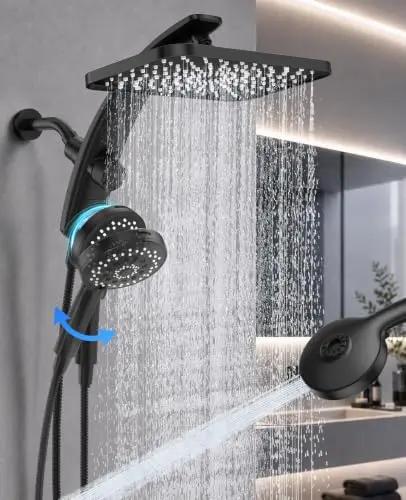
SHC3V402 Dual Rain Combo – 12-Inch Coverage, Magnetic Handheld
Veken’s 12-inch rainfall head and magnetic handheld cover both ends of the combo spectrum: a genuinely large rain panel for full-body coverage, and a detachable wand that snaps back into place one-handed. The front-facing 3-way diverter switches between rain, handheld, and both without a reach behind the fixture.

26009 Engage Magnetix – Docking Done Right
Moen’s take pairs a 6-3/4-inch rainshower with a six-setting handshower on a magnetic dock, using metal and nickel in the build rather than all-plastic parts. It’s the most refined-feeling combo in this lineup and the one with the longest track record behind its docking design.
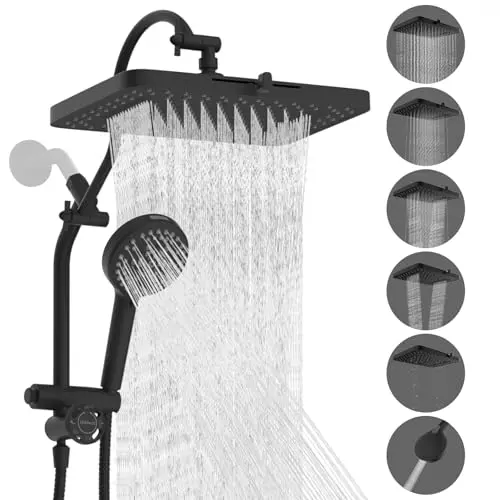
4-Way Diverter Rain Combo – 13-Inch Reach, cUPC Certified
Hibbent goes bigger on coverage and smarter on the arm: a 13-inch rainfall head, a 10-function handheld, and an all-metal 4-way diverter arm that lowers the controls to a reachable height and holds its angle without drooping.
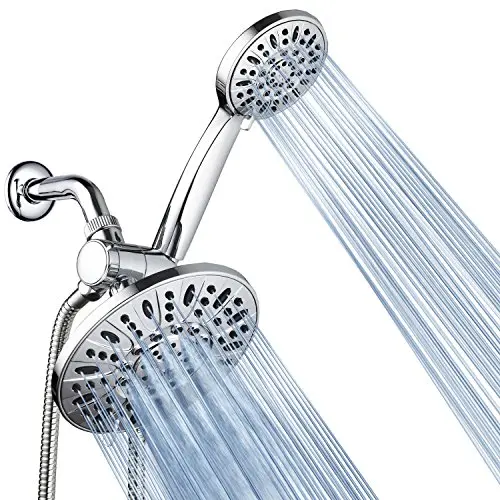
3328 Rainfall Combo – The Budget Benchmark
The 3328 is the longest-running combo design in this lineup: a 7-inch six-setting rain head, a 4-inch six-setting handheld, and a patented 3-way diverter that lets you run either head independently or both at once. It’s the value benchmark most other combos get measured against.
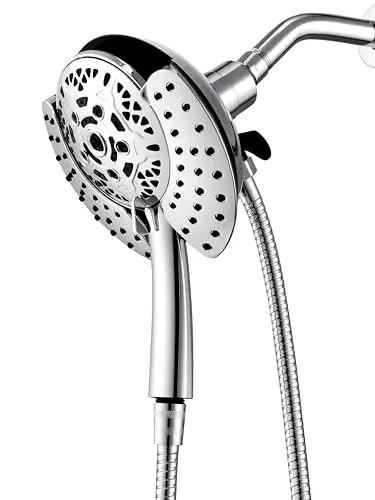
15391 Dual Rain Combo – 21 Spray Combinations
INAVAMZ builds a 7.2-inch rainfall head and a 10-setting handheld around a rotatable stainless hose and a knob that tunes mixed pressure. The headline number is 21 possible spray combinations across both heads.
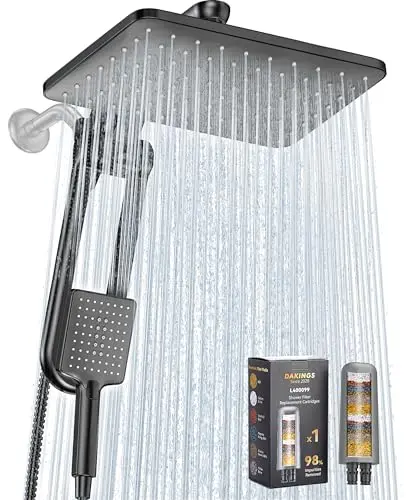
L400099MB Filtered Combo – Dual Filtration for Skin and Hair
The only filtered combo in this lineup. DAKINGS runs water through a cartridge that serves both heads, targeting chlorine and sediment for people with sensitive skin, dry hair, or hard water. The cartridge swaps out with a one-click release.

SS1740CP Dual Combo – Power Wash Built In
MakeFit pairs an 8-inch rainfall head with a 10-mode handheld, then adds a dedicated point-jet button for cleaning tasks. The mounting bar adjusts angle and height instead of relying on a telescoping arm.

XWY Rain Combo – Adjustable Height, Nine-Setting Wand
Razime’s combo centers on a 12-inch square rainfall head with a magnetic handheld and a one-piece bracket that adjusts both height and angle. Nine handheld settings, including a turbo jet.
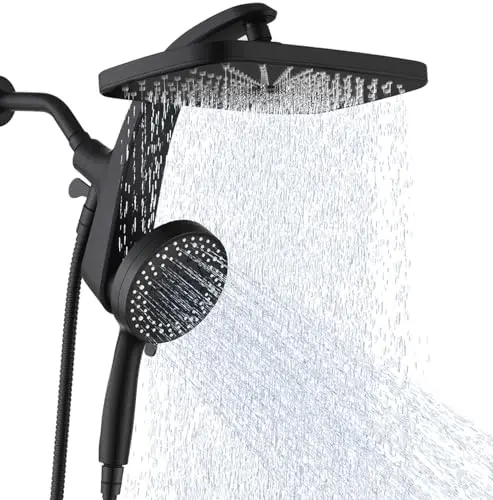
460311 Square Rain Combo – Massage Nozzles Built In
BOZYBO’s 12-inch square rainfall head and 9-setting handheld run through a patented magnetic docking bracket, with hundreds of anti-clog nozzles and four oversized massage nozzles aimed at your neck and shoulders.
How We Evaluated These Shower Head Combos
We didn’t install these combos in our own showers or live with them for a full season of daily use. What we did: cross-referenced 9 shower head combos from 9 distinct brands across six decision axes – diverter design, rainfall coverage, handheld spray breadth, docking mechanism, build material, and installation footprint. We triangulated published specifications, audited the hardware each kit actually includes, weighed owner feedback where available, and mapped every configuration against common bathroom setups, from a standard tub-and-shower alcove to a walk-in with a bench.
The scoring framework weighted real-world fit at 70% – coverage relative to price tier, diverter usability, and how well the handheld reaches where you actually need it – against feature differentiation at 30%, meaning the technical advantages one combo holds over the rest of the field. We have no commercial relationship with the brands here, and the ranking tracks fit and differentiation rather than brand preference. If you’re outfitting a family bathroom, the Veken SHC3V402 is the straightforward answer; if docking ergonomics and long-term support matter most, the Moen 26009 Engage Magnetix earns it.
We also split the lineup by the problems buyers actually bring: wanting a two-head setup on a tight budget, needing a reachable diverter for kids or older adults, and filtering hard water that’s wrecking skin and hair. What we can’t tell you is how each finish holds up after two years of scrubbing, or whether a filter cartridge still threads cleanly after a dozen swaps. Those are long-haul questions only ownership answers. Where owner feedback was thin, we graded on published specs and kept the write-up shorter rather than guessing.
How to Choose the Right Shower Head Combo
1. How the Diverter Decides What a Shower Head Combo Can Do
The diverter is the part of a shower head combo that most buyers ignore and most owners end up caring about. A 3-way diverter gives you three positions: rain head only, handheld only, or both. A 4-way diverter adds a pause mode, handy for lathering up without reaching for the main valve.
Where combos really differ is control placement. Front-facing knobs sit where your thumb naturally lands; rear-mounted switches require a reach behind the pipe, which gets awkward in a small stall. If accessibility matters – kids, shorter adults, anyone showering from a bench – look for a lowered diverter arm. The Hibbent is the clearest example here, with an all-metal arm that drops the controls to hand height.
2. Rainfall Coverage: What 7, 8, 12, and 13 Inches Actually Change
Panel size is the most visible spec and the most misunderstood. A 7-inch rain face is a sensible middle: broad enough to feel like rainfall, small enough that pressure holds up on a standard supply. Once you pass 12 inches, coverage becomes genuinely full-body – but you need adequate flow behind it or the stream turns thin and tepid.
Bigger panels also need room. A 13-inch head on a low shower arm in a shallow stall puts water where you don’t want it. Measure your arm height and stall width before sizing up. For most standard tub-and-shower setups, the Veken SHC3V402 lands at a size that reads generous without overwhelming the space.
3. Magnetic Docking vs Cradle Brackets on a Shower Head Combo
How the handheld stows is a daily-use decision, not a spec-sheet one. Magnetic docking lets the wand snap back without aiming, which is the entire point when your eyes are closed. Cradle brackets are more forgiving of a slightly different wand shape but need a bit of aim.
The catch is that magnetic systems vary wildly. Some hold firmly enough that the wand never drifts; others let it swing, or drop it outright. Moen’s Magnetix is the reference implementation, and the Moen 26009 Engage Magnetix is where to look if this is your priority.
4. Plastic vs Metal: What Shower Head Combo Build Quality Really Means
Nearly every combo at accessible prices is ABS plastic with a plated finish. That’s normal rather than scandalous, and ABS handles water fine. What you’re paying for at higher tiers is metal in the load-bearing parts: the diverter body, the connection nuts, and the hose.
Two things to check regardless of tier. First, brass connection nuts on the hose, which resist cross-threading better than plastic. Second, rub-clean silicone nozzles – in hard water they’re the difference between a shower that stays even and one that sprays sideways within a year. Note that a brushed or polished label describes the plating, not what’s underneath it.
5. Flow Rate, Spray Modes, and Why More Settings Isn't Always Better
Flow rates here run from 1.75 to 2.5 GPM. Lower flow is water-conscious and often required in restricted states, but a large rain panel at low flow can feel underwhelming. If you want both coverage and pressure, look for a pressure-mixing control that lets you tune each head separately.
Spray mode counts climb fast – six, nine, ten. What matters is whether the modes are distinct and reachable. A ten-setting handheld with a front-mounted dial is more useful than a twelve-setting one buried behind the wand. Prioritize a concentrated jet mode for cleaning and a soft mist for faces and kids over raw setting counts.
6. Shower Head Combo Sizing and Fit: Check Your Shower Arm First
Almost every combo in this category uses a standard 1/2-inch connection, so it threads onto an existing shower arm without a plumber. The real variables are height and clearance. A combo with a 17-3/4-inch docked height won’t fit under a low ceiling or above a tall tub surround.
Hose length is the other number worth checking. Somewhere between 59 to 71 inches covers most needs, and extra length matters more than you’d think for rinsing a walk-in shower floor or bathing a dog. If you rent, everything here installs and uninstalls with hand-tightened fittings – no drilling, no permanent changes.
Frequently Asked Questions
1. What's the difference between the Moen 26009 Engage Magnetix and the Veken SHC3V402?
They solve the same problem from opposite directions. The Moen 26009 Engage Magnetix prioritizes build and docking ergonomics: metal and nickel in the body, a kink-free metal hose, a proven magnetic dock, and a limited lifetime warranty, all wrapped around a 6-3/4-inch rain face.
The Veken SHC3V402 swings the other way – a 12-inch rainfall panel, an eight-mode handheld, and a front-facing diverter, with more plastic in the build and a two-year warranty. Pick Moen for longevity and feel, Veken for coverage and price tier.
2. AquaDance 3328 vs INAVAMZ 15391: which shower head combo is the better value?
The AquaDance 3328 is the simpler machine: a seven-inch rain head and a four-inch handheld, each with six settings, plus a diverter that treats the two heads independently. It backs that with a limited lifetime warranty.
The INAVAMZ 15391 is the more configurable option – a 7.2-inch rain head, a ten-setting handheld, and a pressure-mixing knob that lets you dial back the rain head while keeping the wand strong. It also carries cUPC and CEC certification, which matters in states with flow limits. Choose AquaDance for simplicity and warranty support; choose INAVAMZ if you like tuning.
3. Do shower head combos work well with low water pressure?
Better than a single oversized head does, usually. The limiting factor is how much water you’re trying to push through a large panel. A 7 to 8-inch rain face holds pressure noticeably better than a 12-inch panel on a weak supply, and a handheld usually feels stronger than the rain head regardless because it concentrates flow.
If pressure is your core complaint, two features help: a pressure-mixing control that lets you split flow between heads, and a pause mode on the diverter. The Hibbent is built around the assumption that supply is limited – its 13-inch panel is paired with a rain head that offers a concentrated massage setting for when you want force over coverage.
4. Can you install a shower head combo without a plumber?
Yes, in almost every case. These use a standard 1/2-inch connection that threads onto your existing shower arm, and the kits ship with Teflon tape, spare washers, and often a wrench. Set aside ten to twenty minutes for the first install.
The two things that trip people up are cross-threading the connection and forgetting the washer. Hand-tighten only – a wrench on the main joint usually causes more leaks than it fixes. If your current head is seized with mineral buildup, a strap wrench and a little penetrating oil save the job.
5. How long should a shower head combo last?
Longer than the feedback suggests, if you maintain it. The parts that fail first are the docking mechanism, the hose crimps, and the nozzles in hard water. Rub-clean silicone nozzles are the single biggest longevity factor on that list.
Expect the diverter cartridge to be the eventual weak point on any combo with a plastic body. Warranty coverage varies widely in this category – from a couple of years up to limited lifetime protection – and it’s worth weighing if you plan to stay in your home.
Final Verdict
For most people, the Veken SHC3V402 is the combo to buy. The 12-inch rain panel gives you coverage that actually feels like rainfall, the magnetic dock works with one hand, and the front-facing diverter means you’re not groping behind the pipe every time you want the wand. It’s the least fussy way to upgrade a standard shower.
If your budget is tighter, the AquaDance 3328 still delivers the core two-head setup with independent diverter control and a lifetime warranty. And if hard water is the real problem – dry skin, dull hair, a chlorine smell – the DAKINGS L400099MB filters flow to both heads, which almost nothing else in this category does.
Start with fit: measure your shower arm, decide how much coverage your stall can take, then pick the diverter and dock that match how you actually shower.
