
Best Silent Alarm Clocks – 2026 Reviews

There’s a specific kind of insomnia that comes from a clock rather than from stress. You’re almost under, and then: tick. Tick. Tick. The dial is barely visible, the alarm isn’t due for hours, and somehow the smallest object in the room is the loudest one. Add a partner on a different schedule, a shared dorm wall, or a toddler in the next room, and ‘silent’ stops being a nice-to-have.
Silent alarm clocks solve that in two separate ways, and knowing which one you need saves a return. The first is mechanical silence – a quartz movement with a sweep second hand that doesn’t announce every second, or a digital panel with no moving parts at all. The second is wake-method silence: a vibration pad under the pillow, a gradually brightening light, or a beep that climbs through stages instead of hitting full volume at once. Plenty of clocks handle one and fumble the other.
We mapped the market across analog, digital, vibrating, and sunrise designs, and sorted them by who each one actually suits – the light sleeper, the deep sleeper, the frequent traveler, the person sharing a room. No single design wins everything. The trick is matching the kind of quiet to the kind of sleeper.
Best Silent Alarm Clocks – 2026 Reviews
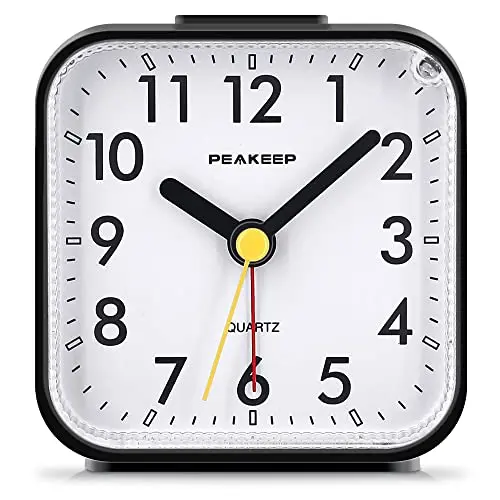
MHP-315 – Silent Quartz Travel Clock With Gentle Wake
A palm-sized battery analog clock – roughly three inches square and under four ounces – built around a silent quartz movement. It runs on a single AA battery, adds a press-to-light dial and a top-mounted snooze bar, and wakes you with a beep that climbs through four stages instead of starting at full volume.
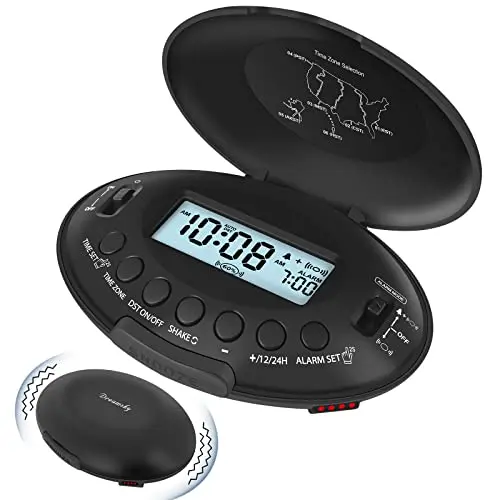
DS2202 – Vibration-Only Wake for Heavy Sleepers
A rechargeable digital clock with a detachable bed shaker that can wake you by vibration alone, with no beep at all. Five shake intensities, a nine-minute snooze, automatic daylight saving adjustment, and a backlit display you can check without hunting for a button.
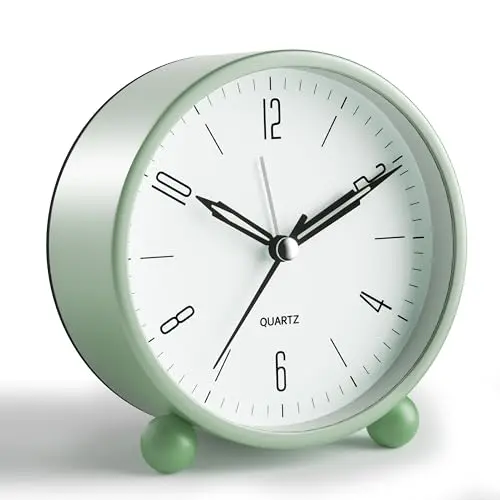
Silent Sweep Analog – 4-Inch Face, Zero Tick
A four-inch round analog clock with a sweep second hand that makes no sound at all, a full-dial night light, and one large on/off button for the alarm. Runs on a single AA battery and comes in a soft green finish that reads as decor rather than equipment.
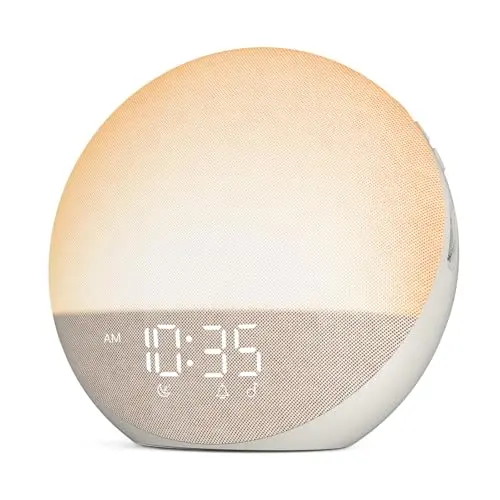
H03 – Sunrise Wake With White Noise and Bluetooth
A sunrise clock that wakes you by gradually brightening the room over a window you choose, from five minutes up to an hour before the alarm. It doubles as a white-noise machine with twenty-five sounds, a dimmable twelve-color night light, and a Bluetooth speaker for audio from your phone.
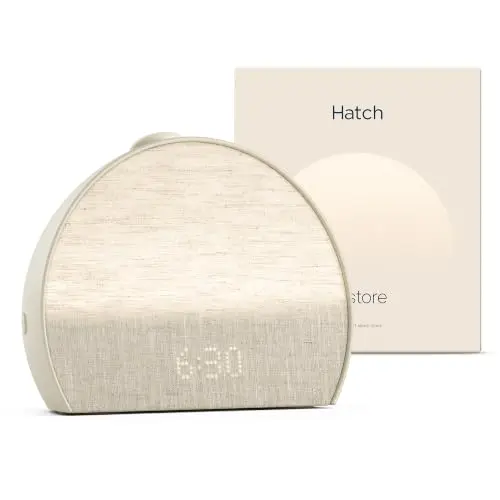
Restore 3 – Circadian Sunrise and Sleep Audio
A screen-free bedside device that pairs a sunrise light with a deep sleep-audio library and guided wind-down content, programmed through the Hatch Sleep app. It’s the most fully realized bedtime-routine product in this lineup, and the only one with a subscription layer.
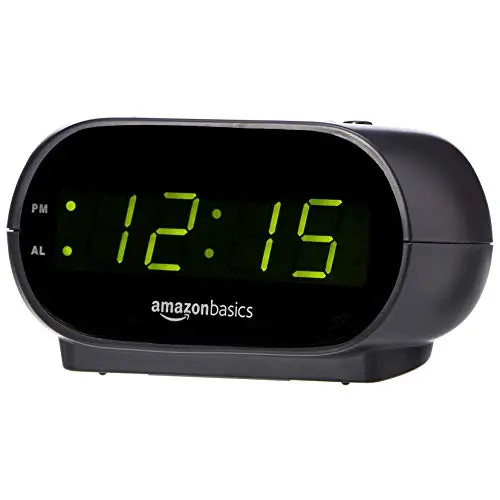
TT1001 – Compact LED Alarm With Nightlight
A small oval digital clock with a green LED readout, an integrated nightlight, and a repeating snooze. It plugs into the wall and uses a backup battery to hold time and alarm settings through short outages.
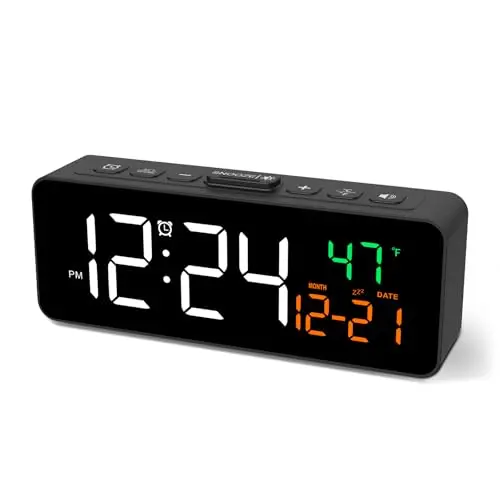
T338B – Dimmable 3-in-1 Bedside Display
A small plug-in digital clock that puts time, date, and room temperature on one panel, with four brightness levels plus an off setting and three alarm volumes. Built to sit under a TV or on a nightstand where a compact readout is all you need.
How We Evaluated These Silent Alarm Clocks
We didn’t run lab-grade decibel measurements or overnight sleep trials. What we did: cross-referenced seven alarm clock models from seven distinct brands across six decision axes – movement noise, wake method, display dimmability, power source, footprint, and how easily each clock is set and silenced in the dark. We triangulated published specifications, manufacturer feature claims, owner feedback where available, and use-case fit against realistic sleep scenarios: light sleeper, deep sleeper, shared room, frequent traveler, and hard-of-hearing household. Every pick also had to justify its place against at least one other clock in the lineup doing something meaningfully different – a deadbeat analog movement versus a vibrating puck versus a light ramp.
The scoring weighted real-world fit for silent operation (70%) – how quiet the clock genuinely is, and whether its wake method respects a sleeping partner – against feature differentiation (30%), meaning the technical choices that separate one design from another, such as vibration-only wake, sunrise ramps, and true display blackout. Where owner feedback was thin, we leaned on published specifications rather than inference. We have no commercial relationship with any brand here, and recommendations track fit and differentiation rather than brand preference. If you want a quiet bedside clock that travels, the Peakeep MHP-315 is the direct answer; if you’re waking a deep sleeper without waking the house, the DreamSky DS2202 earns its spot.
How to Choose the Right Silent Alarm Clocks
1. What Makes an Alarm Clock Actually Silent
Silence in a clock comes from two separate places, and conflating them is the fastest way to buy the wrong thing. The first is the movement – the mechanism that advances the hands or refreshes the digits. A quartz sweep movement glides the second hand continuously with no audible tick, while a stepping movement clicks once a second and is precisely the sound that keeps people awake. Digital panels have no movement noise at all.
The second is the alarm mechanism. A hammer-and-bell analog buzz is loud by design, while a small piezo beeper or a vibrating pad can start quietly and stay reasonable. Most disappointment with ‘silent’ clocks comes from buyers who fixed the first problem and never checked the second.
2. Silent Alarm Clocks vs. Standard Alarm Clocks: What Actually Changes
Compared with a conventional alarm clock, a silent model trades away almost nothing except the tick. You still get an alarm, still get snooze, still get a readable dial – the difference is a sweep or non-ticking movement, and often a graduated alarm volume instead of a fixed blast. What you do give up on some models is refinement elsewhere: brightness control, build feel, extra features.
A basic silent analog clock like the JALL Silent Sweep sits at the low end of the market and still delivers exactly the quiet you’re paying for, which is worth remembering before you spend up.
3. Wake Methods: Ascending Beeps, Vibration, and Sunrise Light
The wake method matters as much as the movement. Ascending beeps start quiet and ramp up over a minute or so, which wakes light sleepers without triggering a startle response. Vibration-only wake is the most silent option available and the only one that reliably rouses a deep sleeper without sound – it requires the shaker to be in contact with your body, usually under a pillow or quilt.
Sunrise light works by gradually brightening the room rather than making noise. It’s the gentlest option, but it’s less reliable for anyone on a tight schedule, in a bright bedroom, or sleeping through a dark winter morning. If a fully realized version of that approach is what you want, the Hatch Restore 3 layers audio routines on top of the light ramp.
4. Dial Legibility, Dimmability, and Sleeping in Real Darkness
If you share a bed or you’re sensitive to light, display dimmability is the spec that quietly decides whether a clock stays on the nightstand. Look for multiple brightness levels plus an off setting, or a press-to-illuminate dial that stays dark until you touch it. A fixed-brightness LED panel in a dark bedroom can be more disruptive than a tick.
Analog dials are naturally dark but need a light source to be readable at three in the morning, which is why on-demand backlights are the better analog compromise. Budget digital clocks often skip dimming entirely; the Netzu T338B is the exception at the entry level.
5. Power Source and Travel Practicality
Battery operation buys placement freedom and rides out outages; AC plug-in buys never thinking about batteries again but ties you to an outlet. If the clock travels – hotel rooms, dorms, guest beds – favor small analog models in the three-to-five-inch range, which weigh almost nothing and need no cable.
Rechargeable vibrating clocks sit in between: they hold charge for weeks and go in a bag, but the shaker is one more piece to keep track of. And if you rely on a plug-in digital clock as your actual alarm, insist on battery backup, because an outage without it wipes both the time and the alarm setting.
6. What Silent Alarm Clocks Cost at Each Tier
Entry-level silent clocks – simple analog, basic digital, small plug-in displays – cover the fundamentals: quiet movement, readable face, a working alarm. Mid-range money buys the details that actually matter at night: full display dimming, graduated alarm volume, sunrise ramps, and rechargeable vibration.
Premium territory is where clocks stop being clocks and become sleep systems – guided audio, app-programmed routines, layered lighting – usually with a subscription attached to the best content. Decide which of those three you’re shopping for before you compare models, because a premium sleep device and a silent bedside clock solve different problems.
Frequently Asked Questions
1. Peakeep vs. JALL: which silent analog alarm clock should you buy?
Both are battery analog clocks with non-ticking movements, so the split comes down to size and wake style. The Peakeep MHP-315 is the travel-first design – roughly three inches square – with a four-stage ascending beep, an on-demand backlight, and a top-mounted snooze bar you can find in the dark. The JALL Silent Sweep is the bigger bedside piece: a four-inch dial, a warm push-button night light, and a fixed-volume alarm that runs long enough to rouse stubborn sleepers. Go with the JALL if you want one large readable face on a nightstand; choose Peakeep for portability and gentle waking.
2. DreamSky DS2202 vs. Hatch Restore 3: which is better for deep sleepers?
They attack deep sleep from opposite directions. The DreamSky DS2202 uses physical vibration – a cordless shaker placed under the pillow or in the quilt, with five intensity levels and a vibration-only mode. That’s the more reliable wake for someone who genuinely sleeps through sound. The Hatch Restore 3 works through light and audio: a sunrise ramp, a deep sleep-sound library, and app-built routines. It’s better at building a wind-down habit and worse as a guaranteed wake-up call for a very deep sleeper. If waking is the problem, pick vibration; if bedtime is the problem, pick Hatch.
3. Are silent alarm clocks loud enough to actually wake you?
Yes, for most people – silence refers to the ticking movement, not the alarm. A silent quartz clock can still fire a beep that runs for half a minute or more, and models with ascending alarms finish just as loud as fixed ones; they simply ease you in.
Where the distinction bites is deep sleepers. If you routinely sleep through sound, a bed shaker or a sunrise light is the safer bet than any beep. Light sleepers and their partners usually want the opposite – the quietest alarm available, or vibration only.
4. Will a silent alarm clock disturb a partner?
Less than a standard clock, but not never. A non-ticking movement removes the constant background noise, which is the part that keeps light sleepers awake in the first place. The alarm itself still makes sound unless you choose vibration-only wake or a sunrise light with the sound disabled – both of which exist in this lineup.
The other partner-friendly detail is display blackout. A fully dimmable panel or a press-to-light dial keeps the room dark, and that matters as much as volume.
5. Do battery-operated silent alarm clocks keep accurate time?
Generally yes, but this is the weak spot to watch. Quartz movements are accurate by design, yet owner accounts for inexpensive analog clocks include drift and the occasional outright failure – it’s the most common long-term complaint in this category.
If exact time matters, a plug-in digital clock with battery backup is the steadier choice, and a rechargeable vibrating clock that sets itself removes manual-setting error entirely. Whatever you buy, check the time against your phone once a month.
Final Verdict
For most people, the Peakeep MHP-315 is the answer: a genuinely silent quartz movement, a wake-up that builds instead of blasting, a dial you can light up for two seconds, and a footprint small enough to travel. It’s the clock we’d hand to a light sleeper without a second thought.
If you share a bed with someone on a different schedule – or you sleep through everything – the DreamSky DS2202 and its under-pillow shaker is the more honest solution, because it wakes you without making a sound. On a tight budget, the Netzu T338B gets you a fully dimmable, silent display for very little. And if you’d rather fix bedtime than wake-up, the Hatch Restore 3 is purpose-built for exactly that.
