
Best Silk Pillowcases – 2026 Reviews

There’s a specific kind of morning where you catch yourself in the bathroom mirror and find a crease running diagonally across your cheek, plus a halo of frizz you definitely didn’t go to bed with. Cotton pillowcases do that. They grip. They pull moisture out of your hair and your night cream, and they leave the evidence on your face by seven.
Silk is the obvious fix, and the market has obligingly flooded with options that all claim to be it. The differences that actually matter come down to two things: how heavy the weave is, measured in momme, and what grade of fiber went into it. Get those right and the rest – closure style, sizing, color range, care requirements – is preference. Get them wrong and you’ve bought a slippery polyester case with a silk-grade price tag.
We compared silk pillowcases across the market to sort real mulberry silk from satin lookalikes, with an eye on how each one treats hair, skin, and a hot night. Some are built for gifting, some for dressing a whole bed, and one is genuinely worth the step up. Here’s how they stack up.
Best Silk Pillowcases – 2026 Reviews
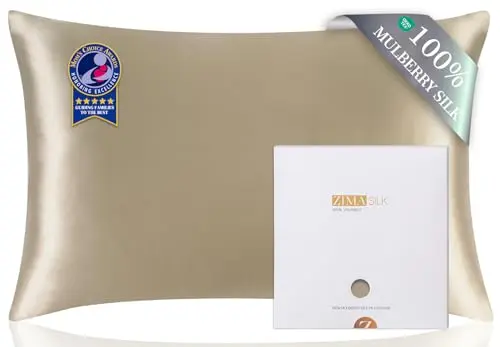
19 Momme Mulberry Silk Pillowcase – Double-Sided 6A Smoothness
ZIMASILK builds its queen case from 19 momme, grade 6A mulberry silk on both faces – no satin backing, no blend panel. The hidden zipper runs the full length, and the brand offers a wide shade range with color-lock finishing meant to survive repeated washing.
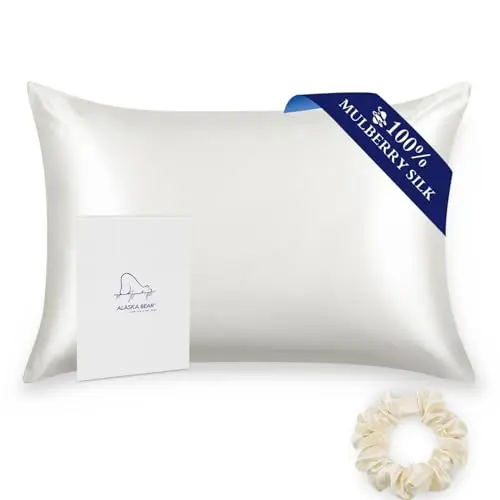
Silk Pillowcase Gift Set – 19 Momme Silk With Scrunchie
Alaska Bear’s queen case uses 19 momme grade 6A mulberry silk with interior edges stitched over and a hidden zipper closure. It ships as a small set with a matching silk scrunchie, and it carries OEKO-TEX certification for chemical safety.
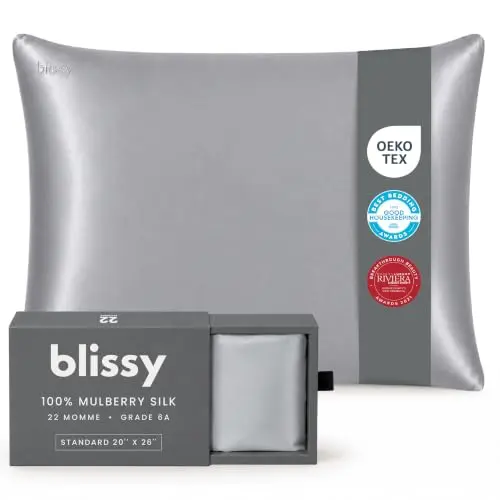
22 Momme Silk Pillowcase – Premium 6A Density
Blissy uses a heavier 22 momme weave from grade 6A long-strand fibers and backs it with OEKO-TEX Standard 100 certification. It’s machine washable in a mesh bag, arrives in a gift-ready box, and is sized to the pillow rather than the bed.
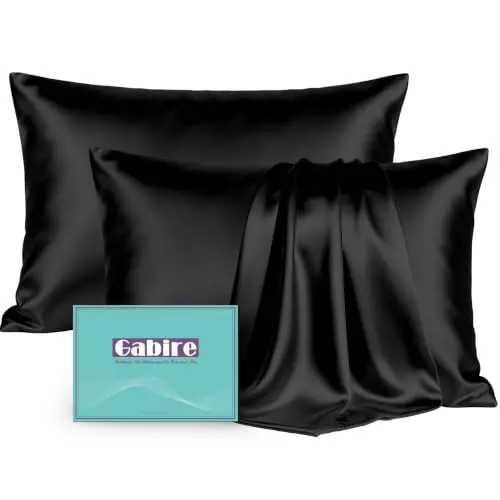
Mulberry Silk Pillowcase 2-Pack – Two-Sided Silk Pair
Gabire sells silk cases in pairs – two standard-size pillowcases, mulberry silk on both faces, with color-matched hidden zippers. The seams use a denser four-stitch-per-centimeter pattern than the three-stitch standard, and care is straightforward machine washing.
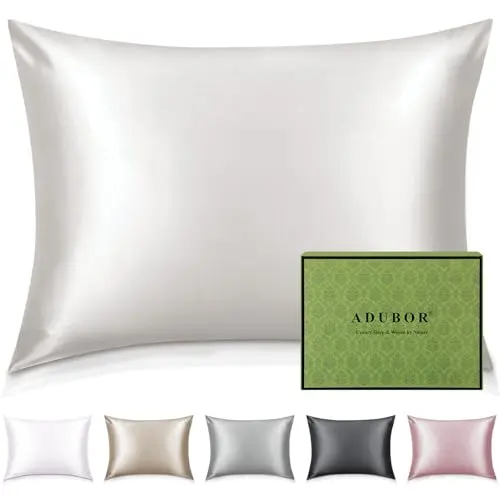
22 Momme Silk Pillowcase – Heavier Weave, Both Sides Silk
Adubor goes heavier than most at 22 momme, grade 6A mulberry silk on both faces, in a standard 20 by 26 inch cut. It has a hidden zipper, arrives in a gift box, and the brand asks for hand washing or dry cleaning.
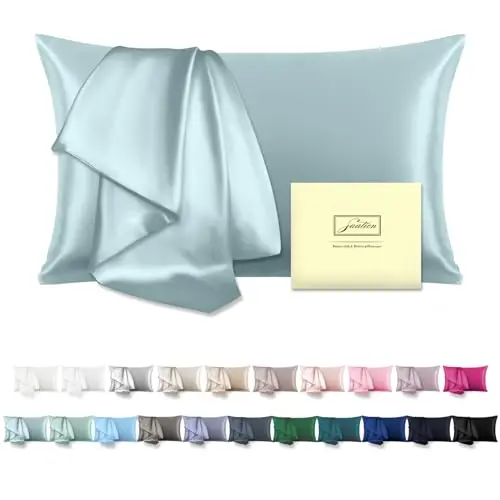
Cooling Silk Pillowcase – Entry-Level Silk Cover
Suatien’s standard 20 by 26 inch case is a straightforward silk cover with a hidden zipper, a cool hand-feel the brand leans into for hot sleepers, and both machine and hand wash guidance. It’s an entry-level option with a gift-friendly pitch.
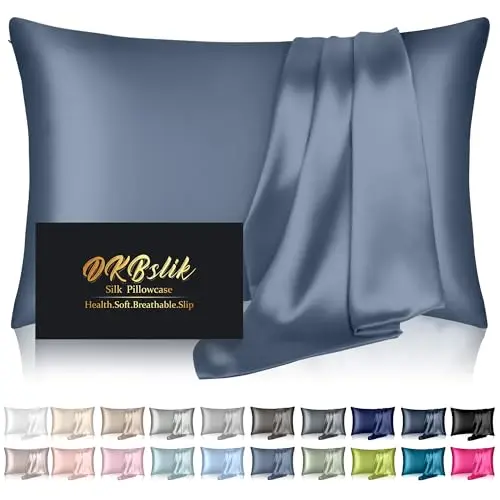
Satin-Finished Silk Pillowcase – Budget Entry Point
DKBslik’s standard case uses mulberry silk with a satin finish, a hidden zipper with a wide opening for easy pillow insertion, and a four-stitch-per-centimeter seam. It’s the most affordable way into the category and comes in a broad color selection.
How We Evaluated These Silk Pillowcases
We didn’t run wash-cycle durability testing or sleep on these cases for months at a time. What we did: cross-referenced 7 silk pillowcases from 7 distinct brands across five comparison dimensions – silk grade and momme weight, closure design, size and color availability, care requirements, and the hair-and-skin performance buyers actually shop for. We triangulated published fabric specifications, construction details, and owner feedback where available, then mapped each case against representative buyer profiles: hot sleepers, curly and color-treated hair, sensitive skin, and gift shoppers.
The scoring framework weighted real-world fit (70%) – how well a case delivers on the silk claims it makes, at the weight it advertises – against feature differentiation (30%), meaning double-sided construction, seam density, closure design, certification, and shade range. We audited momme and grade claims against each listing’s stated fabric type rather than trusting the headline. We have no commercial relationship with any brand here; recommendations track fit and differentiation, not brand preference. If you want the safest all-around pick, the ZIMASILK is it. If you’re outfitting more than one pillow, the Gabire pair makes more sense.
One thing we can’t tell you: how any of these will look after a year of nightly use and repeated washing. What we can tell you is which ones make the strongest material and construction claims, and where owner feedback suggests those claims hold up.
How to Choose the Right Silk Pillowcase
1. What Momme Weight Actually Tells You About a Silk Pillowcase
Momme is a weight measure – the mass of silk per square meter – and it’s the single most useful number on a listing. 19 momme is the category standard, and it’s genuinely fine for a pillowcase: light, breathable, drapey. 22 momme is denser and more substantial, which some sleepers prefer and others find heavier than they want against their face. Anything advertised well below that range while claiming pure mulberry silk deserves a second look.
Here’s the trap. Momme tells you weight, not grade. A 6A grade refers to fiber length and uniformity – long, unbroken strands that weave into a smoother, less pilly surface. A high momme number built from short-staple fiber will still feel rougher after a few months than a lower-momme case made from 6A strands. Check both numbers, and treat any listing that mentions only one with mild skepticism.
2. Grade 6A Silk, Satin Finishes, and Marketing Language
Silk and satin are not synonyms, though plenty of listings write them as if they were. Silk is a fiber; satin is a weave. Satin can be woven from polyester, and a good share of budget pillowcases labeled silk-satin are exactly that. The giveaway is in the hand-feel – polyester satin feels slick and faintly plasticky rather than cool and dry.
If you want real silk, look for 100% mulberry silk and a stated grade. Both-sides silk construction matters too: some cases pair a silk face with a satin or cotton backing, which is fine if you know what you’re getting but easy to miss in the photos. And third-party testing like OEKO-TEX Standard 100 is worth more than the phrase natural and chemical-free, because it’s a checkable certificate rather than a vibe.
3. Closure, Fit, and Sizing: Pillow Size vs. Bed Size
Silk cases come with three closure styles: envelope, hidden zippers, and open-end. Envelope closures are simple but let the pillow slide out; hidden zippers keep everything contained and out of sight, which is why most of the stronger options in this category use them. The practical difference shows up at two in the morning, not at checkout.
Sizing is where people get burned. A case is sized to the pillow, not the mattress – a standard case fits a 20 by 26 inch pillow, a queen case fits 20 by 30, and a king fits 20 by 36. Put a standard case on a queen pillow and you get a loose, bunchy fit that defeats the whole point. Measure the pillow itself before ordering. If you’re outfitting two pillows and want to keep it simple, the Gabire pair comes in standard sizing with color-matched zippers.
4. Wash Care Realities for Silk Pillowcases
Most silk cases are washable, but the instructions vary more than you’d expect. Some brands specify machine wash cold in a mesh bag; others insist on hand wash or dry clean only. That’s not a small difference over a year – it’s the gap between a routine load of laundry and a separate chore you’ll start avoiding.
The common ground: cold water, mild pH-neutral detergent, no bleach, no fabric softener, and air-drying flat away from direct heat. Heat is what kills silk, full stop. A hot dryer will shrink the weave and dull the sheen faster than anything else you can do to it. Wash silk apart from anything with zippers or hooks, and don’t wring it out. If a cold delicate cycle is non-negotiable for you, the Blissy is built around mesh-bag machine washing.
5. Silk Pillowcases for Curly Hair, Acne-Prone Skin, and Hot Sleepers
The hair argument is the strongest one. Silk’s smooth surface creates less friction than cotton, so curly, wavy, and color-treated hair keeps its shape and loses less moisture overnight. If you do a silk press or a blowout, the case is doing as much work as your styling routine.
For skin, the mechanism is absorbency and drag. Silk pulls less moisture and less of your night cream off your face than cotton does, and the surface lets your skin slide rather than tug, which is where sleep creases come from. Hot sleepers tend to notice the cool-to-the-touch feel immediately. If you run warm and sweat at night, a case won’t solve that on its own, but it doesn’t hold heat the way a cotton weave does.
6. How Much a Silk Pillowcase Costs, Tier by Tier
Entry-level silk cases exist, and they aren’t automatically a scam – but the corners get cut somewhere, usually in fiber grade, seam density, or both. Expect more satin-feel complaints and shorter lifespans at that tier.
The mid-range is where most buyers should land. You get 19 to 22 momme silk, double-sided construction, hidden zippers, and honest certification without paying for brand positioning. At the premium end you’re buying heavier weaves, better finishing, gift packaging, and sometimes a support guarantee. That’s a legitimate upgrade, but the returns flatten out fast – a well-made mid-range case is not dramatically worse than a premium one. Most buyers should sit in the middle, and the ZIMASILK lands right at that balance point.
Frequently Asked Questions
1. ZIMASILK vs. Alaska Bear: which silk pillowcase is the better buy?
They’re close, and the decision comes down to what you’re buying for. ZIMASILK gives you the widest shade range, a full-length hidden zipper, and a stated 180-day support window. Alaska Bear counters with OEKO-TEX certification spelled out explicitly and a silk scrunchie in the box, which makes it the more natural gift. Both are built on 19 momme grade 6A mulberry silk. If certification language matters to you, go Alaska Bear; if color choice does, go ZIMASILK.
2. Is the Blissy silk pillowcase worth the step up from a pair like Gabire?
That depends on whether you’re paying for weave density or for quantity. Blissy’s 22 momme construction is noticeably heavier than the 19 momme standard, and it carries an OEKO-TEX Standard 100 certificate. Gabire trades that density for two cases per set at a mid-range tier and adds a denser four-stitch seam. If you sleep on one pillow and want the plushest surface, the Blissy earns its premium. If you’re dressing a whole bed, the pair wins on practicality.
3. Is 19 momme or 22 momme better for a silk pillowcase?
Neither is better in the abstract – they solve different preferences. 19 momme is the pillowcase standard: light, breathable, drapey, and it’s what most of the well-regarded cases here use. 22 momme is denser and feels more substantial in hand, which some sleepers love and others find heavier than they want against their face. What matters more than the momme number is the fiber grade behind it – a 6A grade weave from long strands will feel smoother over time than a heavier weave built from short fiber.
4. Do silk pillowcases actually help with hair and skin?
The mechanism is friction and absorbency, and both are real. Silk’s smooth surface creates less drag than cotton, so hair keeps its shape and loses less moisture overnight – the effect is most noticeable on curly, wavy, and color-treated hair. On skin, silk absorbs less than cotton, so more of your night cream and serum stays where you put it, and the surface lets your face slide instead of tugging. It won’t replace a skincare routine, but as a low-effort change it’s a reasonable one.
5. How do you wash a silk pillowcase without ruining it?
Cold water, mild pH-neutral detergent, no bleach, no fabric softener, and no heat. A mesh laundry bag on a delicate cycle works for most machine-washable cases; hand-wash cases get the same treatment in a basin. Skip the dryer entirely – lay it flat to air-dry away from direct sun and radiators. Heat is what shrinks silk and dulls the sheen. Wash it apart from anything with zippers, hooks, or velcro, and don’t wring it out.
Final Verdict
For most people, the ZIMASILK is the right call. Double-sided 19 momme grade 6A silk, a full-length hidden zipper, the widest color range in this lineup, and a support window that suggests the brand expects the case to last. It’s the pick we’d hand to a friend without a caveat attached.
If you’re outfitting more than one pillow, the Gabire pair solves the cost problem without dropping to satin-backed construction. And if you want the densest weave on the market and don’t mind paying premium rates for it, the Blissy at 22 momme is purpose-built for that job. Everyone else – hot sleepers, curly hair, sensitive skin, gift shoppers – lands on one of those three. Start with the size of your actual pillow, not your mattress, and the rest sorts itself out.
