
Best Sleep Masks For Dry Eyes – 2026 Reviews

You wake up with scratchy, gritty eyes and immediately reach for drops. The room wasn’t that bright, and you went to bed early. For plenty of dry-eye sleepers, the missing piece isn’t another bottle of artificial tears; it’s a mask that helps keep the eyelids gently closed and reduces the overnight airflow that leaves eyes feeling parched.
The category splits into two broad approaches. Flat silk masks rest lightly against the lids and can support a more closed-eye sleeping posture, while contoured 3D masks use deep eye cups to keep fabric away from the lashes and reduce pressure. Both can work for dry eyes, but they solve different problems. The right pick depends on whether you want gentle eyelid contact or zero-pressure clearance.
We looked across the market rather than falling for one brand’s marketing story. The goal here is to match you with a sleep mask that fits your face, respects your skin, and supports the dry-eye comfort you actually need overnight. Light blocking matters, but it’s not the whole job.
Best Sleep Masks for Dry Eyes – 2026 Reviews
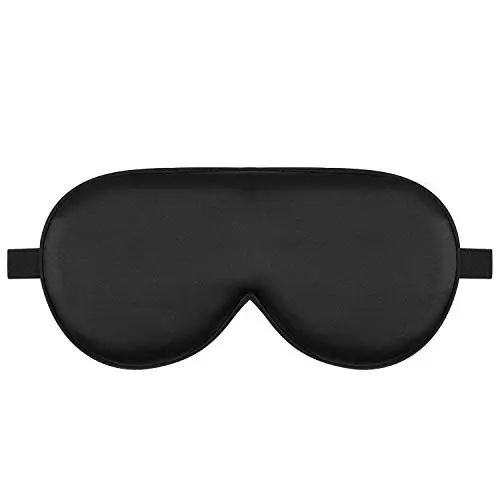
Mulberry Silk Sleep Mask – Gentle Dry-Eye Support
A flat, lightweight silk mask designed to rest gently against the eyelids rather than tent away from them. The Grade 5A mulberry silk is smooth and breathable, and the higher nose cutout helps reduce light without pressing on the bridge.
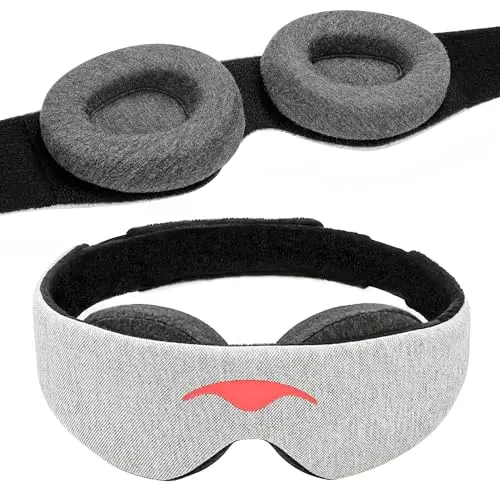
Original Sleep Mask – Adjustable Blackout with Detachable Cups
A modular blackout mask with molded eye cups that can be repositioned for your face. The cups detach, the strap adjusts infinitely, and the whole mask is machine washable.
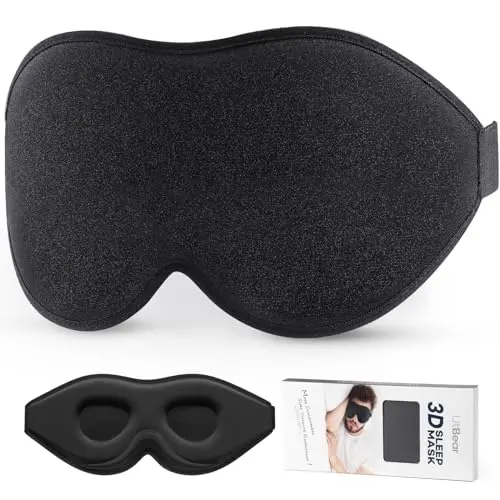
3D Contoured Sleep Mask – Thin-Side Side-Sleeper Comfort
A contoured memory-foam mask with a tall nose bridge and thin, angled sides. The deep eye sockets leave room to blink, while the adjustable strap keeps the mask stable.
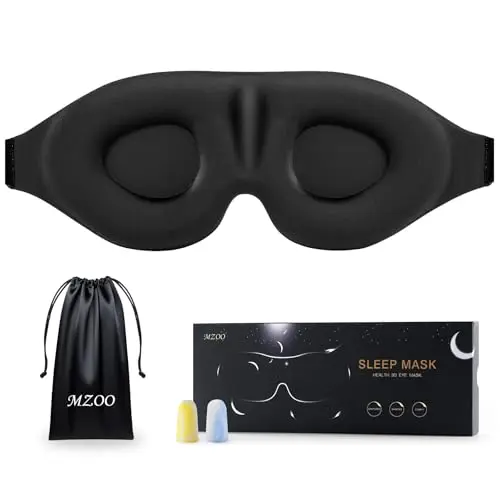
sm010 3D Contoured Sleep Mask – Zero-Pressure Blackout
A contoured mask with deep eye cups, a patented nose-bridge cutout, and thin curved sides. It’s designed to block light while leaving room for natural blinking.
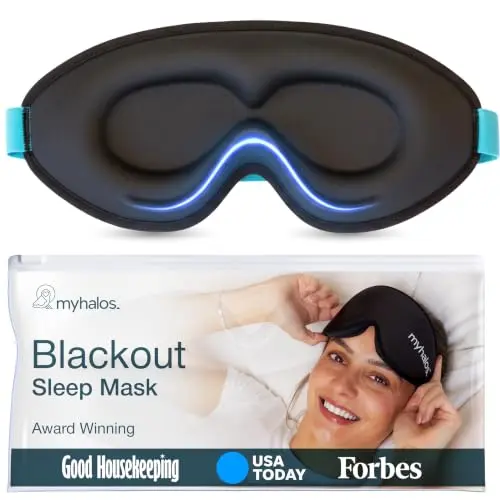
3D Blackout Sleep Mask – Eyelash-Friendly Contour
A lightweight 3D mask with deep eye cups, a taller nose section, and a side-sleeper tilt. It includes a travel pouch and aims to block light without touching lashes.
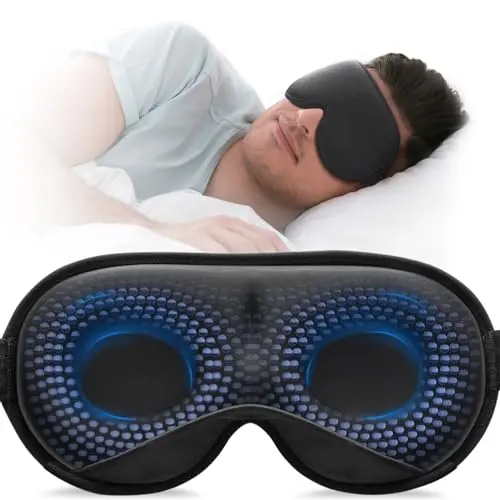
Weighted Sleep Mask – Calming Pressure for Deeper Rest
A lightly weighted mask with beads around the face and a deep eye pocket. It’s designed to add gentle pressure while keeping fabric off the lashes.
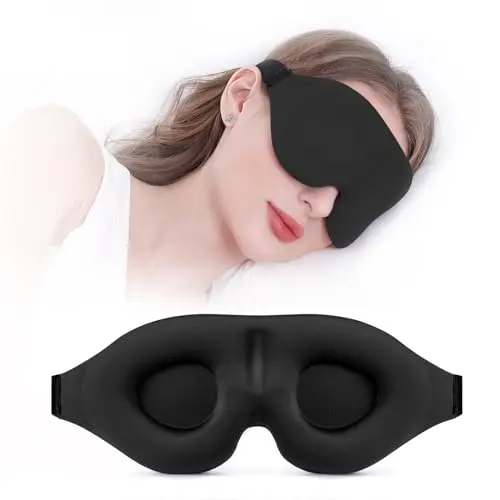
3D Sleep Mask – Side-Sleeper Friendly Zero Pressure
A budget-friendly 3D mask with pressure-free eye sockets, thin sides, and an ear-friendly adjustable strap. The memory foam is designed to stay breathable.
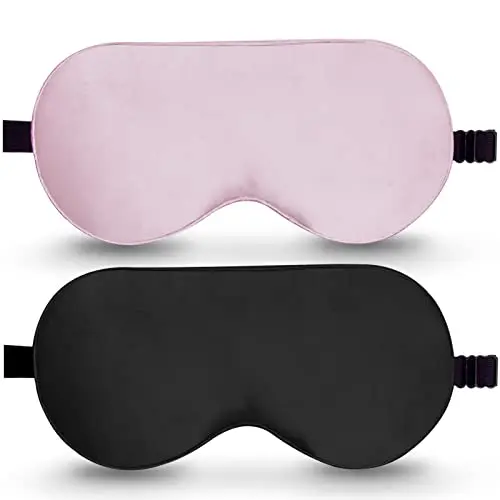
Mulberry Silk Sleep Mask 2-Pack – Soft Blackout Value
A two-pack of flat mulberry silk masks with an adjustable strap. The smooth silk is designed to be gentle on skin and comfortable for side or back sleeping.
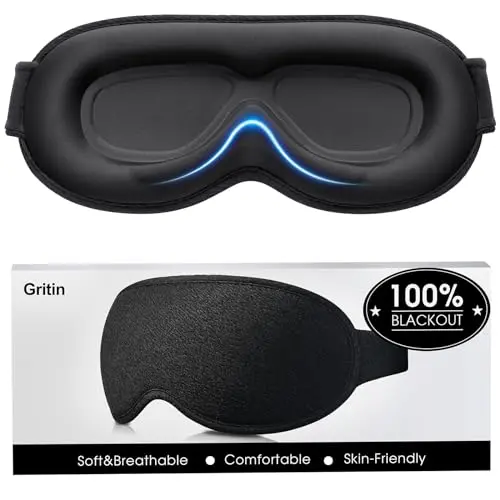
Blackout 3D Sleep Eye Mask – Zero-Pressure Value Pick
A one-piece 3D mask with a flexible nose bridge, memory foam, and an adjustable fabric strap. It includes earplugs for travel.
How We Evaluated These Sleep Masks for Dry Eyes
We didn’t run clinical dry-eye trials or measure tear-film evaporation. What we did: cross-referenced 9 sleep mask models from 9 distinct brands across six decision axes – eyelid contact and closure, fabric and moisture behavior, light blocking, pressure distribution, fit and adjustability, and care requirements. We triangulated published specifications, feature sets, owner feedback where available, and use-case fit against representative dry-eye sleeper profiles. We also audited how each strap system, nose cutout, and fabric choice would behave for a sleeper who wakes with gritty eyes rather than just light sensitivity. That means we weighed the difference between a flat silk mask that rests gently on the lids and a contoured mask that keeps fabric away from the lashes, because both approaches can work for dry eyes for different reasons.
The scoring framework weighted real-world fit for dry-eye sleepers (70%) – how well each mask supports comfortable eyelid closure, moisture retention, and overnight wear – against feature differentiation (30%) – unique design elements like detachable eye cups, nose-bridge shaping, and breathable materials. We have no commercial relationship with any of the brands featured; recommendations track fit and differentiation, not brand preference. If your priority is gentle eyelid contact, the Alaska Bear Mulberry Silk Sleep Mask is the natural starting point; if you want deep blackout with repositionable cups, the Manta Original Sleep Mask is the stronger match.
How to Choose the Right Sleep Masks for Dry Eyes
1. Why Sleep Masks for Dry Eyes Need More Than Total Blackout
Dry eyes are not just a light-sensitivity problem. Overnight, total blackout helps, but many dry-eye sleepers also benefit from eyelid closure and reduced airflow around the eye surface. A mask that presses unevenly or traps heat can make the experience worse. The better question is whether the mask supports tear-film stability through the night without creating pressure points.
2. Eyelid Contact vs. Zero-Pressure Eye Cups
The biggest fork in this category is whether the mask touches your eyelids. A flat silk design rests lightly against the face and can provide gentle eyelid contact, which some dry-eye sleepers find helpful because it discourages lids from drifting open. A contoured mask with deep contoured cups does the opposite: it keeps fabric off the eyes and is better for long lashes, lash extensions, or anyone who hates the feeling of fabric on the eyes. Neither approach is universally better. If you want the contact effect, the Alaska Bear Mulberry Silk Sleep Mask is the clearest example in this lineup; if you want clearance, look at a cup-based mask.
3. Fabric, Breathability, and Moisture Retention for Dry Eyes
Fabric matters because it sits against delicate skin for hours. Mulberry silk is smooth, breathable, and less absorbent than cotton or foam, so it can help keep skincare and natural moisture where they belong. Memory foam masks with breathable covers can work well too, especially when the eye cups are deep enough to avoid contact. The tradeoff is bulk and warmth; hot sleepers should prioritize airflow over padding.
4. Fit, Strap Tension, and Side-Sleeper Comfort
Fit is where dry-eye masks succeed or fail. Strap tension that’s too tight can create pressure marks and sinus pressure; too loose and light leaks around the nose. Side-sleeper comfort depends on thin sides and a nose cutout that doesn’t dig in. If you want a highly adjustable fit with repositionable cups, the Manta Original Sleep Mask is the most flexible design here. If you sleep on your side and want a lower-profile contoured mask, the LitBear 3D Contoured Sleep Mask is the better match.
5. How Much Should You Spend on a Sleep Mask for Dry Eyes?
Budget-friendly masks can block light and provide basic clearance, but the budget-friendly tier often uses simpler straps and less refined foam. Mid-range masks add better nose shaping and more consistent stitching. The premium tier buys modular cups, machine washability, and finer adjustment. Spend more if you need a specific fit or washability; otherwise, a simple silk mask can cover the dry-eye basics.
6. Care and Replacement: Keeping a Sleep Mask Eye-Friendly
Clean your mask often, especially if you have sensitive skin or blepharitis. Silk usually needs hand washing with a gentle detergent and air drying; memory foam masks vary, so check the care label. Replace the mask when the strap stretches, the foam compresses, or the fabric starts to irritate. A clean, well-fitting mask is far more useful than a premium one that stays in a drawer.
Frequently Asked Questions
1. Do sleep masks actually help with dry eyes?
They can, but not as a cure. A sleep mask helps by reducing airflow around the eyes, encouraging eyelid closure, and supporting tear-film stability overnight. The effect depends on fit and fabric. A flat silk mask like the Alaska Bear Mulberry Silk Sleep Mask can rest gently against the lids, while a contoured mask keeps fabric off the eyes. If your dry eye is severe or linked to a medical condition, treat the mask as a comfort aid, not a treatment.
2. What's the difference between the Alaska Bear Mulberry Silk Sleep Mask and the Manta Original Sleep Mask?
Alaska Bear is a flat silk mask built for gentle eyelid contact, breathability, and simple blackout; it’s the better pick if you want the mask to rest against your lids. The Manta Original Sleep Mask is a modular contoured design with detachable eye cups, infinite adjustability, and machine washability. It keeps fabric farther from the eyes and suits sleepers who want deep blackout without eyelid pressure. The tradeoff is bulk and a higher price tier.
3. What's the difference between the MZOO 3D Contoured Sleep Mask and the LitBear 3D Contoured Sleep Mask?
Both are contoured memory-foam masks with deep eye cups, but they solve fit differently. The MZOO uses a patented nose-bridge cutout and 13 mm eye cups for a low-profile blackout fit. The LitBear adds a 22 mm adaptive nose bridge and thin 15-degree sides that make it more side-sleeper friendly. Choose MZOO for a balanced all-around shape; choose LitBear if side-sleeping pressure is your main complaint.
4. Is a weighted sleep mask like the YFONG a good choice for dry eyes?
It can be, if you find gentle pressure calming. The YFONG uses 4.2 oz weighted beads and a deep eye pocket to keep fabric off the lashes while adding a soothing weight. That can help you settle, but the weight isn’t for everyone, and hot sleepers may find it warm. For dry eyes, prioritize fit and eyelid comfort first; the weighted effect is a bonus, not a requirement.
5. Are silk sleep masks better than memory foam masks for dry eyes?
Not universally. Silk is breathable, less absorbent, and smooth against the skin, which can be helpful if you want gentle eyelid contact and don’t like foam bulk. Memory foam masks with deep eye cups keep fabric away from lashes and can be better for side sleepers or lash extensions. The right choice depends on whether you want contact or clearance, and how much adjustability you need.
Final Verdict
For most dry-eye sleepers, the Alaska Bear Mulberry Silk Sleep Mask is the answer. It combines gentle eyelid contact, breathable mulberry silk, and a simple adjustable fit without the bulk of a contoured mask. If you want deep blackout with repositionable cups and don’t mind a premium tier, the Manta Original Sleep Mask is the stronger specialist. Side sleepers should look at the LitBear 3D Contoured Sleep Mask for its thin sides and tall nose bridge. And if you want a spare silk mask without spending much, the BeeVines Mulberry Silk Sleep Mask 2-Pack is the budget-friendly route. Start with the approach that matches your eyelids: contact for closure, cups for clearance.
