
Best Sliding Trays For Coffee Makers – 2026 Reviews

There’s a specific kind of frustration that comes from a coffee maker wedged under an upper cabinet. You can reach the filter basket, but not the water reservoir. So you tilt the whole machine, drag it across the counter, wipe up the trail of grounds, and shove it back. Then you do it again tomorrow morning.
A sliding tray fixes that in one small move: the brewer rides on a platform that pulls forward when you need it and tucks away when you don’t. The catch is that these trays are not interchangeable. Two things separate the ones that change your routine from the ones that end up in a drawer – how much height they add, and how controlled the glide feels under a loaded machine.
Height because your cabinet clearance is fixed and unforgiving; a tray that eats an inch and a half can turn a working setup into a jammed one. Control because a full drip brewer with water in the tank is heavier than it looks, and a platform that wobbles or needs two hands to steer is no better than dragging. We looked across the market rather than inside one brand’s lineup, so what follows covers bamboo, acrylic, pine, and metal platforms, plus mat-style sliders you cut to fit.
Best Sliding Trays for Coffee Makers – 2026 Reviews
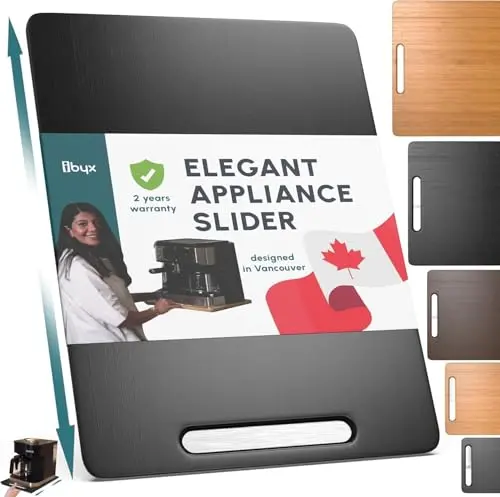
Bamboo Appliance Slider – Quiet Glide for Coffee Makers
The Ibyx slider is the one we’d hand to most people with a coffee maker parked under a cabinet. It’s a bamboo platform on rolling wheels, and the size chart is unusually broad – a compact tray for grinders, a mid-size for toaster ovens, and larger sheets for bigger appliances. The version here is the 12 x 16 platform, and the black finish is understated enough to sit next to a stainless brewer without looking like an accessory.
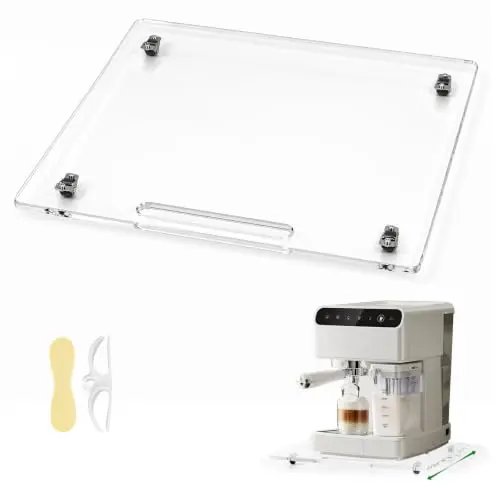
Clear Acrylic Slider (13 x 14) – Cable-Managed Pull-Out
Most trays in this category are black, and they announce themselves. The BEZONO is clear acrylic, which on a light counter nearly disappears. The 13 x 14 footprint is aimed at full-size and dual-use drip brewers, and it adds two things the wood and metal options mostly skip: a built-in cord organizer behind the appliance and an ergonomic front handle for one-handed pulls.
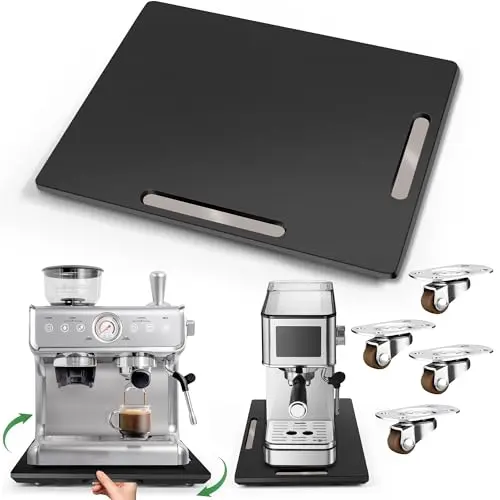
360 Rolling Bamboo Tray (16 x 13) – Dual-Orientation Slider
The Joy&Grace tray takes a different approach to fit: instead of buying a size for each appliance, the 360 rubber rollers let you position the platform horizontally or vertically. A wide brewer and a deep espresso machine can share one tray. The large 16 x 13 version is built for Instant Pots, big coffee makers, and toaster ovens, with crossing support beams under thick bamboo.
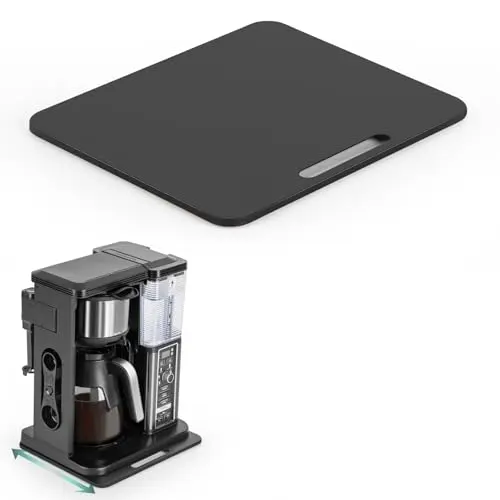
Metal Appliance Slider (10 x 12) – Low-Profile Clearance
This is the tray you buy when clearance is the whole problem. The metal ANBOXIT sits extremely low to the counter – low enough to slide a brewer under a cabinet that would reject most wheeled platforms. It uses Teflon glides rather than wheels, wrapped in a rust-resistant matte black finish, and comes in six size options split across wide and deep profiles.
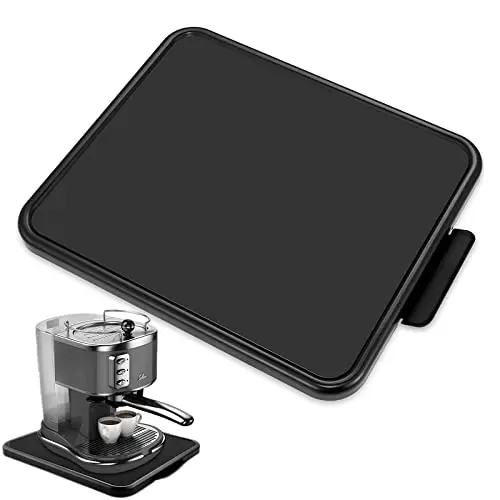
Kitchen Caddy – One-Piece Locking Steel Slider
The Flyisland caddy is built as one piece rather than a base plus a sliding top, which means there’s no track to knock loose mid-pull. A small lever at the front releases the tray for rolling and locks it again the moment you let go, so the appliance stays put while you load a filter. It’s steel with a non-slip silicone pad on top, sized at roughly 13.8 x 11.7 inches.
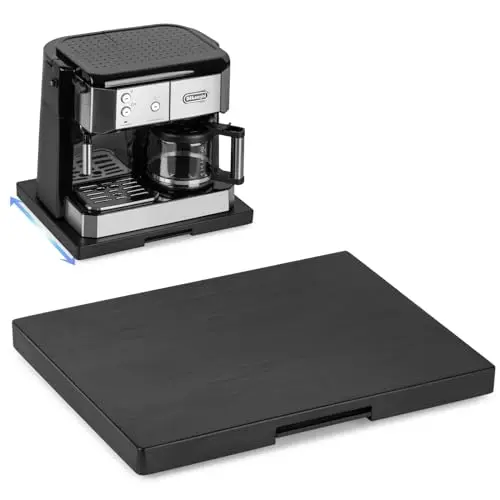
Wooden Appliance Slider – 80-Pound Lever Caddy
The wooden ANBOXIT is the capacity play in this lineup. Solid pine and a thick frame are rated far above what any coffee maker will ask of them, so a full reservoir plus a glass carafe is a non-issue. It uses a tap-up lever instead of a grab handle: a light press releases the platform and it glides, with the lever tucked out of sight when you’re not using it.
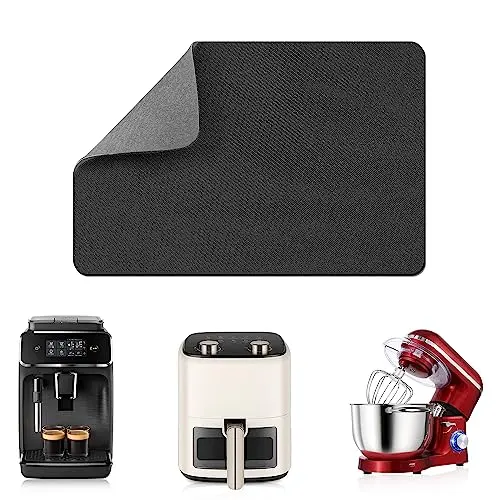
Cut-to-Fit Slider Mat – 360 Rotation, Countertop Safe
The LOPNUR isn’t a platform – it’s a flat rubber mat you trim to the shape of your appliance base. That cut-to-fit design is the reason to look at it: odd-shaped brewers and narrow counter slots that no rigid tray will fit suddenly become workable. It rotates in any direction, resists heat, and doubles as a general purpose counter mat when you’re not sliding anything.
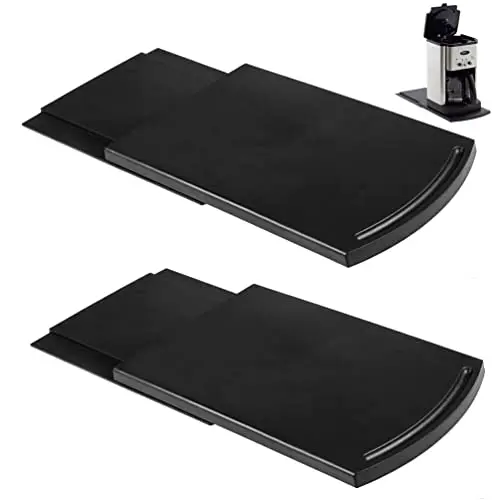
Handy Sliding Tray Mat (2-Pack) – Two-Set Counter Coverage
The HauSun set is exactly what the name says: two flat ABS slider mats in one box. If you’ve got a coffee maker and a kettle, or a brewer and a blender, both can get the treatment without buying twice. They’re BPA-free, wipe clean easily, and add almost nothing to the height of your appliance – which matters in a tight cabinet gap.
How We Evaluated These Sliding Trays for Coffee Makers
We didn’t run these trays through months of daily brewing, and we didn’t weigh them on a lab scale. What we did: cross-referenced 8 sliding tray models from 7 distinct brands across five decision axes – footprint and cabinet clearance, load capacity, glide mechanism and control, material behavior around steam and spills, and surface grip plus cleanup. We triangulated published specifications, build materials and feature sets, owner feedback where available, and fit against the situations people actually buy these for: full-size drip brewers with rear water reservoirs, single-serve machines, and espresso setups wedged under upper cabinets.
The scoring framework weighted real-world fit for a coffee maker (70%) – whether the tray clears your cabinet, holds a loaded machine without flexing, and pulls forward with one hand – against feature differentiation (30%) – distinct glide mechanisms, material advantages, and shape flexibility across machine sizes. We pressure-tested the same cabinet-clearance and footprint questions against every model so the comparison stays apples to apples rather than rewarding whichever tray had the longest feature list.
We have no commercial relationship with any brand here; recommendations track fit and differentiation, not brand preference. If your upper cabinet sits low, the ANBOXIT Metal Appliance Slider is the one to start with. If you’d rather the tray disappear into the counter, the BEZONO Clear Acrylic Slider is the better match.
How to Choose the Right Sliding Tray for Your Coffee Maker
1. Why a Sliding Tray Changes Your Coffee Routine
A coffee maker under an upper cabinet has two access problems: the water reservoir sits at the back, and the steam vents straight up into the cabinet door. A sliding tray solves both at once by turning a fixed appliance into a pull-out drawer. Instead of lifting or dragging, you pull the platform forward, fill, brew, and push it back.
What makes or breaks the experience isn’t the finish – it’s how much height the tray adds and how controlled the glide feels. A tray that adds more clearance than you have is useless, and one that wobbles under a full reservoir ends up parked in the same spot as before.
2. Sizing a Sliding Tray for Your Coffee Maker
Measure twice. Start with the footprint of your coffee maker’s base – not the widest point of the body, since overhangs don’t need support. Add a little margin so the machine isn’t hanging off the edge. Then check the depth from the cabinet face: too deep and the tray will hit the backsplash before the machine clears the cabinet.
The second measurement is cabinet clearance – the gap between the top of your brewer and the bottom of the upper cabinet. Every tray eats some of that. Flat mat-style sliders add almost nothing, wheeled platforms add roughly an inch, and thick wooden caddies can eat closer to two. If you’re already tight, that number is the whole decision.
Manufacturers usually publish size charts grouped by appliance type, and it’s worth reading them rather than eyeballing it. If you’ve got a full-size brewer and a low cabinet, the ANBOXIT Metal Appliance Slider runs the lowest profile in this lineup.
3. Wheels, Glides, or Sliding Mats: How Each One Moves
There are three mechanisms in this category. Rubber wheels roll silently and handle heavy machines well, but they add height and can pick up crumbs. Teflon or polymer glides sit flatter and have no moving parts to jam, at the cost of a little more drag under load. Flat mats add essentially no height and cost the least, but they rely entirely on a clean, smooth countertop to slide at all.
If your coffee maker is light and your cabinet is low, a mat is enough. If you’re pulling a loaded drip brewer out twice a day, wheels or glides earn their extra height. And if you want the tray to stay put the moment you let go, look for a locking lever or a non-slip base rather than a free-rolling platform – the Flyisland Kitchen Caddy locks itself back down once you release the lever.
4. Load Capacity and the Weight of a Full Reservoir
Published ratings vary wildly, and the honest answer is that most coffee makers don’t need a high one. An empty drip brewer is light. The same brewer full of water with a glass carafe in place is heavier than people expect, but still well inside the range of a reasonable rating.
Where capacity actually matters is flex. A tray rated well above what you’ll put on it tends to stay flat, and a flat tray slides predictably. Thin two-piece designs can bow in the middle under a full carafe, which is usually where they start to bind or separate. If your machine is a large dual-brew unit, lean toward the sturdier platform.
5. Steam, Spills, and Choosing a Material for a Coffee Station
A coffee maker is a hot, wet appliance in a small footprint. Steam rises into whatever is above it, and spills pool at the base. That pushes material choice in a specific direction.
Bamboo and wood look the best and feel the most solid, but they don’t love standing water – wipe spills promptly and expect hand washing. Steel and coated metal shrug off heat and moisture and wipe clean, though they’re heavier. Acrylic blends into a light counter but shows smudges and hard-water spots. Rubber and ABS mats are the most forgiving of spills and the easiest to rinse, at the cost of a less premium feel.
6. What to Expect at Each Price Tier
Budget-friendly options here are mostly flat mats – cut-to-fit rubber or a two-pack of ABS sliders. They work, they add almost no height, and they’re the right call if your machine is small or your cabinet gap is tight.
Mid-range trays are where wheels and locking mechanisms show up: steel frames, one-piece designs, and platforms built around a specific appliance size. That’s the sweet spot for a daily-use coffee maker. The premium tier buys material – thick bamboo, solid pine, machined acrylic – plus shape flexibility and quieter hardware. You’re paying for how the tray feels and how well it disappears into the kitchen, not for a function you’ll notice mid-brew.
Frequently Asked Questions
1. Do sliding trays for coffee makers fit under standard upper cabinets?
Usually, but it depends entirely on your gap. Most countertop coffee makers are comfortably shorter than the space under a standard upper cabinet, so the real question is how much headroom is left over. A flat mat-style slider adds very little. A wheeled platform typically adds around an inch, and a thick wooden caddy can add closer to two.
Measure from the top of your machine to the bottom of the cabinet before you buy anything. If that number is under an inch, skip the wheeled trays and look at mats or a low-profile metal slider.
2. What's the difference between the Ibyx Appliance Slider and the Joy&Grace 360 Rolling Tray?
Both are bamboo platforms on wheels, but they solve sizing differently. The Ibyx Appliance Slider comes in a broad range of footprints, so it’s the easier match to one specific machine. The Joy&Grace 360 adds universal rollers so it can be oriented horizontally or vertically – handy if you’re fitting a wide brewer now and a deep espresso machine later.
Pick the Ibyx if you want one correctly sized tray and you’re done. Pick the Joy&Grace if you want a single platform that adapts, or if you need a large footprint for a big dual-brew machine.
3. Is a clear acrylic slider worth it over a wooden tray?
It comes down to what bothers you. Clear acrylic like the BEZONO Clear Acrylic Slider visually disappears on a light counter, wipes clean of coffee splashes, and adds a genuinely useful cable manager behind the machine. Wood gives you a warmer look and often a higher load rating, but it’s heavier, adds more height, and needs to stay dry.
If your counter is a design feature, go acrylic. If you want maximum sturdiness and don’t mind the visual weight, go bamboo or solid pine.
4. Can a sliding tray handle a coffee maker with a full water reservoir?
Yes – that’s the main reason people buy one. A full drip brewer is heavier than it looks, but the practical issue isn’t raw capacity, it’s flex and control. A tray that stays flat and rolls on smooth wheels or glides handles a loaded reservoir without drama. A thin two-piece design can bow or bind under the same load, which is where most complaints about sturdiness originate.
Look for a rigid platform and a base that stays put when you release the handle.
5. Will these trays work on marble, quartz, or butcher block countertops?
Yes, and that’s part of the appeal. The main risk to a nice countertop is dragging an appliance directly across it, which is exactly what a tray prevents. Rubber wheels paired with silicone or rubber pads are the gentlest combination on polished stone and sealed wood.
Two things to watch: grit trapped under a wheel can still scratch, so wipe the counter before you slide, and heavy wooden trays can leave marks if the base pad wears thin.
Final Verdict
For most people with a coffee maker parked under a cabinet, the Ibyx Appliance Slider is the answer. It glides quietly, comes in enough footprints to actually fit your machine, and feels solid under a loaded brewer – which is more than most trays in this category manage.
If your cabinet gap is tight, skip the bamboo and go with the ANBOXIT Metal Appliance Slider; the low profile is the difference between sliding and scraping. Want the tray to vanish into a light counter? The BEZONO Clear Acrylic Slider handles that, plus the cord clutter behind your machine. And if a rigid platform simply won’t fit, the LOPNUR Cut-to-Fit Slider Mat trims to whatever shape your brewer happens to be.
Measure your clearance first, then buy once.
