
Best Small Air Purifiers For Bedroom – 2026 Reviews

Bedrooms are the hardest room in the house to buy an air purifier for. You want the air genuinely cleaned, but you also want to sleep, and a machine that moves serious air usually makes serious noise. Those two goals pull against each other, and most shopping advice pretends they don’t.
That tension is what this guide is built around. The small purifiers below are sized for a nightstand or a dresser corner rather than a living-room floor, which matters more than the box copy suggests. A unit you can place within a few feet of the bed pulls air through your breathing zone instead of scrubbing the far side of the room. Clean air delivery rate and sleep-mode decibel ratings are the two numbers that separate the ones you’ll keep from the ones you’ll unplug in a week.
We looked across brands rather than inside a single catalog, because this market has split in two. One camp is budget units that lean on aromatherapy pads and colored lights. The other is certified units that publish independently measured clean air delivery rates and let the machine do the work. Knowing which camp you’re buying from is most of the decision.
Best Small Air Purifiers for Bedroom – 2026 Reviews
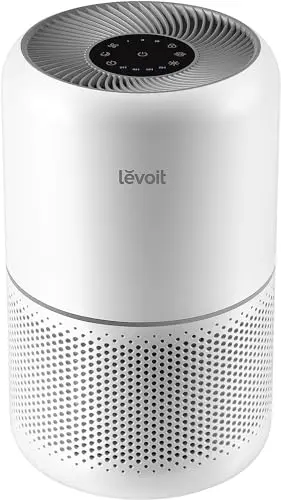
Core 300-P – Verified HEPA Power for Bedrooms
The reference point for a bedroom purifier that doesn’t ask for compromises. Its 143 CFM CADR is independently verified, sleep mode runs at 24 dB with the display dark, and the 3-stage filter is easy to buy and easy to fit.
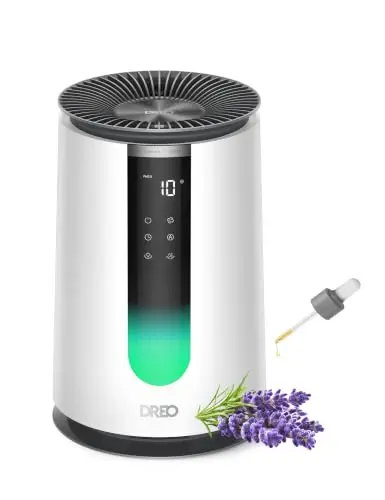
DR-HAP008 (Dreo 338) – Real-Time Air Quality Tracking
A compact purifier that reads the room. The built-in PM2.5 sensor drives a color-coded air quality display and an Auto Mode that raises fan speed when particulates climb, so you’re not adjusting anything at three in the morning.
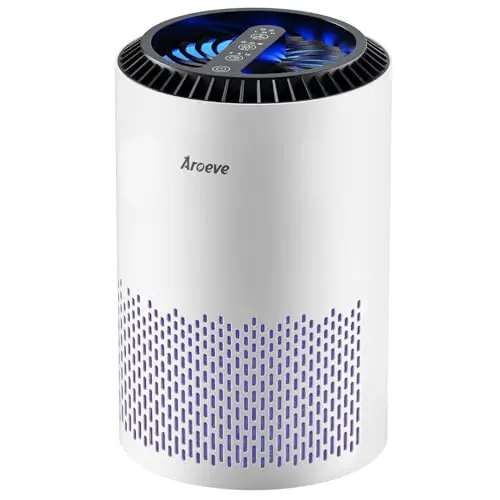
MK01A – Compact Bedside Filtration
The budget pick that behaves like a proper appliance rather than a toy: dual-channel 360-degree inlets, a genuine 22 dB sleep mode, and a footprint small enough to vanish on a dresser.
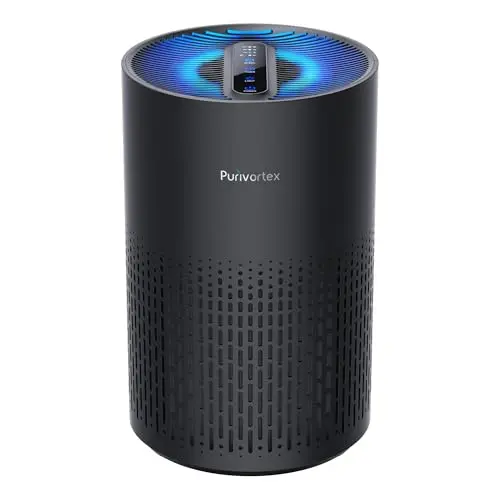
PX500 – Bigger Filter in a Small Body
Purivortex’s argument is filter mass – a 6-inch stack in a body that still fits a shelf, wrapped in a two-year warranty that’s unusual at this tier.
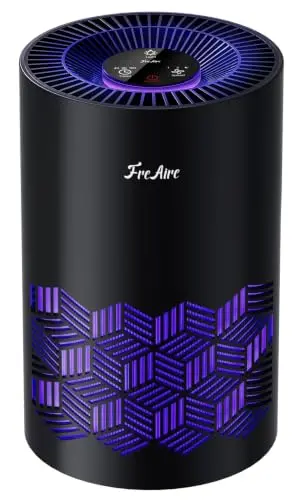
KN6391RGB – Ambient Light and Quiet Sleep Mode
A nursery-friendly compact unit that leans into ambiance: three ambient light settings, a 20 dB sleep mode, and 360-degree airflow from a genuinely small footprint.
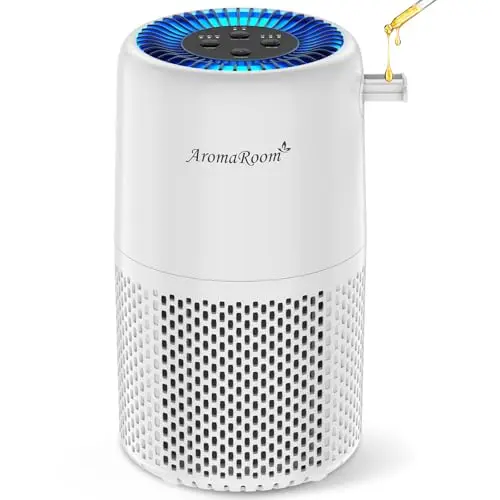
AP103-A – True HEPA for Small Rooms
A True HEPA unit sized for a baby room or guest room, with three timer settings, a 22 dB sleep mode, and a fragrance pad if you want scent alongside clean air.
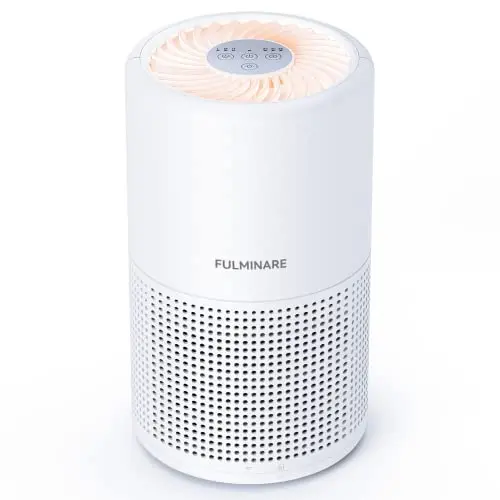
PU-P05 – Travel-Light Nightstand Purifier
The lightest unit here at under two pounds, with an H13 HEPA filter, five timer options, and a night light you can switch independently of the fan.
How We Evaluated These Small Air Purifiers for Bedrooms
We didn’t run these through a sealed chamber with a particle counter. What we did: cross-referenced 7 small air purifier models from 7 distinct brands across six decision axes – verified clean air delivery rate, sleep-mode noise, footprint and weight, filter type and replacement cost, bedroom-sized coverage, and control features. We triangulated published specifications, certification listings like AHAM and CARB, and owner feedback where available, then mapped each unit against a real bedroom profile: 120 to 250 square feet, a door that stays shut, and someone trying to sleep.
Two factors carried the most weight. First, whether a coverage claim survives scrutiny – square footage derived from a single air change per hour tells you little about a bedroom, while a published CADR tells you plenty. Second, whether quiet mode is genuinely quiet or just a slower version of loud. The framework put real-world bedroom fit at 70% – noise, footprint, filtration depth, overnight usability – against feature differentiation at 30%, where a PM2.5 sensor or a multi-stage filter earned credit. We have no commercial relationship with any brand here; recommendations track fit, not brand preference.
A few things we can’t tell you: how these fare after a year of nightly running, or whether a fan bearing develops a rattle in month nine. What we can promise is an honest read on what each brand publishes and what long-term owner feedback suggests. If you want the safest bedroom pick, the Core 300-P is it; if watching your air quality in real time appeals more, the DR-HAP008 fits better.
How to Choose the Right Small Air Purifiers for Bedroom
1. Why Room Size Beats Big Coverage Claims in a Bedroom
The number on the box is usually the least useful number on the box. Most coverage figures are calculated at one air change per hour, meaning the unit technically cycles the room’s full volume once in sixty minutes. Four to five air changes an hour is where you actually notice a difference in dust and allergy symptoms, so divide the headline figure by four or five to get a realistic bedroom number.
A 200-square-foot bedroom with an eight-foot ceiling holds roughly 1,600 cubic feet. You want a purifier that can move that volume several times an hour, which is why CADR matters more than square footage. Look for a smoke CADR in the low hundreds of CFM for a standard bedroom; smaller numbers are fine for a nursery or guest room.
2. What 'Small' Actually Means for an Air Purifier
Small here is a physical description, not a performance one. The units in this lineup run roughly five to nine inches wide and one to six pounds, which is what makes them viable on a nightstand or dresser instead of a floor stand. Footprint matters more in a bedroom than anywhere else, because placement drives performance – a purifier within a few feet of the bed cleans the air you’re breathing, while the same unit across the room mostly cleans air near the door.
The tradeoff is filter media. A small body holds a small filter, which clogs faster and moves less air. Brands that take this seriously compensate with dual-channel or 360-degree inlets to pull from more area, or by stacking a taller filter inside a narrow housing. Ask how tall the filter is before assuming two small purifiers are equivalent.
3. Sleep Mode Is the Spec That Decides Bedroom Comfort
Every unit here claims a quiet mode; the useful distinction is whether that mode still filters. A purifier that drops to 20 to 24 dB but also drops to a token airflow is basically a white noise machine. The good ones slow the fan rather than stopping it, keeping continuous filtration overnight at a level below a whisper.
Two related details get overlooked. First, display dimming – a bright blue LED at 2 a.m. will bother you more than 24 dB of fan noise. Second, whether the unit offers a timer, so you can run it hard during the day and let it settle at night.
4. HEPA Grade, CADR, and Certification Seals
HEPA has a specific meaning: capture of 99.97% of particles at 0.3 microns. A filter described as ‘HEPA-type’ or ‘HEPA-grade’ is not making that claim. H13 is a grade tier above standard HEPA and shows up on a couple of units here.
Certification seals tell you someone independent checked. AHAM VERIFIDE means clean air delivery rate was measured by an ANSI-accredited body. CARB compliance is a California ozone requirement, and ETL or FCC listing covers electrical safety. A unit with no published CADR and no third-party listing isn’t automatically bad – but you’re taking the coverage claim on faith.
5. Filter Replacement Costs and Cadence
Replacement filters are where cheap purifiers get expensive. Expect to swap every three to six months depending on dust and pets, and check the price and availability of the genuine filter before you commit. Some budget brands price the unit low and the filter high; others bundle spares.
Two safeguards: buy a unit with a filter change indicator, since clogged media quietly cuts airflow, and stick to the manufacturer’s filter if the brand warns that off-brand media may not seal properly. Given a choice between a cheap unit with pricey filters and a mid-tier unit with inexpensive ones, the second usually wins over a couple of years.
6. Levoit Core 300-P vs DREO DR-HAP008: Which Suits a Bedroom?
These two sit at the top of the lineup for different reasons. The Core 300-P wins on raw verified performance – a higher CADR, a 2-year warranty, and years of owner use behind it. It’s the set-and-forget option: no sensor, no auto mode, just consistent filtration.
The DR-HAP008 goes the other direction. Its PM2.5 sensor and Auto Mode mean it reacts to the room rather than running a fixed schedule, which is handy if you cook nearby or have a pet that sheds. Pick the Levoit for maximum verified airflow; pick the Dreo if you’d rather the machine make its own decisions.
Frequently Asked Questions
1. Are small air purifiers actually strong enough for a bedroom?
Yes, if the bedroom is actually small. A unit like the Core 300-P delivers a verified 143 CFM CADR, which cycles a 200-square-foot room roughly five times an hour. That’s enough to make a measurable difference in dust and allergen levels.
Where small units fall short is open-plan or oversized rooms. If your bedroom runs above roughly 300 square feet with high ceilings, step up to a larger unit rather than running a compact one at full speed all night – the noise defeats the purpose.
2. What's the difference between the Levoit Core 300-P and the AROEVE MK01A?
The Core 300-P is AHAM VERIFIDE with a published CADR and a 2-year warranty; the MK01A is a compact budget unit with 360-degree inlets, a 22 dB sleep mode, and an aromatherapy pad, but no independent CADR certification.
In practice the Levoit moves noticeably more air and is easier to source filters for. The AROEVE is smaller, lighter and far cheaper – the right call for a nursery or guest room, while the Levoit suits a primary bedroom.
3. How does the DREO DR-HAP008 compare to the Purivortex PX500?
The Dreo has a PM2.5 sensor and Auto Mode that adjust fan speed to real air quality; the Purivortex has a taller 6-inch filter and a 2-year warranty but no sensor and no automation. The Dreo is AHAM Verified, while the Purivortex leans on SGS lab testing instead.
Choose the Dreo if you want the purifier to think for you. Choose the PX500 if filter mass and warranty length matter more than automation.
4. Do I need an AHAM VERIFIDE air purifier?
No, but it removes guesswork. The seal means CADR was independently measured by an ANSI-accredited body rather than derived from an internal test. In a category where coverage claims vary wildly, that’s worth something.
Plenty of good bedroom purifiers skip the program and publish lab results instead – ISO 17025 testing or SGS verification are legitimate substitutes. What you want to avoid is a unit with no published CADR and no third-party testing at all.
5. How often should I replace the filter in a small bedroom purifier?
Every three to six months for most bedrooms. Pets, open windows and running it at high speed all shorten that. A unit with a filter change indicator takes the guesswork out; without one, check the media monthly and replace it once it’s visibly greyed.
Use the manufacturer’s filter where possible. Several brands in this lineup specifically warn that off-brand filters may not seal correctly, which lets air bypass the media entirely.
6. Will a small air purifier help with pet dander and smoke?
It helps with both, with caveats. Pet dander is a particle, and a HEPA stage rated for 0.3 microns captures it readily. Smoke is a mix – the particulate portion gets filtered, but odor compounds need the activated carbon layer, and thin carbon layers saturate quickly.
If smoke is your primary concern, prioritize a unit with a real carbon stage and a smoke CADR figure you can check. For dander, almost any True HEPA unit here will do the job.
Final Verdict
For most bedrooms, the Core 300-P is the answer. It’s the one unit here that combines an independently verified CADR, a genuine 24 dB night mode, a dimmable display, and a warranty that outlasts the category norm. It takes the guesswork out of the purchase.
If budget is the constraint, the MK01A covers a normal bedroom at 22 dB for far less, and it’s small enough to live on a dresser. If you want the purifier to monitor and adjust on its own, the DR-HAP008 with its PM2.5 sensor and Auto Mode is the smarter buy, and the PX500 is worth a look if a taller filter and a two-year warranty matter more than automation.
Match the unit to the room, put it near the bed, and replace the filter on schedule. That’s the whole game.
