
Best Small Commercial Espresso Machines – 2026 Reviews

A small commercial espresso setup usually starts with a reality check: the counter is tight, the drink menu is broader than plain espresso, and nobody wants to babysit a machine between customers. That is why compact semiautomatics with serious steam and a sensible grinding workflow get so much attention. The best ones feel less like scaled-down cafe gear and more like focused tools for a small team.
The two axes that separate a useful small commercial espresso machine from a frustrating one are workflow and recovery. Workflow covers grinder integration, portafilter size, and how easily the steam wand moves between pitchers. Recovery covers how quickly the machine returns to temperature and steam after a shot. A beautiful machine that stalls on the second drink is not really commercial, even if it looks the part.
This guide surveys the compact end of the market across multiple brands and focuses on machines that can handle a small cafe counter, a studio breakroom, or a serious home setup without demanding a full cafe footprint. We will show you where each option earns its place.
Best Small Commercial Espresso Machines – 2026 Reviews
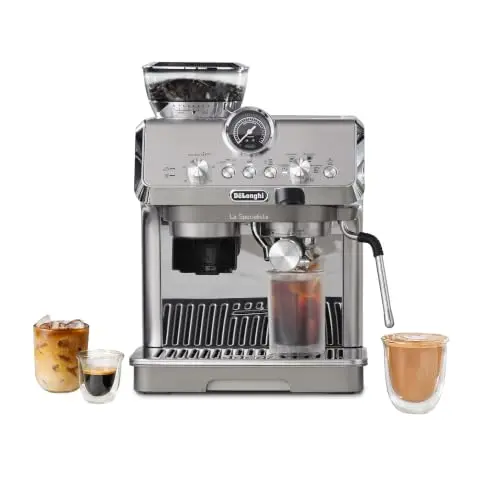
La Specialista Arte Evo – All-in-One Small Commercial Workhorse
A compact all-in-one with a conical burr grinder, commercial-style steam wand, and active temperature control. Four presets and the included barista kit make it a practical step-up for a small office or serious home counter.
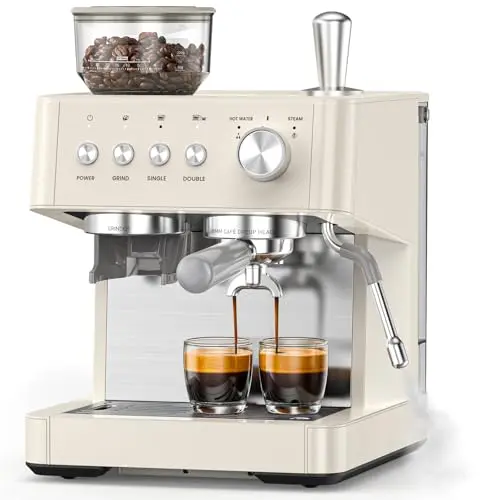
CM5431D-UL – Anti-Clog Grinder and Commercial Portafilter
This compact semiautomatic pairs a 30-setting anti-clog grinder with a 58mm commercial-style portafilter and a 2.3-liter removable tank. It is built for drink variety and quicker workflow in a tight space.
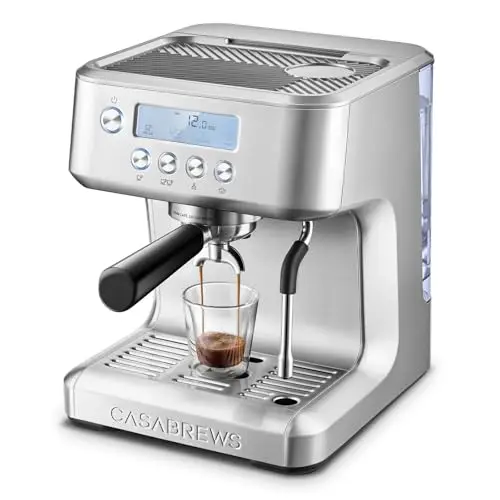
ULTRA – Compact 20-Bar Steam Power
A compact 20-bar semiautomatic with an LCD, four brew-temperature settings, and a 73-ounce removable tank. It is aimed at beginners and small offices that want latte and cappuccino capability without a built-in grinder.
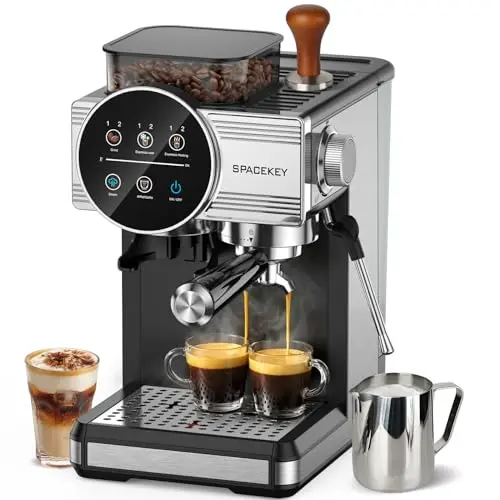
CM5510 – Compact Grinder with PID Control
A small-footprint all-in-one with a 30-setting burr grinder, 20-bar pump, PID temperature control, and a dedicated cold-brew function. The touchscreen and 60.9-ounce tank keep daily operation simple.
How We Evaluated These Small Commercial Espresso Machines
We didn’t run controlled kitchen lab tests or long-term reliability trials. What we did: cross-referenced four compact semiautomatic espresso machines from four distinct brands across five decision axes – footprint, grinder integration, portafilter size, steam-wand capability, and temperature control. We triangulated published specifications, feature sets, owner feedback where available, and use-case fit for small commercial settings such as studio breakrooms, office kitchens, and compact cafe counters. We also weighed how each machine handles back-to-back drinks, because a small commercial counter punishes slow steam recovery and awkward refills more than a home kitchen does. The goal was not to crown a spec-sheet winner but to identify which machine keeps a small counter moving.
The scoring framework weighted real-world performance (70%) – how well each machine supports a repeatable grind, brew, and steam workflow – against feature differentiation (30%) – unique technical advantages and small-space specificity. We mapped each model against realistic buyer profiles and audited the included accessories, tank sizes, and cleaning requirements. Where the data was thin, we shortened the claim rather than filling gaps with guesswork. We have no commercial relationship with any of the brands featured; recommendations track fit and differentiation, not brand preference. If you want the most complete all-in-one for a small team, the La Specialista Arte Evo is your match; if you want a commercial-style portafilter and built-in grinder at a lower tier, the CM5431D-UL serves you better.
How to Choose the Right Small Commercial Espresso Machine
1. What Makes an Espresso Machine 'Small Commercial'?
A small commercial espresso machine is not simply a home machine with a bigger price tag. The useful definition is workflow: it has to fit a tight footprint, recover fast enough for the next drink, and avoid forcing the operator to juggle too many separate steps. In a small cafe, studio breakroom, or office kitchen, the counter is shared and the machine is often used by people who are not full-time baristas.
That is why grinder integration and recovery time matter more than a long list of drink presets. A built-in grinder saves space and reduces mess, while fast recovery keeps milk drinks from turning into a bottleneck. If the machine cannot handle a short queue, it is not really small commercial in practice.
2. Grinder, Portafilter, and Steam: The Workflow Anchors
A 58mm portafilter is a useful marker because it accepts a wider range of baskets and accessories than the smaller 51mm baskets common on compact machines. It does not guarantee cafe-level results, but it makes the workflow more familiar to anyone who has worked on commercial gear. Pair that with a commercial-style steam wand and you have the core of a small commercial setup.
Steam quality is what turns espresso into lattes and cappuccinos. You want a wand that can create microfoam without blasting the milk, plus enough recovery to steam a second pitcher without a long wait. A thoughtful anti-clog grind path also matters if you use oily dark roasts, because a jammed grinder stops the whole workflow. If you want the shortest path from beans to a shot, the La Specialista Arte Evo is the pick.
3. How Tank Size and Counter Depth Affect a Small Commercial Espresso Machine
Water tank capacity is easy to overlook until the machine needs a refill in the middle of a rush. A larger removable tank is more convenient for a shared counter, but it also adds weight and takes up space. Check the actual depth and height against your cabinets, not just the width. Cup clearance matters too if you use taller travel mugs or latte glasses.
The drip tray and cleaning access are part of the same decision. A removable tray and accessible steam wand are small details that make daily use less annoying. For a tighter counter and a commercial-style basket, the CM5431D-UL is the better fit.
4. Temperature Stability Beats a Big Pressure Number
Pressure specs get a lot of attention, but PID temperature control or active temperature control has more to do with whether a shot tastes balanced. A machine that holds temperature steadily through the brew is easier to dial in than one that swings hot and cold. This matters even more when different roasts rotate through the hopper.
Look for temperature adjustment or presets that match the beans you actually use. A 15-bar or 20-bar pump is not automatically better; the basket, grind, and temperature stability do more for the final cup. Do not chase a bigger pressure number if the machine cannot hold a stable brew temperature.
5. Which Small Commercial Espresso Machine Fits Your Counter?
Start with your drink menu. If milk drinks dominate, prioritize steam power and recovery. If espresso and Americanos are the core, a simpler machine with a good built-in grinder may be all you need. If you already own a separate burr grinder, you can spend the budget on steam and temperature control instead of duplication.
Then check the physical fit. A compact all-in-one can replace a grinder and a machine, but it still needs clearance for the hopper, portafilter, and cup. If you already own a grinder, the ULTRA keeps the setup simpler and cheaper.
Frequently Asked Questions
1. What makes an espresso machine 'small commercial' rather than just prosumer?
Small commercial espresso machines sit between home prosumer gear and full cafe equipment. The meaningful markers are a compact footprint, fast steam recovery, a workflow that can handle back-to-back drinks, and usually a commercial-style portafilter or grinder integration. A machine can be expensive and still not be small commercial if it slows down the second and third drink.
2. De'Longhi La Specialista Arte Evo vs. Electactic CM5431D-UL: which is better for a small cafe counter?
The La Specialista Arte Evo is the more polished all-in-one, with active temperature control, four presets, and a commercial-style steam wand. The CM5431D-UL counters with a 58mm commercial portafilter, a 30-setting anti-clog grinder, and a larger removable tank. For a small cafe counter where staff rotate, the La Specialista Arte Evo is easier to standardize; for a tighter budget and a more commercial-style basket, the Electactic is the value route.
3. Casabrews ULTRA vs. Spacekey CM5510: which compact espresso machine is easier for beginners?
The Casabrews ULTRA is easier to hand to a beginner because its LCD-guided controls and four brew temperatures keep the decisions simple. The Spacekey CM5510 offers more capability with PID temperature control, a built-in grinder, and cold brew, but the touchscreen workflow has more to learn. If simplicity is the priority, the ULTRA is the friendlier first machine; if you want the most features in a small footprint, the Spacekey is the stretch pick.
4. Do I need a built-in grinder for a small commercial espresso machine?
Not always, but a built-in grinder shortens the workflow and reduces counter clutter. If you already own a quality separate burr grinder, a machine like the ULTRA can make sense and save space in a different way. If you are equipping a shared counter, the grinder integration and anti-clog grind path on an all-in-one are worth prioritizing.
5. Can a small commercial espresso machine keep up in an office?
Yes, if the office drinks are mostly espresso, Americanos, and a few milk drinks at a time. Look for fast steam recovery, a large removable tank, and simple controls that do not require a trained barista. A single-boiler semiautomatic can work for a small team, but a rush of back-to-back lattes will expose its limits faster than an espresso-only lineup.
Final Verdict
For most small commercial counters, the La Specialista Arte Evo is the answer. It combines a built-in grinder, a commercial-style steam wand, and active temperature control in a compact all-in-one that a small team can learn quickly. If you want a commercial-style 58mm portafilter and a lower-tier all-in-one, the CM5431D-UL is the value-focused alternative. If simplicity and a separate grinder are part of your plan, the ULTRA is the easiest beginner-friendly route. And if you want the most compact feature set with PID control and cold brew, the CM5510 is the stretch pick. Match the machine to your counter and drink volume, and you will get more from a small commercial setup than from chasing specs alone.
