
Best Small Commercial Ice Makers – 2026 Reviews

A busy coffee bar can burn through a bin of ice before the lunch rush, and that is where small commercial ice makers earn their keep. The category is not just a scaled-down version of a full restaurant machine. It is a balancing act between daily output, bin capacity, batch speed, and an undercounter footprint that actually fits.
The small commercial part matters. An 80-pound-per-day unit can be perfect for a kiosk or office kitchen, while a 170-pound-class machine makes more sense for a cafe with steady drink traffic. Look past the headline number and check storage capacity, recovery time, and whether the unit needs a gravity drain. Those details decide whether the machine keeps up on a Saturday or leaves you scooping the last cubes.
We cross-shopped the compact commercial ice maker market across brands, from filtered undercounter models to high-capacity freestanding units. The goal is simple: match the machine to your busiest service window, not the cleanest spec sheet. Here is how the strongest options compare.
Best Small Commercial Ice Makers – 2026 Reviews
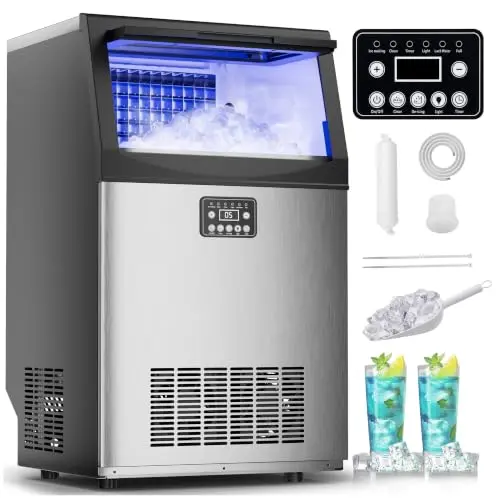
MM-ZB360 – Balanced Undercounter Workhorse
The Mountman MM-ZB360 is a stainless steel undercounter unit built for small commercial service, with a 110-pound daily output and a 33-pound bin. It makes 36 cubes in roughly 7 to 14 minutes, supports self-cleaning, and includes a removable water filter for cleaner-tasting ice.

0987-001-C1 – Filtered Undercounter with Big Batches
The Nanori 0987-001-C1 is a filtered undercounter model rated for up to 110 pounds per day with a 33-pound storage bin. It produces 50-cube batches in the 7-to-16-minute range, offers ten thickness settings, and adds ETL/DOE certification plus a one-touch self-clean cycle.

CIM-500T-3 – High-Volume Compact with 55-lb Bin
The Uthfy CIM-500T-3 steps up capacity with a 170-pound-class daily rating and a 55-pound bin, still in an undercounter-style footprint. It makes 50 clear cubes in roughly 7 to 14 minutes, adds automatic water filtration, self-cleaning, a 24-hour timer, and forced de-icing.
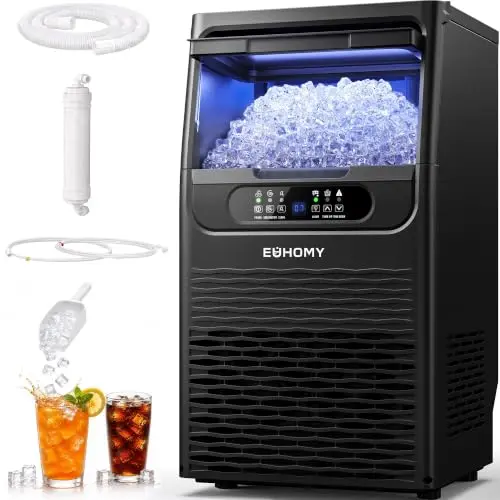
CIM011-0810 – Compact Low-Volume Pick
The EUHOMY CIM011-0810 is the compact route into small commercial ice, with an 80-pound daily output and a 12-pound bin. It makes 36 cubes in 8 to 12 minutes and includes an upgraded water filter, ETL certification, a 24-hour timer, and auto-cleaning.
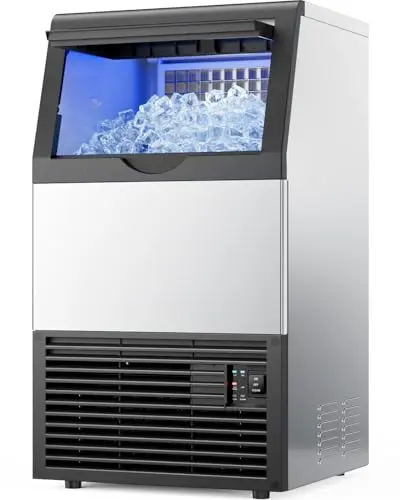
CIM-360F – Undercounter with Long Warranty
The Mojgar CIM-360F is a 100-pound-per-day undercounter unit with a 33-pound bin and 10-to-18-minute batches. It uses an R290 compressor, offers one-touch self-cleaning and adjustable thickness, and carries a 24-month machine and compressor warranty.
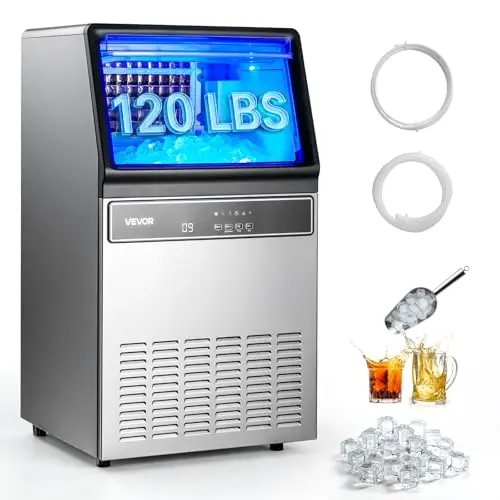
IMC9000F-CB – Timer-Friendly Quiet Option
The VEVOR IMC9000F-CB is rated for 120 pounds per day with a 33-pound bin and 45-cube batches. It adds a 48-hour timer, a self-cleaning cycle, adjustable ice thickness, and quiet operation rated under 50 dB.

CIIM360 – Simple Stainless Undercounter
The SUNGDOGIN CIIM360 is a stainless undercounter or freestanding model rated at 110 pounds per day with a 33-pound bin. It makes 36 cubes in 7 to 14 minutes and includes one-touch self-cleaning and adjustable ice thickness.
How We Evaluated These Small Commercial Ice Makers
We didn’t run controlled freeze-cycle lab tests or log a full week of output in a working bar. What we did: cross-referenced 7 small commercial ice maker models from 7 distinct brands across six decision axes – daily ice output, storage-bin capacity, batch cycle time, undercounter fit and drainage, cleaning and filtration, and noise/build quality. We triangulated published specifications, feature sets, owner feedback where available, and use-case fit for cafes, bars, offices, and light retail service. We also mapped the practical install details that get overlooked: gravity drains, clearance heights, water supply, and accessory bundles. That matters because a spec sheet can look strong while a drain route or a small bin makes the unit awkward in real service. We didn’t measure long-term compressor life or audit every installation scenario.
Our scoring framework weighted real-world fit (70%) – how well each unit matches a small commercial workload without overbuilding – against feature differentiation (30%) – filtration, timer controls, ice-thickness range, self-cleaning, and warranty support. We weighed those signals against the way these machines are actually used: steady refills, peak-hour recovery, and daily cleanup. We have no commercial relationship with any featured brand; recommendations track fit and differentiation, not brand preference. If you want the most balanced undercounter workhorse, the Mountman MM-ZB360 is the first place we’d look. If filtered ice and larger batches matter more, the Nanori 0987-001-C1 is the stronger fit.
How to Choose the Right Small Commercial Ice Makers
1. Start With Daily Output and Storage in Small Commercial Ice Makers
Daily output gets the attention, but storage bin capacity is what carries you through a rush. A machine that makes 110 pounds per day but holds only 12 pounds will still run dry during a busy lunch. Look for a bin that matches your service window, not just the 24-hour number.
Recovery time matters too. Batch cycles in the 7-to-14-minute range keep refills moving; longer cycles can work in lighter settings if the bin is large enough. If your demand is modest and counter space is tight, the EUHOMY CIM011-0810 is the compact route. For busy service, step up to a larger bin like the Uthfy CIM-500T-3.
2. Why Undercounter Fit and Drainage Decide the Install
Most small commercial ice makers are designed to slide under a counter or stand freestanding, but the dimensions are only half the story. Check undercounter clearance against the actual height, including adjustable feet, and leave room for the door swing and ventilation. Front-venting models are more flexible for built-in use.
The bigger stumbling block is drainage. Many units rely on a gravity drain, which means the hose must slope downward to a floor drain. A drain pump is not always included. Confirm your drain location before delivery, especially in basements or retrofitted bars.
3. Ice Style, Cycle Time, and Recovery Between Batches
Ice thickness is adjustable on most models here, and that is more useful than it sounds. Thin ice suits coffee and rapid chilling; thicker cubes hold up in whiskey and display service. Match the setting to your menu rather than leaving it at the factory default.
Batch cycle time and cube count work together. A 50-cube batch every 7 to 16 minutes can outperform a smaller batch that finishes faster. For peak-hour recovery, pair a respectable cycle time with a bin that gives you a buffer.
4. Filtration, Cleaning, and Noise in Daily Service
A built-in water filter is one of the most practical upgrades in this category. It helps with taste, clarity, and scale, especially in areas with hard water. If the filter is removable, cleaning and replacement are easier.
Self-cleaning cycles reduce routine labor, but they do not replace periodic manual sanitizing. Noise level matters if the unit sits near a counter or dining area; models rated under 50 dB are easier to live with. Check the warranty as well, since compressor coverage varies by brand.
5. Budget, Mid-Range, and Premium Small Commercial Units
Entry-level units usually trade bin size and output for a lower upfront cost; they suit light commercial use, home bars, and office kitchens. Mid-range models add larger bins, faster batches, and more filtration. Premium picks push capacity, insulation, and warranty support. The right tier depends on how often you run out of ice, not on the badge alone.
Spend up when ice is part of your revenue. If ice is a convenience, a compact unit with a small bin can be the smarter buy.
6. Cross-Brand Tradeoffs: Mountman vs Nanori vs Uthfy
The Mountman MM-ZB360 is the balance point: 110 pounds per day, a 33-pound bin, and a water filter in a mid-size undercounter body. The Nanori 0987-001-C1 leans toward larger 50-cube batches and ten thickness settings, while the Uthfy CIM-500T-3 goes furthest on capacity with a 55-pound bin. Choose the Mountman for all-around duty, the Nanori for filtered batch flexibility, and the Uthfy for higher-volume service. The right fit is the one that matches your busiest two hours, not your quietest day.
Frequently Asked Questions
1. Do small commercial ice makers need a floor drain?
Most undercounter models in this class use a gravity drain, so yes: you need a floor drain or a drain line that sits lower than the machine. A handful of setups can use a drain pump, but it is not always included. Before buying, confirm the drain location, the hose route, and whether the unit needs a water supply line. If you cannot achieve a downward slope, choose a different location or budget for a pump.
2. How does the Mountman MM-ZB360 compare with the Nanori 0987-001-C1?
The Mountman MM-ZB360 is the more balanced all-rounder: 110 pounds per day, a 33-pound bin, a removable water filter, and a 7-to-14-minute cycle. The Nanori 0987-001-C1 pushes batch size with 50 cubes per cycle and adds ten thickness settings, plus ETL/DOE certification. Choose the Mountman for straightforward undercounter duty and the Nanori when filtered ice and thickness control matter more than a smaller footprint. Both need a gravity drain.
3. VEVOR IMC9000F-CB vs Uthfy CIM-500T-3: which handles busier service?
The Uthfy CIM-500T-3 is the stronger choice for busier service because its 55-pound bin and 170-pound-class output give more buffer between batches. The VEVOR IMC9000F-CB counters with a 48-hour timer, a 45-cube batch, and a quieter sub-50 dB rating, which suits front-of-house placements. If your priority is peak-hour recovery, go Uthfy. If you need scheduling flexibility and quieter operation, the VEVOR makes more sense.
4. What size counts as a small commercial ice maker?
In this roundup, small commercial means an undercounter or compact freestanding unit, usually in the 80-to-170-pound-per-day range with a 12-to-55-pound bin. That is enough for cafes, small bars, offices, and light retail, but not for a high-volume restaurant. Pay attention to counter height, bin capacity, and drain requirements; those practical limits separate a true small commercial fit from a machine that simply has a commercial badge.
Final Verdict
For most small commercial setups, the Mountman MM-ZB360 is the pick that asks the fewest compromises: enough output for steady service, a bin that buys you time between batches, and filtration and cleaning features that make daily operation easier. If your ice demand is light and counter depth is tight, the EUHOMY CIM011-0810 gets you into the category with a genuinely compact body. If you run a busier cafe or bar and keep hitting the bottom of the bin, the Uthfy CIM-500T-3 is the higher-capacity alternative worth the step up. And if filtered batches and thickness control are your priority, the Nanori 0987-001-C1 is the specialist pick. Match the machine to your busiest service window, confirm the drain, and the choice becomes much clearer.
