
Best Small Hepa Air Purifiers – 2026 Reviews

A small bedroom, a desk corner, or a nursery doesn’t need a huge tower purifier. It needs a compact unit that moves enough air for the room, stays quiet enough to forget, and doesn’t turn filter replacements into a chore. That’s the whole brief for a small HEPA air purifier.
The tricky part is that small and HEPA get stretched in marketing. Some mini purifiers are genuinely tiny but only clean a closet-sized area at high fan speed; others have a small footprint but a medium-room price and filter habit. The useful split is between true desktop-mini units and compact bedroom purifiers that still earn their floor space.
We compared the cross-brand field on filtration specs, sleep-mode noise, real room coverage, controls, and replacement-filter availability. The goal isn’t to crown the smallest box. It’s to match a compact footprint to the room you actually need to clean.
Best Small HEPA Air Purifiers – 2026 Reviews
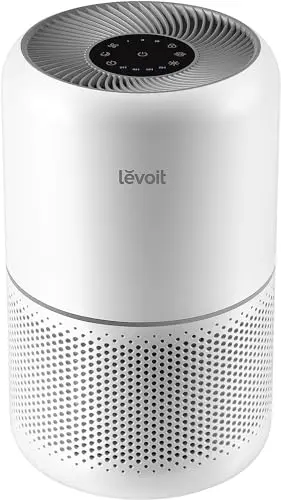
Core 300-P – Quiet HEPA for Bedrooms
The Core 300-P is the compact-bedroom benchmark: an AHAM-verified HEPA purifier with a 143 CFM smoke CADR, a 24 dB sleep mode, and a footprint that fits beside a nightstand. It uses a three-stage filter and includes a timer and filter indicator.
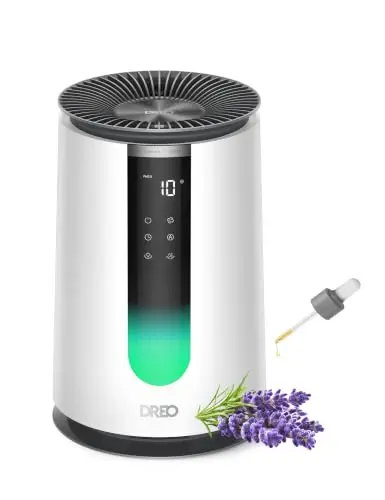
DR-HAP008 – PM2.5-Smart Compact
The DR-HAP008 adds real-time PM2.5 monitoring and a color AQI display to a compact HEPA body. AHAM-verified at 115 CFM, it offers Auto, Turbo, Sleep, and Normal modes plus a scent diffuser, making it the most data-forward small purifier here.
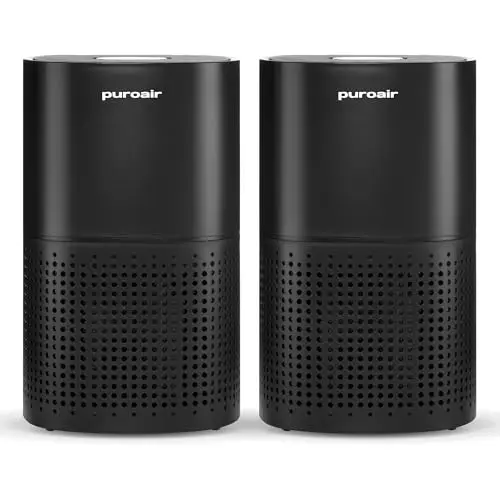
Air 240 – Two-Room HEPA Coverage
PuroAir’s 240 two-pack is aimed at buyers who want matching HEPA units for more than one room. Each tower uses a three-layer pre-filter, HEPA, and carbon setup, with a particle sensor and auto mode that ramps up when air quality drops.
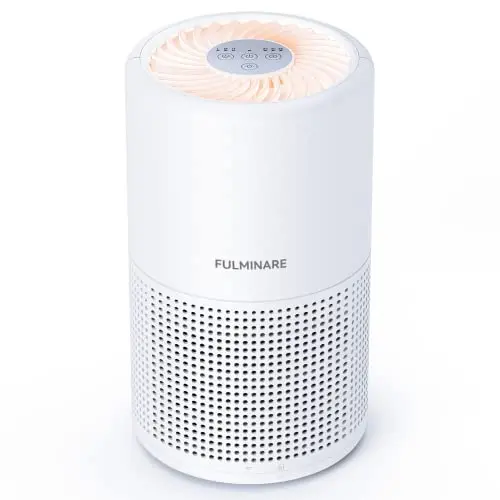
PU-P05 – Tiny Night-Light Purifier
The PU-P05 is a genuinely tiny H13 HEPA purifier with a built-in night light, five timer settings, and a sleep mode rated around 20 dB. It suits desks, dorm rooms, and nurseries where floor space is tight.
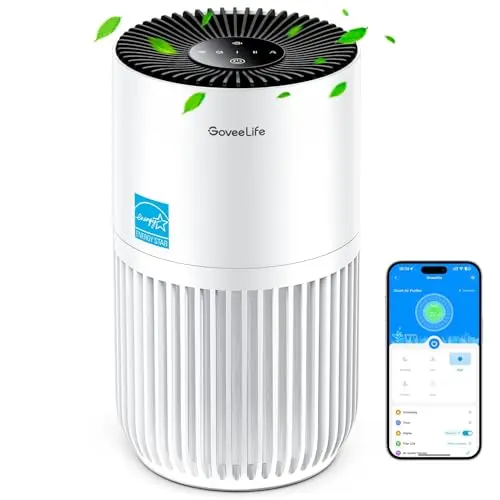
H7126 – App-Controlled Mini
The H7126 is a mini HEPA purifier built around app and voice control. It supports Alexa, IFTTT, schedules, and custom modes, adds an aromatherapy pad, and runs as low as 24 dB in sleep mode for bedrooms and small offices.
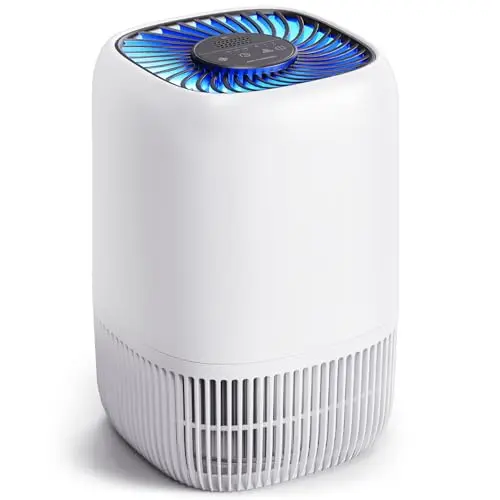
DH-JH12 – Simple Compact Cleaner
The DH-JH12 keeps things simple: a compact 360-intake HEPA purifier with three speeds, a timer, and an essential-oil tray. It is certified to DOE, ETL, FCC, CARB, CE, and ROHS standards and runs as low as 22 dB.
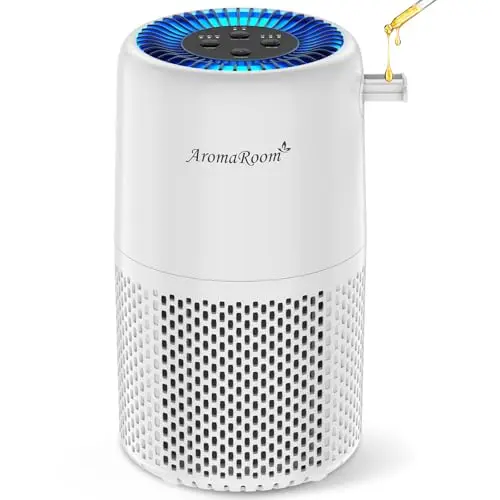
AP103-A – Compact Aroma Purifier
The AP103-A is a small True HEPA purifier with sleep and timer modes, a 22 dB low setting, and an aromatherapy fragrance pad. It’s sized for bedrooms, baby rooms, and offices rather than whole-home cleaning.
How We Evaluated These Small HEPA Air Purifiers
We didn’t run particle-count decay tests in a sealed chamber or measure CADR ourselves. What we did: cross-referenced 7 small HEPA air purifier models from 7 distinct brands across 5 decision axes – footprint and weight, filtration and CADR, sleep-mode noise, controls and smart features, and replacement-filter availability. We triangulated published specifications, certification details, feature sets, and owner feedback where available, then mapped each unit to realistic small-room scenarios like bedrooms, nurseries, dorms, and desks.
The scoring framework weighted real-world fit for small spaces (70%) – how well each purifier matches a compact room without giving up cleaning power – against feature differentiation (30%) – unique controls, sensors, scent options, and portability. We have no commercial relationship with any of the brands featured; recommendations track fit and differentiation, not brand preference. If you want the safest compact-bedroom pick, the Core 300-P is the one; if real-time air monitoring matters, the DR-HAP008 is the stronger match.
We also weighed the small-print tradeoffs: headline room coverage at one air change per hour versus the more useful higher-clean-air-delivery figure, filter cost and availability, and whether a tiny body still has enough airflow to clean more than a desk. Where data was thin, we kept the assessment shorter rather than filling gaps with guesswork. That matters because a purifier that only works at maximum fan speed is a noisy desk fan with a filter.
How to Choose the Right Small HEPA Air Purifier
1. What Counts as a Small HEPA Air Purifier?
Small is about footprint and weight, not just a marketing label. A true small HEPA air purifier should fit on a nightstand or desk, use a sealed HEPA filter (True HEPA or H13), and move enough air for a bedroom without sounding like a hair dryer. Check CADR and recommended room size at a realistic air-change rate, not the biggest number in the title. Many compact units are close-range purifiers, which is fine for a desk or nursery but not a substitute for a larger bedroom unit.
2. Room Coverage and CADR: Read the Fine Print
Room coverage claims get inflated by using one air change per hour, which is a weak standard for allergy relief. A more useful number is 4.8 air changes per hour in the room size you actually have. CADR matters too: smoke, dust, and pollen ratings tell you how quickly the unit cleans different particles. For a small bedroom, aim for a unit that can refresh the space several times per hour on a fan speed you can tolerate. If you want a compact unit with AHAM-verified CADR for a bedroom, the Core 300-P is the clearest benchmark here.
3. Noise, Sleep Mode, and Nighttime Placement
**Sleep mode** is where small purifiers earn or lose their place. A 20-24 dB rating is a useful target for a bedside unit, but fan speed matters: many purifiers only hit that number on low, where cleaning power drops. Look for display-off options, timer settings, and a night light you can disable. If you need white noise, a slightly louder low setting is fine; if you need silence, prioritize a unit with a genuinely quiet low fan and a dimmable display.
4. Filters, Certifications, and Long-Term Costs
Filter replacement is the real ownership cost. Most small purifiers need a new filter every three to six months, and off-brand filters can fit poorly or reduce performance. Check that genuine replacement filters are easy to find before you buy. Certifications are also a useful filter: AHAM VERIFIDE means independent CADR testing, CARB covers California ozone limits, and ETL or UL speaks to electrical safety. Energy Star matters if you run the unit continuously. If you want an entry-level compact unit with a straightforward filter routine, the PU-P05 is a reasonable starting point.
5. Smart Features and Controls: Helpful or Overkill?
App control and voice assistants are convenient, but they’re not purification features. The more useful smart add-on is a PM2.5 sensor paired with auto mode, which raises fan speed when smoke, dust, or cooking odors spike. A real-time AQI display can also help you see whether the unit is actually doing something. Just check the Wi-Fi band and whether the app is required for basic operation. If you want the purifier to react to real-time air quality, the DR-HAP008 is built around that idea.
6. Matching a Small HEPA Air Purifier to Your Room
For a bedroom, prioritize CADR and sleep-mode noise over smart extras. For a nursery or desk, a true mini with a night light and timer can be enough, especially if you keep it close to the sleeper. For a dorm or office, portability, one-touch controls, and filter availability matter more than a big display. Don’t buy a tiny unit for a large open living room and expect it to keep up; match the claimed room size to a real door-closed space, then size up if you have pets or allergies.
Frequently Asked Questions
1. Are small HEPA air purifiers actually effective for bedrooms?
Yes, if the unit is matched to the room. A small HEPA purifier can clean a closed bedroom well when it has enough CADR for the space and you run it on a fan speed you can tolerate. The mistake is buying a desktop mini for a large open room, or relying on a one-air-change-per-hour coverage claim. For allergy relief, look for True HEPA or H13 filtration and a sleep mode that still moves air. Keep the unit a few feet from the bed and avoid blocking the intake.
2. What's the difference between the Levoit Core 300-P and the DREO DR-HAP008?
The Core 300-P is the simpler, more established compact-bedroom pick: AHAM-verified CADR, a 24 dB sleep mode, and a three-stage filter with easy replacement. The DR-HAP008 adds real-time PM2.5 monitoring, a color AQI display, and Auto/Turbo modes that react to air quality. If you want set-and-forget purification, the Core 300-P is the safer choice; if you want to see what the air is doing, the DR-HAP008 is the better fit.
3. How does the PuroAir 240 compare with the GoveeLife H7126 for small spaces?
The PuroAir 240 is a larger two-pack purifier with a particle sensor and auto mode, so it suits buyers who want matching units for more than one room. The GoveeLife H7126 is a true mini with app and Alexa control, a 24 dB sleep mode, and an aromatherapy pad. For a single small bedroom, the GoveeLife is easier to place; for two rooms or a larger open space, the PuroAir pair makes more sense.
4. Do small HEPA air purifiers work for pet hair and odors?
They help, but manage expectations. A small HEPA purifier can capture pet dander and some airborne hair that reaches the intake, and a carbon layer helps with odors. It won’t replace vacuuming or grooming, and pet hair on the floor or furniture won’t be cleaned by the purifier. For pet households, choose a model with a washable pre-filter or an easy-to-vacuum pre-filter, and size up if the room is large.
5. How often should I replace the filter in a small HEPA air purifier?
Most small HEPA purifiers need a new filter every three to six months, or sooner if you run them continuously in a dusty home or with pets. Check the filter-change indicator and the manufacturer’s recommendation for your specific model. Genuine replacement filters are worth the small premium because off-brand filters can fit loosely and reduce performance. If odors return quickly or airflow drops, replace the filter before the calendar says so.
Final Verdict
For most buyers, the Core 300-P is the small HEPA air purifier to start with. It nails the basics – AHAM-verified cleaning, a compact footprint, and a genuinely quiet sleep mode – without asking you to manage an app. If you want the purifier to show you air quality and adjust itself, the DR-HAP008 is the more informative pick. If you’re outfitting a desk, dorm, or nursery on a tight budget, the PU-P05 gets you true H13 filtration and a night light in a tiny body. And if you need matching units for two rooms, the PuroAir 240 two-pack is the practical route. Match the unit to the room, prioritize sleep-mode noise if it’s going bedside, and don’t chase the biggest coverage claim in the title.
