
Best Smoke Air Purifiers – 2026 Reviews

Smoke is a stubborn houseguest. It hangs in the air, clings to curtains, and leaves that acrid edge long after the fire is out, whether the source is a wildfire, a neighbor’s fire pit, or a cigarette. A regular air purifier can help, but not every unit is equally good at smoke.
Two things separate a smoke-capable purifier from a generic one: enough clean-air delivery for the room, and carbon filtration that can tackle odors and volatile compounds instead of just particles. A HEPA filter catches fine particulate; the carbon layer is what keeps the air from smelling like a campfire.
We compared models across the market with those priorities in mind, weighing smoke-focused filtration, room coverage, noise, and daily livability. The picks below cover different rooms and budgets, so you can match the machine to the smoke problem you actually have.
Best Smoke Air Purifiers – 2026 Reviews
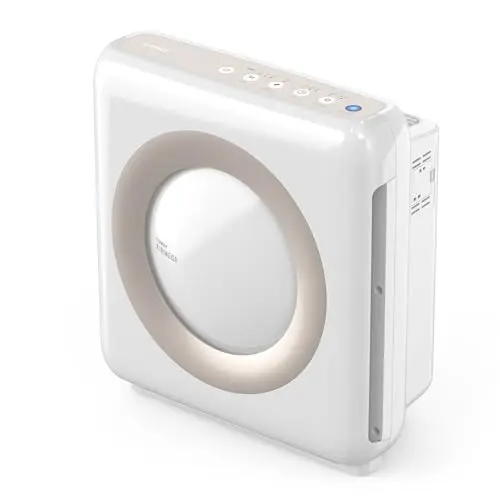
Mighty AP-1512HH(W) – Smoke and Odor Workhorse
The Mighty AP-1512HH(W) is a proven smoke-and-odor air purifier with a four-stage filtration stack, including a washable pre-filter, deodorization filter, bipolar device, and HEPA filter rated to reduce 99.97% of 0.3-micron particles. Auto mode adjusts fan speed based on real-time air quality, and the LED indicator can be dimmed for sleep. It covers large rooms and includes filter alerts for maintenance.
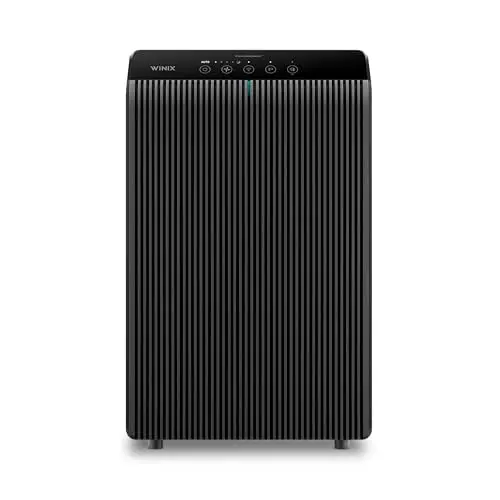
5510 – Carbon-Forward Smoke Relief
The Winix 5510 is a large-room air purifier with True HEPA filtration, a high-deodorization carbon filter, and a washable fine mesh pre-filter. It captures fine smoke particles and tackles cooking, pet, and smoke odors, while Auto mode and a real-time air-quality indicator adjust cleaning to conditions. The 5510 adds app support and a light-triggered sleep mode.
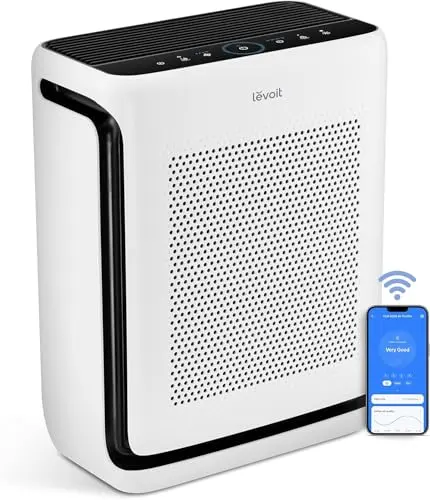
Vital 200S-P – Large-Room Smoke Clearer
The Levoit Vital 200S-P is built for large rooms and allergy-prone households, with AHAM Verifide performance and smoke CADR rated at 250 CFM. It uses a traditional inlet plus a U-shaped inlet to pull in pet hair and odors, and it includes an air-quality monitor, Auto mode, and app control. Sleep mode runs quiet enough for bedrooms.
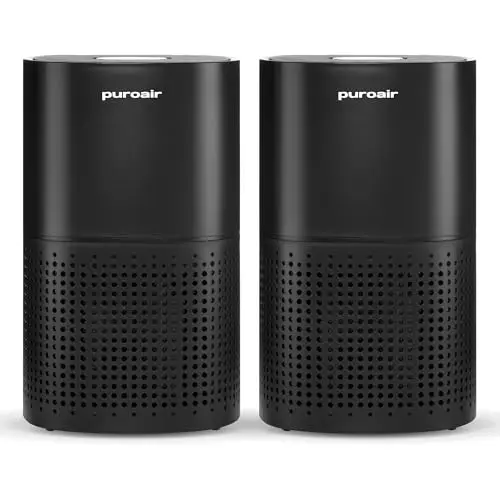
PuroAir 240 – Two-Room Smoke Defense
The PuroAir 240 two-pack brings HEPA plus activated carbon filtration to two rooms at once, with a 360-degree intake and a smart particle sensor. PuroIQ Auto mode raises fan speed when air quality drops, and sleep mode keeps nighttime operation quiet. Each unit is designed for rooms up to 1,000 square feet.
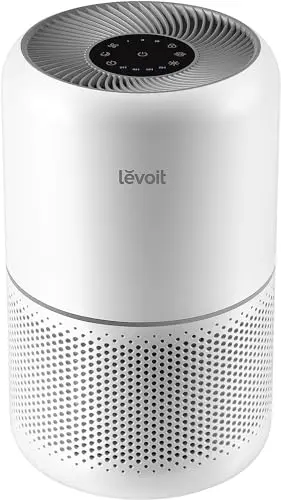
Core 300-P – Compact Smoke and Allergen Control
The Core 300-P is a compact bedroom air purifier with AHAM Verifide performance, a 3-in-1 HEPA filter, and a smoke CADR of 143 CFM. Sleep mode drops noise to a near-silent level, and the display can be turned off. It includes a timer, filter indicator, and a small footprint for tight rooms.
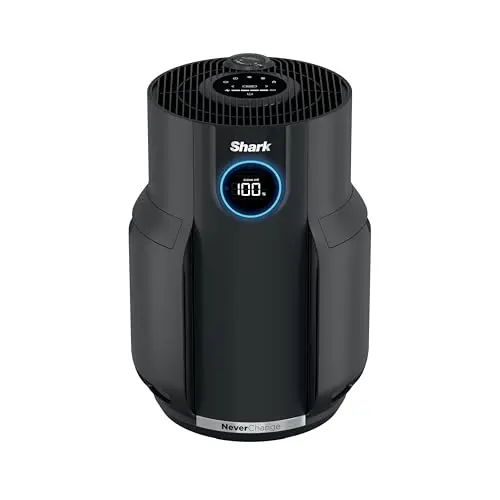
NeverChange HP152 – Compact Odor Neutralizer
The Shark NeverChange HP152 is a compact air purifier with HEPA-exceeding NanoSeal filtration, a washable Debris Defense filter, and an Odor Neutralizer cartridge. CleanSense IQ shows real-time air quality, and the unit is designed for rooms up to 650 square feet. It’s a low-maintenance option for bedrooms, offices, and smaller living spaces.
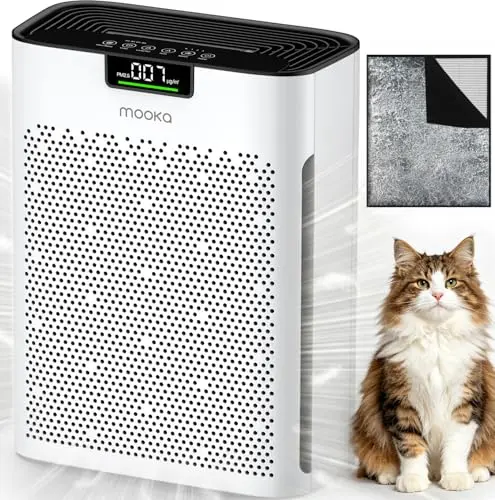
KJ190H – Budget Wildfire Smoke Pick
The MOOKA KJ190H is a budget-oriented air purifier with a 3-stage filtration system, a washable pre-filter, and a PM2.5 air-quality display. It’s designed for wildfire smoke, ash, and smog, with Auto mode, four fan speeds, and timers. Sleep mode runs at a low noise level, and a child lock adds safety.
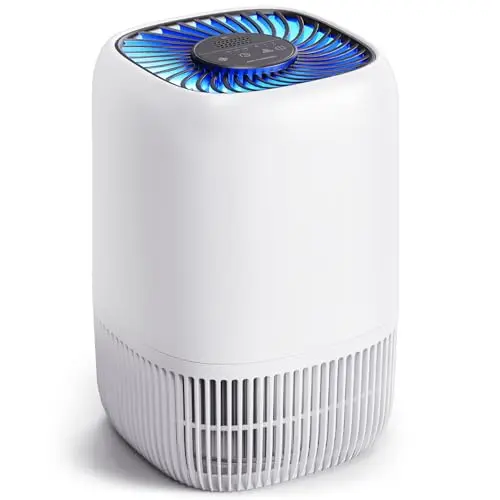
DH-JH12 – Tiny Desktop Smoke Cleaner
The VOOPNU DH-JH12 is a compact air purifier with 360-degree intake, triple-layer filtration, and a small desktop-friendly body. It offers three speeds, a timer, and an essential-oil tray, with sleep mode rated at 22 dB. It’s positioned for tight spaces and lighter smoke or odor duty.
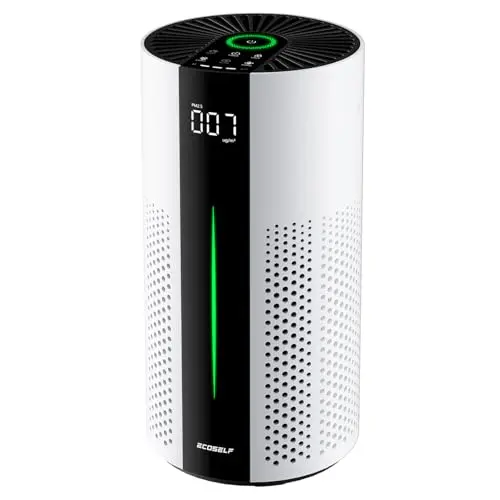
HAP609 – Smart Compact Air Cleaner
The ECOSELF HAP609 is a compact smart air purifier with 360-degree airflow, a 3-stage HEPA and carbon filter, and a PM2.5 display. Auto mode adjusts fan speed based on real-time readings, while sleep mode drops to 20 dB and turns off display lights. It includes a timer, child/pet lock, and filter reminder.
How We Evaluated These Smoke Air Purifiers
We didn’t run controlled smoke-chamber tests or measure particle counts with lab instruments. What we did: cross-referenced 9 smoke-relevant air purifier models from 8 brands across six decision axes – smoke CADR and airflow, carbon and odor filtration, room coverage, noise and sleep operation, smart/auto controls, and filter maintenance. We triangulated published specifications, feature sets, owner feedback where available, and use-case fit against common smoke scenarios such as wildfire season, cigarette odor, and kitchen smoke.
The scoring framework weighted real-world smoke performance (70%) – how well each unit clears particles and addresses odor in its intended room size – against feature differentiation (30%) – unique filtration design, controls, and convenience advantages. We mapped each model to a realistic buyer profile rather than treating coverage claims as interchangeable. Recommendations track fit and differentiation, not brand preference. If you want the most balanced smoke-and-odor package, the Mighty AP-1512HH(W) is the one we’d start with; if carbon-heavy odor control matters most, the 5510 is the stronger route.
We did not verify long-term filter lifespan in a home, and we did not test every unit in a smoke-filled room. We did audit how each model handles fine particles, odors, and daily operation so the lineup reflects practical smoke-season priorities, not marketing labels.
How to Choose the Right Smoke Air Purifier
1. What Makes an Air Purifier Good for Smoke?
Smoke is a two-part problem. It carries fine particulate that can lodge deep in the lungs, and it also brings volatile organic compounds and odor molecules that make a room smell like a fire even after the visible haze clears. A HEPA filter handles the particles; activated carbon handles the gas-phase odors and VOCs. If you only look at HEPA efficiency, you can miss half the job.
For smoke, smoke-specific CADR matters more than a generic room-size claim. CADR is the clean-air delivery rate for a specific pollutant, and smoke CADR tells you how quickly the unit can process smoke particles. A purifier with strong dust performance but weak smoke CADR will feel underwhelming during a wildfire event.
2. Smoke CADR and Room Coverage: Size the Purifier to the Space
Coverage claims often assume one air change per hour, which is a low bar for smoke. You want enough air changes per hour to clear a smoky room, not just technically touch the square footage. A large-room purifier in a small bedroom will run on lower speeds and stay quieter; a compact unit in an open living room will struggle.
Use the smoke CADR as your reality check. If the number is modest, treat the purifier as a bedroom or office machine. If you’re dealing with an open floor plan or a whole-home smoke event, look for a unit with higher airflow and a larger intake.
3. Carbon Filtration and Odor Control for Wildfire and Cigarette Smoke
Carbon is where smoke purifiers separate themselves. Gas-phase filtration depends on how much carbon is in the filter and how well the air actually passes through it. A thin carbon layer can knock down light cooking odors; a carbon filter mass designed for smoke has a better shot at cigarette smell and wildfire odor.
Be careful with odor neutralizer cartridges that release a scent. They can make a room smell fresher, but they don’t always remove the underlying odor. If smoke sensitivity is the issue, prioritize carbon filtration and a filter replacement cadence you can actually keep up with.
4. Coway AP-1512HH vs Winix 5510: Two Approaches to Smoke Control
The Coway AP-1512HH leans on a deodorization filter plus HEPA and a long track record for smoke-and-odor duty. The Winix 5510 counters with high-deodorization carbon and app control, which makes it easier to monitor a room remotely. If you want a set-and-forget workhorse, the Mighty AP-1512HH(W) is the pick. If carbon-heavy odor control and app convenience matter more, the 5510 fits better.
5. Noise, Sleep Mode, and Daily Livability in a Smoke Air Purifier
Smoke events often mean running the purifier continuously, including overnight. Sleep mode and display dimming matter more than they do on a purifier you only run during the day. A unit that’s too loud will get switched off, which defeats the purpose. If the machine lives in a bedroom, the Core 300-P is the pick for a compact, quiet setup.
6. Filter Maintenance and Smart Features Worth Paying For
A filter indicator is basic but important, and a washable pre-filter helps stretch the main filter between changes. Smart features like Auto mode are useful when smoke levels fluctuate, but they don’t replace the need for carbon capacity. Check the replacement schedule before you buy, especially if you’ll run the unit continuously during smoke season.
Frequently Asked Questions
1. What's the difference between the Coway AP-1512HH and Winix 5510 for smoke?
Both are strong smoke choices, but they lean different ways. The Coway AP-1512HH uses a four-stage filtration stack with a deodorization filter, and its auto mode is simple and effective. The Winix 5510 emphasizes high-deodorization carbon and adds app control for remote monitoring. If you want the more straightforward smoke-and-odor workhorse, the Mighty AP-1512HH(W) is the safer pick; if you want carbon-heavy odor control plus app convenience, go with the Winix.
2. Is the Levoit Core 300-P or PuroAir 240 better for cigarette smoke?
The Core 300-P is better for a single bedroom because of its compact footprint, quiet sleep mode, and AHAM Verifide performance. The PuroAir 240 two-pack is the stronger multi-room play: HEPA plus carbon filtration and a PuroIQ sensor that reacts to smoke and odors. For one small room, the Core 300-P is the pick. For two rooms or a bedroom-plus-living-room setup, the PuroAir bundle makes more sense.
3. Are all air purifiers effective against smoke?
No. HEPA filtration is good at capturing smoke particles, but odor and VOC removal depends on carbon. A purifier with a thin carbon layer may clear the haze without fixing the smell. Look for smoke-specific CADR, meaningful carbon filter mass, and a room coverage rating that matches where you’ll run it.
4. How long should I run a smoke air purifier?
Run it continuously during a smoke event, not just when you see haze. Smoke particles and odors can linger in soft furnishings, so steady airflow helps. Use Auto mode if the unit has it, keep windows closed, and rely on the filter indicator rather than a fixed calendar. If the purifier is undersized for the room, longer runtime won’t fully make up for low smoke CADR.
5. What should I look for in a smoke air purifier for a bedroom?
Prioritize quiet operation, a display dimmer or sleep mode, and a smoke CADR matched to the bedroom size. A compact unit like the Core 300-P works well if the room is small; a larger unit can run on low and stay quiet if you have the floor space. Carbon filtration still matters for overnight odors, and a filter reminder keeps maintenance from slipping.
Final Verdict
For most smoke problems, the Mighty AP-1512HH(W) is the pick. It pairs HEPA particle capture with a deodorization stage and auto sensing, which is the right combination for smoke that leaves both fine particles and an odor behind. If wildfire smoke or cigarette smell is the main issue, the 5510 adds carbon-forward odor control and app convenience. For a bedroom where space and quiet matter more than maximum coverage, the Core 300-P is the budget-friendly route. And if you’re clearing a large open-concept room, the Vital 200S-P brings higher smoke CADR and a bigger intake. Match the purifier to the room, run it continuously during smoke events, and stay on top of filter changes-that’s most of the battle.
