
Best Soft Duvet Covers – 2026 Reviews

A duvet cover is the layer you actually touch every night, so ‘soft” is not a small detail. But softness is also where marketing language gets slippery. A cover can feel plush in the hand and still sleep warm, or feel crisp out of the bag and become the most comfortable layer after a few washes.
The two axes that separate strong options from mediocre ones are surface softness and breathability. Fabric construction matters here: brushed microfiber, washed microfiber, seersucker, and cotton all deliver a different kind of soft. Closure and tie design matter too, because a cover that bunches or slips will feel annoying no matter how nice the fabric is.
We compared the soft duvet cover market across major brands, focusing on how each option balances hand feel, temperature, durability, and daily upkeep. The goal is not to crown one fabric type for everyone. It is to help you choose the soft duvet cover that fits your sleep style, your bed, and your laundry routine.
Best Soft Duvet Covers – 2026 Reviews
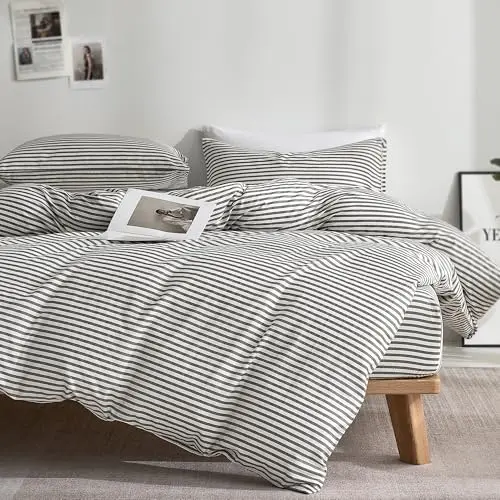
Classic Striped Cotton – Breathable Softness for Hot Sleepers
A 100% cotton duvet cover set with a classic gray-and-white stripe, a double hidden zipper, and eight corner ties. The Oeko-Tex certified cotton is designed for breathable softness, making it a strong fit for hot sleepers who want a natural-fiber feel.
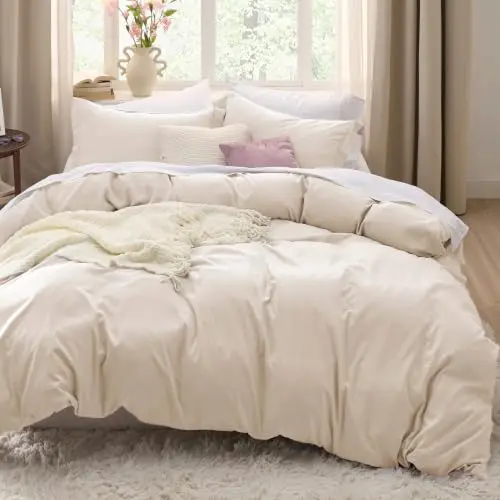
Prewashed Cotton-Like – Relaxed Softness Year-Round
A prewashed microfiber duvet cover set with a cotton-like relaxed texture, eight corner ties, a hidden zipper, and Oeko-Tex certification. It is designed to balance softness and breathability for year-round use.
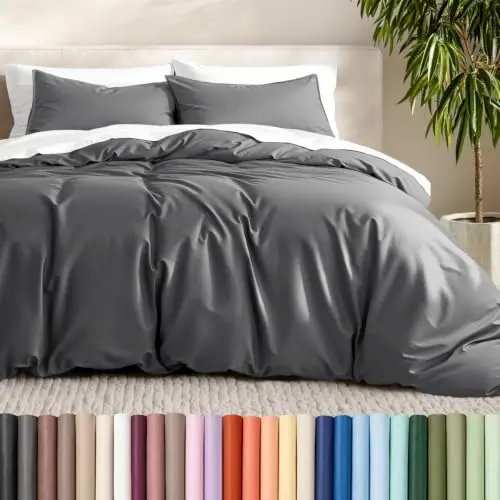
1800 Ultra-Soft – Brushed Microfiber Comfort
A double-brushed microfiber duvet cover set with a 100 GSM fabric weight, eight corner ties, a hidden zipper, and envelope-closure pillow shams. It is built for a soft, lived-in feel with all-season breathability.
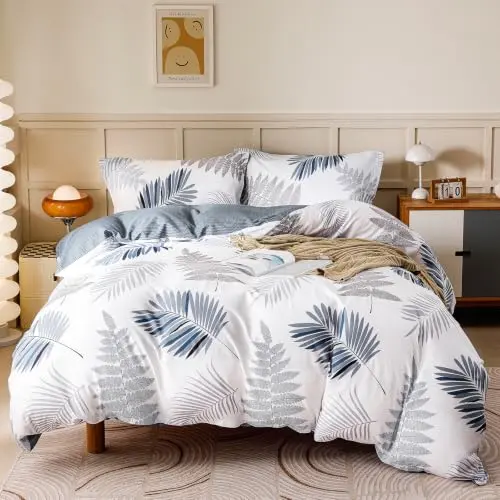
Blue Leaf Cotton – Breathable Patterned Comfort
A 100% cotton duvet cover set with a blue leaf pattern, a 70-inch hidden zipper, eight corner ties, and a twill weave. The cotton is designed for soft, breathable comfort and fade-resistant color.

3-Piece Brushed Microfiber – Budget-Friendly Softness
A three-piece brushed microfiber duvet cover set with a hidden zipper, wrinkle-resistant finish, and Oeko-Tex certification. The set includes a queen cover and two pillow shams for an easy bedroom refresh.
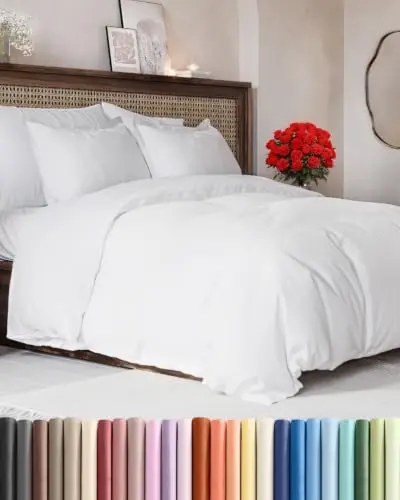
Extra Soft Duvet Cover – Double-Brushed Everyday Comfort
A double-brushed microfiber duvet cover set with eight ties, a zipper closure, Oeko-Tex certification, and fade-resistant color retention. It is lightweight and breathable for year-round use.
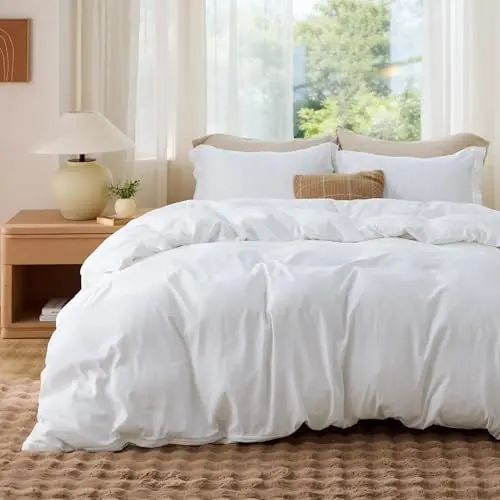
Double-Brushed Duvet Cover – Hotel-Style Softness
A double-brushed polyester microfiber duvet cover set with eight corner ties, a hidden zipper, and fade-resistant color. It is lightweight and designed for year-round use with a smooth, quiet feel.
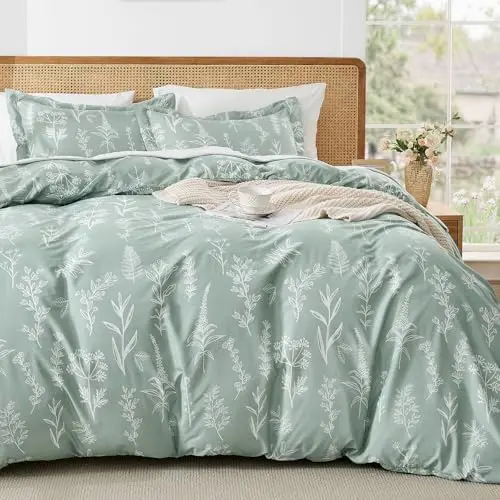
Reversible Floral – Soft Botanical Refresh
A brushed microfiber duvet cover set with a reversible botanical floral pattern, a hidden zipper, and corner ties. The set includes a queen cover and two pillow shams for a coordinated bedroom refresh.
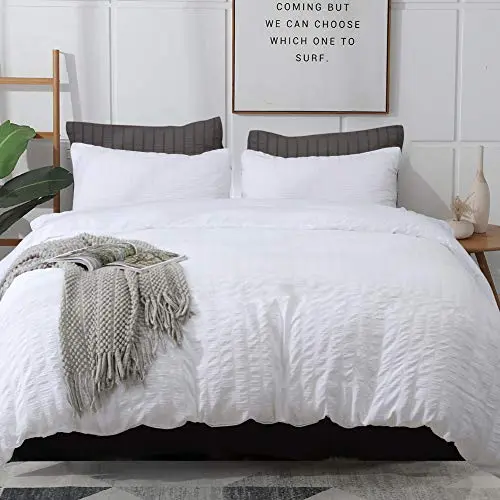
Seersucker Textured – Washed Microfiber Charm
A washed microfiber duvet cover set with a seersucker texture, a metal zipper, and corner ties. The textured fabric is designed to be soft, breathable, and pet-friendly.
How We Evaluated These Soft Duvet Covers
We didn’t sleep on these covers night after night or run wash-cycle durability tests in a lab. What we did: cross-referenced 9 duvet cover models from 8 brands across 6 decision axes – fabric composition, brushed or washed finish, breathability, closure and tie design, fit, and care requirements. We triangulated published specifications, feature sets, and owner feedback where available, then mapped each option against the way people actually use a duvet cover: layering over an insert, washing regularly, and sharing a bed with a partner or pet. We treated softness as more than a surface sensation. A cover can feel plush in the hand but sleep warm, or feel crisp at first and soften over time, so we weighed hand feel against breathability and wash resilience.
The scoring framework weighted real-world fit and performance (70%) – how well each cover delivers on softness, breathability, and secure insert hold – against feature differentiation (30%) – unique details like eight-tie layouts, double zippers, Oeko-Tex certification, and texture. We audited the details that cause daily friction: whether the zipper is hidden or metal, whether the ties are placed at four corners or eight points, and whether the fabric is likely to wrinkle, pill, or fade. We have no commercial relationship with any of the brands featured; recommendations track fit and differentiation, not brand preference. If you sleep warm and want a natural-fiber feel, the JELLYMONI Classic Striped Cotton is the strongest match; if you want a relaxed cotton-like texture with microfiber ease, the Bedsure Prewashed Cotton-Like is the better route.
How to Choose the Right Soft Duvet Covers
1. What Makes a Soft Duvet Cover Feel Soft?
Softness in a duvet cover comes from two places: the fiber and the finish. Brushed microfiber is mechanically roughened to create a peach-like surface, so it feels plush immediately. Washed microfiber and prewashed finishes skip some of that initial stiffness and feel more relaxed out of the bag. 100% cotton starts crisper and softens over time, especially with a twill weave or a higher thread count.
Do not confuse hand feel with sleep comfort. A cover can feel velvety in the store but trap heat, or feel crisp at first and become the most breathable option after a few washes. Look for breathable construction, a lightweight build if you sleep warm, and a care label that matches how you actually do laundry.
2. Brushed Microfiber vs Cotton vs Washed Microfiber for Soft Duvet Covers
Brushed microfiber wins on immediate softness and wrinkle resistance. It is usually the most budget-friendly route and tends to hold color well, but thin versions can feel bedsheet-light. 100% cotton is breathable and natural-feeling, with a more substantial hand feel, though it wrinkles and often costs more. Washed microfiber and seersucker textures sit in the middle: soft, casual, and forgiving of wrinkles, with a lived-in look.
If you want the softest possible surface and easy care, the Bare Home 1800 Ultra-Soft is the brushed-microfiber pick. If you prefer a natural-fiber feel and sleep warm, the JELLYMONI Classic Striped Cotton is the better fit.
3. Breathability and Temperature Control for Hot Sleepers
Breathability matters most if you sleep warm or share a bed with someone who does. Cotton and lightweight microfiber tend to feel cooler than thick brushed fabrics, but construction matters as much as fiber. A breathable weave, a lightweight fill in your insert, and a cover that does not trap air will do more for comfort than a marketing label.
Hot sleepers should also pay attention to the pillow shams and the duvet insert underneath. A breathable cover over a heavy insert will still sleep warm. If temperature regulation is your priority, start with a cotton or lightweight microfiber cover and adjust the insert separately.
4. Fit, Closure, and Corner Tie Details That Matter
A duvet cover is only as good as its insert hold. Eight corner ties are better than four if you move a lot in your sleep, because they secure the middle edges as well as the corners. A hidden zipper keeps the closure out of sight and is faster than buttons, while a double zipper can add durability at the opening. Check the size dimensions against your insert: a cover that is too large will look sloppy, and one that is too small will strain the seams.
Also consider the pillow sham closures. Envelope closures look cleaner than open ends, and a flange adds a finished hotel-style detail. These are small things, but they separate a cover that looks intentional from one that looks like a utility layer.
5. How to Choose the Right Soft Duvet Cover for Your Bedroom
Start with your sleep temperature and laundry habits. If you want the softest surface with minimal upkeep, brushed microfiber is the practical choice. If you sleep warm or prefer a natural feel, cotton is worth the extra care. Then check the care label: cold wash and low tumble dry are common, and high heat can dull softness or shrink some fabrics.
Finally, decide how much pattern you want. Solid colors are forgiving and easy to layer, while stripes, florals, and seersucker textures add personality. The best soft duvet cover for your bedroom is the one that matches your temperature, your wash routine, and the look you will still like after a few months.
Frequently Asked Questions
1. What's the difference between the JELLYMONI cotton striped duvet cover and the Bare Home brushed microfiber set?
The biggest difference is fiber and feel. JELLYMONI uses 100% cotton with a breathable hand feel, a double hidden zipper, and eight corner ties; it is the better match for hot sleepers who prefer natural fibers. Bare Home uses double-brushed microfiber with a 100 GSM fabric weight, so it feels plusher immediately and resists wrinkles more readily. If you want instant surface softness and easy care, choose the Bare Home 1800 Ultra-Soft; if you want cotton breathability, JELLYMONI is the better fit.
2. Bedsure Prewashed vs Utopia Bedding: which soft duvet cover is better for hot sleepers?
Both are microfiber, so neither will feel as breathable as cotton, but they approach softness differently. Bedsure Prewashed has a relaxed cotton-like texture, eight corner ties, and a hidden zipper; it feels softer and less slick out of the bag. Utopia Bedding is a brushed microfiber set with a wrinkle-resistant finish and a very approachable price tier. For hot sleepers, the looser, airier feel of the Bedsure Prewashed Cotton-Like makes it the better pick between the two, though a cotton cover is still the cooler option overall.
3. Are all soft duvet covers actually soft?
No. Softness is a broad label, and some covers feel plush in the hand but sleep hot or lose their finish after a few washes. Look for a brushed or washed finish, a breathable fabric, and a construction that matches your priorities. A 100% cotton cover may feel crisper at first and soften over time, while a microfiber cover may feel softer immediately but trap more heat.
4. Do corner ties and zipper closures really matter on a duvet cover?
Yes, because they affect how often you have to fix the bed. Eight corner ties hold the insert at more points than four-tie designs, which reduces bunching. A hidden zipper is faster than buttons and keeps the opening clean, while a metal zipper can feel more substantial but may add a little weight. Check that the tie loops are securely stitched, since that is a common failure point.
5. How should I wash a soft duvet cover to keep it soft?
Use a gentle cycle with cold or warm water, depending on the care label, and avoid heavy detergent. Tumble dry on low heat or air dry to protect the finish; high heat can dull brushed microfiber and shrink some cotton covers. Wash with similar colors, skip bleach unless the label allows it, and remove the cover promptly from the dryer to limit wrinkles. For cotton, a low tumble and a quick shake will keep it softer than line drying until bone-dry.
Final Verdict
For most buyers, the JELLYMONI Classic Striped Cotton is the answer. It pairs breathable 100% cotton with eight corner ties, a double hidden zipper, and a classic stripe that works in most bedrooms. If you want maximum surface softness with easier care, the Bare Home 1800 Ultra-Soft is the brushed-microfiber pick. If you want a patterned cotton cover, the OAITE Blue Leaf Cotton adds personality without giving up breathability. And if you are outfitting a guest room or want a low-cost refresh, the MUXHOMO Reversible Floral is the budget-friendly soft option. Match the cover to your sleep temperature and laundry habits, and you will end up with bedding you actually want to touch every night.
