
Best Sound Machines For Tinnitus – 2026 Reviews

Tinnitus rarely shows up on a schedule. It can be a faint hiss at bedtime, a high ring in a quiet office, or a tone that gets louder the moment the room goes silent. A sound machine helps by giving your brain a steadier, more neutral sound to rest on, but not every machine is good at that job. The wrong one adds a harsh digital edge or loops in a way you notice within minutes.
For tinnitus, the useful features are less about how many sounds a machine claims and more about how well it controls them: non-looping playback, fine volume steps, and a tone that stays smooth at low levels. A real-fan machine and a digital masker can both work, but they suit different sleepers. We looked across the category to find the machines that make masking feel natural rather than clinical.
Best Sound Machines for Tinnitus – 2026 Reviews
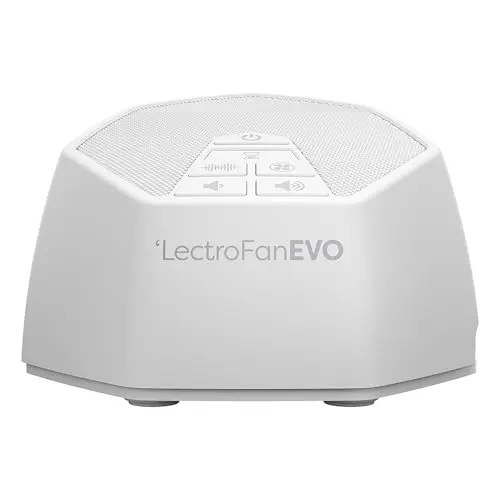
EVO – Non-Looping Masking with Precision Volume
A compact non-looping sound machine with a broad sound library, precision volume, and a headphone jack for private masking.
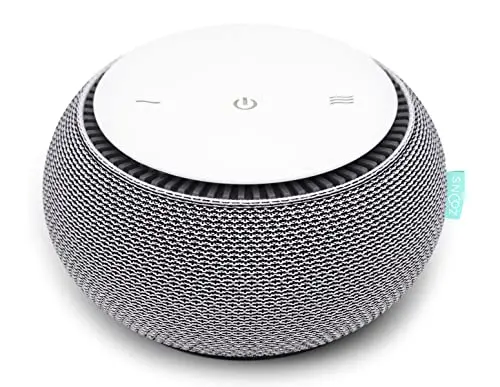
Original – Real Fan Sound with App Scheduling
A real-fan white-noise machine for people who want one natural, non-looping fan sound with app scheduling and simple controls.
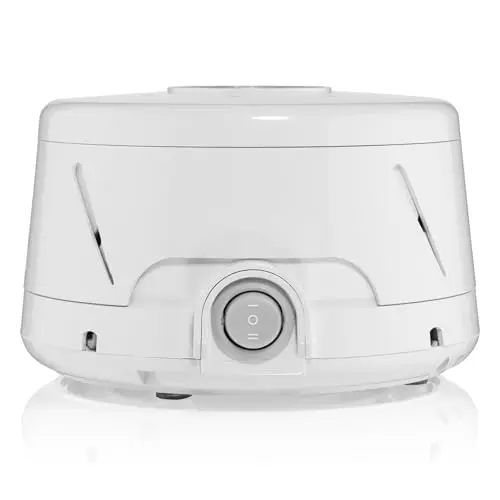
Dohm Classic – Pure Fan Masking
The classic fan-based masker with a natural broadband sound, dual speeds, and a deliberately simple plug-in design.
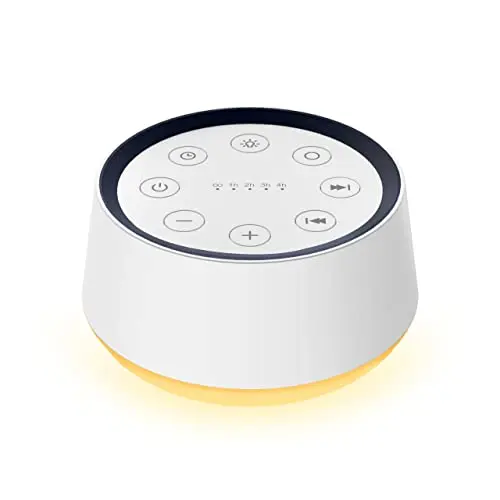
30-Sound Brown Noise Machine – Budget Masking Variety
A budget-friendly sound machine with three brown-noise tracks, fine volume steps, timers, and a colorful night light.
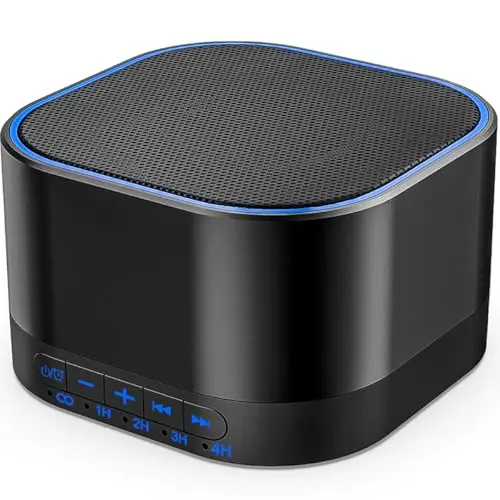
SN-A1 – Compact 20-Sound Masking
A tiny multi-sound masker with 20 non-looping sounds, 32 volume levels, and AC or USB power for flexible placement.
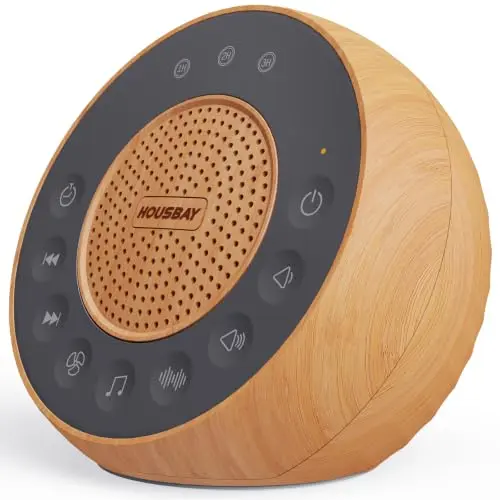
CAWS50S – Wood-Grain Directional Sound
A wood-grain bedside machine with 31 sounds and a forward-facing speaker that aims masking sound toward you.
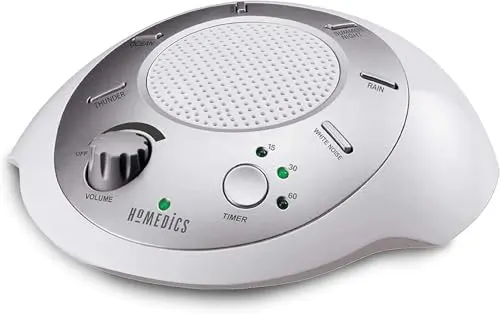
SoundSleep – Travel-Friendly Six-Sound Masker
A travel-size six-sound machine with an auto-off timer and simple controls for basic bedside masking.
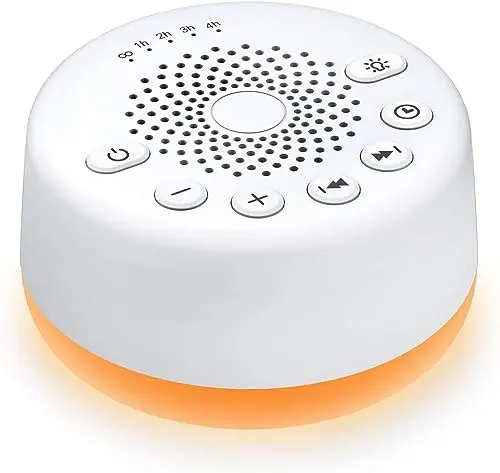
IS05 – Night-Light Sleep Masker
A budget sound machine with 25 sounds, a dimmable night light, five timers, and memory for nightly routines.
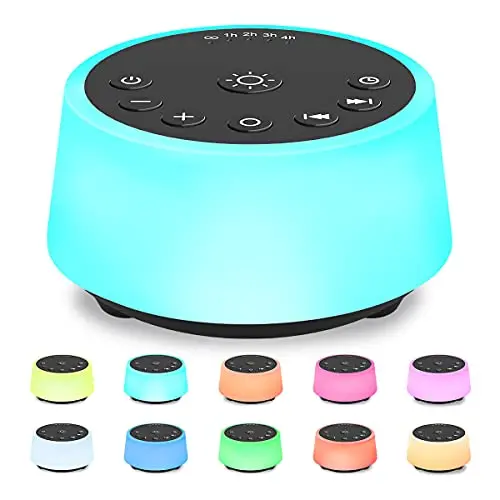
129 – Colorful Budget Masking
A compact budget masker with 25 sounds, 32 volume levels, and a 10-color night light for colorful bedrooms.
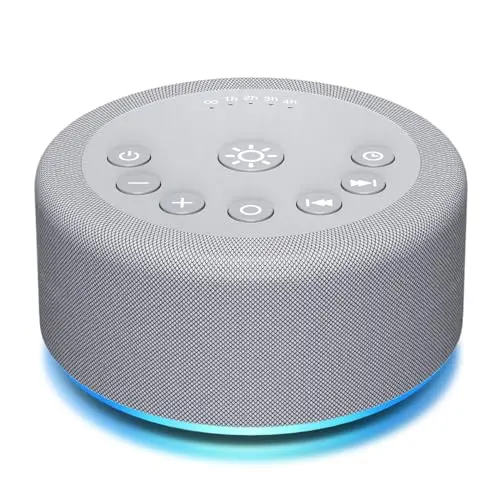
R5 – Non-Looping Brown Noise with Night Light
A budget bedside machine with 30 non-looping sounds, brown-noise options, 36 volume levels, and a 12-color light.
How We Evaluated These Sound Machines for Tinnitus
We didn’t run clinical audiology tests or measure tinnitus loudness in a lab. What we did: cross-referenced 10 sound machines from 10 brands across six decision axes – sound variety, non-looping behavior, volume precision, form factor, timer and memory controls, and suitability for bedside masking. We triangulated published specifications, feature sets, owner feedback where available, and use-case fit for people who need steady background sound rather than a medical device. We also weighed whether each machine could produce a usable low-volume mask without forcing you into a narrow set of harsh tones.
The scoring framework weighted real-world fit for tinnitus masking (70%) – how well each machine lets you shape and control a soothing sound at low volume – against feature differentiation (30%) – unique sound libraries, fan-based designs, app controls, and travel-friendly details. We audited timer behavior, volume range, and sound-looping claims against the published feature sets, then mapped those findings to common tinnitus use patterns: falling asleep, staying asleep, and masking in a shared bedroom. We favored machines with non-looping sounds, because repeating loops can become more noticeable when you are trying to ignore ringing. We have no commercial relationship with any of the brands featured; recommendations track fit and differentiation, not brand preference. If you want the most flexible digital masker, the LectroFan EVO is the strongest match; if you prefer a real-fan sound, the SNOOZ Original is the better route. We cannot tell you which sound will feel best to your ears; that part still requires a little trial and error.
How to Choose the Right Sound Machines for Tinnitus
1. What Matters Most in a Sound Machine for Tinnitus
For tinnitus, the best sound machine is the one that gives you a steady, non-looping sound you can leave running without noticing the pattern. Volume precision matters more than raw loudness: you want to set masking just above the ringing, not so loud that it becomes its own distraction. Brown noise and pink noise are popular because they soften the high frequencies that can make white noise feel sharp, while fan-based sound offers a natural broadband texture.
Also look at timer and memory controls, because a machine you have to reset every night gets old fast. A headphone jack can help in shared bedrooms, and a compact body matters if you travel or move the machine between rooms. The goal is not the longest feature list; it is a sound you can tolerate for hours.
2. Digital Noise vs. Real-Fan Sound Machines for Tinnitus
Digital machines give you choice: white noise, brown noise, rain, ocean, fan, and sometimes lullabies, often with fine volume steps and timers. That flexibility is useful when one sound feels too sharp or too flat against your tinnitus. The tradeoff is that some digital loops can feel artificial, and a few machines add a faint hiss or pulse at low volume.
Real-fan machines like the Dohm Classic take the opposite approach. They produce a natural broadband sound from actual airflow, usually with fewer controls but a more organic texture. If you already know you like fan noise, this route is simple and easy to live with; if you need brown noise or multiple masking options, a digital machine is more flexible.
3. Why Non-Looping Sound and Fine Volume Control Matter for Tinnitus
A looping sound repeats on a short cycle, and once you notice the loop, your attention can lock onto it. Non-looping playback avoids that pattern, especially in quiet rooms where tinnitus is most noticeable. This is why a machine with dozens of sounds can still disappoint if the loops are short or the volume jumps are too wide.
Fine volume control lets you find the masking threshold: loud enough to take the edge off the ringing, quiet enough to sleep. Memory function is a small but useful extra, because it restores your last sound and level instead of making you hunt for them in the dark. Timer settings matter too, though many people prefer continuous play for all-night masking.
4. LectroFan EVO vs. SNOOZ Original: Which Sound Machine Suits Tinnitus?
The LectroFan EVO is the more flexible tinnitus tool: 22 non-looping sounds, precision volume control, a headphone jack, and a sleep timer give you many ways to shape masking. It is a better fit if you want to experiment with fan, ocean, and white-noise textures or need private listening in a shared room.
The SNOOZ Original is narrower but more natural: a real fan inside produces a non-looping fan sound, and the app scheduler plus 10 volume levels make nightly use easy. Choose SNOOZ if you want one calm fan texture done well; choose LectroFan if you want more sound options and finer control.
5. Budget vs. Premium Sound Machines for Tinnitus
Budget machines usually give you more sounds and night-light features for less, but build quality and speaker refinement can vary. The BrownNoise 30-sound machine is a good example of the value tier: three brown-noise tracks, 36 volume levels, and five timers cover the practical basics without premium pricing.
Premium machines tend to simplify rather than add features. You may pay more for a real-fan design, app scheduling, or a longer warranty, and those extras can be worth it if you want a single device to last for years. The right tier depends on whether you value variety or a calmer, more focused design.
6. Setup, Placement, and Care for Tinnitus Masking
Place the machine about three to six feet from your head, between you and the noise source if possible. Start at a low volume and raise it only until the tinnitus feels less prominent; louder is not automatically better. If the sound feels sharp, try a brown-noise or fan setting before giving up on the machine.
Keep the power cord stable, especially on compact budget models, and wipe the exterior with a dry or slightly damp cloth. Avoid blocking the speaker grille, and use the memory function if your machine has one so your preferred setting comes back automatically. A little placement tweaking often matters more than switching devices.
Frequently Asked Questions
1. What's the difference between the LectroFan EVO and the SNOOZ Original for tinnitus?
The LectroFan EVO is the more adjustable option, with 22 non-looping sounds, precision volume control, a headphone jack, and a sleep timer. That makes it easier to experiment until you find a masking tone that does not compete with your tinnitus. The SNOOZ Original is simpler: a real fan inside produces one natural fan sound, with app scheduling and 10 volume levels. If you want variety, go LectroFan; if you want one calm fan texture, go SNOOZ.
2. Is a real-fan machine like the Yogasleep Dohm Classic better than a digital machine like the LectroFan EVO for tinnitus?
Neither design is universally better. A real-fan machine gives you a natural broadband texture that many people find easier to ignore than digital loops, and the Dohm Classic keeps controls simple with dual speeds. A digital machine offers more sounds and finer volume steps, which helps if you need brown noise or a specific masking tone. If fan noise already helps you sleep, the Dohm Classic is the simpler route; if you want to try different textures, the LectroFan EVO is more flexible.
3. What's the difference between the BrownNoise machine and the Magicteam SN-A1?
The BrownNoise 30-sound machine leans into deep masking tones, with three brown-noise tracks, 36 volume levels, and a 12-color night light. The Magicteam SN-A1 is smaller and simpler, with 20 non-looping sounds and 32 volume levels, but no night-light focus. Choose BrownNoise if you want brown noise and lighting in one bedside unit; choose Magicteam if you want a compact masker with a wide sound library and do not need the light.
4. How should I set up a sound machine for tinnitus at night?
Start with the machine three to six feet from your head and set the volume just above the tinnitus, not louder than you need. Choose a non-looping sound that feels smooth rather than sharp, and give yourself a few nights to adjust before deciding it does not work. If you share a bed, use a headphone jack or point the speaker away from your partner. A timer can help you fall asleep, but many people prefer continuous play for all-night masking.
Final Verdict
For most people with tinnitus, the LectroFan EVO is the pick because it combines non-looping sounds, fine volume control, and practical nightly features without locking you into one texture. If you prefer a natural fan sound, the SNOOZ Original is the calmer premium alternative, and the Dohm Classic is the simplest real-fan route. Budget-minded shoppers who want brown noise and a night light should look at the BrownNoise 30-sound machine. Start with the tone that feels least noticeable at low volume; that is usually the one you will keep using.
