
Best Specialty Coffee Makers – 2026 Reviews

Specialty coffee at home usually starts with a compromise: you want cafe-quality flavor, but you don’t want a counter full of gear. The good news is that the category now spans espresso machines, precision drip brewers, pour-over setups, and French presses, each with a different workflow and a different idea of what specialty means.
The two axes that separate a satisfying specialty coffee maker from a frustrating one are brew control and routine fit. Brew control covers temperature stability, grind quality, and extraction method; routine fit covers capacity, cleanup, and how much hands-on work you’re willing to do before you’ve had caffeine.
This guide surveys the market across brands and brew styles so you can pick the machine that matches your morning, not the one with the longest feature list.
Best Specialty Coffee Makers – 2026 Reviews
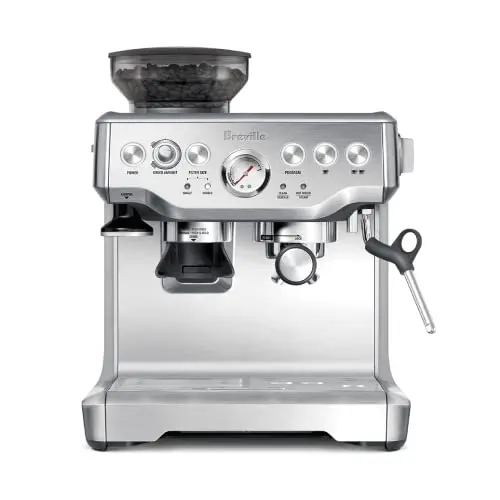
Barista Express – Espresso and Latte Centerpiece
A bean-to-cup espresso machine with a built-in conical burr grinder, PID temperature control, and a steam wand for microfoam. It’s built for drinkers who want cafe-style espresso and lattes without a separate grinder.

KBGV Select – Precision Drip for Half or Full Pots
A precision drip brewer with a brew-volume selector for half or full carafes, a copper heating element, and a quiet, simple workflow. It’s aimed at drinkers who want consistent filter coffee without pods or programming.

KBT – Thermal Carafe Drip Brewing
A thermal-carafe version of the classic Moccamaster drip brewer, with a manual-adjust brew basket and a stainless steel carafe that keeps coffee hot without a warming plate.
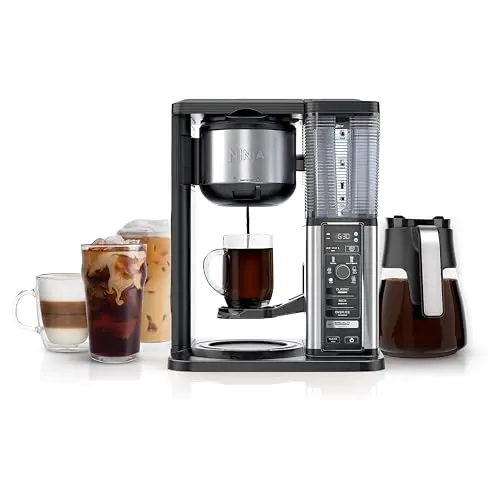
Specialty Coffee Maker CM401 – Cafe-Style Drinks Without Pods
A versatile drip brewer with a fold-away frother, four brew styles, and six brew sizes. It can make standard coffee, iced coffee, and a concentrated specialty brew for milk drinks.
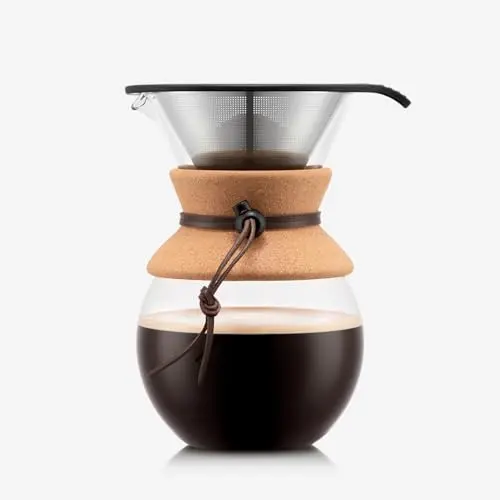
Pour Over Coffee Maker – Filter-Free Manual Brewing
A manual pour-over brewer with a borosilicate glass carafe, a reusable stainless steel mesh filter, and a cork grip. It makes 34 ounces of coffee in a few minutes without paper filters or electricity.
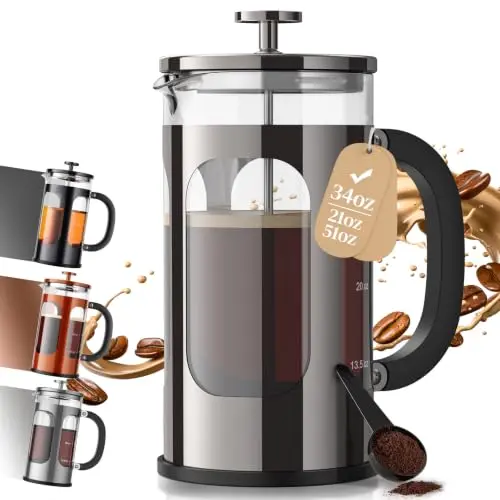
French Press – Rich Immersion Brewing
A French press with a borosilicate glass carafe, 304 stainless steel filtration, and a four-layer filter system. It’s built for hot coffee, cold brew, and loose-leaf tea.
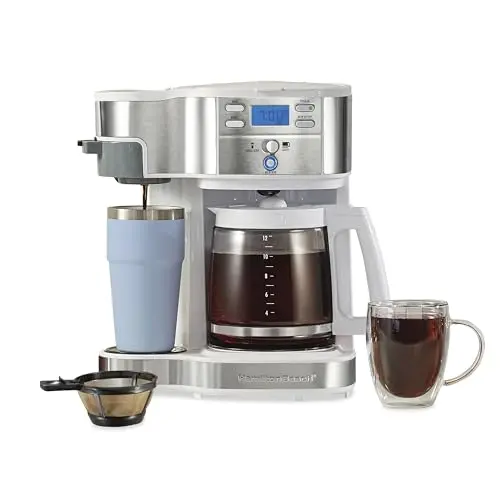
2-Way Programmable Coffee Maker – Carafe and Single-Serve Flexibility
A two-way brewer that makes a full 12-cup carafe on one side and a single serving up to 14 ounces on the other. Both sides use ground coffee, so there are no pods to buy.
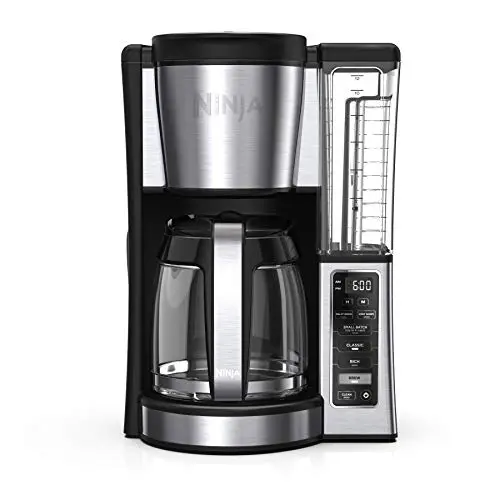
Fresh Brew Coffee Maker CE251 – Straightforward Programmable Drip
A programmable 12-cup drip brewer with classic and rich brew settings, a small-batch option, and a 24-hour delay brew. It’s a straightforward machine for everyday pots.
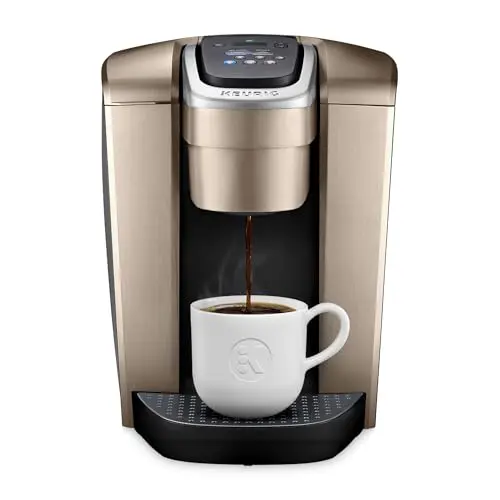
K-Elite – Single-Serve Speed and Convenience
A single-serve pod brewer with strength and temperature control, iced coffee capability, and a large removable reservoir. It’s built for speed and convenience rather than manual brewing.
How We Evaluated These Specialty Coffee Makers
We didn’t run controlled kitchen lab tests or long-term reliability trials. What we did: cross-referenced 9 specialty coffee maker models from 7 distinct brands across six decision axes – brew method, temperature control, capacity, workflow, cleaning and maintenance, and warranty coverage. We triangulated published specifications, feature sets, owner feedback where available, and use-case fit for espresso drinkers, drip-coffee households, and manual-brew enthusiasts. We also mapped each machine to the kind of routine it actually supports, because a brewer that shines in one household can feel like counter clutter in another.
The scoring framework weighted real-world performance (70%) – how well each option delivers on its stated brewing job – against feature differentiation (30%) – the technical advantages and use-case specificity that set a model apart. We audited claims against the product information provided, pressure-tested the lineup for overlap, and weighed whether a higher-end machine earns its place through control, capacity, or build. We have no commercial relationship with any of the brands featured; recommendations track fit and differentiation, not brand preference. If espresso and milk drinks are your priority, the Barista Express is the most complete answer; if you want precise drip coffee for a household, the KBGV Select is the better route.
How to Choose the Right Specialty Coffee Makers
1. What Makes a Specialty Coffee Maker Different?
In broad terms, a specialty coffee maker is one that gives you more control over extraction than a basic drip machine. That can mean precise temperature regulation, a built-in grinder, a manual pour-over method, or a steam wand for microfoam. The common thread is that the machine helps you brew coffee that tastes deliberate rather than merely hot and brown.
Not every specialty machine looks alike. Espresso machines prioritize pressure and milk texturing, while filter brewers focus on even saturation and consistent brew temperature. Manual brewers hand control back to you. Decide which kind of control you actually want before comparing specs.
2. Brew Method: Espresso, Drip, Pour-Over, or French Press?
The brew method is the biggest fork in the road. If your ideal cup is a latte or cappuccino, an espresso machine with a steam wand is the right tool, and the Barista Express is the most complete example in this lineup. If you want a pot for a household, a precision drip brewer like the Moccamaster models makes more sense. For a hands-on single cup, a pour-over cone or French press gives you control without electricity; the Bodum Pour Over is the low-fuss entry point.
Don’t assume one method is more specialty than another. A well-brewed French press can taste better than a poorly dialed espresso shot. Match the method to the drinks you actually order.
3. Temperature Control and Grind Quality Matter Most
Two variables do more for flavor than any marketing feature: water temperature and grind quality. Coffee needs enough heat to extract sweetness and acidity without scorching, and a consistent grind helps water move through the bed evenly. That’s why a built-in conical burr grinder or a PID temperature controller can be worth more than a long list of presets.
If you already own a good grinder, you can put more of your budget into the brewer. If you don’t, an all-in-one machine like the Barista Express or a brewer with strong temperature stability may save you from buying two pieces of equipment.
4. Capacity and Workflow: Match the Machine to Your Counter and Routine
Capacity is not just how many cups a carafe holds. It’s also how much of the process you want to automate. A thermal carafe keeps a pot hot without a warming plate, a single-serve side handles quick cups, and a programmable timer lets you wake up to coffee. The tradeoff is usually counter space and cleanup complexity.
Think about the actual morning: do you brew once and drink over an hour, or do you make a cup and leave? A 10-cup drip brewer with a thermal carafe suits the first routine; a single-serve or small-batch setup suits the second. For households that do both, the Ninja CM401 covers the widest range of brew sizes without pods.
5. Cleaning, Descaling, and Long-Term Care
Routine cleaning is where many specialty coffee makers lose their shine. Carafes, brew baskets, and milk wands all need attention, and descaling is non-negotiable in hard-water areas. Look for removable water reservoirs, dishwasher-safe parts, and a descaling reminder if you want maintenance to stay simple.
Manual brewers are often easier to keep clean because they have fewer hidden parts. Espresso machines need more frequent attention to the group head and steam wand. Before buying, check whether the cleaning routine is realistic for your schedule.
6. Understanding Price Tiers Without Overpaying
Specialty coffee makers range from entry-level manual brewers to premium espresso setups. The entry-level tier buys you a well-made manual brewer or a basic drip machine; the mid-range tier adds temperature control, better build, or a built-in grinder; the premium tier buys espresso capability, larger capacity, or longer warranties. The right tier depends on how much control you’ll actually use.
A higher price doesn’t guarantee a better cup if the machine doesn’t match your routine. Spend on the features that remove friction for you, whether that’s a thermal carafe, a grinder, or a milk wand.
Frequently Asked Questions
1. What's the difference between the Breville Barista Express and the Moccamaster KBGV Select?
The Barista Express is an espresso machine with a built-in grinder, so it’s built for shots, lattes, and cappuccinos. The KBGV Select is a precision drip brewer for filter coffee, with a brew-volume selector for half or full pots. Choose the Breville if milk drinks are your daily ritual; choose the Moccamaster if you want a pot of clean filter coffee. The Barista Express is the more hands-on machine, while the KBGV Select is simpler to live with.
2. Bodum Pour Over vs. Veken French Press: Which manual brewer is right for you?
The Bodum makes a cleaner, lighter-bodied cup because the stainless mesh filters more sediment than a French press, and its glass carafe is easy to rinse. The Veken uses immersion brewing and a four-layer filter to produce a richer, oilier cup with more body. Go with the Bodum Pour Over if you like clarity and a fast pour-over routine; go with the Veken if you want full immersion flavor and cold-brew flexibility.
3. Do specialty coffee makers require special beans or filters?
No. Most specialty coffee makers work with ordinary ground coffee, though fresh beans and a consistent grind make a bigger difference than the machine alone. Some brewers use paper filters, while others rely on reusable mesh or metal filters. Check the filter type before buying if you have a preference, because it affects both flavor and ongoing cost.
4. How important is a built-in grinder in a specialty coffee maker?
A built-in grinder is convenient because it removes a separate step and often feeds the portafilter directly. It matters most for espresso, where grind consistency has an outsized effect on extraction. For drip or manual brewing, a separate grinder gives you more flexibility and may be a better long-term investment. If counter space is tight, an all-in-one machine can be the more practical choice.
Final Verdict
For most specialty coffee drinkers, the Barista Express is the answer: it brings a built-in grinder, PID temperature control, and a capable steam wand into one machine, so espresso and milk drinks are genuinely within reach at home. If your ritual is a pot of filter coffee, the KBGV Select is the cleaner fit, with half-carafe flexibility and a simple workflow. For cafe-style variety without espresso equipment, the Ninja CM401 covers iced coffee, specialty concentrate, and milk frothing. And if you want the most affordable entry into manual brewing, the Bodum Pour Over delivers a filter-free cup with almost no counter footprint.
